Launching a food product sounds exciting, but it’s more than just creating a recipe. From formulation and testing to packaging and compliance, every step adds to the overall investment.
If you’re planning to start a food brand, understanding the real cost of developing a food product helps you budget better and avoid unexpected expenses. Let’s break it down in a simple way.
This Blog is informational. For professional services, visit our Food Product Development Services page.
Understanding the Cost of Developing a Food Product
When calculating the product development cost in India, remember, it’s a structured process, not just cooking in a kitchen.
Your total investment usually includes:
- Market research & feasibility
- Recipe formulation & trials
- Lab testing & shelf-life validation
- Packaging & label compliance
- Regulatory approvals
- Pilot production & scale-up
- Launch & marketing
All these together determine the real cost to launch a food product.
What Does Food Product Development Cost?
Most guides gloss over the details, but here’s what you should expect for a new food or beverage product development in India:
| Type of Formulation | INR (₹) | USD ($) Approx. |
|---|---|---|
| General Food Formulation | ₹1,50,000 | $1,800 |
| Functional Food Formulation | ₹3,50,000 | $4,200 |
| Innovative & Patent-based | ₹10,00,000 | $12,000 |
Detailed Food Startup Cost Breakdown
Get clear insights into budgeting for formulation, compliance, shelf-life testing, packaging, and launch. We help you plan smart, avoid overspending, and build a profitable food brand with expert guidance.
KNOW THE COST TO DEVELOP YOUR PRODUCT
1. Ideation & Market Research
Even before formulation begins, you invest in:
- Market gap analysis
- Competitor benchmarking
- Trend validation
- Ingredient research
Estimated cost: ₹50,000-₹2,00,000
2. Recipe Formulation & R&D
This is the core food product R&D cost phase.
Includes:
- Ingredient functionality testing
- 3-5 lab trials
- Sensory optimisation
- Nutritional alignment
- FSSAI compliance checks
Estimated cost: ₹1,50,000-₹3,50,000
More complex = higher development cost.
3. Packaging & Label Development
Packaging affects safety, stability, compliance, and brand perception.
Costs include:
- Food-grade packaging selection
- Label design
- Nutritional panels
- Allergen declarations
- Barcode & legal checks
Estimated cost: ₹50,000-₹3,00,000
4. Shelf-Life Testing
This is non-negotiable.
Includes:
- Microbial testing
- Stability testing (ambient/chilled/frozen)
- Organoleptic evaluation
Estimated cost: ₹40,000-₹1,50,000
Skipping this risks product recalls and retailer rejection.
5. Manufacturing & Scale-Up
Moving from the lab to the factory increases food manufacturing costs.
Includes:
- Pilot batch production
- Machinery compatibility trials
- Bulk sourcing adjustments
- Contract manufacturer testing
Estimated cost: ₹50,000-₹2,00,000 (initial testing phase)
6. Regulatory & Certification Costs
Documentation adds to the cost of developing a food product:
- FSSAI License
- Nutritional reports
- Allergen testing
- HACCP / FSSC 22000 audits
- Export documentation
Estimated cost: ₹25,000-₹1,50,000+
7. Launch & Distribution Budget
The final cost to launch a food product includes:
- Marketplace onboarding
- Influencer marketing
- Sampling campaigns
- Distributor margins
- Ads & branding
Launch budget range: ₹1,00,000-₹10,00,000
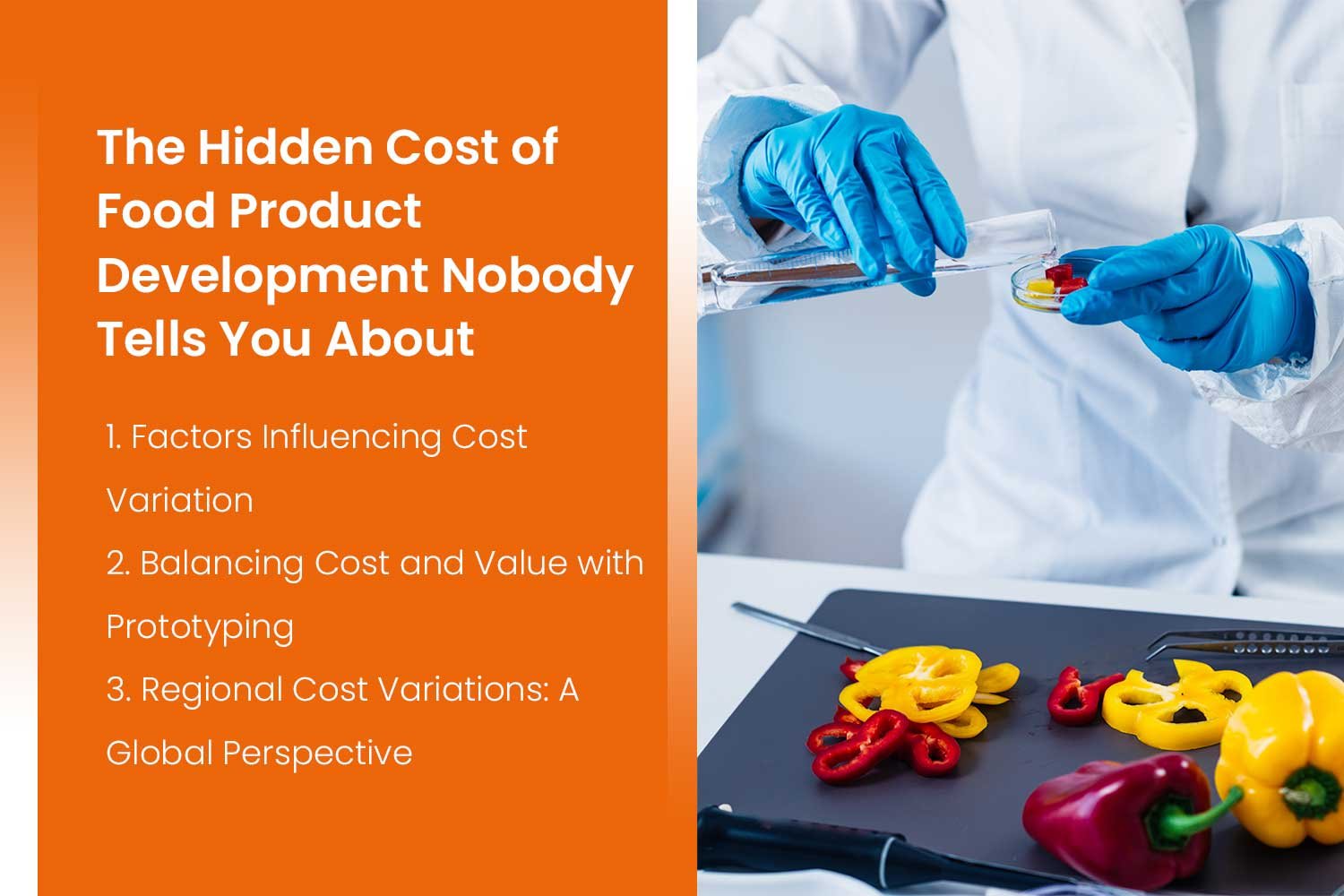
The Hidden Cost That Nobody Tells You About
- Iteration and Tweaks: Rarely does a product hit the mark on the first try. Every change, whether to flavour, texture, or packaging, adds to your timeline and budget.
- Minimum Order Quantities: Ingredient suppliers and packaging vendors often require you to buy more than you need for initial runs, tying up cash in inventory.
- Testing and Validation: Food safety, shelf life, and sensory testing are non-negotiable and can add thousands to your development bill.
- Branding and Design: Creating compliant, attractive packaging and labelling is more expensive than most first-timers expect
Why Costs Vary So Much
Your total product development cost in India depends on:
- Functional or premium ingredients
- Special claims (sugar-free, high protein, vegan)
- Export requirements
- Shelf-life duration
- Number of reformulations
- Packaging complexity
More innovation = more R&D = higher cost.
Regional Cost Differences
In India, basic product development may cost ₹1.5-5 lakh. and in the US or Europe, similar development can cost $15,000-$40,000 due to:
- Higher lab fees
- Regulatory complexity
- Labour costs
Even within India, metro cities may have slightly higher food manufacturing costs due to infrastructure and sourcing differences.
It’s Not Just About Taste, It’s About Strategy!
Your product may taste great, but if it doesn’t tick the boxes on stability, compliance, scalability, and consumer appeal, it won’t last. To get the best services and perfect cost optimization choose Foodsure.
Whether you’re developing a functional beverage, a snack bar, or a clean-label sauce, planning your cost of food product development structure is just as important as the product itself. Contact Foodsure to get the best results, call at +91 8130404757

FAQs
Q1. What is the average cost of developing a food product in India?
Basic product development cost in India starts around ₹1.5 lakh and increases based on complexity and functionality.
Q2. What does food product R&D cost typically include?
It includes formulation trials, ingredient testing, lab validation, nutritional analysis, and compliance checks.
Q3. How much does it cost to launch a food product fully?
Including development, packaging, compliance, and marketing, the cost to launch a food product may range from ₹3 lakh to ₹20 lakh+.
Q4. Why is shelf-life testing important in food manufacturing costs?
Retailers require validated shelf life to ensure safety and product stability.
Q5. Does packaging significantly affect the food startup cost breakdown?
Yes, food-grade packaging, labelling compliance, and design can add ₹50,000-₹3,00,000.
Q6. Why do functional foods cost more to develop?
They require advanced R&D, specialised ingredients, and additional testing for claims.
Q7. Can I reduce food development costs by skipping trials?
Skipping trials increases the risk of failure, reformulation, or recall, often costing more later.
Q8. What hidden costs should food startups expect?
Minimum order quantities, reformulations, regulatory delays, and unexpected testing requirements.
Q9. Does export increase food manufacturing cost?
Yes, due to added certifications, documentation, and stricter compliance norms.
Q10. How should startups plan their food development budget?
Create a detailed cost breakdown covering R&D, compliance, manufacturing, packaging, and launch, plus contingency funds.