
Moving a favorite recipe from a home kitchen to commercial manufacturing is an exciting step for any food entrepreneur. But to scale recipe for commercial manufacturing is more challenging than just multiplying ingredients. It needs proper attention to how ingredients work, the adjustments of the process, the capabilities of the equipment, and food safety standards. This guide will cover all the necessary steps that are needed for easy and smooth scaling up for commercial manufacturing.
Why Scaling Up For Commercial Manufacturing Is More Than Just Multiplication?
At first, it may look that increasing a functional recipe’s yield is as simple as multiplying each ingredient by the correct batch size. In reality, the way ingredients interact and respond to heat and mixing changes as batch size grows.

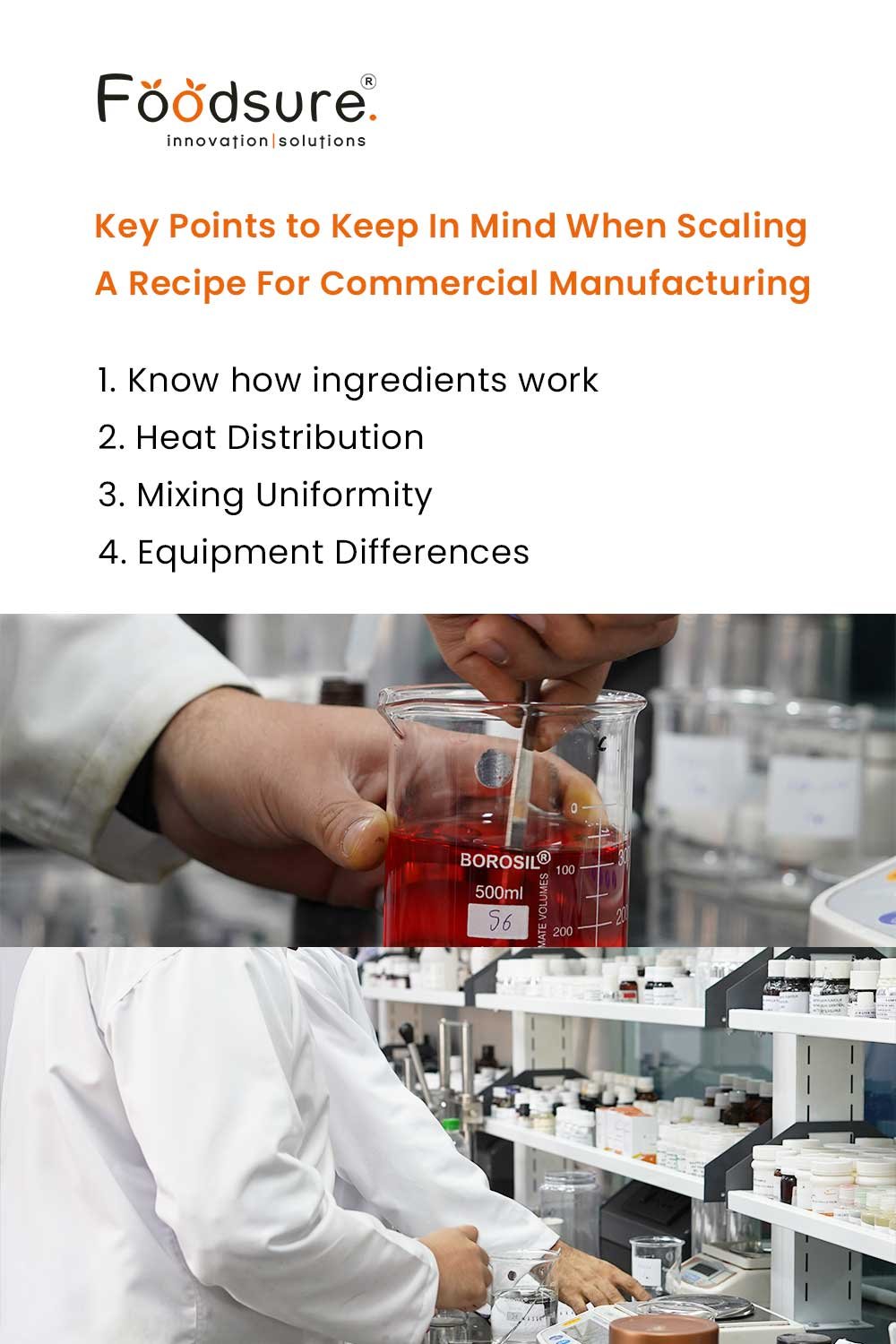
Key Points to Keep In Mind When Scaling A Recipe For Commercial Manufacturing
- Know how ingredients work: Some ingredients, like baking agents, thickeners, and spices, don’t always scale evenly and properly. Their effects can become stronger or weaker, so adjustments are needed.
- Heat Distribution: Larger batches heat differently, which can impact cooking times, texture, and safety.
- Mixing Uniformity: Getting even mixing becomes more challenging with bigger volumes, which can affect flavor and texture consistency.
- Equipment Differences: Commercial kitchen machines work differently from home appliances, influencing how ingredients combine and cook.
Challenges To Scale Recipe For Commercial Manufacturing
Scaling up for commercial manufacturing is challenging for food startups. These challenges can even fail your product before the market launch. The challenges in scaling up a recipe for commercial manufacturing are:
- Ingredients are not consistent
- Differences in processes
- Flavor is not balanced properly
- Texture and stability are not consistent
- Not able to meet the shelf life
- Food Safety and compliance issues
- Equipment Limitations

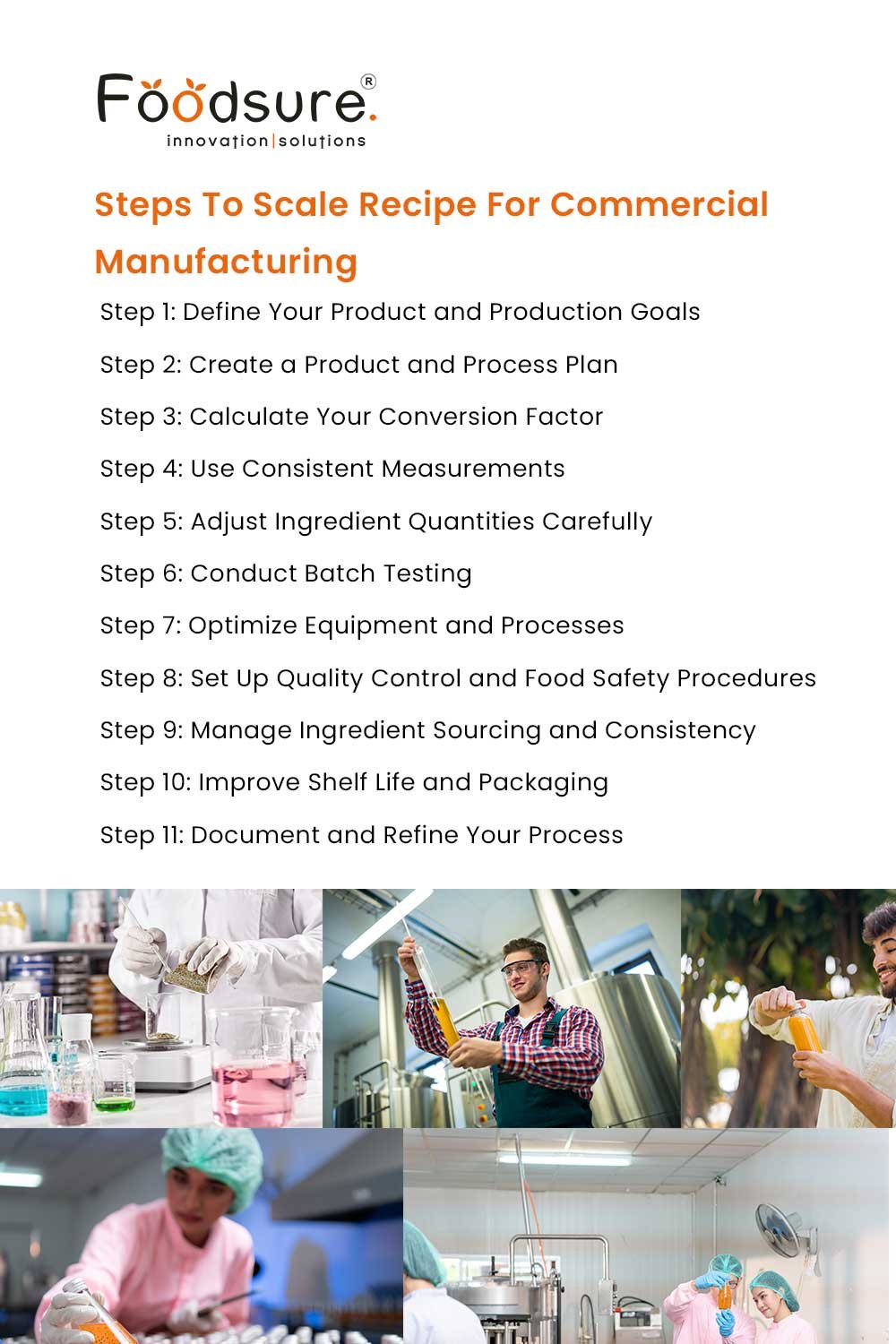
Steps To Scale Recipe For Commercial Manufacturing
Step 1: Define Your Product and Production Goals
Before scaling up for commercial manufacturing, know your goals properly. What batch size do you want? What packaging will you use? What quality standards do you need to meet? Knowing your goals helps you select the right equipment, organize your commercial kitchen setup for food businesses, and plan for growth.
Step 2: Create a Product and Process Plan
List your variations of your product, types of packaging, and the volumes of production you want in your food recipe. This plan helps you meet challenges and build a flexible production system that can grow with your business.
Step 3: Calculate Your Conversion Factor First
To start scaling up recipe for commercial manufacturing, calculate your industrial food recipe conversion factor first:
Conversion Factor = Desired Batch Yield / Original Recipe Yield
For example, if your original recipe makes 10 liters and you want 1,000 liters, your conversion factor is 100. Use this as a baseline for adjusting the amounts of ingredients. Remember, batch size conversion for food production is the most important step when you are scaling up a recipe for commercial manufacturing.
Step 4: Use Consistent Measurements In Your Food Recipe
Accuracy is most important in commercial food product development. Convert all amounts of ingredients to weight (grams or kilograms) rather than volume. Weighing ingredients ensures accuracy and repeatability, especially in large batches. Work with food product scale-up consultants for your business to get help on proper and consistent measurements.
Step 5: Adjust Ingredient Quantities Carefully
Most ingredients can be multiplied by the conversion factor, but some need special attention:
- Spices and Seasonings: These ingredients can become too strong if scaled directly. Increase them by about 80-90% of the factor and adjust after tasting. Spice and seasoning scaling experts will help you adjust their quantities properly.
- Baking Agents: Baking powder, yeast, and similar ingredients need careful attention to get the right texture in your food recipe formulation.
- Thickeners and Emulsifiers: Their performance can change with batch size, so test different amounts to get the proper consistency in food formulation.
Step 6: Conduct Batch Testing Of Your Food Recipe Formulation
Before full production of your recipe, make a smaller pilot batch using your adjusted recipe. This will help you to:
- See how ingredients work at a larger scale
- Proper mixing times, temperatures, and cooking durations
- Spot and fix issues with texture, flavor, or stability
Pilot batch testing for commercial production helps avoid costly mistakes and makes sure that the quality of your food recipe is consistent.
Step 7: Optimize Equipment and Processes
Commercial kitchen equipment, like large mixers, kettles, ovens, and packaging machines, works differently from home tools. Check that your equipment can handle your batch size and product requirements:
- Mixing: Larger mixers need more time or different speeds to mix ingredients evenly and properly.
- Heating: Steam-jacketed kettles provide even heat for big batches, which helps in reducing the risk of burning.
- Cooling: Blast chillers cool products quickly to keep them fresh and safe.
- Packaging: Automated lines speed up bottling and sealing while reducing contamination.
Get in touch with the equipment suppliers or commercial manufacturing consultants to find the best machines for your needs.
Step 8: Set Up Quality Control and Food Safety Procedures
Larger batches mean more risks of inconsistency and contamination. Put strong quality control measures in place:
- Standard Operating Procedures (SOPs): Write clear instructions for every step, from weighing ingredients to packaging.
- Regular Testing: Check taste, pH, moisture, and microbial safety.
- Follow Regulations: Meet local and national food safety rules like HACCP, FDA, or FSSAI.
Keep detailed records and monitor every batch to catch problems early.
Step 9: Manage Ingredient Sourcing and Consistency
Buying ingredients in bulk can introduce variations. Work with trusted suppliers or recipe formulation experts and set clear quality standards. Commercial recipe formulation services from experts will help you in ingredient sourcing and its proper consistency.
Step 10: Improve Shelf Life and Packaging Of Your Food Recipe
Larger production runs mean longer storage times. Test your product’s shelf life under different conditions. Choose packaging that protects against light, oxygen, and moisture. If needed, use preservatives or special packaging to keep your product fresh.
Step 11: Document and Refine Your Process
Keep proper records of ingredients, batch formulas, process settings, and quality checks. This helps with traceability, compliance, and ongoing improvements. Use feedback from pilot and early production runs to tweak your recipe and process.
Tips From Recipe Formulation Experts
- Work with Specialists- Food formulation experts will help you solve tricky problems and improve your product.
- Consider Co-Manufacturers- If you don’t have large-scale equipment, partner with co-manufacturers or food formulation consultants who will provide production facilities and technical support.
- Plan for Growth- Functional food manufacturing services will help you in choosing equipment and layouts that can handle bigger batches as your business expands.

Read More: Tips For Effective Food Recipe Formulation
Your Time To Scale Recipe For Commercial Manufacturing Starts Now!
You’ve put in the work to perfect your recipe, now it’s time to share it with the world. If you’re dreaming of seeing your product on store shelves or just curious about what’s possible, this is your moment. Take the first step to scale recipes for commercial manufacturing with the best food formulation experts and watch your passion grow into a successful business. Reach out to Foodsure on +91 8130404757