If you’re stepping into the world of food product development or just even thinking of making your own food brand, you might have heard about food scientists and food technologists. At first glance, the titles might seem interchangeable, but don’t be confused. These two roles may work side by side in the food industry, but they bring very different strengths to the table.
Here’s the truth: understanding the difference is not just technical; it can define the success of your food brand. If you are planning to create a clean-label snack, a functional beverage, or scale your grandma’s legendary recipe, knowing who to bring on board, a food technologist or a food scientist, can save you time, money, and a whole lot of frustration.
This is the complete blog for you, where we’ll take you beyond the buzzwords. Know about what these professionals really do, how they shape your product from idea to shelf, and why choosing the right expert matters more than ever.
Who Is a Food Scientist?
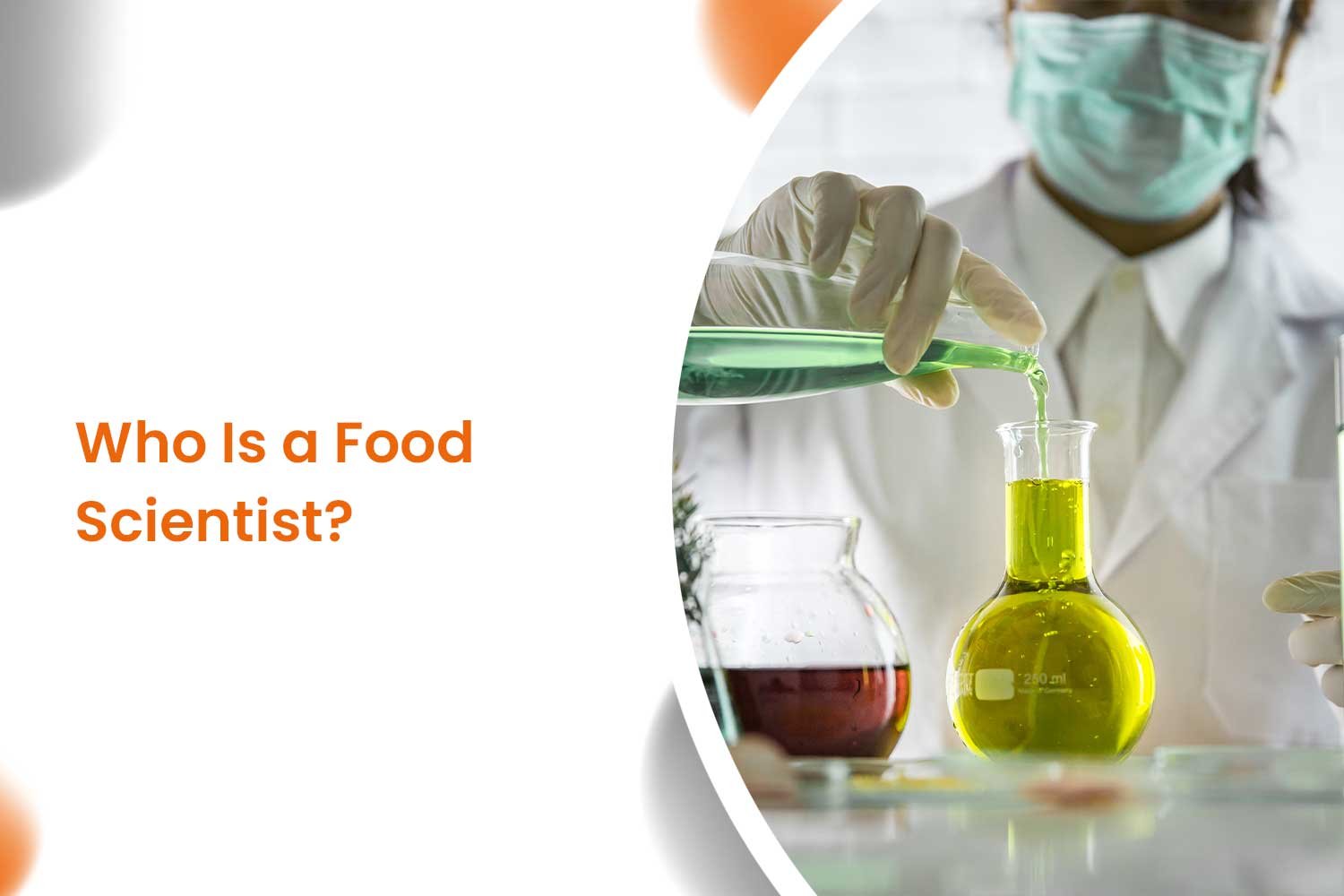
A food scientist is the architect behind food innovation. They focus on the why and how of food, from chemical structures and ingredient interactions to nutrition and safety.
They typically work on:
- Food chemistry (how ingredients react with each other)
- Food microbiology (spoilage, bacteria, safety)
- Nutrition science (macros, micros, calorie profiling)
- Shelf-life science and preservation
- Lab-scale formulation and prototyping
Example: When a large brand wants to reduce sugar in its chocolate without affecting taste or shelf life, it’s the food scientist who experiments with natural sweeteners, studies stability, and ensures the texture remains consistent over time. They think at the molecular level.
Who Is a Food Technologist?
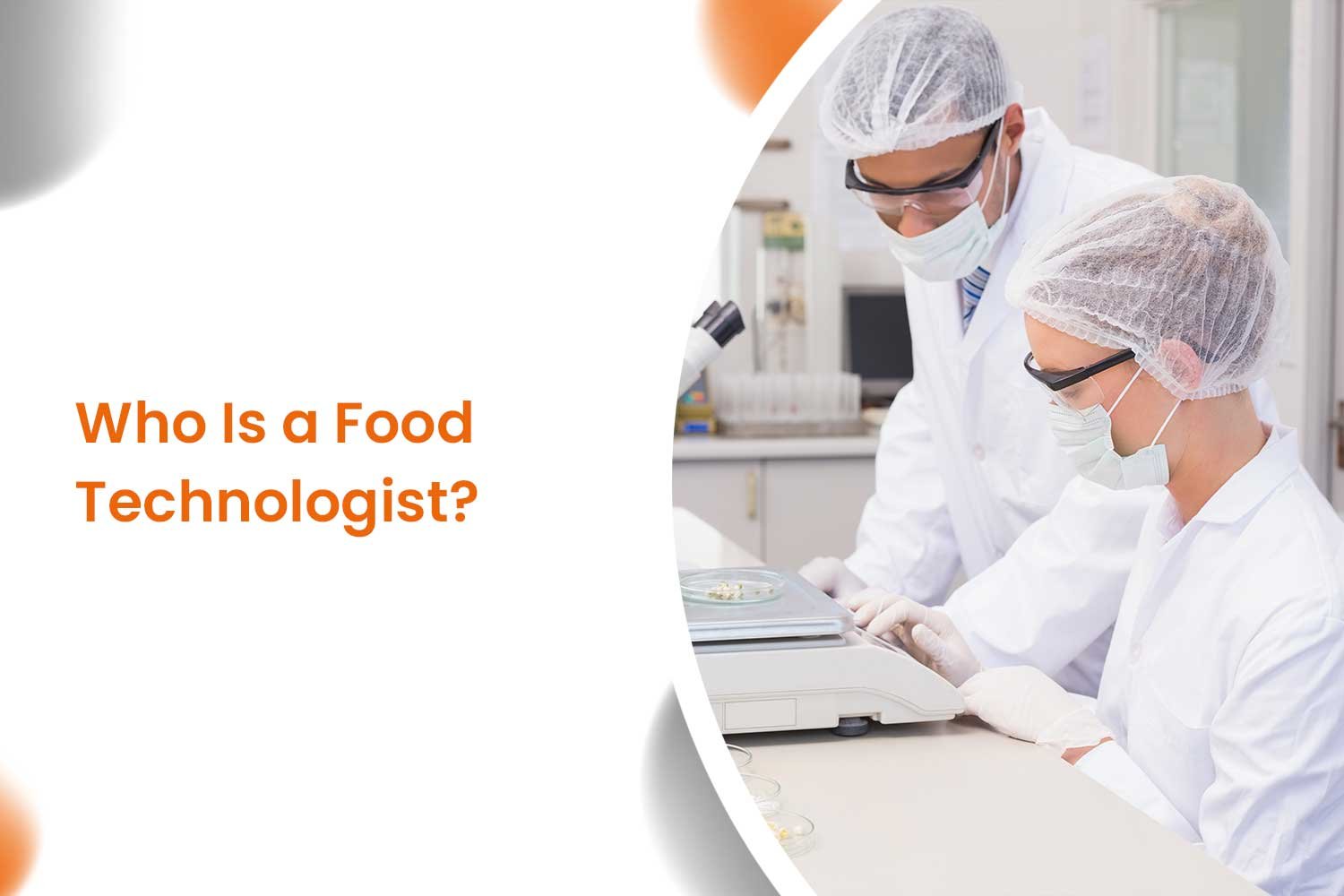
A food technologist brings the idea to life on the production floor. Their role revolves around processing, standardisation, equipment handling, and ensuring the product can be manufactured consistently at scale.
They focus on:
- Converting lab recipes into large-scale production
- Selecting and optimising machinery
- Batch consistency and quality control
- Food safety systems (HACCP, GMP)
- Regulatory compliance and documentation
Example: If a startup develops an oat milk recipe in a lab, the technologist decides how to produce it in 1,000 litre batches, which machines to use, and how to maintain hygiene and stability during manufacturing.
Key Differences at a Glance
| Aspect | Food Scientist | Food Technologist |
| Core Role | Research & Innovation | Process & Implementation |
| Primary Focus | Formulation, Nutrition, Safety | Machinery, Production, QA |
| Education Background | B.Sc/M.Sc in Food Science, Biotech, Chemistry | B.Tech/M.Tech in Food Technology, Processing |
| Work Environment | R&D labs, Innovation centres | Production facilities, Manufacturing plants |
| Tools Used | Lab tools, spectroscopy, chromatography | Mixers, ovens, dryers, and automated lines |
| Key Output | New recipes/formulas, prototypes | Market-ready packaged food |
| Industry Demand | High in research-based firms & FMCGs | High in factories, contract manufacturing, and startups |
Food Technologists vs Food Scientists: Their Role as Formulators
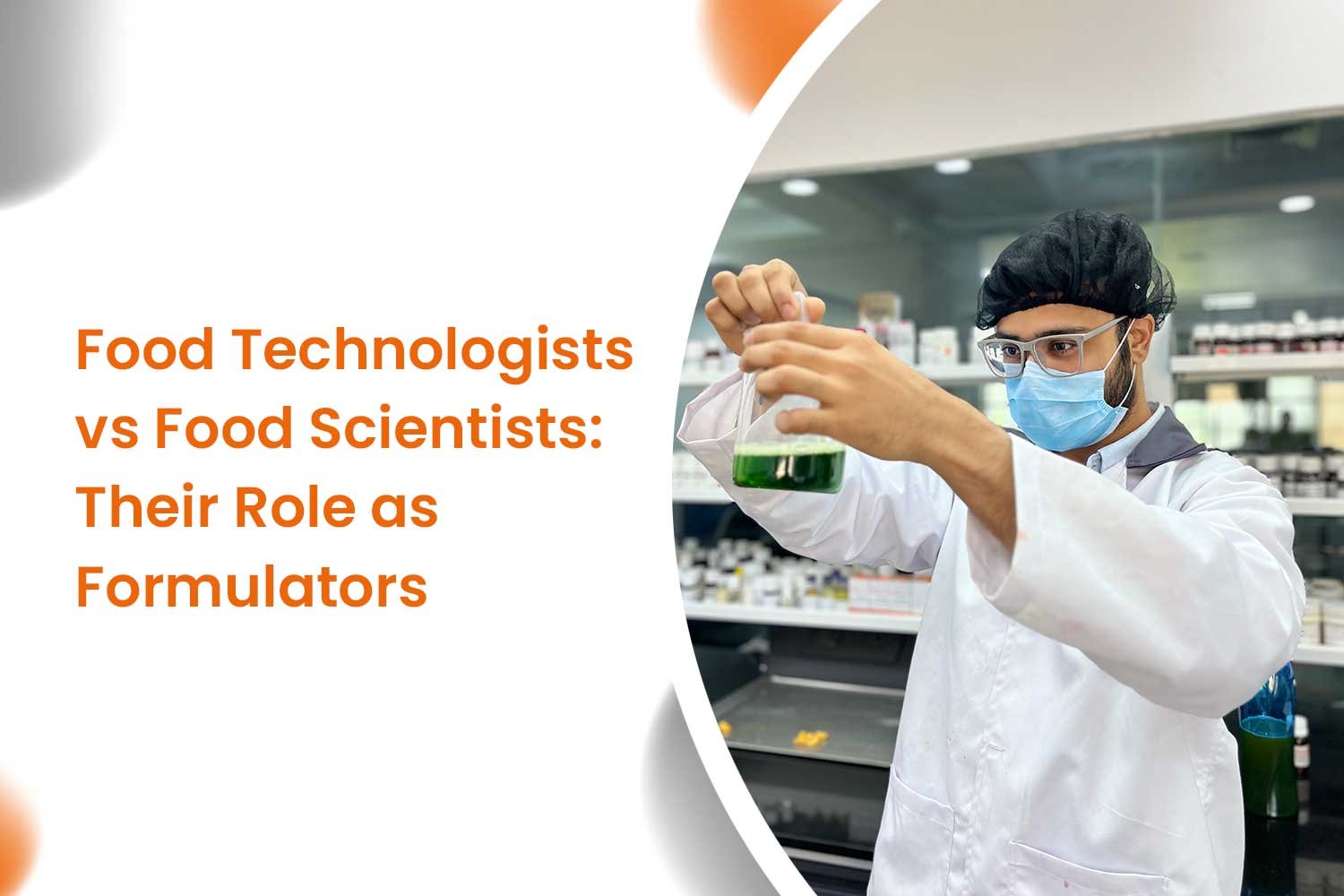
Food Scientist as a Formulation Expert:
The food scientist formulates from a molecular perspective. For example, if you’re creating a vegan mayonnaise, a food scientist will explore how to replicate emulsification using plant-based proteins and stabilisers, ensuring consistency, taste, and shelf life.
They explore:
- Protein-starch-fat interactions
- pH and enzymatic behaviour
- Ingredient replacement with functionality preserved
- Nutritional profiles backed by data
Food Technologist as a Product Developer:
Once the formula is validated, the technologist steps in to make it feasible for manufacturing. They look at:
- Which equipment suits the product
- How to maintain quality during bulk production
- Cost-effectiveness of ingredients
- Storage, logistics, and consumer-packaging interface
Together, they bridge science and business; one crafts the formula, the other makes it market-ready.
Where Do They Work?
Both roles are found across the food value chain, but in very different contexts.
Food Scientists work in:
- R&D departments of FMCG brands (Amul, ITC, Britannia)
- Innovation labs in wellness startups (Oziva, Curefoods)
- Ingredient companies (Tate & Lyle, DSM)
- Government labs (ICAR, CFTRI)
- Nutraceutical firms
Food Technologists work in:
- Food processing units and factories
- Contract manufacturing setups
- Machinery and packaging companies
- Quality testing labs
- Regulatory and auditing bodies
Industry Insights
- PepsiCo’s Global R&D Team is packed with food scientists who research new ingredients for taste, performance, and longer shelf life. When developing baked chips or zero-calorie sodas, they innovate using cutting-edge nutritional science.
- On the other hand, Haldiram’s manufacturing team employs food technologists to replicate the same bhujia flavour in every 1-tonne batch using semi-automatic lines, precise temperature control, and strict hygiene protocols.
- Indian startups like YogaBar or Slurrp Farm rely on food scientists for formulation and food technologists for execution, ensuring their millet-based cookies or protein bars are both healthy and scalable.
Why Both Roles Must Work Together
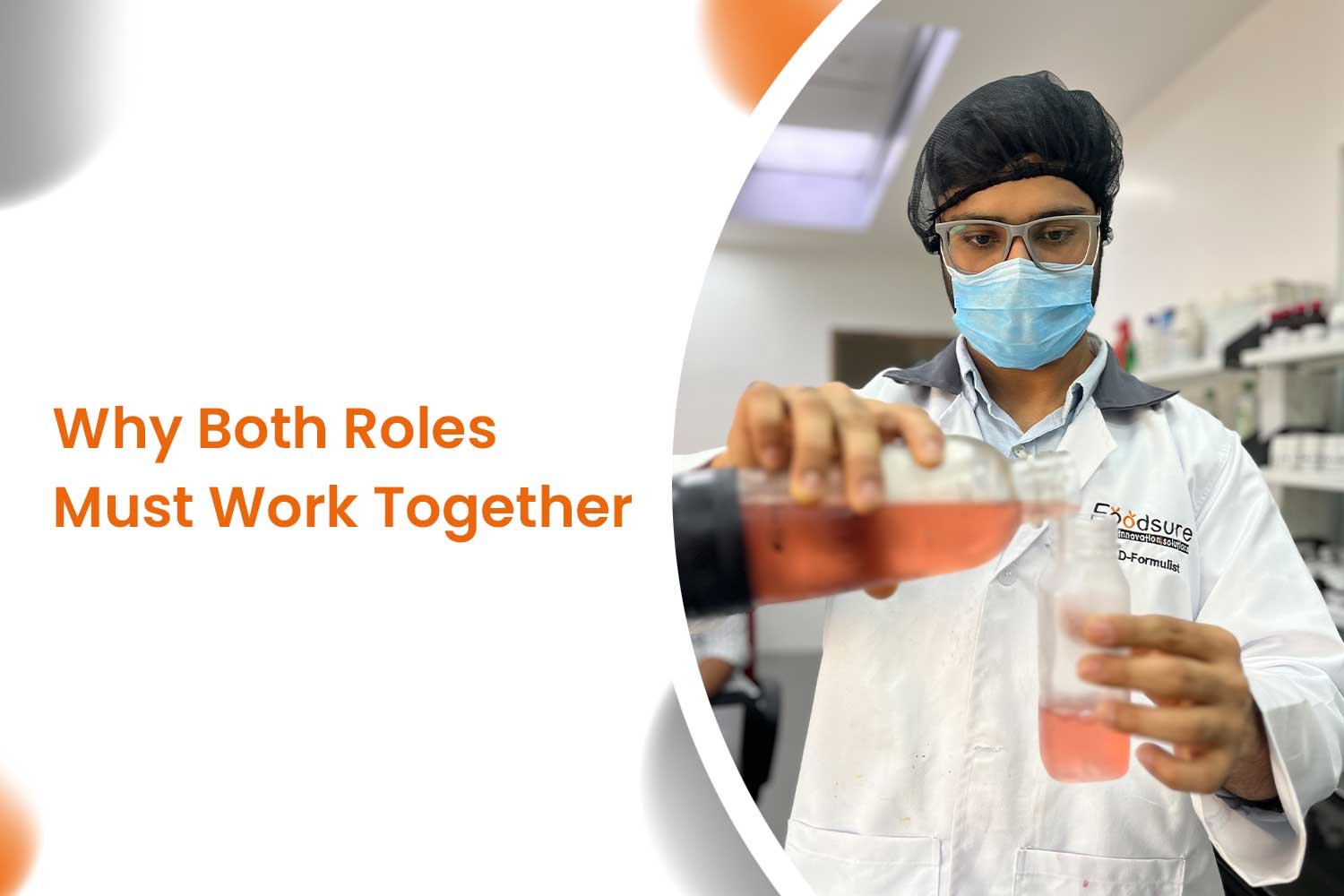
Product success = great idea + flawless execution
- A food scientist may create a fantastic vegan ghee substitute, but it’s the food technologist who ensures it maintains flavour and consistency in a 1000-litre batch every day.
- A food technology consultant might find a way to reduce wastage in an energy bar line, but without the food scientist’s formula knowledge, the texture may change.
They are two sides of the same coin, and the smartest food brands combine both roles right from idea to product shelf.
Top Skills Required
For Food Scientists:
- Sensory analysis
- Food chemistry
- Microbiology
- Shelf life testing
- Data analysis
For Food Technologists:
- HACCP, GMP, and FSSAI understanding
- Machine handling
- Recipe standardisation
- Production planning
- Troubleshooting
Why India’s Top Food Brands trust Foodsure?
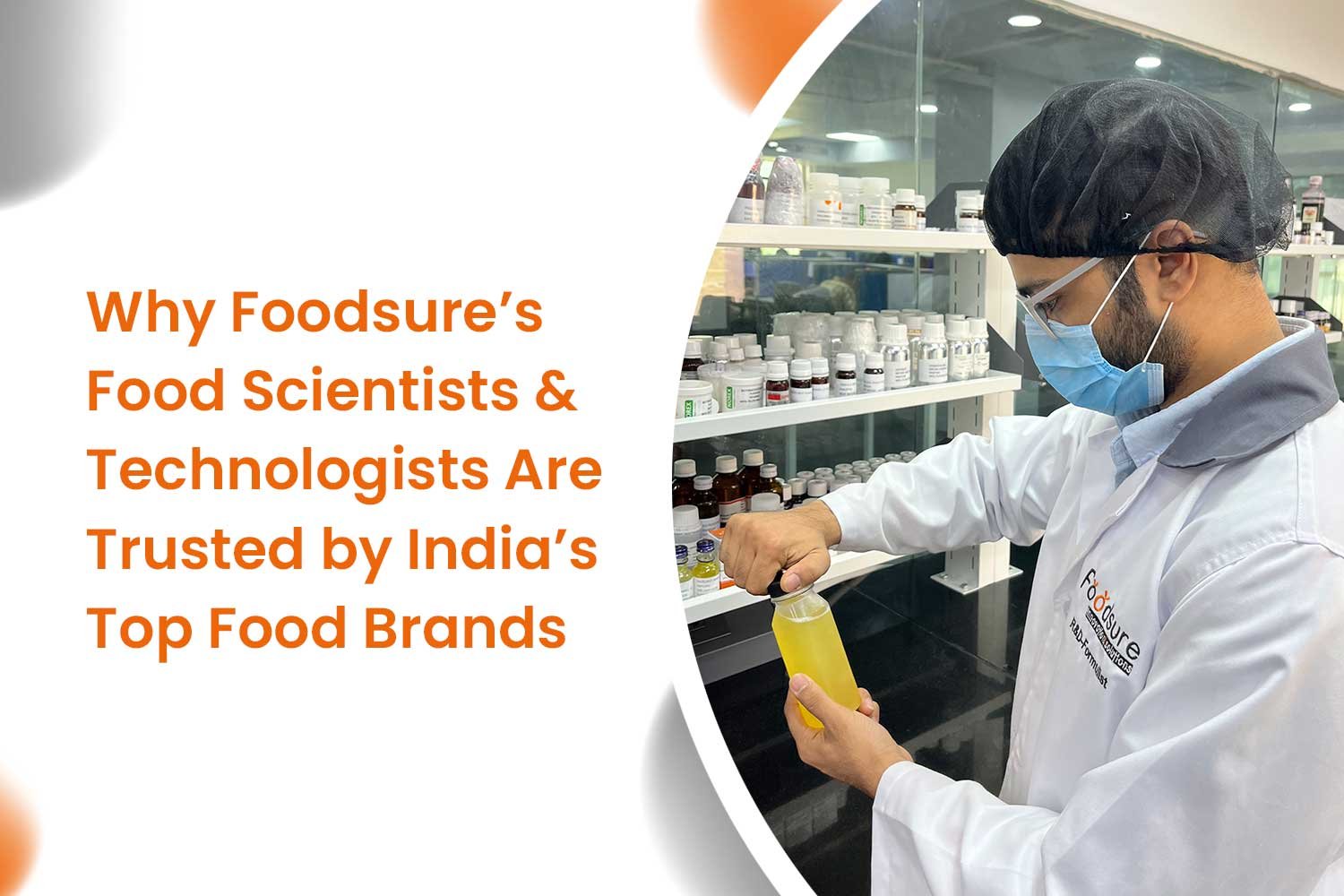
Got an idea for a snack, a drink, or maybe a new roasted dry fruit mix? That’s where we come in.
At Foodsure, our team of food scientists and food technologists knows the ins and outs of turning a food concept into something real and delicious. We don’t just follow a formula. We work closely with you to develop a product that’s both tasty and safe, and ready for the market.
You bring the idea. We help you with:
- Creating the right recipe, whether it’s healthy, indulgent, or both
- Choosing the best ingredients, processes, and packaging options
- Making sure your product meets all safety and quality standards
- Enhancing shelf life, taste, and texture (without compromising your vision)
From your very first sample to your final packaging, we stay with you at every step. And it’s not just theory, we’ve helped various brands.
We are the trusted food formulation company in India. We aim to create something you can proudly call your own.
Food Technologist vs Food Scientist
The difference between a food scientist and a food technologist is not about who’s better; it’s about what the product needs and at what stage.
If you’re dreaming of launching the next best protein drink or millet snack, you’ll need a food science expert to get the nutrition and flavour right. But to take that formula to the supermarket shelf? You’ll need a food technology expert to handle the processing, packaging, and compliance.
Time is ticking, and our food technology consultant can help you on your journey. Calling all the startup founders, a food business investor, etc., understanding these roles will give you a clearer, smarter path forward in the growing world of food innovation.
Join Hands With Foodsure For Food Innovation. Call at +91 8130404757 today!
FAQs
Q1. What is a food technologist?
An expert who designs and standardises food items to be manufactured in safe and scalable conditions and to guarantee consistency and quality.
Q2. What does a food scientist do?
A scientist involved in the study of food chemistry, nutrition, and safety to develop stable and innovative formulations.
Q3. What is the main difference?
A food scientist is concerned with formulation and research. A food technologist is concerned with production and application.
Q4. Is food technology a good job?
Yes. The need for skilled technologists is also increasing with the increment of food startups and packaged foods.
Q5. Do startups need both roles?
Ideally, yes. Both scientific validation and production feasibility lower the risks associated with launching.