Consumers today expect the food they eat to be safe, clean, and high quality. This is where food hygiene becomes essential. From handling raw ingredients to preparing, packaging, and delivering food, proper hygiene practices ensure that food remains safe for consumption.
In simple terms, it refers to the practices and conditions required to maintain food safety and prevent contamination during food handling, preparation, processing, and storage. Understanding what is food hygiene helps food businesses maintain regulatory compliance, protect consumer health, and build long-term trust.
In this guide, we explain the it’s definition, practical hygiene practices, standards, risks, and how it connects to Food Product Development and food businesses.
What Is Food Hygiene?
The food hygiene definition refers to the set of practices used to maintain cleanliness, prevent contamination, and ensure food safety during food preparation, storage, and distribution.
In commercial food systems, food hygiene preparation and preservation includes several processes such as:
- Safe handling of raw ingredients
- Proper cooking and temperature control
- Clean equipment and facilities
- Safe packaging and storage
- Hygienic transportation and delivery
These practices help reduce the risk of foodborne diseases, spoilage, and contamination in both small kitchens and large food production facilities.
Want to optimise your Food Business? Request a free consultation!
Explore Our Exclusive Food Product Development
Important Updates: Innovations in Food Industry
Key Elements of Food Hygiene
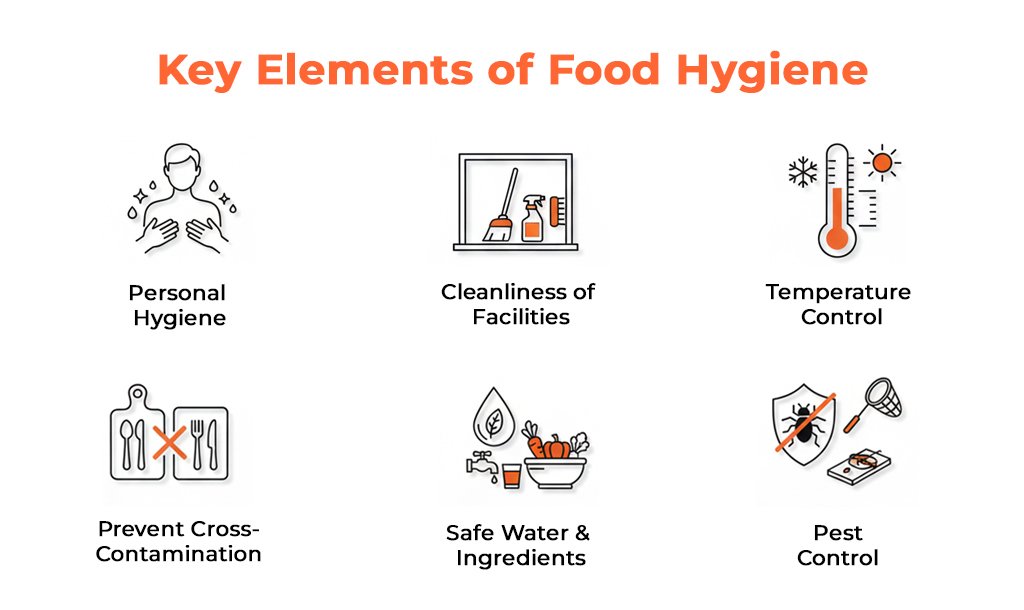
1. Personal Hygiene
Food handlers must maintain high levels of cleanliness while handling food.
Important practices include:
- Washing hands before and after handling food
- Wearing clean protective clothing like gloves, aprons, and caps
- Keeping nails short and clean
- Covering cuts with waterproof dressings
- Avoiding food handling when sick
These steps are fundamental to preventing contamination.
2. Cleanliness of Facilities
A clean workspace is essential for maintaining food safety.
Best practices include:
- Cleaning food preparation surfaces before and after use
- Using food-grade sanitizers
- Maintaining cleaning schedules and records
Food production facilities should also follow proper sanitation procedures regularly.
3. Temperature Control
Temperature plays a crucial role in food hygiene preparation and preservation because bacteria grow rapidly within certain temperature ranges.
Recommended temperature ranges:
- Cold foods: 0°C – 5°C
- Hot foods: Above 60°C
- Danger zone: 5°C – 60°C
Food should spend minimal time in this danger zone to prevent microbial growth.
Example Temperature Log:
| Food Item | Storage Temp (°C) | Checked By | Time |
|---|---|---|---|
Milk | 4 | John | 09:00 |
| Cooked rice | 65 | Sara | 13:30 |
| Vegetables | 3 | Mike | 11:15 |
4. Prevent Cross-Contamination
Cross-contamination occurs when harmful bacteria transfer from one food or surface to another.
Prevention methods include:
- Keeping raw and cooked foods separate
- Using separate cutting boards and utensils
- Storing raw foods below ready-to-eat foods
- Avoiding allergen contamination
These steps are especially important in food production environments.
5. Safe Water & Ingredients
Food hygiene also depends on ingredient quality.
Key requirements include:
- Using potable water for food preparation
- Purchasing ingredients from approved suppliers
- Regularly checking ingredient quality
Ingredient safety plays a major role in food product development and manufacturing.
6. Pest Control
Pests are a major source of food contamination.
Effective pest control includes:
- Regular facility inspections
- Proper waste management
- Sealed storage areas
- Covered waste bins
Regular pest monitoring reduces contamination risks.
Food Hygiene Standards: FSSAI & International Practices
| Standard / Requirement | What It Covers |
|---|---|
Good Hygiene Practices (GHP) | Cleanliness, personal behavior, and sanitation in food handling |
HACCP Implementation | Identifying hazards and controlling critical points in production |
| Documentation | Records of cleaning, temperature logs, pest control, and staff training |
| Facility Design | Separate zones for raw and cooked foods, handwashing stations, ventilation |
Daily Food Hygiene Checklist
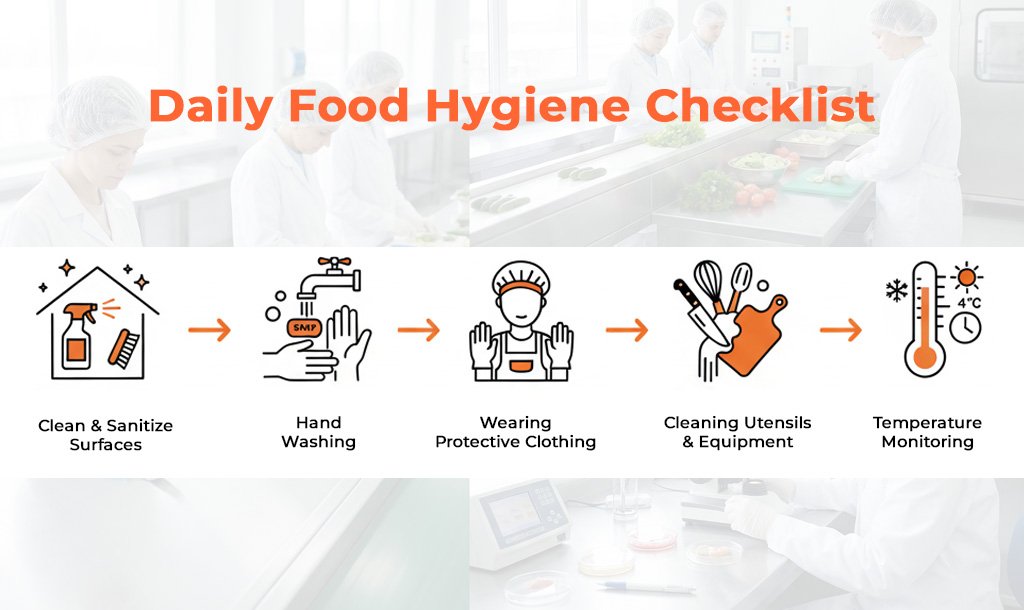
Maintaining hygiene requires consistent monitoring.
- Clean and sanitize food contact surfaces
- Wash hands before food preparation
- Wear protective clothing like gloves and hair nets
- Clean utensils before reuse
- Maintain temperature logs
- Store raw foods below cooked foods
- Cover and empty waste bins regularly
- Conduct pest control inspections
Daily checklists help maintain consistent food hygiene standards.
Hygiene in Food Packaging and Labelling
Food hygiene extends beyond preparation to packaging and distribution.
Key requirements include:
- Using food-grade packaging materials
- Protecting products from moisture and contamination
- Providing clear labeling information
Learn more about: Food Packaging and Labelling Regulations
Labelling Essentials
- Product name
- Ingredient list
- Allergen declaration
- Batch number
- Manufacturing and expiry dates
- Veg / Non-veg symbol
These details support transparency and compliance with food safety regulations.
Cleaning & Sanitation Procedures
Effective sanitation is essential for safe food operations.
Standard cleaning process:
- Remove visible waste
- Wash with detergent
- Rinse with clean water
- Apply food-grade sanitizer
- Dry using a clean cloth
Maintaining sanitation records helps businesses track hygiene compliance.
Food Hygiene in Food Production Facilities
Large-scale food operations must maintain strict hygiene protocols.
Facility Layout Tips
- Separate raw and cooked food zones
- Install handwashing stations
- Use easy-to-clean floors and walls
- Maintain proper ventilation
Equipment Hygiene
- Clean equipment before and after use
- Follow manufacturer cleaning guidelines
- Schedule regular maintenance
These measures help maintain safe food production environments.
Common Food Hygiene Risks
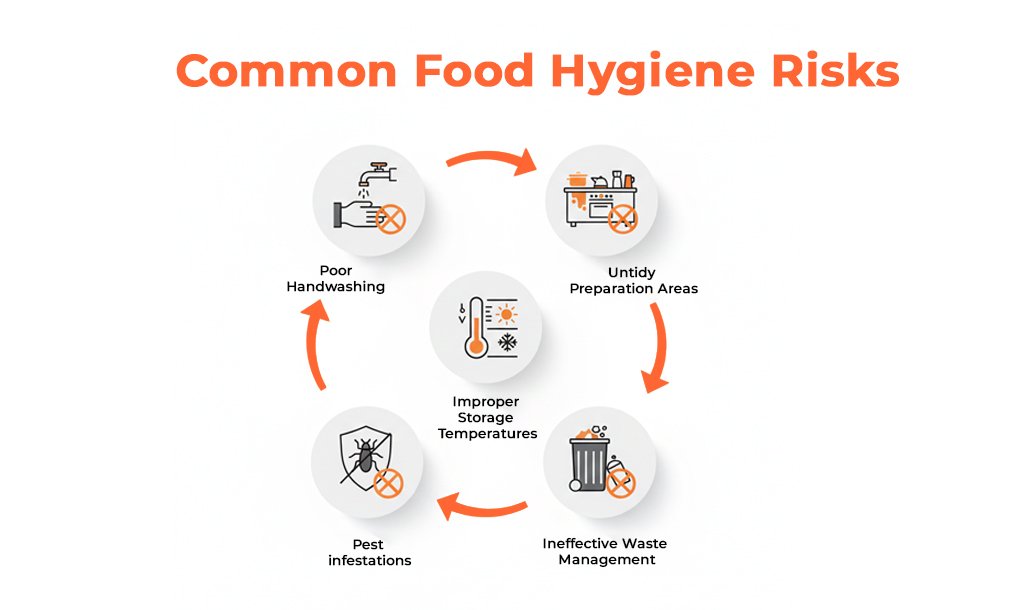
Some common risks include:
- Poor handwashing
- Untidy preparation areas
- Improper storage temperatures
- Pest infestations
- Ineffective waste management
Solution: Regular audits and surprise inspections.
FSSAI Hygiene Rating Scheme
The FSSAI Hygiene Rating Scheme helps consumers identify safe food establishments.
- Obtain FSSAI license
- Train Food Safety Supervisor
- Pass hygiene audit by authorized agency
- Display hygiene rating certificate for customers
Food Hygiene Mistakes to Avoid
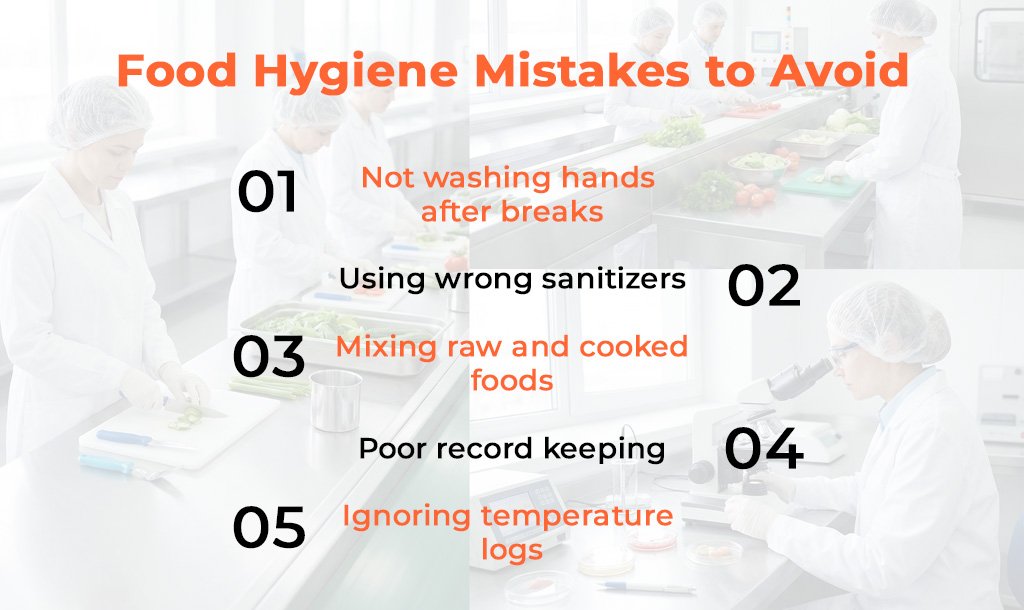
Businesses should avoid common hygiene mistakes such as:
- Not washing hands after breaks
- Using wrong sanitizers
- Mixing raw and cooked foods
- Poor record keeping
- Ignoring temperature logs
Example Hygiene SOP for Food Businesses
| Task | Frequency | Responsible |
|---|---|---|
Handwashing checks | Every shift | Supervisor |
Surface cleaning | After each batch | Food handler |
| Waste removal | Twice daily | Cleaning staff |
| Temperature log update | Every 2 hours | Floor manager |
Food Hygiene and Food Product Development
Food hygiene impacts product quality, shelf life, and customer trust. Proper hygiene practices during Food Product Development ensure the final product is safe, scalable, and regulatory-compliant.
- Concept & recipe creation
- Hygiene-conscious pilot production
- Packaging & labelling with proper standards
- Full-scale production with continuous hygiene monitoring
- Distribution & retail with safe handling
Suggested Read: New Food Business Ideas (2026)
Final Takeaway: Why Food Hygiene Is Essential
Food hygiene protects both consumers and food businesses.
Key benefits include:
- Reduce contamination risks
- Improve product quality
- Comply with food safety regulations
- Build customer confidence
- Ensure long-term business success
Get Expert Food Hygiene Guidance
Keeping your food safe and your business compliant is easier with expert guidance. Foodsure provides practical food hygiene consultation to help kitchens, restaurants, and food businesses maintain high standards.
Why Choose Foodsure?
Foodsure helps food businesses by providing:
- Guidance on FSSAI Compliance and hygiene standards
- Customized advice for your food production, packaging, and operations
- Staff training in safe handling, cleaning, and sanitization
- Practical checklists and audits to reduce contamination risks
Partner with Foodsure’s food consultants to ensure your products are safe, our team will train yours, and your business stays compliant. Contact us today to improve your food hygiene and quality.
Get Expert Food Hygiene Guidance Today
FAQ’s
Q1: What is food hygiene?
Food hygiene means following practices that keep food safe and clean, like washing hands, cleaning surfaces, storing food properly, and controlling pests. Example: Kitchen staff washing hands before preparing meals.
Q2: Why is food hygiene important for businesses?
It keeps food safe for consumers, avoids fines, and builds trust with customers. Example: A cloud kitchen following FSSAI hygiene rules to maintain safety.
Q3: What are common food hygiene mistakes?
Not washing hands, mixing raw and cooked foods, ignoring temperature logs, or poor record keeping. Example: Storing raw eggs above ready-to-eat cakes can cause contamination.
Q4: How often should cleaning and sanitization be done?
Daily for surfaces, after every batch for equipment, and weekly review of cleaning logs. Example: Dairy plants sanitizing milk tanks after each production.
Q5: What is the danger zone in food storage?
The danger zone is 5°C – 60°C, where bacteria grow fast. Keep cold foods below 5°C and hot foods above 60°C. Example: Cooked rice left at room temperature can spoil quickly.