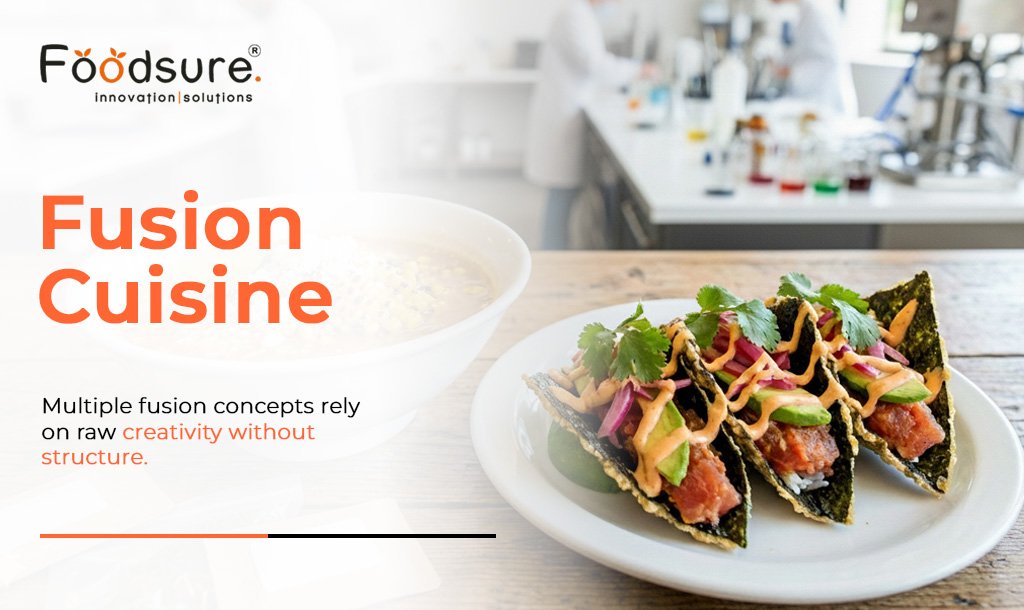
Fusion cuisine definition is where flavours meet imagination. Combining culinary traditions creates jaw-dropping dishes that inspire. The magic lies in balancing, bringing diverse ingredients and techniques together in a manner that feels effortless on the plate. To make that magic work, a thoughtful approach is needed that not only involves creativity but also some wise systems.
The Myth of Creative Chaos in Fusion Cuisine
Multiple fusion concepts rely on raw creativity without structure. Menus evolve based on the availability of the products, and Ingredients change based on taste or availability. Process stays in people’s minds rather than on paper, which works for a pop-up or a short period. It fails the moment you try to replicate the success.
Fusion cuisine should be given the liberty it deserves, which only functions if there are safety measures. Without them, quality becomes inconsistent, costs spike, and teams improvise their way through inconsistencies. What looks like artistic chaos is usually operational neglect.
If you want fusion cuisine to last, then talent alone is not enough. You need systems that support creativity instead of clashing with it.
Why Fusion Cuisine Breaks Without Systems
Fusion cuisine is harder than traditional concepts because complexity multiplies fast. That complexity turns into chaos without structure.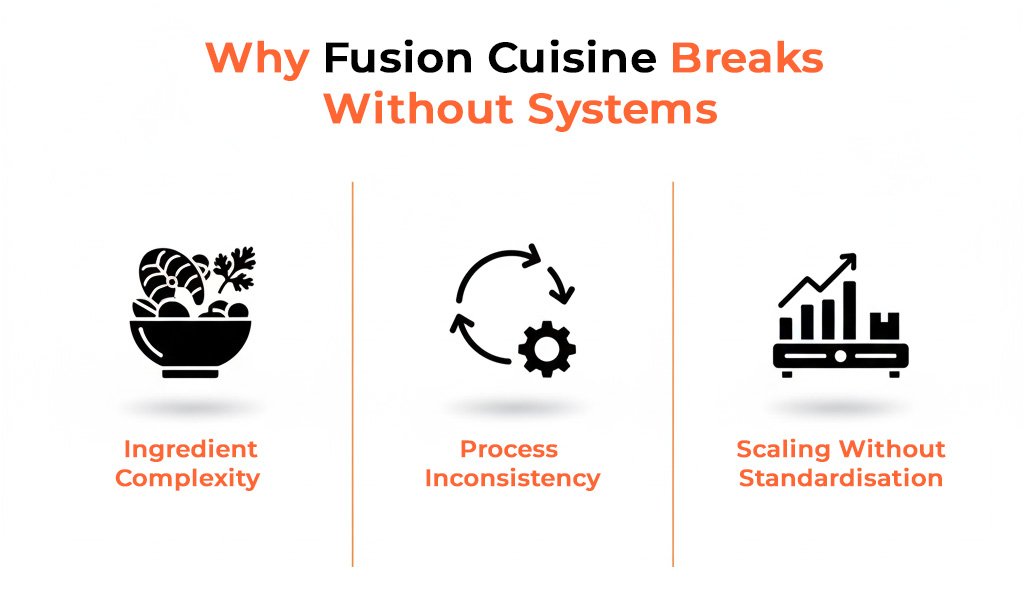
Ingredient Complexity
Fusion menus blend multiple culinary traditions. That leads to broader supplier networks, new ingredients, and inconsistent quality. When sourcing isn’t planned, teams make substitutions, flavour profiles drift, and costs increase, which nobody notices until margins disappear.
Process Inconsistency
Different techniques and prep standards have different expectations depending on who’s on shift. Without defined processes, execution depends on memory and the interpretation of the person. That’s not culture. That’s risk.
Scaling Without Standardisation
The first location works because the founders are everywhere. The second exposes every undocumented decision. The third magnifies them.
The comparison most operators miss:
- Creativity without systems leads to inconsistency
- Systems without creativity lead to bland food
- Systems plus creativity lead to repeatable excellence
If you want growth without chaos, operations have to mature alongside the menu. This is where concepts stall if leadership refuses to move past vibes.
Systems That Make Fusion Cuisine Scalable
Systems don’t kill creativity. They protect it. They make sure the best ideas survive contact with reality.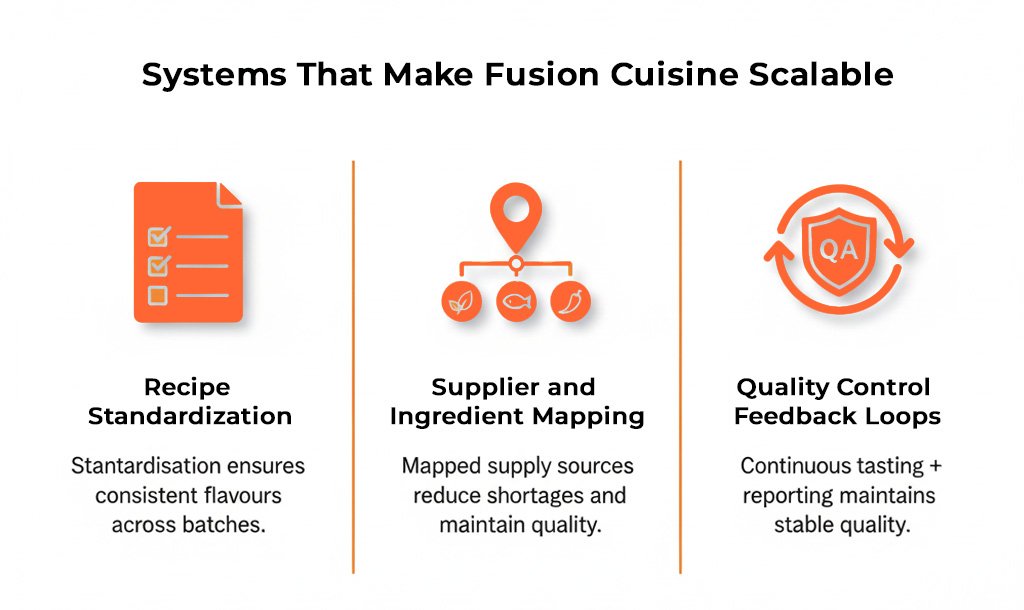
Recipe Standardization
Standardisation does not mean stripping personality. It is about summarising the non-negotiable aspects. Flavour benchmarks, preparation methods, and portion size. When recipes are documented properly, teams can execute the operations consistently while still leaving room for creativity in different places.
Supplier and Ingredient Mapping
Ingredient reliability is the main factor for fusion concepts to survive or fail. Being clear about suppliers, alternates, lead times, and acceptable substitutions prevents panic from making wrong decisions. It also gives purchasing leverage and protects menu integrity when supply shifts.
Proper mapping turns reactive sourcing into intentional.
Quality Control Feedback Loops
Usually, brands inspect quality once and assume that the product quality will remain the same. High-performing brands build continuous feedback loops, tasting protocols, line checks and data from customer feedback linked to execution, not opinions.
Systems catch drift early. They give teams clarity instead of guesswork.
When these elements function together, creativity stops being dependent and fragile; it becomes functional.
What High-Growth Brands Do Differently
The brands that scale fusion cuisine successfully do not emphasise creativity. They make it effective.
Before changing the menu, they secure the core recipes.
They train teams on principles, not just steps.
They treat operations as a design issue, rather than an afterthought.
One fast-growing concept started as a chef-driven fusion kitchen with wild weekly changes. Growth stalled. Reviews slipped. After systemising sourcing, prep, and execution, the menu became tighter and the creativity sharper. Growth followed because the foundation stopped moving.
Conclusion: From Vibes to Repeatable Success
Creativity is not the reason for the failure of fusion cuisine. It fails because creativity is left unsupported. It’s the reality most founders avoid. Systems give your best ideas a chance to fight. They turn moments into models. They let teams execute the work without constant supervision.
If you want fusion cuisine that scales without losing its essence, do not rely on vibes. Build the machine that lets creativity run with the flow. Your next stage of growth doesn’t need more inspiration. It needs a working structure. Call Foodsure at +91 8130404757. And get all the information and services you need. Book your free consultation now.
Frequently Asked Questions
How to create fusion dishes?
Fusion dishes are created by thoughtfully combining techniques, flavours, or ingredients from two or more cuisines.
What is fusion cuisine?
Fusion cuisine blends culinary traditions to create innovative dishes that respect and celebrate multiple cultures.
What are some fusion food examples?
Popular examples include sushi burritos, Korean tacos, tikka masala pizza, ramen burgers, and kimchi quesadillas.
What are key ingredients used in fusion dishes?
Ingredients like soy sauce, miso, spices, cheeses, and herbs add depth, umami, and cross-cultural flavour balance.
What are five examples of fusion cuisine?
California roll, butter chicken pizza, Korean BBQ tacos, curry pasta, and pho tacos.
What is the most popular fusion cuisine?
Asian fusion is the most popular, combining Japanese, Chinese, Thai, and other Asian flavours with global techniques.
What are popular Indian fusion dishes?
Butter chicken pizza, tandoori chicken pasta, masala dosa wraps, paneer tacos, and curry poutine.
What are the basics of food fusion?
Understanding flavour profiles, cooking techniques, and cultural context helps create balanced fusion dishes.
What is considered the world’s first fusion food?
Chop suey, created in the United States in the 19th century, is often considered one of the first fusion dishes.
How do you make fusion recipes?
Fusion recipes are made by selecting compatible flavours or techniques from different cuisines and balancing them carefully.
What is an example of fusion cooking?
Korean kimchi quesadillas are a great example, blending Mexican and Korean flavours in one dish.