Launching a food & beverages startup often begins with passion, creativity, and a promising product idea. Many founders experience early success during small-batch testing, where the product receives positive feedback from early adopters. However, this initial excitement can sometimes hide a deeper challenge known as food startup pilot failure.
The real challenge begins when a product must transition from small-scale testing to full-scale manufacturing. This shift exposes operational gaps, cost inefficiencies, regulatory challenges, and market competition that were not visible during pilot trials. Understanding food startup pilot failure is therefore essential for entrepreneurs aiming to build a scalable and sustainable brand.
In this blog post, we will explore why so many food and beverage startups interrogate failures after the pilot stage, as well as the major gaps that impede product movement toward commercialisation.
Want to optimise your Food Business? Request a free consultation!
Explore Our Exclusive Food Product Development
Understanding the Pilot Scale Illusion
During the pilot phase, products are typically developed in controlled environments such as shared kitchens, R&D labs, or small co-packing facilities. The batches are small, ingredients are carefully handled, and production adjustments are easy to manage.
Because of this controlled setup:
- Product quality appears consistent
- Early consumers provide positive feedback
- Production challenges remain minimal
However, the percentage of food startups that fail in validation phase increases because pilot success does not reflect real-world market conditions.
A food startup pilot failure occurs when entrepreneurs mistake product validation for business validation. Large-scale production introduces variables like supply chain pressure, shelf-life stability, packaging durability, and operational costs that were never tested during pilot batches.
Lack of Scale-Ready Formulation
A common reason for food & Beverage startups failing after a pilot failure is that the formulation itself is not designed for scale.
Ingredients that perform well in small batches may:
- Separate or degrade in large volumes
- React differently under industrial heat or pressure
- Lose flavour, texture, or visual appeal
- Become unstable during storage or transportation
These formulation changes can significantly impact product quality. Many founders assume their pilot recipe will scale smoothly, but without proper scale-up trials and formulation optimisation, quality inconsistencies begin to appear.
This issue contributes heavily to the failure rate of food startups, especially in competitive product categories.
You May Also Like: Art and Science of Food Formulation
Underestimating Cost Escalation
At the pilot stage, production costs often appear manageable. However, the cost structure changes dramatically once commercial manufacturing begins.
Hidden cost drivers include: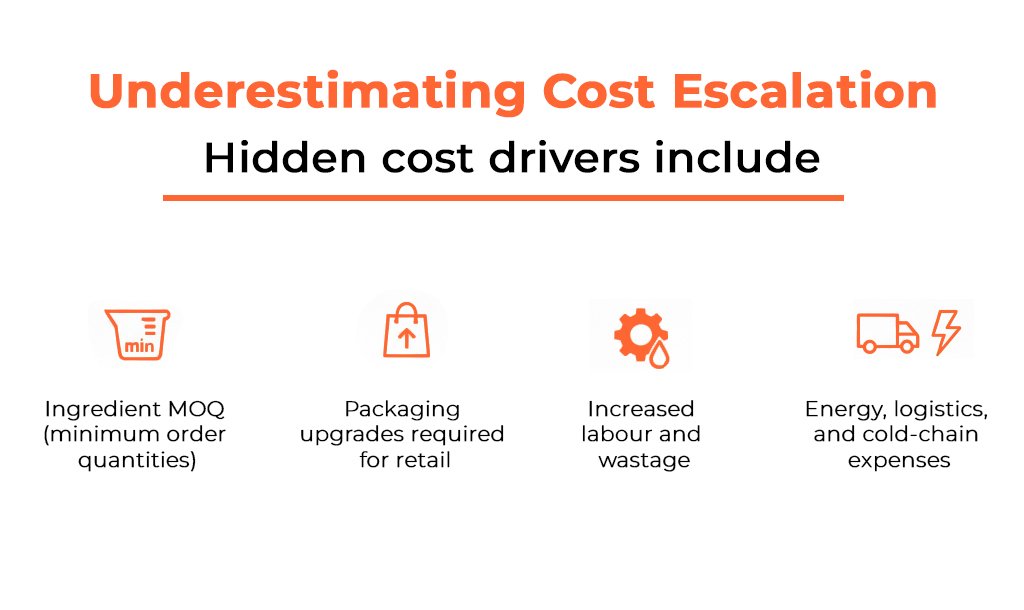
- Ingredient minimum order quantities (MOQ)
- Commercial packaging upgrades
- Manufacturing labour
- Logistics and cold chain management
- Retail margins and distributor commissions
Many food & beverages startup founders calculate pricing based on pilot batch costs rather than real manufacturing expenses.
Suggested Read: Cost of Food Formulation / Product Development
Weak Supply Chain Planning
Pilot production allows flexibility in sourcing ingredients. Entrepreneurs can often buy ingredients locally or in small quantities. Commercial production requires consistent and scalable supply chains.
Startups must secure:
- Reliable ingredient suppliers
- Backup vendors for risk mitigation
- Consistent quality raw materials
- Predictable delivery timelines
Supply disruptions caused by crop variability, import delays, or price fluctuations can halt production entirely. Without a robust sourcing strategy, many food & beverages startups face operational instability during scaling, leading to food startup pilot failure.
Regulatory and Compliance Gaps
Food regulations become significantly more complex when moving from pilot batches to commercial distribution. Startups often underestimate the requirements associated with:
- Food safety certifications
- Nutritional labeling compliance
- Shelf-life validation
- Allergen declarations
- Traceability systems
Regulatory gaps can delay product launches or even trigger recalls. For young brands with limited capital, these regulatory hurdles can quickly accelerate the failure rate of food startups.
Poor Shelf-Life and Stability Testing
Shelf life is not just a technical metric; it is a commercial necessity.
At the pilot scale, products are consumed quickly. At scale, they must survive: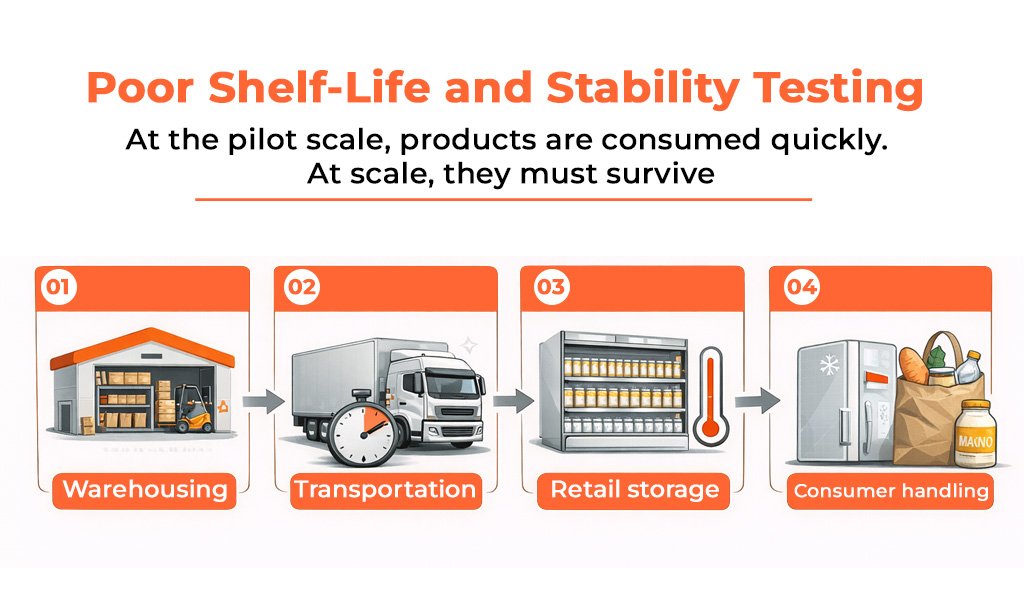
- Warehousing
- Transportation
- Retail storage
- Consumer handling
Many startups skip extended stability studies to save time. As a result, products fail in market due to spoilage, texture breakdown, flavour loss, or packaging failures. These issues are expensive to fix once distribution has started and are a major reason why food startup pilot failure occurs silently but rapidly.
Manufacturing Partner Mismatch
Choosing the wrong manufacturing partner is another major scaling challenge. Pilot success often occurs in small production environments, but commercial manufacturing requires experienced partners who understand industrial processes.
Common issues include:
- Lack of category expertise
- Inconsistent batch quality
- Inflexible production schedules
- Prioritisation of larger clients
Operational misalignment leads to delays, rising costs, and compromised product quality. This factor alone contributes significantly to the beverage startup failure rate and other categories within the food & beverages startup ecosystem.
Over-Reliance on Early Consumer Feedback
Pilot stage feedback often comes from a narrow audience such as:
- Friends and family
- Health-focused consumers
- Early trend adopters
While this feedback is useful, it does not represent the broader market. When scaling begins, products must appeal to mainstream consumers who have different expectations regarding:
- Price sensitivity
- Taste preferences
- Convenience
- Branding
Startups that rely too heavily on early validation without broader market testing often experience declining demand after launch. This contributes to the percentage of food startups that fail in validation phase.
Absence of a Clear Go-To-Market Strategy
A strong product does not guarantee sales.
Startups often focus heavily on product development but neglect: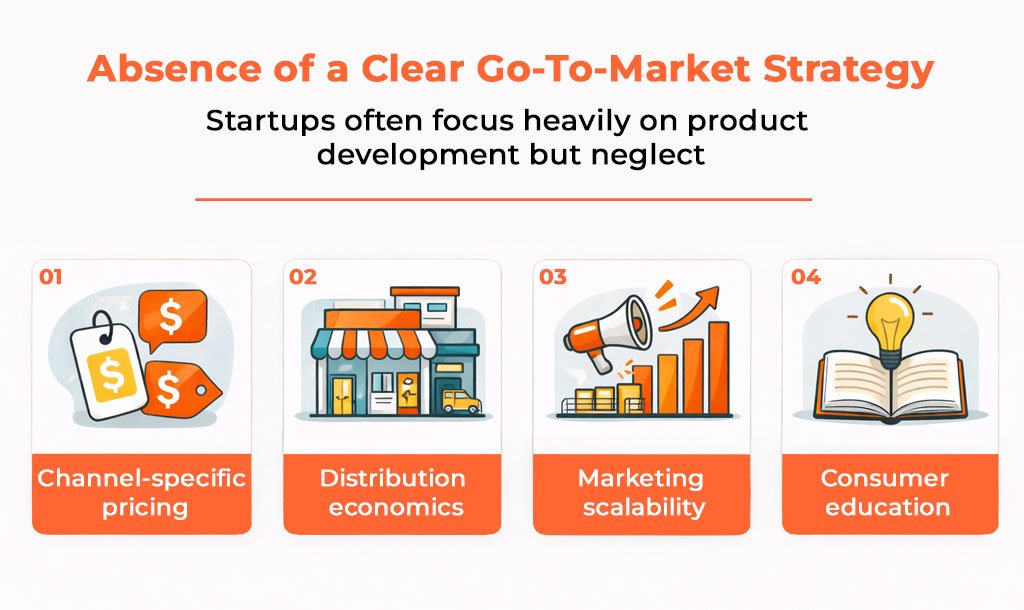
- Channel specific pricing
- Distribution economics
- Marketing scalability
- Consumer education
Pilot sales are usually direct or limited. Commercial success requires structured go-to-market execution. Without it, products struggle to gain visibility, velocity, and shelf rotation, leading to stagnation and eventual exit.
Conclusion
A food startup pilot failure usually occurs not because the idea is weak, but because the transition from pilot batches to commercial production is more complex than expected. Challenges in formulation scalability, cost management, supply chain planning, and regulatory compliance often increase the failure rate of food startups and the beverage startup failure rate.
For any food & beverages startup, preparing early for large-scale production can significantly reduce the percentage of food startups that fail in validation phase.
Want to scale your food product successfully?
Explore our services and request a free consultation to turn your pilot success into a commercially viable product.
Need Help Developing Your Food Product?
Foodsure helps startups and FMCG brands turn food ideas into successful, market-ready products. From formulation to manufacturing, we simplify the entire journey so you can launch faster, safer, and more profitably.
Why 500+ Brands Choose Foodsure
- R&D and product formulation support
- Cost optimization without quality compromise
- Private label and co-manufacturing solutions
- Regulatory and compliance guidance (FSSAI, labeling)
- Pilot trials, shelf-life testing, and stability studies
- Packaging, scaling, and go-to-market support
Who We Work With
- D2C founders launching their first product
- FMCG companies expanding product lines
- Restaurants & cloud kitchens creating packaged foods
- Health, fitness, and Ayurveda focused brands
- Export brands needing compliant formulations
Book a Free Consultation
Tap into expert guidance for your food product. Whether it’s R&D, formulation, scaling, or manufacturing, our team will help you build the perfect solution.
Frequently Asked Questions
Why do most food startups fail after the pilot stage?
Most failures occur due to poor scale readiness, cost miscalculations, supply chain gaps, regulatory issues, and lack of working capital.
Does pilot success guarantee commercial success?
No. Pilot success validates the product idea but does not confirm operational, financial, or market scalability.
What is the biggest mistake startups make during scale-up?
Assuming the pilot formulation, costs, and processes will behave the same at the commercial scale.
How important is formulation optimisation before scaling?
Extremely important. Scale-ready formulations ensure consistency, shelf life, and product stability in large volumes.
When should regulatory compliance be addressed?
Regulatory planning should begin during pilot development, not after scaling begins.
Why is shelf-life testing critical before launch?
Shelf-life failures lead to recalls, brand damage, and financial losses once products enter wider distribution.
Can the wrong manufacturing partner cause failure?
Yes. Manufacturing misalignment often leads to inconsistency, delays, cost overruns, and quality issues.