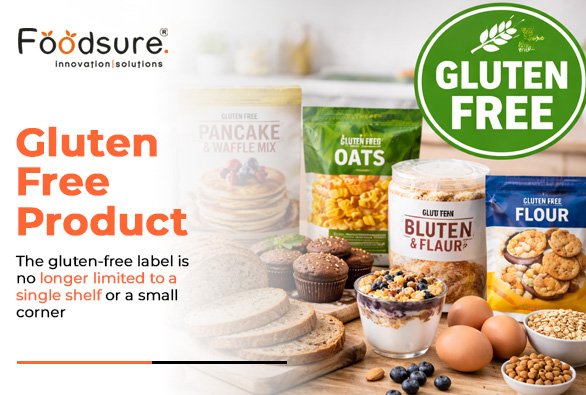
Gluten-free foods are no longer limited to a small section in supermarkets. Today, they appear in breads, snacks, cereals, desserts, and many packaged foods. While gluten-free products were originally developed for people with medical conditions such as coeliac disease, many consumers now choose them for improved digestion, cleaner ingredients, and healthier eating habits.
However, developing gluten-free foods is not simple. Removing gluten affects texture, structure, taste, and shelf life. This is why many brands work with a gluten-free expert to create products that meet both consumer expectations and commercial requirements.
Want to optimise your Food Business? Request a free consultation!
Explore Our Exclusive Food Product Development
Why Gluten-Free Has Become a Commercial Priority
The gluten-free category has grown rapidly in recent years.
Key reasons behind this growth include:
- Increasing awareness of coeliac disease and gluten sensitivity
- Consumers looking for digestive-friendly food options
- Rising demand for clean-label and transparent ingredients
- Health-conscious consumers exploring alternative grains and diets
- Food brands expanding into functional and speciality food markets
For brands, gluten-free is no longer a niche category. It is now a major commercial opportunity.
You May Also Like: How to Start a Food Business
The Hidden Role of Gluten in Food
Gluten plays an important role in food structure and texture.
Functions of gluten in food products:
- Provides elasticity and flexibility in dough
- Helps retain moisture and softness
- Supports air retention during baking
- Improves texture and volume in baked goods
When gluten is removed, products may face several challenges:
- Dry or crumbly texture
- Dense or heavy structure
- Reduced moisture retention
- Difficulty in maintaining product stability
This is why gluten-free foods require careful formulation and testing.
Nutrition That Goes Beyond “Gluten-Free”

Being gluten-free does not automatically make a product nutritious. Some gluten-free products rely heavily on refined starches.
To improve nutritional value, brands can include:
- Whole grains such as millet, quinoa, and buckwheat
- Legume flours for protein enrichment
- Seeds and fibres for digestive health
- Natural nutrient-rich ingredients
A gluten-free expert ensures these ingredients are balanced properly without affecting taste or texture.
You May Also Like: Food Packaging and Labelling
Taste Is Still the Final Judge
No matter how healthy a product is, taste remains the biggest factor for repeat purchase.
Key factors affecting gluten-free taste and texture include:
- Flavour release in gluten-free formulations
- Moisture balance and mouthfeel
- Sweetness perception and aroma
- Crispness or softness in snacks and baked goods
Because of these factors, sensory testing is essential during development.
Managing Shelf Life Without Overprocessing
Shelf stability is a major technical challenge in gluten-free products.
Common issues include:
- Moisture loss during storage
- Texture breakdown over time
- Microbial growth risks
- Reduced product stability
To manage shelf life effectively, brands must focus on:
- Ingredient functionality
- Water activity control
- Proper packaging solutions
- Optimised processing techniques
This helps maintain product quality without excessive additives.
You May Also Like: Cost of Food Formulation
Scaling Gluten-Free Products for the Real World
Many gluten-free products perform well in small batches but face problems during large-scale manufacturing.
Common scaling challenges include:
- Texture changes during high-volume processing
- Moisture imbalance during storage
- Inconsistent flavour and quality between batches
- Increased production costs
Working with a gluten-free expert helps brands design formulations that remain stable during commercial production.
Innovation Beyond Basic Gluten-Free
The gluten-free category continues to evolve with new product innovations.
Emerging trends include:
- High-protein gluten-free snacks
- Plant-based gluten-free foods
- Functional foods with added nutrients
- Fortified gluten-free staples
Brands that combine taste, nutrition, clean labels, and shelf stability will succeed in this growing market.
Understanding why to use clean-label gluten-free products is key to building long-term consumer trust.
You May Also Like: New Food Innovations in the Food Industry
Our Perspective on Gluten-Free Development
Science and empathy working together is what we, as a company, believe is the key to success in gluten-free development. Every product is a reflection of the consumers’ daily decisions, dietary requirements, or lifestyle choices. We take the production of gluten-free foods to be the making of complete foods, which are certainly worthy of the same quality, nutrition, and experience considerations as any regular product.
By means of organised development, thorough testing, and careful planning, gluten-free foods can very well live up to the contemporary demands.
Closing Thoughts
Gluten-free product development requires the right balance of taste, nutrition, texture, and clean-label ingredients. Understanding why to use clean-label gluten-free products helps brands build consumer trust and create better food products.
Working with a gluten-free expert ensures your product is safe, stable, and market-ready.
Need Expert Support for Gluten-Free Product Development?
Foodsure provides professional Gluten-Free Product Development services for snack and packaged food brands.
Our food experts help you develop safe, compliant, and market-ready gluten-free products with proper formulation, testing, and regulatory checks to ensure a smooth and successful launch.
How We Support Gluten-Free Product Development
- Gluten-free formulation and ingredient selection
- Cross-contamination risk assessment and control guidance
- FSSAI-compliant gluten-free labelling and claim verification
- Nutritional panel accuracy and allergen declaration support
- Pre-launch compliance checks and documentation assistance
Who We Help With Gluten-Free Product Development
- Startups launching gluten-free snacks and foods
- FMCG and D2C brands expanding into gluten-free ranges
- Private label owners and contract manufacturers
- Food brands targeting health-focused and special-diet markets
Talk to Gluten-Free Product Development Experts – Free Consultation
Planning to launch or improve a gluten-free food product and need expert guidance?
Frequently Asked Questions
Why do many gluten-free products fail in the market?
Most fail due to poor texture, short shelf life, or weak nutrition. Successful gluten-free products require expert formulation and scale-ready development, not just ingredient replacement.
How does Foodsure approach gluten-free product development differently?
Foodsure uses a structured strategy formulation process that balances nutrition, taste, shelf stability, and manufacturing feasibility from the very first stage.
Can gluten-free products achieve the same taste and texture as regular foods?
Yes, with the right formulation approach. Foodsure focuses on sensory optimisation so gluten-free foods feel familiar, enjoyable, and indulgent to consumers.
Are gluten-free products suitable for mass-market consumers or only niche audiences?
Today, gluten-free products appeal to mainstream consumers seeking clean-label and digestive-friendly options, making them commercially viable for mass markets.
How does Foodsure ensure balanced nutrition in gluten-free foods?
Foodsure integrates nutrient-rich grains, proteins, and fibres during formulation to deliver balanced nutrition without compromising taste or texture.
What challenges affect the shelf life of gluten-free food products?
Moisture imbalance, texture breakdown, and microbial risks are common challenges. Foodsure designs formulations that protect shelf life without relying on heavy preservatives.
Can Foodsure help reformulate existing gluten-free products?
Yes. Foodsure supports reformulation projects to improve taste, nutrition, shelf stability, or cost efficiency of existing gluten-free products.
How long does gluten-free product development usually take?
Timelines vary based on complexity, but a structured development process reduces delays caused by trial-and-error or scale-up failures.
Are clean-label gluten-free products harder to develop?
Clean-label gluten-free development is more complex but achievable. Foodsure identifies functional alternatives that maintain performance while meeting clean-label expectations.
When should brands involve Foodsure in gluten-free development?
Ideally, at the concept or early development stage. Early involvement helps avoid costly reformulations and ensures smoother scale-up and market entry.