Have you ever gone out in the blazing Indian weather, drunk water following a hot workout at the gym or en route to work, and found yourself exhausted and half asleep? The exhausted sensation develops because plain water fails to provide essential electrolytes, which include sodium, potassium, and magnesium that your body loses through sweating.
- Emotional drain of imbalance: Your body shows the exhaustion of the minerals lost, acting as a parody of dehydration, although you drank litres, which is typical of the humid climate when the loss of sweat increases 2-3 times.
- The hidden boundary of water: Water dilutes blood electrolytes, decreasing absorption by up to 60% compared to balanced mixes.
- Curiosity spark: What will make it possible to replenish the energy within minutes with the help of the best hydration drink formula, think over the specialised electrolyte beverages or sports beverages?
Learn how these hydration fluids heal the gap that water lacks.
The Growing Confusion Around the Best Hydration Drink in India
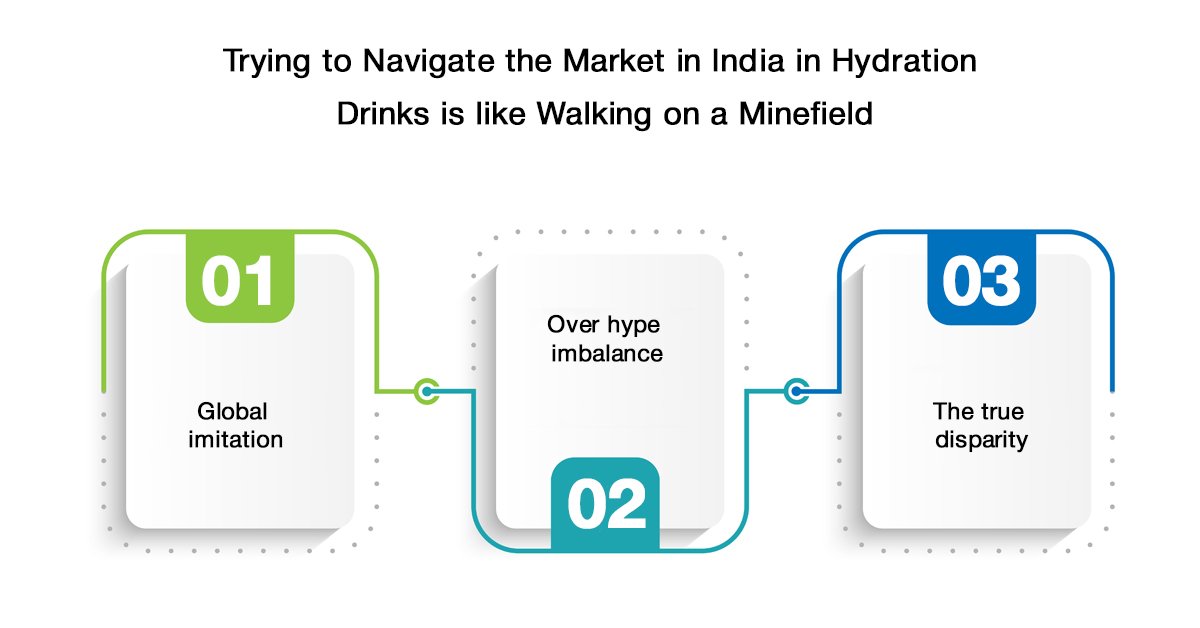
Trying to navigate the market in India in hydration drinks is like walking on a minefield. There are shelves with electrolyte drinks and sports drinks all proclaiming to give the best performance, not to mention that most of them fail miserably.
- Global imitation: The sweat profiles of Indians imported to make the formula are not taken into account (higher sodium loss with spicy food), and the result is cramps and fatigue.
- Over hype imbalance: Badly constructed alternatives cut costs on magnesium/potassium ratios, aped after the supposed ineffectiveness of water.
- The true disparity: Many walk out into the world chasing the names of popular brands instead of the one that works.
ELECTROLYTE FORMULATION SUPPORT
Developing a Hydration or Electrolyte Drink?
Get expert guidance on electrolyte balance, sugar optimisation, stability testing, and commercial-ready beverage formulation.
Why Hydration Beverages Fail in the Indian Market
The current excitement about hydration drinks in India needs to be cancelled because people should recognise the main issue, which exists between electrolyte drinks that focus on taste and profit and their actual ability to maintain hydration.
- Science sidelined: The brands do not pay enough attention to the science of sweat. Indian consumers lose 1.5-2x more sodium in heat/humidity, but the formula is applied in dull global ratios without localisation.
- Taste-first shortcuts: Cost-saving focuses on artificial sweeteners/ fructose on palatability instead of 4:1 sodium-potassium ratios, which are demonstrated to be 40% more effective at rehydration.
- R&D drought: Most products complete testing because only a small number of products undergo testing for specific regional weather conditions. The copycat beverages do not consider the actual body absorption capacity of their ingredient,s which includes low-absorption citrates.
Operational Hurdles in Launching the Best Hydration Drink
Entrepreneurs who develop electrolyte beverages in India deal with the following fundamental challenges:
- Ratio puzzles: Nailing sodium-potassium pattern (optimal 3:2 in Indian sweat) in contradicting global and local data.
- Sugar dilemma: Striking the balance between the need to eat zero sugar and the need to obtain energy without the off-tastes of stevia or sucralose.
- Mineral masking: Liquids for hydration conveniently conceal the salty and bitter flavour of magnesium and potassium.
How Electrolyte Drinks Actually Hydrate the Body
Think of your body like a car engine overheating in India’s heat. Your body uses sweating as a cooling mechanism, but this process causes your body to lose essential minerals such as sodium, potassium and magnesium. These electrolytes ensure that your muscles are firing, nerves are signalling, and water is flowing into cells.
- What sweat washes away: When exercising, working or in hot weather, you lose up to 1 litre/hour with 800-1000mg sodium, 200mg potassium – your battery power.
- Fix weak water: The process restores fluids to your body, yet it results in the loss of vital nutrients, which function as a coolant system without oiling its essential parts. The method decreases your body fluid intake by 60% which leads to muscle cramps, cognitive impairment and exhaustion.
- Electrolyte advantage: The ideal hydration drink replenishes the precise ratios (e.g., 4:1 of sodium-potassium), which move water into cells three times more quickly- no fatigue, just refill.
Evidence daily: Post-sweat slump disappears when hydration drinks are equal to sweat loss, not only volume.
The Right Approach to Electrolyte Drink Formulation India
The best hydration drink formulation hinges on science-backed electrolyte ratios, balanced sugars, and optimal osmolality, tailored for India’s heat and sweat profiles. The effective hydration beverages match your body’s sodium and potassium loss during exercise, which ranges from 800 to 1200 milligrams of sodium and 200 to 400 milligrams of potassium per litre of sweat. The process achieves 40 to 60% faster absorption through water while restoring energy without causing crashes.
Table 1: Electrolyte Functions
| Electrolyte | Function | Why It Matters |
| Sodium | Fluid balance | Prevents dehydration, pulls water into cells clevelandclinic |
| Potassium | Muscle support | Prevents cramps, regulates heart rhythm, clevelandclinic |
| Magnesium | Energy support | Reduces fatigue, aids ATP (Adenosine Triphosphate) production, clevelandclinic |
| Chloride | Acid balance | Supports absorption, maintains pH clevelandclinich |
Table 2: Sugar Strategy
| Type | Sugar % | Target Audience |
| High | 6–8% | Athletes (endurance fueling) scienceforsport |
| Moderate | 3–5% | Active lifestyle (daily recovery) ajkd |
| Zero | 0% | Fitness segment (keto/low-carb) |
Functional boosts increase efficacy:
- Vitamin C and B12: The antioxidants fight against oxidative stress caused by humidity; B12 enhances concentration during long commutes. (webmd, fastandup)
- Coconut water powder: 2:1 electrolyte, natural, with lots of potassium to suit Indian diets, which contain a lot of rice/spices. (Mayoclinic)
The hydration drinks clean-label revolution replaces artificial colours with natural flavours such as kokum or amla that naturally extend shelf-life without the use of artificial preservatives, and are attractive to the health-conscious urban market.
Recommended Read – Carbonated Drinks Hydration
Commercial Considerations in Electrolyte Drink Formulation India
An excellent electrolyte drink formula is 50% of the battle in India. Commercial acumen is what makes it happen.
- FSSAI regulations were relaxed: Medical claims such as “ORS”; add electrolytes to the list in an understandable manner, and maintain a sensible level of salt in the food to clear inspection.
- Packaging choices: Use affordable plastic bottles for city stores or cheap sachets for local shops, pick what lasts without spoiling.
- Going big: Find local sources so you can save money. Go to regular factories that can make a lot in a day.
Formulation is brilliant combined with these practical steps to the actual market success.
Foodsure’s Expertise in Best Hydration Drink Development
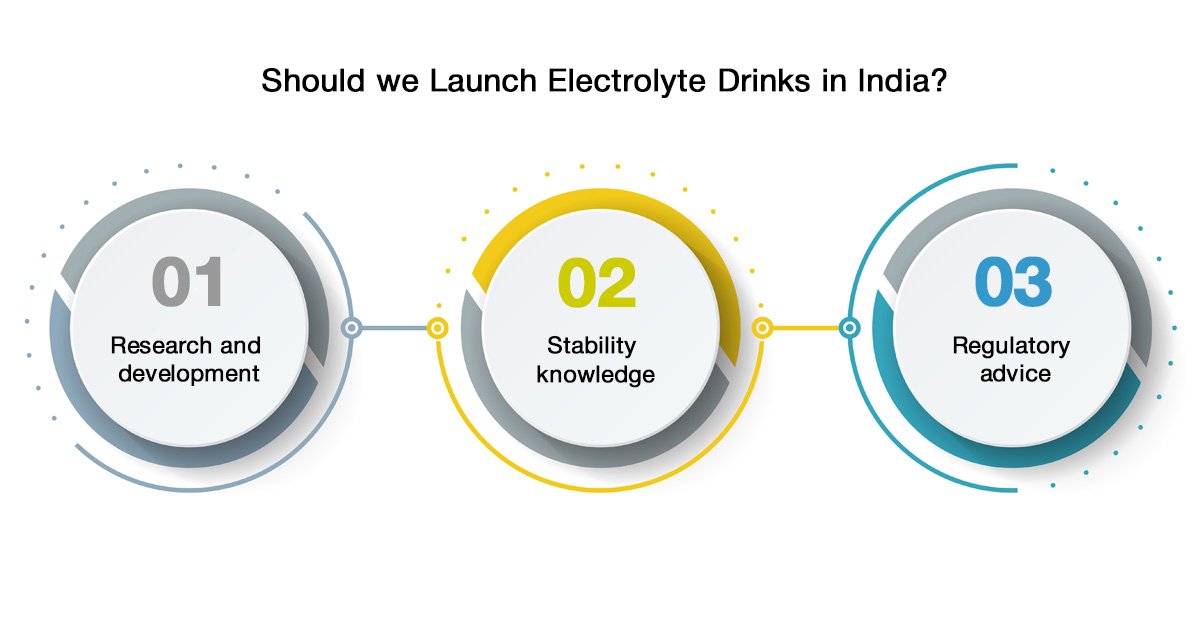
Should we launch electrolyte drinks in India? Foodsure fills in your technical co-principal, in light of formulation gaps to market reality.
- Research and development: Excellent hydration beverage formulation: Indian sweat profiles and palate.
- Stability knowledge: Test shelf-life under poor conditions, i.e. when the product contains electrolytes, and the preservatives are not used.
- Regulatory advice: Manage FSSAI documentation and labelling to avoid hiccups.
In the case of Foodsure, our founders are going to be vision-oriented, whereas we will be taking care of the science and compliance aspects.
Key Lessons for Best Hydration Drink Formulation Success
To develop the most hydrating beverage in India, science and smarts should be the priorities on day one:
- Begin with sweat science: Equate local heat and loss of sodium-potassium.
- Nail electrolyte balance: Early ratios to beat water limits.
- Pick sugar strategy: High among athletes, zero among fitness- decide in advance.
Action now: Prototype, test, start climate-ready.
Planning your electrolyte drink formulation in India? Create thirst-quenching drinks that capture goodwill and market.
READY TO SCALE YOUR HYDRATION BRAND?
Launch a Commercially Viable Hydration Beverage
From electrolyte optimisation to large-scale production planning, Foodsure supports end-to-end hydration and sports drink formulation.
Explore More on Hydration & Beverage Formulation
FAQs
Why is the best hydration drink better than the regular hydration drinks?
The optimal hydration drink is an electrolyte balance, which is scientifically balanced and enhances the intake of fluid better than other hydration drinks.
What is the formula of the best hydration drink?
The most appropriate hydration drink involves sodium, potassium, magnesium, a regulated sugar concentration, and balanced osmolality.
What is the difference between the electrolyte drink formulation India and the sports drinks in the world?
In contrast to most sports drinks in the world, electrolyte drink formulation India is developed based on high heat and heavy sweat loss, and FSSAI requirements.
Is there better hydration when using electrolyte drinks compared to traditional sports drinks in real life?
Low sugar modern electrolyte beverages are more recommended in day-to-day hydration than the traditional beverages that contain high levels of sugar.
Why do hydration drinks need sodium?
Sodium aids in accomplishing the dehydration drinks to maintain the body fluids and serves to ensure a person is not dehydrated in hot weather and during engagements.
What factors influence electrolyte beverage design in India commercially?
Formulation of electrolyte drinks in India needs attention to the balance of the minerals, sugar levels, stability testing, and regulation.
What is the best way brands can create the best hydration drink in the Indian market?
The optimal hydration beverage can be created through the concentration on the balance of electrolytes, the compatibility with the climate, the use of clean label ingredients, and the possibility of large-scale production.