Consumers today are moving away from sugary sodas and artificial energy drinks. They want something natural, safe, and beneficial. That’s where fermented beverages come in.
These drinks feel authentic because they are rooted in tradition. Modern science has established its gut health benefits and immunity advantages. Probiotic beverages become extremely appealing through the combination of ancient wisdom and functional health properties.
People don’t just want refreshment anymore. One bottle provides them with digestion support, improved metabolism, and preventive wellness.
The emergence of functional fermented drinks presents entrepreneurs with major business opportunities.
Challenges in Scaling Fermented Beverages in the Functional Market
The market for fermented beverages experiences rapid expansion, but the existing confusion about these products grows simultaneously. The trend of kombucha and probiotic drinks currently dominates the market, which has led many brands launch these products.
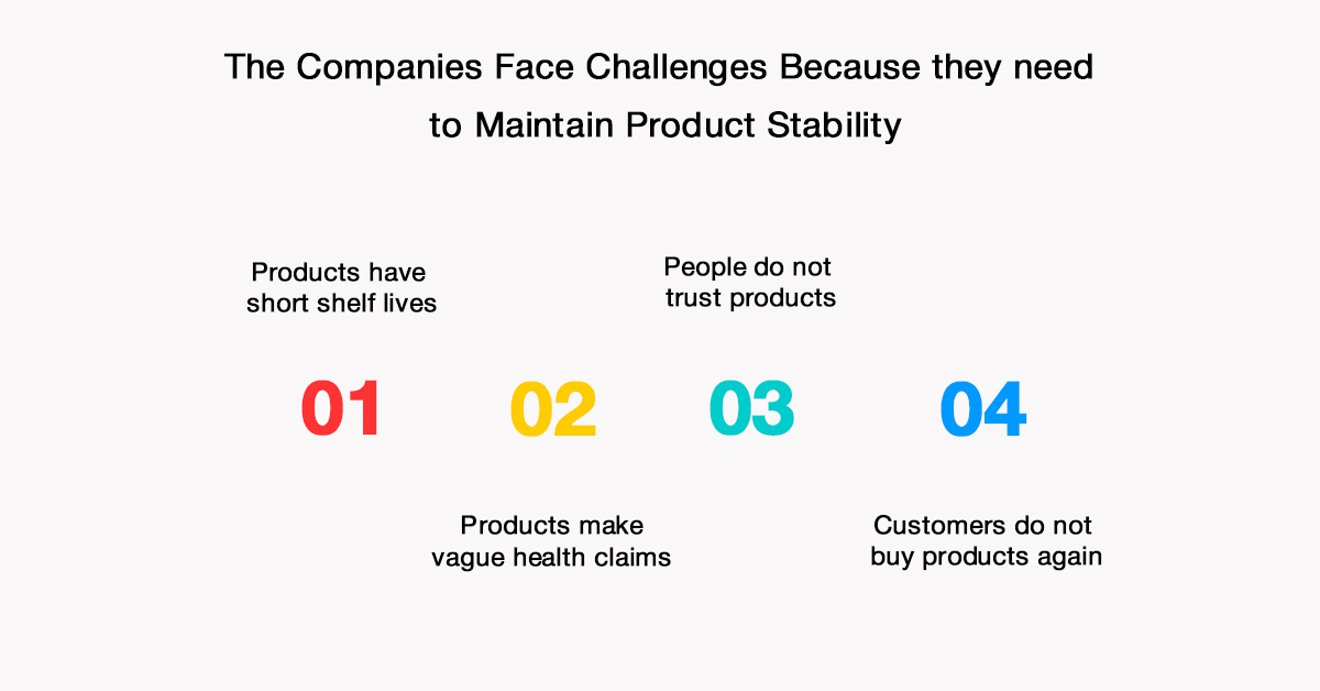
The companies face challenges because they need to maintain product stability while delivering consistent taste and meeting regulations. Some products make probiotic claims that lack proper validation of their specific strains. The companies produce fermented beverages that lose their active cultures before they reach the end users.
It results in:
- Products have short shelf lives.
- Products make vague health claims
- People do not trust products
- Customers do not buy products again
The process of fermenting a drink does not guarantee its success in the market. A product will fail to succeed in the market without proper research and development activities, and correct market positioning and regulatory compliance methods.
PLANNING A FERMENTED BEVERAGE BRAND?
Develop a Scalable Fermented or Probiotic Beverage
From fermentation culture selection and ingredient compatibility to stability testing and regulatory compliance, our experts help turn your fermented beverage idea into a scalable commercial product.
Why Probiotic Beverages and Functional Fermented Drinks Struggle in the Market
The causes of these failures are not very uncommon:
- Scientific deficiency in fermentation science
- Misunderstanding between the probiotic drinks and the general fermented drinks
- Poor strain selection
- Weak consumer education
The process of fermentation is biological. It entails the conversion of sugars into useful substances by microorganisms. However, large-scale management of live cultures is complicated. Quality is directly affected by temperature control, packaging and storage.
In India, the Indian Food Safety and Standards Authority (FSSAI) is also an important requirement in regulatory compliance. Health claims are required to be substantiated. Labels must be accurate.
These are some of the technical aspects that many founders underestimate and concentrate on the branding aspect only, which poses a long-term risk.
Founder Pain Points in Launching Fermented Beverages
Short shelf life of fermented beverages
- Ensuring the number of live probiotics is up to the expiry date
- Taste variation Batch-to-batch
- Commercial level fermentation control
- Confusion of regulatory documentation
Fermented Beverages Explained in Simple Terms
Let us break this down into its most basic elements.
Fermented beverages are drinks produced through the fermentation process where natural bacteria or yeast transform sugars into three products: acids, gases and small quantities of alcohol. The process creates enhanced flavour while producing useful substances.
Not all fermented drinks are probiotic beverages.
The distinction between the two terms can be understood through this explanation:
- Fermented drink = Made through fermentation
- Probiotic beverage = Contains live, beneficial bacteria in sufficient quantity until consumption
Buttermilk serves as an example of a fermented product.
A product needs to have verified live bacteria in the correct quantity at the time of drinking for it to qualify as a probiotic product.
Functional fermented drinks go one step further. The process of fermentation serves as the foundation that creates health benefits through the combination of herbs and vitamins, adaptogens and fibre.
The core principle of fermentation serves as our foundation for building functional capabilities.
Top Fermented Beverages Examples and Their Health Benefits
Here are common fermented beverages examples and benefits:
| Beverage | Type | Key Benefit | Traditional / Modern |
| Kombucha | Tea-based | Gut support & antioxidants | Modern |
| Kefir | Dairy-based | High probiotic content | Traditional |
| Kanji | Carrot-based | Digestive support | Traditional (India) |
| Buttermilk | Dairy-based | Cooling & digestion | Traditional |
| Apple Cider Vinegar | Fruit-based | Metabolism support | Modern |
| Tepache | Pineapple-based | Enzyme-rich | Traditional |
Health Benefits of Fermented Beverages
- Improvement of gut microbiome equilibrium
- Assistance to digestive processes
- Strengthening of immune system defenses
- Improvement of nutrient uptake
Product advantages depend on the specific formulation used. The functional claim becomes less valid if live bacteria fail to survive both processing and storage conditions.
The importance of research and development work exists because of its fundamental role in waste management.
Difference Between Probiotic Beverages and Functional Fermented Drinks
- Live Strains
- Probiotic Beverages: CFU Mandatory live
- Functional Fermented Drinks: Availability is optional; can replace it with postbiotics or metabolites.
- Health Claims
- Probiotic Beverages: Gut-specific claims (e.g., supports microbiome).
- Functional Fermented Beverages: Some broader wellness IDs (power, agility, “coolness).
- Scientific Validation
- Probiotic Beverages: Intense clinical support was necessary for strains.
- Functional fermented drinks: Pay more attention to such functional additives as herbs or vitamins.
- Cost Structure
- Probiotic Beverages: The increase in costs is attributed to strain sourcing, testing, and cold chain.
- Functional Fermented Drinks: mid/priced with normal brewing facility.
- Shelf Stability
- Probiotic Beverages: Requires refrigeration or high-tech.
- Functional Fermented Drinks: Simpler and usually shelf-stable following pasteurisation.
Proven Strategies for Successful Fermented Beverages
Building a profitable fermented beverage brand requires these essential components.
- Clear Consumer Positioning: You should determine which health benefits your product will support: gut health, women’s wellness, sports recovery and immunity. Specific positioning improves marketing clarity.
- Strain Validation: Probiotic claims require the use of clinically proven strains, which must remain alive throughout their shelf life.
- Taste Optimisation: Consumers will not compromise on taste. The team needs to find the correct balance between acidity levels and sweetness levels.
- Shelf-Life Testing: The team needs to perform testing for microbial stability. The team needs to verify product safety while delivering consistent results.
Fermented beverages reach their maximum market potential when science-based taste standards and regulatory requirements are established together.
Emerging Trends Driving the Fermented Beverages Market
The market for fermented beverages continues to grow because of these factors:
- Rising gut health awareness
- Increased preventive healthcare mindset
- Demand for clean-label products
- Growing lactose intolerance
Modernisation of traditional fermented drinks occurs through premium packaging and functional product development.
The opportunity lies in blending:
Traditional knowledge + Scientific validation + Smart branding.
Founders who adopt strategic approaches to this category will establish brands that maintain uniqueness throughout their existence.
End-to-End Support for Fermented Beverages Formulation and Compliance
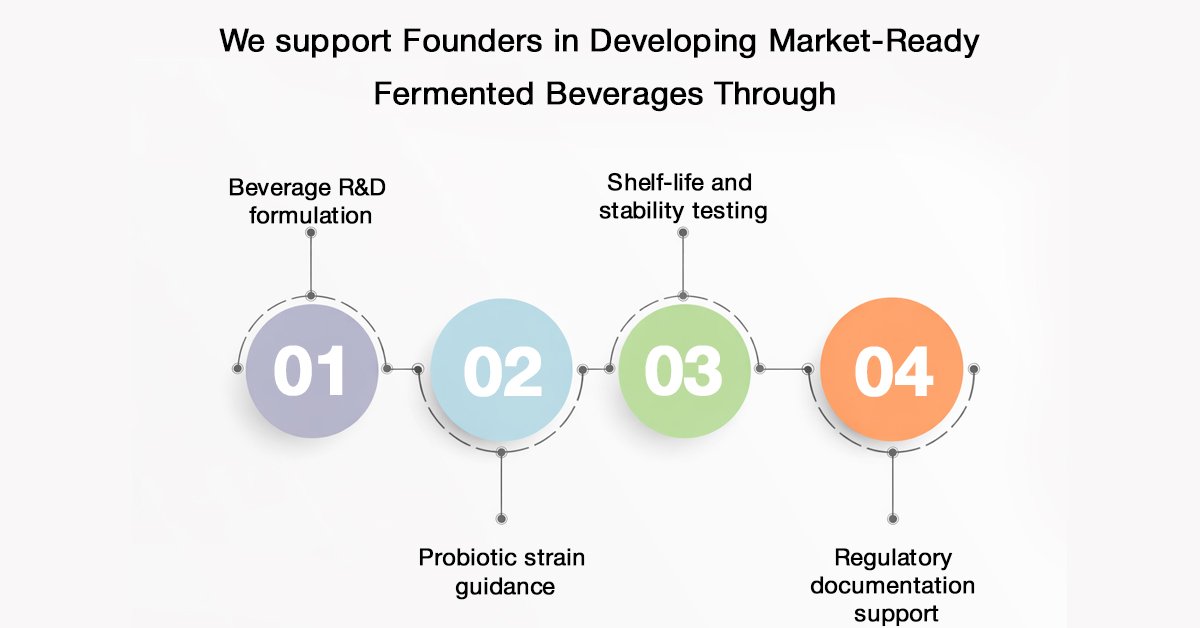
At Foodsure, we support founders in developing market-ready fermented beverages through:
- Beverage R&D formulation
- Probiotic strain guidance
- Shelf-life and stability testing
- Regulatory documentation support
Founder Takeaway
The popularity of fermented beverages as a contemporary trend continues. The movement represents a transition toward functional wellness practices.
The achievement of success requires scientific proof combined with proper taste distribution, full regulatory understanding, and distinct product identification.
The implementation of strategic practices enables your business to develop a high-quality brand that stands as a reliable market presence.
Our team ensures that your probiotic beverages and functional fermented drinks achieve both popularity and full technical strength with regulatory compliance.
Are you planning to introduce fermented beverages or probiotic beverages to the market?
READY TO LAUNCH A FUNCTIONAL FERMENTED DRINK?
End-to-End Fermented Beverage Development
Foodsure supports fermentation R&D, probiotic validation, shelf-life testing, clean-label formulation, and commercial manufacturing to help you launch a compliant fermented beverage brand.
Related Blogs
- Top Fermented and Probiotic Drinks Trends for Gut Health
- Probiotic Drink Development Guide
- Postbiotics in Functional Beverages
- Gut Health Soda Formulation
- Nutraceutical Beverage Formulation Guide
FAQs
What are fermented beverages?
Fermented beverages are drinks made through microbial fermentation that enhance flavour, nutrition, and digestive benefits.
What are some popular fermented beverage examples and benefits?
Kombucha, kefir, kanji, and buttermilk serve as examples that provide gut health support, better digestion and natural probiotics.
Are all fermented beverages probiotic beverages?
No, only fermented beverages that contain live, validated beneficial bacteria in sufficient quantity qualify as probiotic beverages.
What is the difference between probiotic beverages and functional fermented drinks?
Probiotic beverages focus on live gut-friendly strains, while functional fermented drinks may add herbs, vitamins, or other wellness ingredients.
What are the health benefits of fermented beverages for gut health?
Fermented beverages support microbiome balance while enhancing nutrient absorption and improving digestion.
Do probiotic beverages require regulatory approval in India?
Probiotic beverages must follow the Food Safety and Standards Authority of India (FSSAI) regulations, which require specific labelling and claim standards.
Why are functional fermented drinks becoming popular in the market?
These products combine traditional fermentation with modern health benefits to create clean-label products that meet consumer demand for preventive wellness solutions.