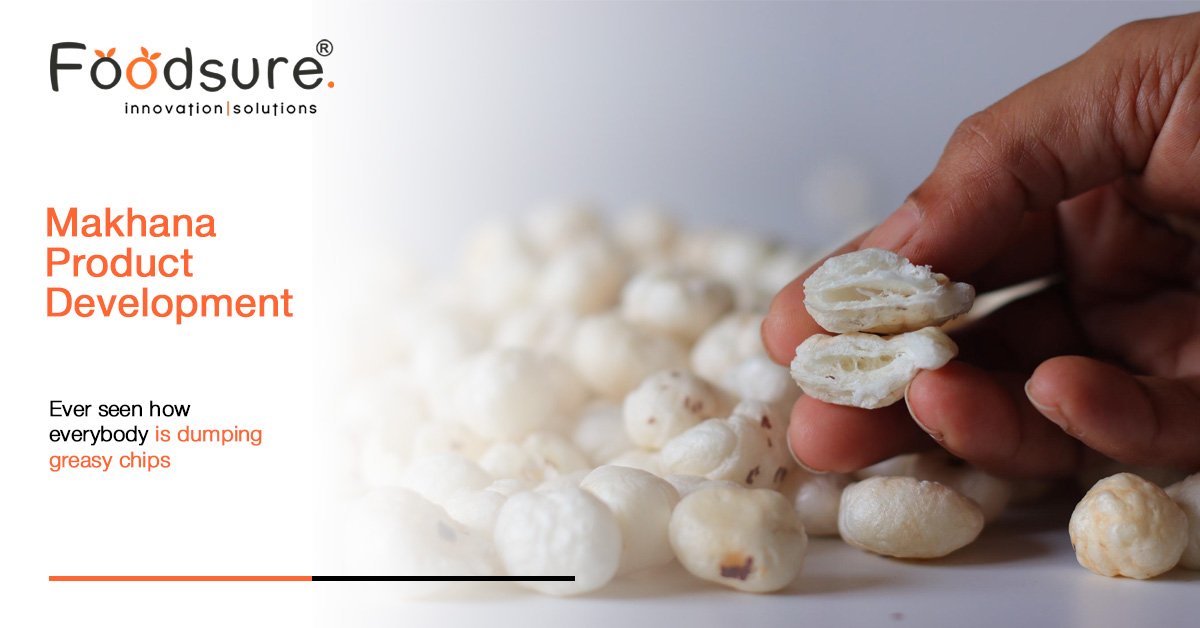
Ever seen how everybody is dumping greasy chips to get something smarter? The modern-day customers are health-conscious, love protein-packed bites, clean ingredients, and grab-and-go. And leading the pack? Makhana, the crunchy, guilt-free alternative to fried junk, is blowing up, and that’s exactly why makhana product development is gaining massive traction in the snack industry.
This is your opportunity, in case you are an entrepreneur or a food brand that is looking at the Indian market. India grows over 90% of the world’s makhana, especially in Bihar’s Mithila region, so it is the ideal location to create something new, roasted snack packs, bold flavours and even the fortified super-snacks. The demand is exploding!
However, the success of launching would be more than pop sourcing. In this blog, you must learn how to formulate your products, claim FSSAI, have a viral pack design and shelf life tricks to make it.
You May Also Like: Top 10 Makhana Brands In India 2026: Fox Nuts Insights
Why is Makhana a Fast-Growing Snack Category in India?
Makhana is transformed into a modern functional food product, though it has been a traditional snack. This is naturally free of fat, gluten-free, high in protein and antioxidants. These health advantages are just in line with the current health-conscious consumer tastes.
The makhana market is experiencing growth due to several factors:
- Increasing needs for healthy snacking substitutes
- Expansion of fitness and wellness neighbourhoods
- Rising popularity of plant-based snacks
- Development of higher-end packaged snack lines
- Snack distribution through e-commerce and quick-commerce
Due to this demand, there is an influx of start-ups in the market, developing makhana startup products in India with the intention of creating high-end snack brands.
BUILD A MAKHANA BRAND
Launch a Winning Makhana Product with us
Foodsure helps founders develop flavoured makhana products — from recipe formulation and FSSAI compliance to packaging and pilot manufacturing — so your brand is shelf-ready in 4 to 8 weeks.
Key Stages of Makhana Product Development
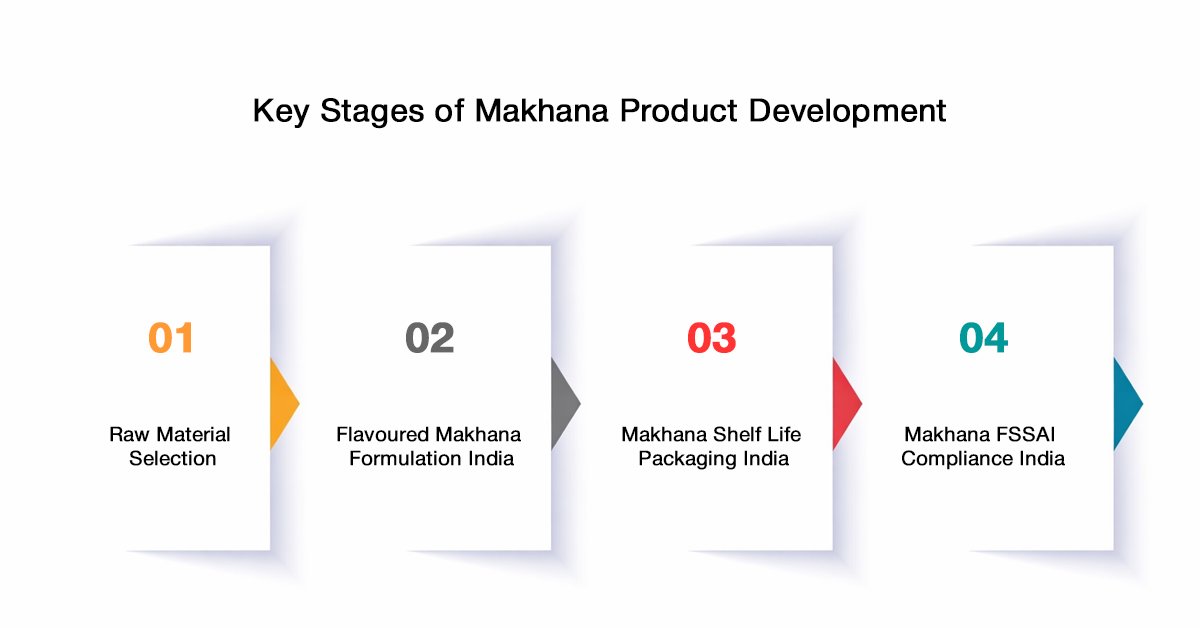
The development of makhana products requires proper planning through various technical and business processes to be successful. Regulatory compliance, scalability and consistency of products are guaranteed by a well-organised process of product development.
Raw Material Selection
The basis of high-quality products is the quality of makhana seeds. India has a major production centre in Bihar where fox nuts are grown.
The important parameters that should be considered are:
- Grain size and germinating percentage.
- Moisture level
- Cleanliness and pollution management.
- Roasting compatibility
Continuity of raw materials increases absorption of flavours and shelf stability.
Flavoured Makhana Formulation India
Formulation of flavoured makhana is one of the most significant product innovations in India. Consumers would like to have diversified flavours that align with the conventional and contemporary tastes.
The most popular flavour groups include:
- Classic salted
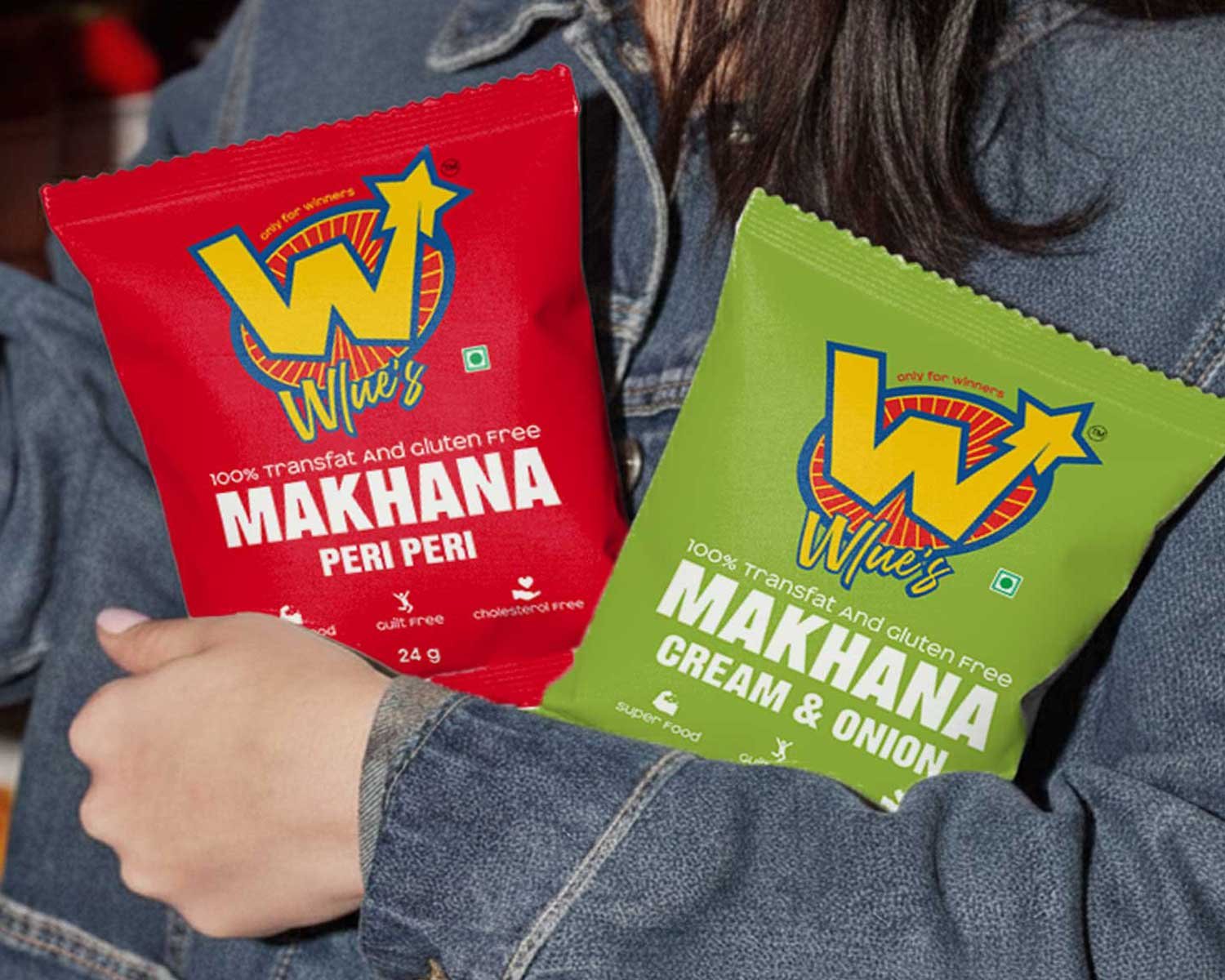
- Peri-peri
- Cheese and herbs
- Pudina masala
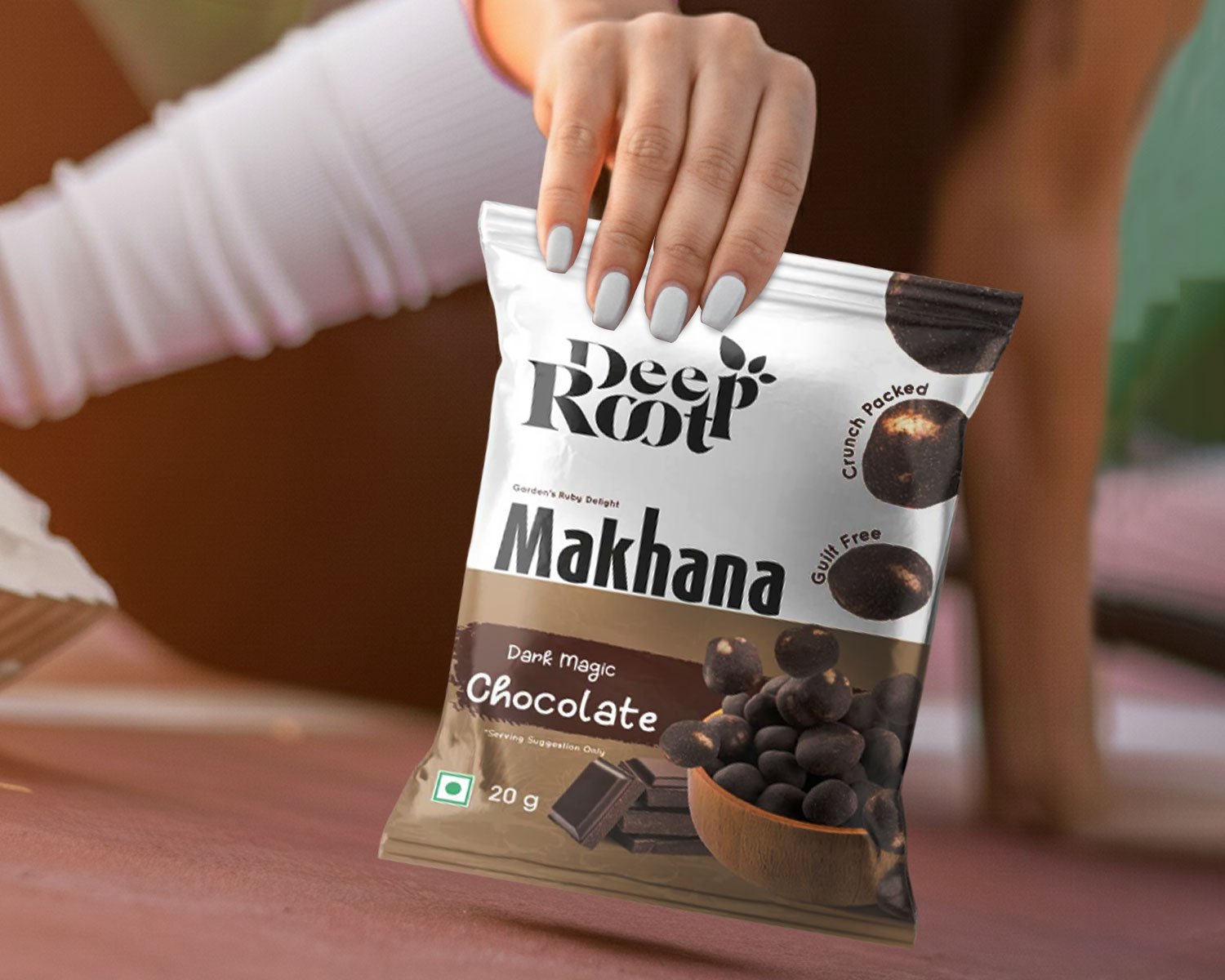
- Chocolate-coated makhana
- Caramel makhana
- Variants containing protein or superfoods.
The process of balancing includes the distribution of seasoning, roasting, the use of oil, and the method of coating. One of the technical challenges in the makhana formulation is to obtain a regular flavour with a reduced amount of moisture.
Makhana Shelf Life Packaging India
Crunchiness and preservation of flavour are the keys to commercial success. Adequate packaging of makhana’s shelf life in India provides the product with freshness throughout storage and transportation.
Typical types of packaging solutions are:
- Nitrogen-flushed pouches
- Multi-layered laminated package
- Moisture barrier pouches
- Stand-up zipper packs
These types of packaging are used to avoid the absorption of moisture, oxidation and to avoid texture. In a favourable and ideal packaging environment, a well-developed makhana product has a shelf life of 6 -9 months.
Makhana FSSAI Compliance India
Businesses are required to abide by regulations before starting a snack brand. Makhana FSSAI compliance in India is a system that provides the product to the national standards of food safety.
Notable regulatory requirements are:
- FSSAI product approval
- Ingredient declaration
- Nutritional labeling
- Shelf-life validation
- Allergen declaration (where necessary)
- Compliance with manufacturing licenses.
Failure to comply may result in recall of the product or fines, and thus, regulatory direction is necessary during product development.
Building a Successful Makhana Brand Launch in India
The makhana market is also turning out to be competitive, and there are numerous startups venturing into the healthy snack market. The only way to make a successful launch of the makhana brand in India is to combine good quality of the product and proper product positioning.
Some of the important brand-building measures are:
Unique Product Positioning
Differentiate into organic, protein-enriched, diet-friendly or gourmet makhana.
Attractive Packaging
The new snack consumers are willing to spend money on slick-looking packaging that conveys health and quality.
Strategic Launch of Digital-First
Distribution channels are becoming significant through e-commerce and fast-commerce applications.
Innovation in Functional Ingredients
Most of the brands are trying:
- Protein-enriched makhana
- Probiotic snack versions
- Makhana is filled with ayurvedic herbs.
- Kids-focused snack variants
These innovations generate new segments and assist brands in being visible.
Makhana Startup Product Development India
Makhana is one of the most accessible entry points of the health snack industry in the case of food startups.
Some of the opportunities are promising, such as:
- Protein makhana snacks
- Diet snack variants
- Kids snack formats
- Gourmet flavoured makhana
- Trademarked makhana brands for export.
Startups, however, are frequently restricted in terms of the possibility to scale manufacturing and ensure stability on the shelf, as well as comply with the regulations. That is why the startup product development of makhana in India by professionals becomes significant to the expedited and secure product introduction.
Challenges in Makhana Product Development
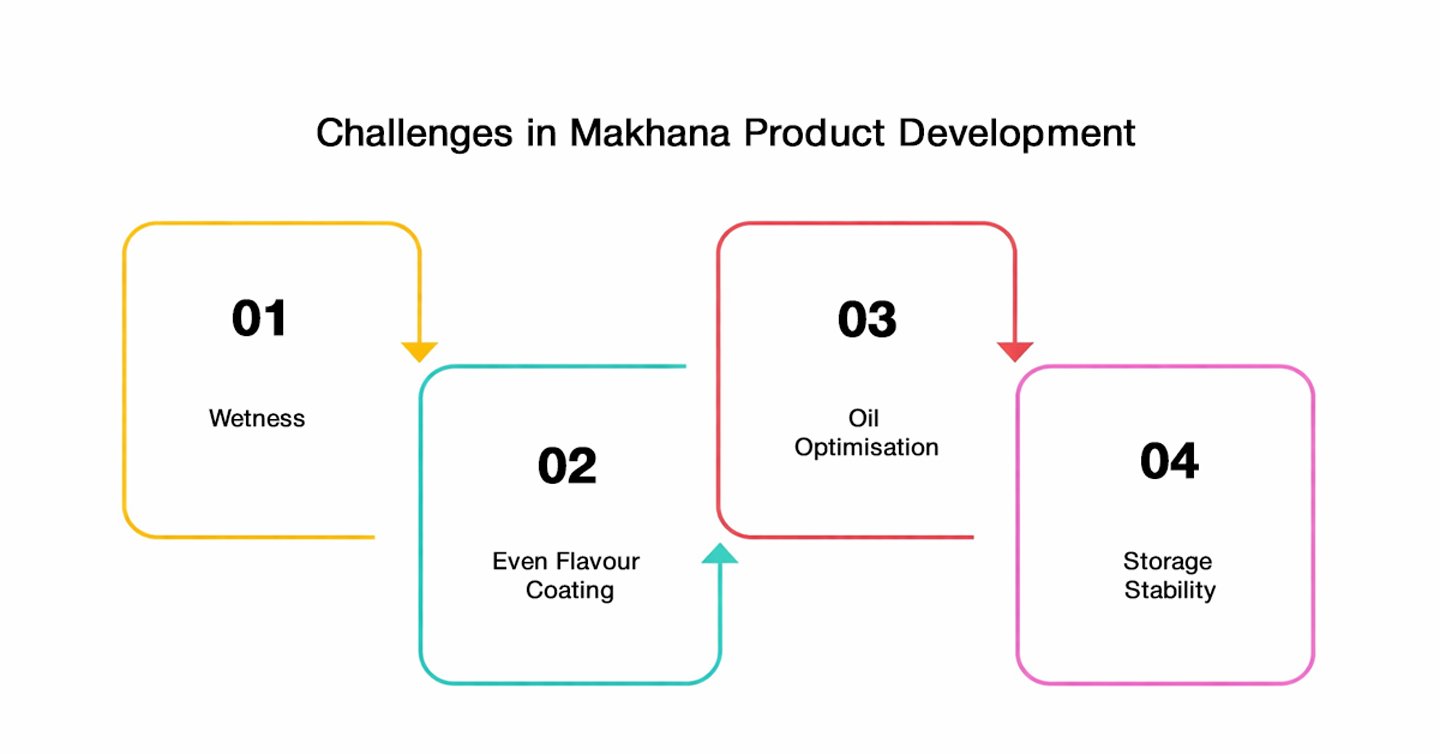
Regardless of the opportunities, there are a number of technical issues that need to be considered when developing the makhana product.
- Wetness: Makhana is easy to absorb moisture, which can interfere with crispness and shelf life.
- Even Flavour Coating: The distribution of seasoning needs to be uniform without making it soggier.
- Oil Optimisation: Excessive oil can decrease the shelf life, whereas insufficient oil can interfere with flavour binding.
- Storage Stability: In India, climatic conditions demand the use of a package that will not be affected by humidity and heat.
The solution to such issues demands food science, snack formulation and packaging technology know-how.
Founder Takeaway
The Indian makhana market is in a phase of good growth due to healthy consumers and the preference for healthy snacks. To the entrepreneurs, this is a significant chance of creating bespoke snack brands.
Nevertheless, the development of makhana products is a collaboration between food science, quality sourcing, packaging skills, and regulatory adherence to succeed. Investor founders, who provide food product development and professional formulation assistance in a structured way, have a much higher chance of creating scalable and competitive brands.
Call Foodsure for Professional Makhana Product Development
It takes proper skills in formulation, packaging, and compliance with regulations to launch a successful brand name of makhana. FoodSure assists businesses in the complete development of makhana products, including the generation of innovative ideas and the creation of market-ready snack products.
We offer makhana formulation, flavour innovation, shelf-life testing, packaging solutions, compliance with FSSAI, and commercial manufacturing services.
Planning to launch a brand of makhana in India?
Contact us today and bring your snack product to the market with no doubt!
BUILD A MAKHANA BRAND
Launch a Winning Makhana Product with us
Foodsure helps founders develop flavoured makhana products — from recipe formulation and FSSAI compliance to packaging and pilot manufacturing — so your brand is shelf-ready in 4 to 8 weeks.
FAQs
What is makhana product development?
The product development of makhana entails formulating, flavouring, packaging, shelf-life testing and regulatory compliance of value-added makhana snacks.
What is the duration involved in coming up with a makhana product?
Makhana product development is usually 4 -8 weeks, including development time based on flavour development, packaging choice and shelf-life test.
What is the most appropriate packaging of makhana snacks?
The makhana shelf life packaging in India is commonly done using nitrogen-flushed laminated pouches and moisture barrier packaging.
Do you need to have FSSAI approval for makhana snacks?
Yes, makhana FSSAI compliance in India needs to be labelled correctly, declare ingredients and have manufacturing licenses and then they may be sold commercially.
Which flavours are trendy in the flavoured makhana preparation in India?
The popular flavours include peri-peri, cheese, pudina, masala, caramel and chocolate-coated makhana.
Is it possible to introduce makhana brands in India?
Yes, the market is expanding at a high rate, and the development of the makhana startup product in India is a good opportunity in the new food business.
How long is the packaged makhana shelf life?
When the makhana shelf life is well packaged in India, the shelf life of roasted makhana snacks is normally 6 – 9 months.