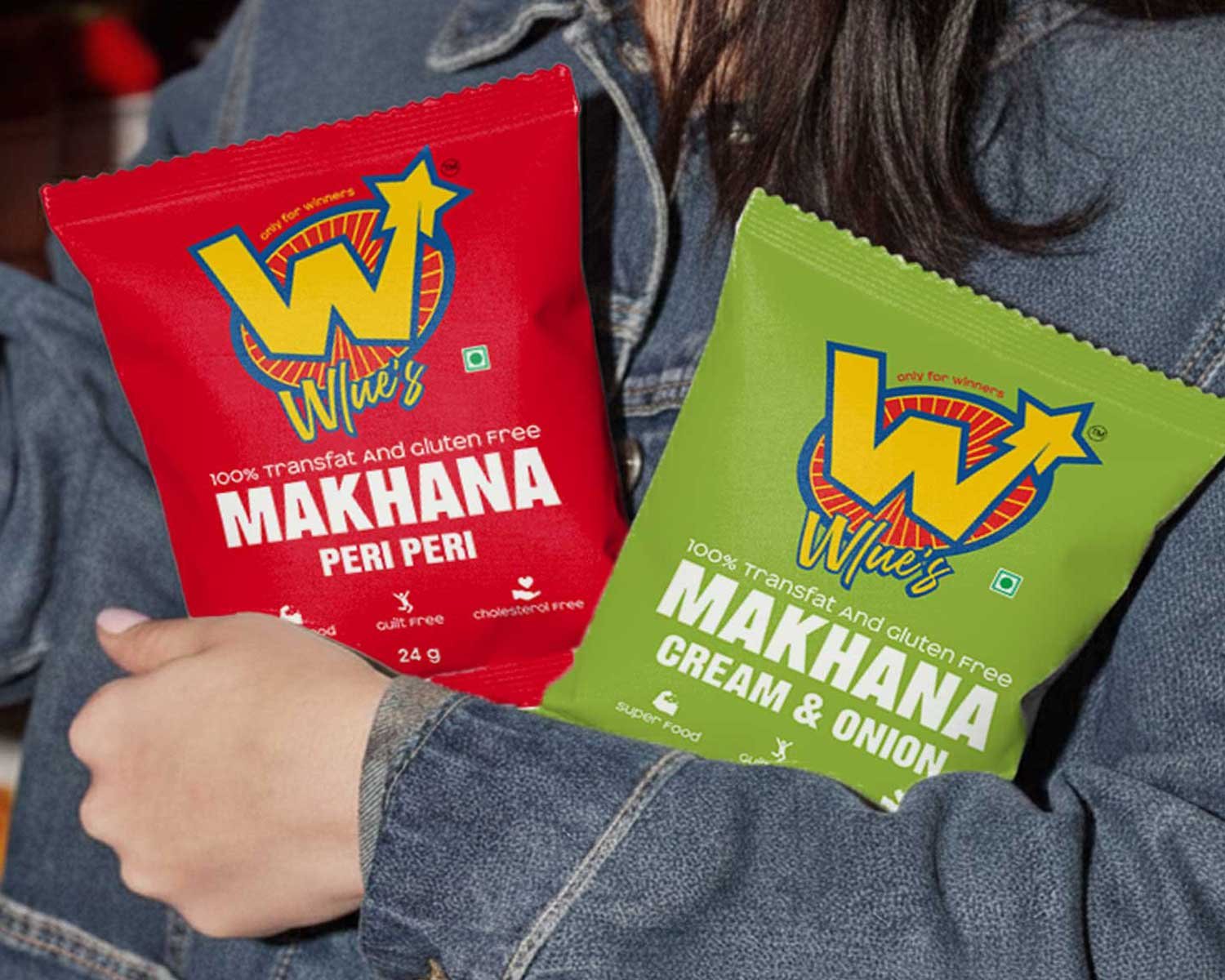
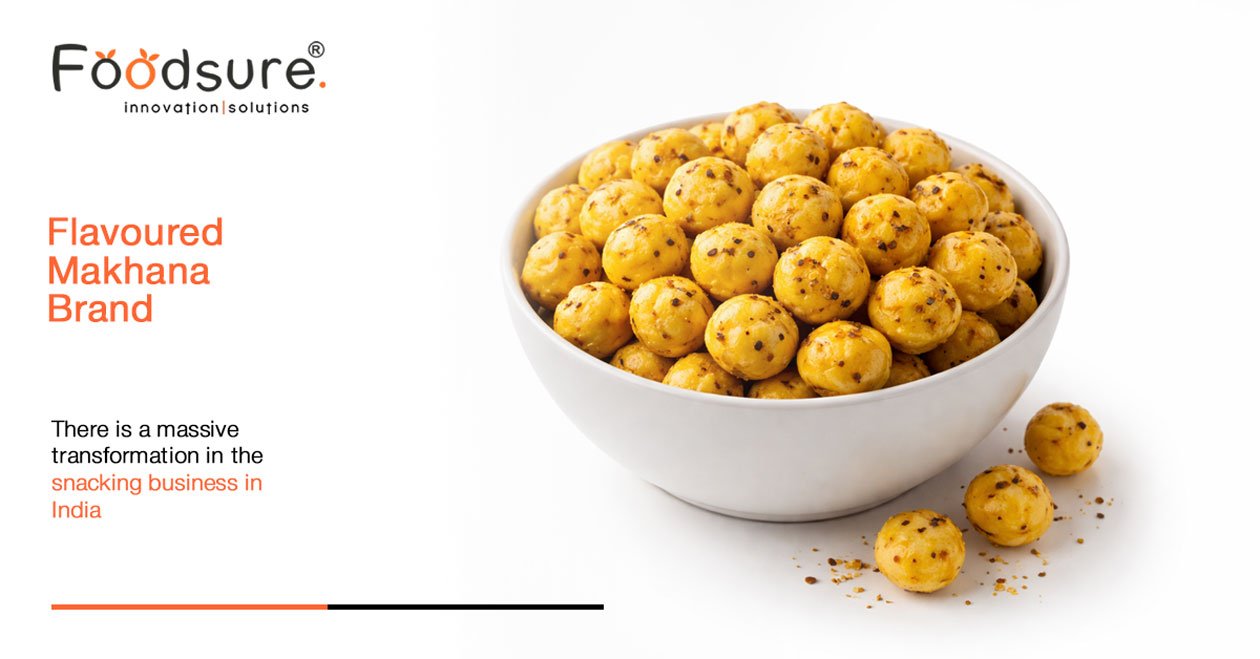
There is a massive transformation in India’s snacking business. Customers are moving out of the deep-fry food and are aggressively seeking more nutritious options that do not compromise on bold flavour. This change offers a strong business opportunity for entrepreneurs interested in launching a fox nut brand or entering the booming lotus seed snack market in India.
Fox nuts or lotus seeds (makhana) are among the most popular healthy snacks to sell in India. As modern retail, fast commerce, and digital-first brands have risen, it is possible to launch a flavoured makhana brand today, which can be highly scalable, as long as food product development, makhana seasoning formulation in India, packaging, and distribution strategy are correct.
LAUNCH YOUR OWN MAKHANA BRAND Inspired by the Makhana Boom? Build Your Own Flavoured Makhana Brand in IndiaThe makhana snack market is growing fast. Foodsure helps Indian founders develop their own flavoured makhana brand — seasoning formulation, FSSAI compliance, packaging, and contract manufacturing under one roof. Explore Food Product Development |
Why Makhana Is a High-Growth Snack Category
Makhana has ceased being just a folk fast food. It has turned into a premium healthy snack, usually consumed by millennials who reside in urban areas and exercise.
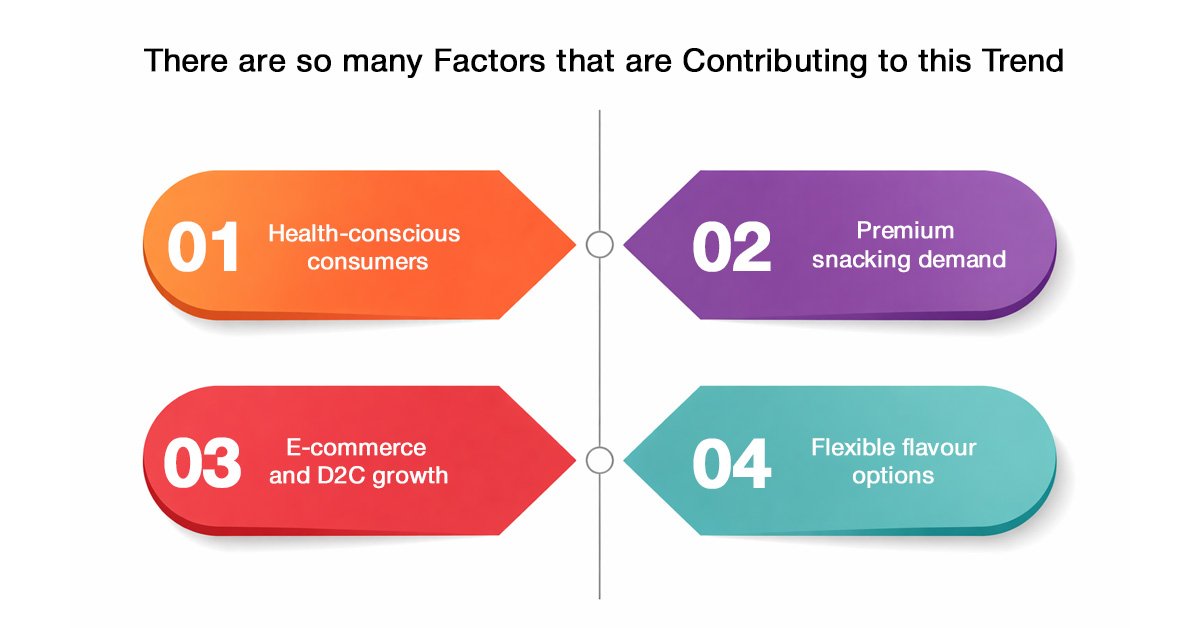
There are so many factors that are contributing to this trend:
- Health-conscious consumers: Makhana is gluten-free, containing low calories and high antioxidants. It suits modern diets, such as vegan, keto-friendly, and gluten-free ones.
- Premium snacking demand: Customers are ready to pay a high price for snacks that have a mixture of health and gustation. This has increased the demand for premium packaged snack products in India and gourmet makhana products.
- E-commerce and D2C growth: The Indian ecosystem allows start-ups to sell through sites and marketplaces and through quick commerce platforms due to the introduction of the makhana D2C brand.
- Flexible flavour options: Makhana is able to serve a wide range of seasoning profiles, such as peri-peri and cheese, Indian masala and caramel. It is such flexibility that allows powerful snack flavour innovation in India and product differentiation in FMCG.
These are the factors that make makhana one of the most challenging types of snacks that new founders can venture into.
Flavoured Makhana Brand: Step-by-Step Startup Guide
In order to initiate a successful brand of flavoured makhana, it requires that proper planning must be carried out in the development of the product, flavour innovation, packaging and production.
The roadmap that can be utilised in practice is the following:
Understand Your Target Market
Identify the customers prior to launching your product.
The makhana customer segments include:
- Fitness and gym enthusiasts
- Healthy snacks are required by busy workers.
- Parents who demand better snacks for their children.
- Presenting snacks is introduced into the corporate market.
- Premium retail consumers
All the segments are different in flavour preference, size of packaging, distinctiveness and pricing anticipations. Learning this assists in consumer segmentation in the FMCG, snack brand positioning in India and the establishment of a robust health snack brand strategy.
Product Innovation and Flavour Development
Flavour experience is the actual difference of a makhana brand.
The phase involves the development of spicy makhana products in India, whereby the brands are made with a unique combination of flavours that are capable of appealing to the Indian taste.
Some of the popular flavours in makhana are:
- Classic salted
- Peri-peri
- Cream & onion
- Pudina masala
- Tandoori
- Cheese
- Himalayan pink salt
- Caramel sweet makhana
The other seasoning development areas include low oil absorption, clean-label ingredients and natural flavour profiles.
This is a very important phase since, when it comes to repeat purchasing, flavour quality is the factor.
Raw Material Sourcing and Roasting Technology
The high-quality makhana kernels used are usually obtained in Bihar, which supplies nearly 85 – 90% of makhana in India.
The significant product development factors include:
- Kernel size consistency
- Roasting technology
- Oil usage
- Crispiness retention
Roasting methods include:
- Dry roasting
- Oil roasting
- Air roasting
Each of these methods has an impact on the end texture, absorption of flavours and shelf-life of the product.
Branding and Positioning Strategy
The generic brand positioning strategies are:
- Mark of a healthy snack: Focused on low-calorie and nutritious snacks.
- Gourmet snack brand: Luxury packaging and good tastes.
- Fitness snack brand: Energy-based compositions containing protein.
- Indian snack age-old brand: Ayurvedic and Desi flavours.
The trust and recall of consumers is largely attributed to the brand story.
Makhana Snack Packaging Design India
Packaging is one of the best sales promoters in the snack industry.
The makhana snack pack package used in India must be effective in:
- Waterproofness
- Vitality in dissolved oxygen
- Product visual appeal
- Convenient serving sizes
Good packaging design has the advantage of enhancing the shelf life, flavour protection, and retail visibility. The new makhana brands have also purchased environmentally appropriate packaging material to attract the green consumer market.
Makhana Contract Manufacturing India
Most of the start-ups are not required to manufacture and, as such, incur a lot of money in manufacturing plants; they utilise makhana contract manufacturing in India.
Contract manufacturing is associated with several advantages:
- Lower startup investment
- Faster product launch
- Manufacturing capacity that can be discarded.
- Access to food safety certified premises.
Nevertheless, care should be taken to ensure that the standardisation of quality, consistency and flavours of production batches is high.
Where to Sell Your Makhana Brand
One of the largest driving forces of growth of a makhana startup is the distribution strategy.
D2C Website
Creating your own website assists in developing a brand name and increasing margins. It facilitates the Indian food brands through direct-to-consumer and ownership of customer data.
Marketplaces
The visibility can be scaled by selling on such platforms as Amazon and Flipkart. This is crucial towards the FMCG market place strategy in India and online snack distribution.
Quick Commerce
E-commerce such as Blinkit, Zepto, and Swiggy Instamart are quickly expanding. They enable:
- Instant delivery
- High repeat purchase
- Urban penetration
This is one of the channels that are important in fast snacks commerce in India and impulse purchases.
Modern Trade
Offline visibility and trust are given by the retail chains such as DMart and Reliance Retail. This is in line with the current trade of FMCG India and the retail growth plan.
Gifting & Corporate Sales
Heavy business orders on festivals and corporate gift giving can be of high revenue. This is within the B2B food sales in India and corporate gifting snacks.
A multi-channel strategy will guarantee increased contact, increased growth, and improved brand memory.
How to Compete with Existing Makhana Brands
The market already consists of solid market players such as Farmley, The Makhana Co, Early Foods and even new regional brands.
To be differentiated, you should be distinct:
- Unique Flavour Innovation: Surpass the usual flavours with regional or functional blends.
- Powerful Health Positioning: Target clean-label or low-oil versions or fortified versions.
- High Quality Packaging: Spend on attractive and convenient packaging.
- Niche Targeting: Target certain audiences such as children, people who use fitness, or gift givers.
- Brand Storytelling: This is creating an emotional connection with a brand by creating a story that people can relate to.
The essential step to success in the competitive makhana brand in India and the startup ecosystem of healthy snacks is differentiation.
Pricing and Market Strategy
Positioning: Pricing depends on positioning:
- Mass segment: ₹50 – ₹70 (30g)
- Premium segment: ₹90 – ₹150
- Gourmet segment: ₹200+
A good pricing policy helps in FMCG pricing strategy in India, premium margins of snacks, and brand positioning.
Regulatory Compliance and Food Safety
Key requirements include:
- FSSAI license
- Ingredient compliance
- Nutritional labeling
- Shelf-life testing
Brands must also conduct:
- Stability testing
- Moisture analysis
- Compatibility of packaging research
These provide the compliance of food safety in India, regulatory approval of snacks, and market preparation on a long-term basis.
Common Challenges in Makhana Brand Launch
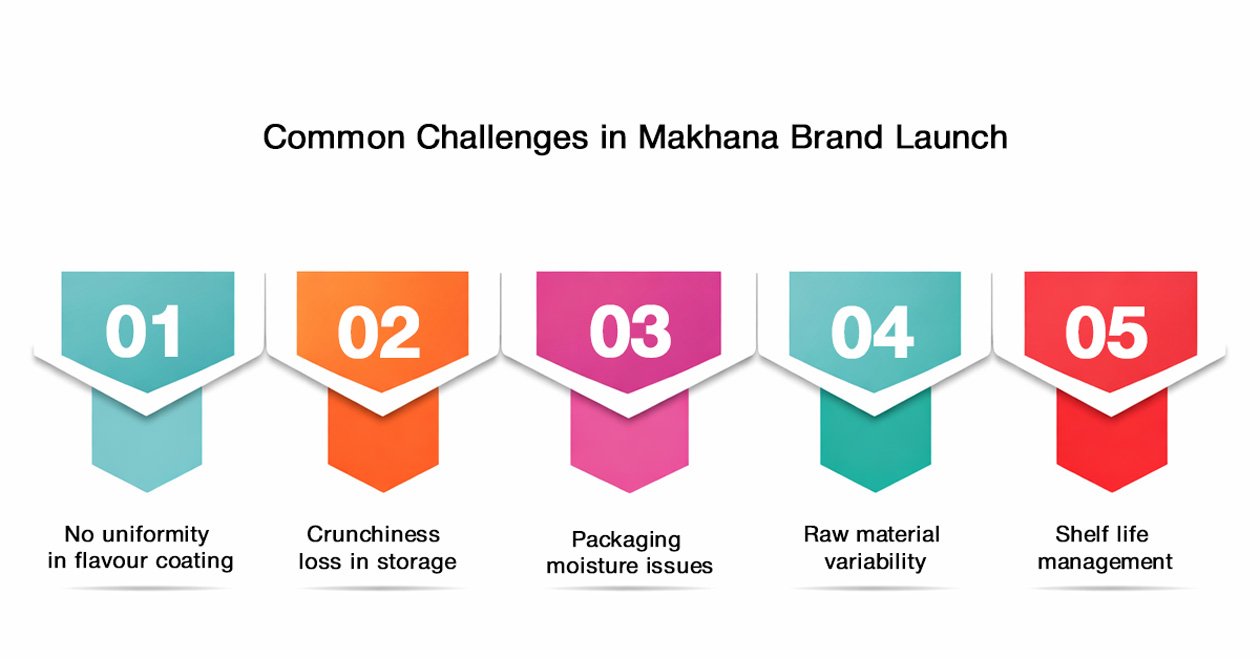
Even though the category of makhana has enormous potential, new brands are usually challenged by such challenges as:
- No uniformity in flavour coating
- Crunchiness loss in storage
- Packaging moisture issues
- Raw material variability
- Shelf life management
Professional product development is able to overcome these issues in the initial phase of launching.
Call Foodsure for Professional Food & Beverage Product Development
To establish a flourishing flavoured makhana brand, one needs to have the knowledge of flavour manufacturing, packaging, and manufacturability.
We assist new startups and food businesses with: Makhana product development, Seasoning Formulation, Snack Packaging Design, etc., in India.
Our team develop snack concepts into market-scaled products to be launched in both retail and the makhana D2C brand in India.
Are you planning to start your own makhana brand?
Call +91 8130404757 and bring your product to the market in a shorter time.
LAUNCH YOUR OWN MAKHANA BRAND Launch Your Own Flavoured Makhana Product With UsThe makhana snack market is growing fast. Foodsure helps Indian founders develop their own flavoured makhana brand — seasoning formulation, FSSAI compliance, packaging, and contract manufacturing under one roof. Explore Food Product Development |
FAQs
Is the flavoured makhana business a good business to start in India?
Yes, the Indian market of healthy snacks is booming, and makhana has great opportunities, taking into account its healthy nutrition value and status of luxury.
What will be the cost of launching a brand of makhana?
Start-up cost can range between 5 lakh and 25 lakh, depending on packaging, branding and manufacturing size.
What is the recipe for makhana seasoning?
The focus of professional makhana seasoning formulation in India is adhesion of flavours, heat stability, homogenous coating and clean-label ingredients.
How long does flavoured makhana average shelf life?
Most of the flavoured makhana products have a shelf life of 69 months when the product is packed in moisture barrier packs.
Does it have makhana brands as a sell-through D2C?
Yes, there are a lot of successful brands in India, and one of them is a makhana D2C brand, which is sold through websites, Amazon, and quick commerce.
How can the makhana snacks be best packaged?
In India, the snack packets are normally nitrogen-flushed, laminated, zip-up packets.
Can we prepare makhana snacks through contract manufacturing in start-ups?
Yes, the contract manufacturing facilities of Makhana in India have numerous brands that approach them in order to reduce the number of investments made, and maximise the rate of production at an extremely high pace.