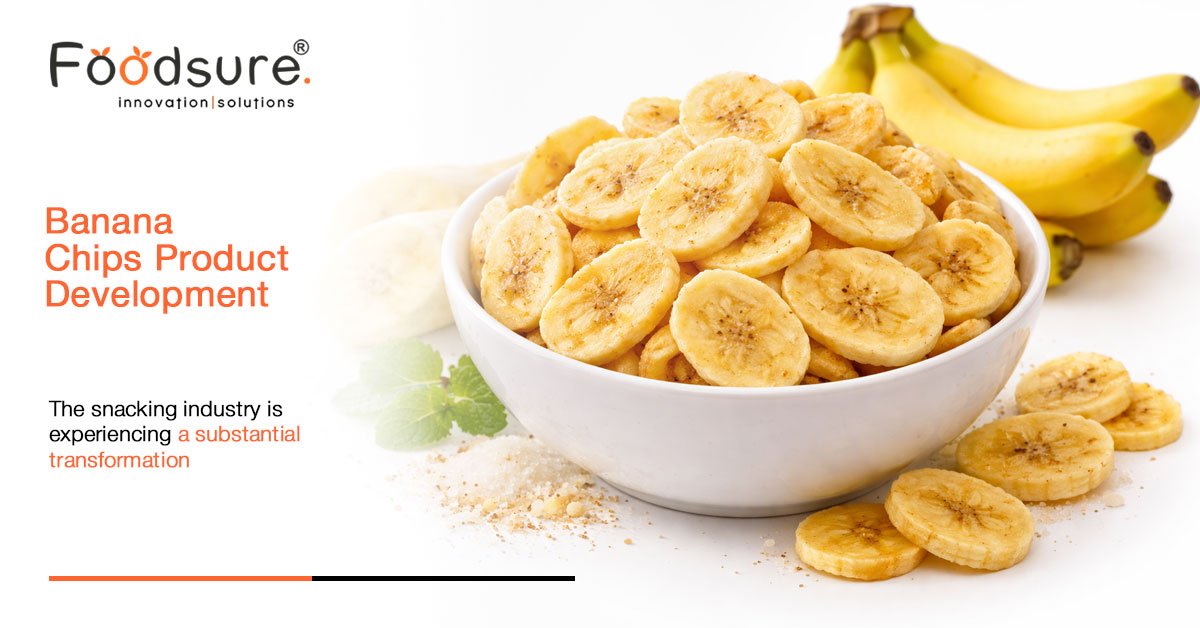
The snacking industry is experiencing a substantial transformation. There is a clear shift in people’s preference from primarily processed foods to options that are more regional, familiar, and better-for-you. Within this industry change, banana chips are making quite a name for themselves. They offer an ideal combination of crunch, nostalgia, and a cleaner snacking appeal and we offer banana chips product development for startups & founders.
However, creating a profitable banana chips brand is a lot more complicated than just slicing and frying bananas. Along with growing demand comes higher competition and elevated quality standards. That’s why food product development is crucial. Whether it’s the choice of the banana variety, the texture of the product, the shelf life, or the regulatory compliance, a product that is scalable and ready for the market is created through a well-planned process, scientific knowledge, and market insight. Working with a food consultant, food technologist, or leveraging contract manufacturing, food formulation, and nutraceutical product development ensures the product meets modern consumer expectations.
Why Banana Chips Are a High-Potential Category?
India is a major banana producer, and banana chips have a great regional base, particularly in South India. Currently, they are shifting to a mainstream packaged snack market in the urban markets.
Key Growth Drivers
|
Factor |
Impact on Market |
|
Health-conscious snacking |
Shift from fried junk to traditional snacks |
|
Regional authenticity |
Kerala-style chips are gaining a premium positioning |
| Export potential |
High demand in the Middle East, the US, and the UK |
| Product innovation |
Flavoured, baked, and vacuum-fried variants |
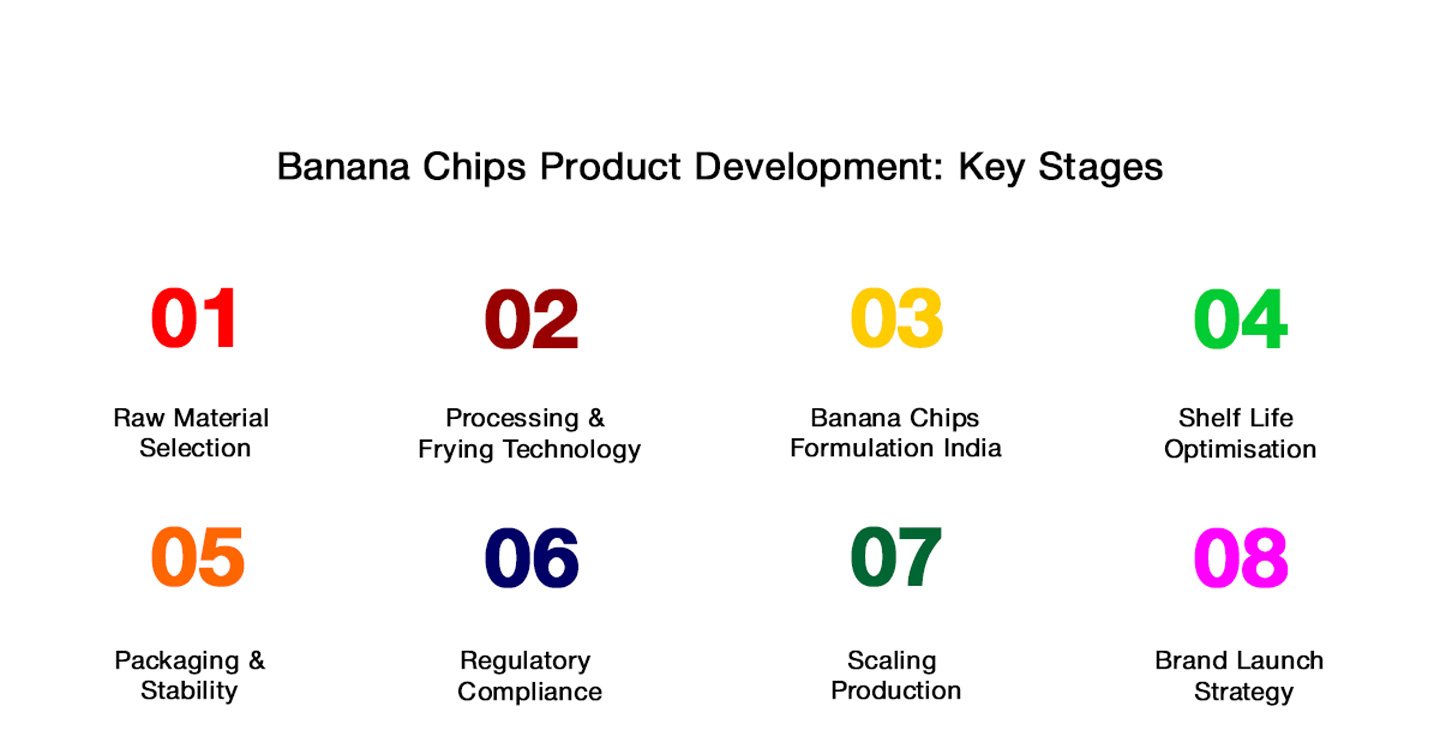
Banana Chips Product Development: Key Stages
1. Raw Material Selection
Good banana chips are based on the proper choice of the banana variety.
|
Banana Type |
Characterstics | Use Case |
|
Nendran |
Firm, less sweet | Premium Kerala-style chips |
| Cavendish | Easily available |
Mass-market production |
| Robusta | Balanced texture |
Flavoured chips |
The selection of the incorrect variety may influence the texture, absorption of the oil, and the taste.
2. Processing & Frying Technology
It is not only salt and oil in a strong banana chips product development in India’s strategy.
|
Method |
Benefits | Limitations |
|
Deep frying |
Authentic taste | High oil content |
| Vaccum frying | Low oil, better nutrition |
Higher cost |
| Baking | Health positioning |
Different texture |
3. Banana Chips Formulation India
A strong banana chips formulation in India strategy goes beyond just salt and oil.
Key Formulation Elements
- Type of oil (coconut oil, palm oil, sunflower oil)
- Blended (peri-peri, masala, jaggery-coated) seasoning
- Anti-browning agents (to retain colour)
- Texture enhancers
Example Formulation Table
|
Component |
Purpose |
|
Banana slices |
Base ingredient |
|
Edible oil |
Frying medium |
| Salt/spices |
flavor |
| Antioxidants |
Shelf life improvement |
4. Shelf Life Optimisation
Another significant issue is shelf life because of the oxidation of the oil and exposure to moisture.
Banana Chips Shelf Life India Considerations
|
Factor |
Impact |
| Moisture content |
Leads to sogginess |
| Oil quality |
Rancidity risk |
| Packaging |
Oxygen exposure |
| Storage conditions |
Temperature sensitivity |
Typical Shelf Life
- Standard fried chips: 4 – 6 months
- Nitrogen-impregnated packs: 6 – 9 months
5. Packaging & Stability
Packaging is not only branding, but it is also a technical requirement.
Recommended Packaging Types
|
Packaging Type |
Benefit |
|
Metallized pouches |
Moisture & oxygen barrier |
| Nitrogen flushing |
Prevents oxidation |
| Vacuum packs |
Premium shelf stability |
6. Regulatory Compliance
In India, it is required to comply in order to sell.
Banana Chips FSSAI Registration India
|
Requirement |
Details |
|
FSSAI License |
Mandatory for food businesses |
| Labeling norms |
Ingredients, nutrition, shelf life |
| Food category compliance |
Snack category regulations |
Failure to comply may result in fines and recall of products.
7. Scaling Production
Due to the increasing demand, startups have to abandon small batches and move to commercial production.
Banana Chips Contract Manufacturing India
|
Model |
Best For |
|
Third-party manufacturing |
Low initial investment |
| In-house production |
Long-term control |
| Hybrid model |
Balanced approach |
The use of contract manufacturing makes it possible to launch startups in a shorter period without a large amount of capital expenditure.
8. Brand Launch Strategy
A banana chips brand cannot be launched by just having a good product.
Banana Chips Startup Brand Launch in India
Key Steps
- Determine target audience (health-based, mass-market, high-end)
- Develop a unique selling proposition (USP).
- Establish packaging and branding.
- Test in pilot markets
- Gather customer feedback
Common Challenges in Banana Chips Product Development
|
Challenge |
Solution |
|
Inconsistent texture |
Controlled slicing & frying |
|
High oil content |
Vacuum frying |
| Short shelf life |
Advanced packaging |
| Flavor inconsistency |
Standardized formulation |
Emerging Trends in Banana Chips
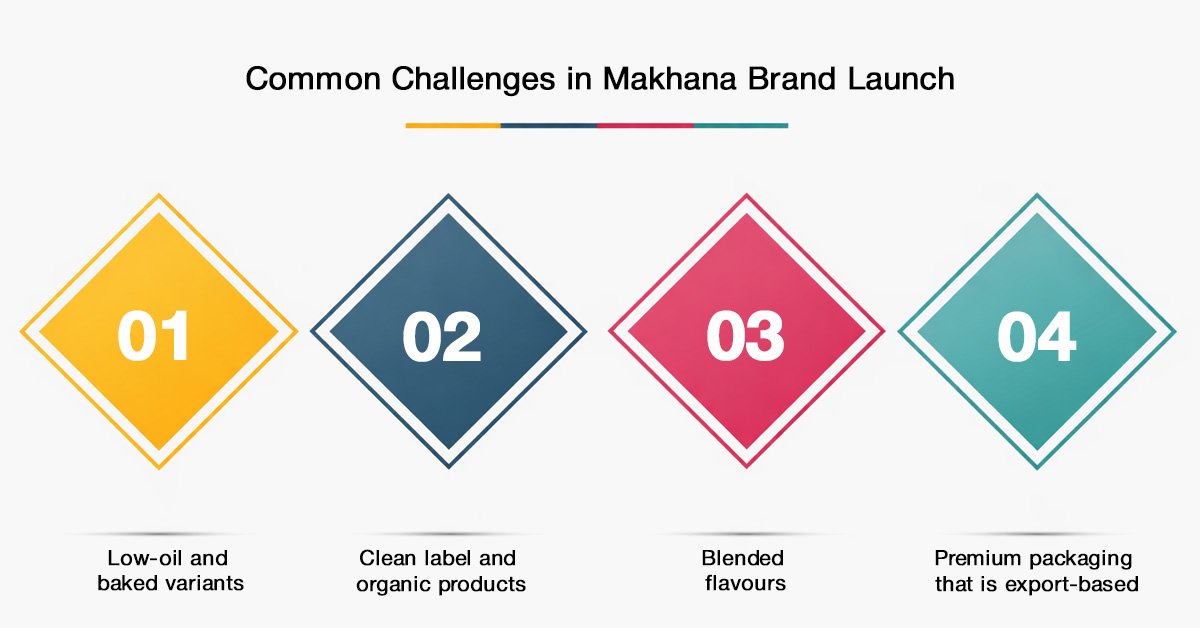
- Low-oil and baked variants
- Clean label and organic products
- Blended flavours (spicy blends, chocolate blends, cheese)
- Premium packaging that is export-based
How Foodsure Helps You Succeed
In Foodsure, we are behind startups and brands in the full process of developing the banana chips products:
- Scientific food formulation and development of flavours
- Shelf life and stability test through expert food product development
- Packaging optimization guided by a food consultant and food technologist
- Commercial and regulatory support and FSSAI
- Contract manufacturing guidelines
- End-to-end product launch strategy including nutraceutical product development
We not only make your product market-ready, but market-winning.
Call FoodSure for Banana Chips Product Development
You may have a banana chips brand that you are about to start or are about to grow, so it is the time to do this right.
Collaborate with Foodsure in developing a product that performs well in terms of taste, quality, shelf life and compliance, and also has a competitive edge in the competitive snack market.
Contact us at +91 8130404757 and make your idea a successful and scalable brand today!
FAQs
What type of banana will help in producing chips commercially in India?
It is the most popular Nendran (Kerala Banana), but varieties such as Robusta produce lower-cost wafers.
What can I do so that my banana chips do not go soft?
Moisture migration is normally the cause of sogginess. You should have the chips fried until there is less than 3% moisture in them, and you should also use moisture-proof and nitrogen-flushing packages.
How much does it cost to register FSSAI as a snack startup?
Registration only costs 100 rupees annually, and State Licenses range between 2,000 and 5,000 annually, depending on the state and the capacity to produce.
Is it possible to sell banana chips with no oil?
Yes, by vacuum frying or air-drying processes. These approaches are popular in the trend of the healthy snacking market, but they demand more start-up capital.
What will be the flavours of banana chips on trend in 2026?
Outside Classic Salted, there is a huge demand for flavours such as Peri-Peri, Sour Cream and Onion, Truffle and Jaggery-coated (Sarkara Upperi).
Does the brand of banana chips require its own GST registration?
Yes, in case your turnover is more than the limit (which is normally 20-40 Lakhs), GST registration is obligatory for interstate commerce and electronic commerce sales.
To what extent can I have a shelf life?
The organised retail sector has a 6-month shelf life with professional formulation and multi-layer packaging.