Consumers today are becoming more mindful of what they consume, especially when it comes to sugar. Consumers still choose soft drinks as their preferred choice, but they now select drinks that provide the same cooling effect yet have lower calorie content and cleaner ingredient lists. People want drinks that provide a light and natural drinking experience that matches their daily activities.
The purpose of this blog is to assist beverage founders in understanding the ways the soft drinks industry is changing from its classic carbonated drinks to new products, while demonstrating how low-sugar reformulation improves taste and consistency and drives repeat customer purchases through optimised soft drinks manufacturing.
Problem with the Traditional Soft Drinks Manufacturing Process
The process of reducing sugar in soft drinks shows that manufacturers face challenges beyond making product formula changes. The majority of companies underestimate sugar’s role in their drinks’ taste and texture and entire drinking experience. The implementation of quick solutions results in suboptimal product results.
What Goes Wrong Without Proper Reformulation:
- The drink loses its sweet taste balance, which results in flat-tasting drinks.
- The drink becomes harsh because its acidity levels have increased.
- The use of sweeteners produces an unpleasant aftertaste that tastes like artificial flavouring.
- The drink has low mouthfeel, which makes it appear to be thin and watery.
The process of manufacturing soft drinks requires complete alignment with reformulation methods because it affects the quality of carbonated beverages, which need to maintain product consistency and customer satisfaction.
Why Low-Sugar Reformulation in Soft Drinks Is Challenging
The process of decreasing sugar content in soft drinks requires more than just sugar elimination or sugar substitution methods. Sugar in beverages performs three functions because it helps to manage acidity levels, while it improves taste and gives the drink its full-bodied appearance.
The drink will experience two problems when the sugar content decreases:
- The drink will experience a watery or thin texture
- The taste of the drink will lose its balance
The use of alternative sweeteners will create bitter flavours in the product. The product’s carbonation and shelf life will be altered by all changes made to its formulation. Brands face challenges in preserving their original flavour profile because they lack the necessary technical knowledge to do so after product reformulation. This is one of the most common reasons behind beverage repeat purchase failure — consumers try the reformulated product once and never return.
Founder Pain Points in Carbonated Drinks Reformulation
- High sugar content is affecting brand perception through its impact on consumer evaluation of the product.
- The low-sugar variants did not succeed because they did not meet the basic requirements of taste tests.
- The product delivers a taste experience that ends with a bitter flavour and an artificial taste.
- The new formula exhibits inconsistent carbonation levels during the testing of its various batches.
Understanding Soft Drinks Manufacturing Process in Simple Terms
The manufacturing process for soft drinks functions as a recipe that requires balanced ingredients for success. The three components of sugar, flavour, and carbonation must develop a unified whole. The reduction of sugar from the recipe results in an entire balance alteration.
The process of reformulation requires multiple adjustments because sweetness represents only one element of change. A successful low-sugar drink maintains all the desirable qualities of the original product while displaying a complete and smooth drinking experience.
Soft Drinks Manufacturing Process and Reformulation Impact
When issues of formulation came up, various phases in the manufacturing process had impacts on the final product:
| Step | Process Stage | Reformulation Impact |
|---|---|---|
| 1 | Water Treatment | Guarantees a clean and neutral foundation. |
| 2 | Syrup Preparation | Essential for the decrease of sugar and flavour. |
| 3 | Carbonation | There must be an adjustment of the low-sugar formula. |
| 4 | Blending | Not batch varied. |
| 5 | Filling & Packaging | Ensures its product stability. |
| 6 | Quality Control | Guarantees taste, sweetness and shelf life. |
Every stage needs to be optimised to make sure that low-sugar carbonated drinks maintain pretty much the same quality and consumer appeal.
Low-Sugar Innovation in Carbonated Drinks
The main force of innovation in the carbonated beverage industry is now low-sugar products. The brands are exploring high-level practices that allow them to reduce the sugar levels without affecting their product flavour and customer experience.
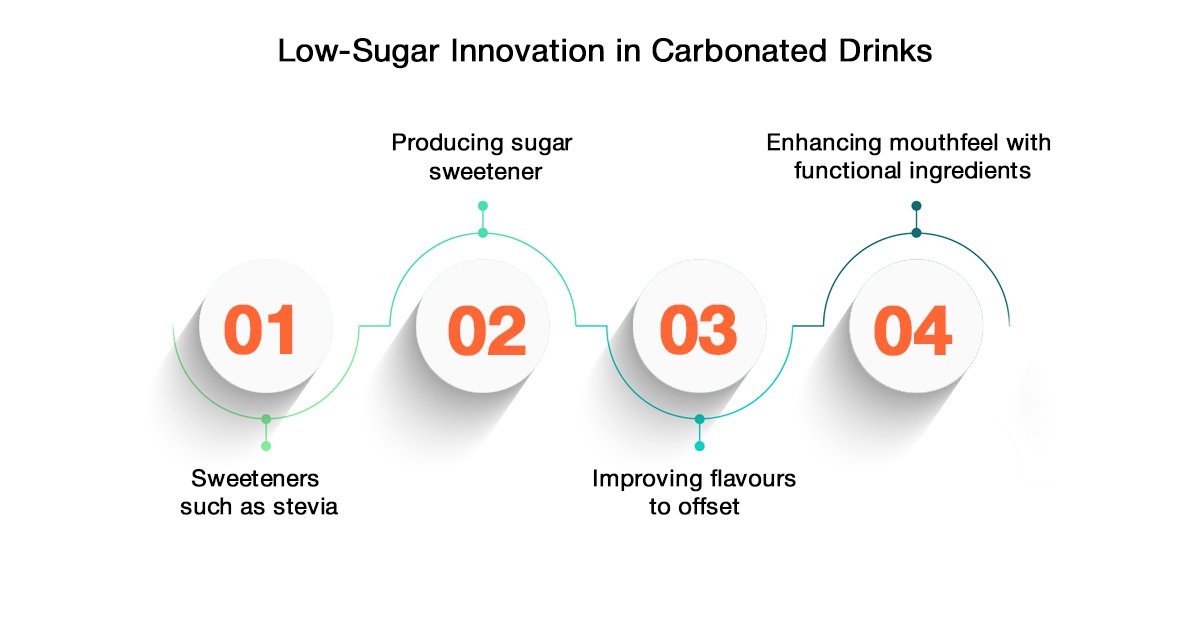
Common approaches include:
- Sweeteners such as stevia should be used, but as natural ones.
- Producing sugar-sweetener mixtures.
- Improving flavours to offset the decreased sweetness.
- Enhancing mouthfeel with functional ingredients.
This is to be done so that the consumers do not experience a discernible difference in taste despite low sugar content. Our detailed guide on no-sugar beverage formulation covers the exact sweetener systems and mouthfeel strategies that work at commercial scale.
Reformulate Your Soft Drink
Build a Low-Sugar Soft Drink That Tastes Better Than the Original
Reducing sugar without losing taste, mouthfeel, or carbonation consistency requires precise reformulation expertise. Foodsure helps beverage brands reformulate their soft drinks — from sweetener selection to commercial production scale-up.
What Actually Works in Soft Drink Reformulation
The brands must have an organised reformulation strategy to be successful in the modern soft drinks market:
- Firms ought to make sugar cuts gradually rather than put a sudden cut on sugar.
- The combination of several sweeteners will provide better taste outcomes than those of a single sweetener.
- The flavour masking process allows products to gain taste neutrality by removing the aftertaste.
- The mouthfeel enhancement process provides an alternative to sugar-based body weight.
The strategies help the companies to maintain product quality and cater to the consumer’s need to have healthier beverages. A real-world look at how this plays out in practice is covered in our sugar-free beverage case study.
Soft Drinks Industry Trends: From High Sugar to Smart Formulation
A significant transformation is exciting in the soft drinks industry due to health-conscious consumers.
| Traditional Soft Drinks | Modern Soft Drinks |
|---|---|
| High sugar content | Low or zero sugar |
| Artificial flavours | Natural ingredients |
| Fixed formulations | Continuous reformulation |
| Mass appeal | Niche and functional positioning |
This shift underscores how crucial innovation is for survival in the competitive and rapidly changing beverage market. Understanding the latest beverage industry trends helps brands anticipate where consumer preferences are heading before committing to a reformulation direction.
Role of Expertise in Soft Drinks Manufacturing Process
Reformulating soft drinks demands comprehensive knowledge about ingredient interactions, flavour science and production scaling abilities. The manufacturing process of soft drinks needs to be properly arranged so that sugar reduction maintains taste, product stability, and tasting consistency.
The correct formulation method enables brands to adjust their products according to market demands while keeping their distinctive brand identity.
Founder Takeaway: Future of Soft Drinks Lies in Reformulation
The upcoming trends in soft drinks will focus on creating products that combine better taste through advanced non-carbonated solutions. The market will favour brands that achieve taste and quality consistency through their ability to reduce sugar content.
The process of reformulating products creates a business opportunity that enables companies to develop new products and expand their operations.
Our team helps you reformulate soft drinks with the right balance of taste, low sugar content and efficient production methods, which will help your business achieve successful scaling.
Ready to build a better low-sugar beverage? Connect with our experts today.
PLAN A PROFITABLE SOFT DRINK BRAND
Build a Low-Sugar Soft Drink With The Right Formula & Cost Structure
Foodsure supports beverage founders with soft drink reformulation, sweetener strategy, carbonation optimisation, and contract manufacturing guidance to launch a profitable low-sugar beverage brand.
Related Blogs
- Carbonated Drink Formulation
- No-Sugar Beverage Formulation Service
- Sugar Free Beverage Case Study
- Reformulation of the Beverage
- Beverage Sensory Validation
FAQs
What is the soft drinks manufacturing process?
The production of soft drinks starts with water treatment, which leads to syrup preparation and carbonation, followed by blending and packaging processes that maintain consistent product taste and quality.
Why is low sugar important in soft drinks?
The presence of low sugar content in soft drinks enables companies to meet consumer demands for healthier products, which results in improved brand image and increased customer repeat purchases.
How can I improve my soft drinks manufacturing process?
The process of improving your soft drinks manufacturing operations requires you to optimise your product formulations while maintaining proper ingredient balance and implementing effective scaling methods together with quality control systems.
What are the challenges in carbonated drinks reformulation?
The process of carbonated drink reformulation requires precise execution because it can create both taste problems and aftertaste defects while leading to carbonation problems.
How to reduce sugar in soft drinks without affecting taste?
The original taste experience remains intact after reducing sugar because sweetener blends together with flavour masking and mouthfeel enhancers create the same taste experience.
What is soft drink formulation?
Soft drink formulation requires the creation of ideal ingredient combinations that produce the desired taste, texture and stability characteristics.
Why do reformulated soft drinks fail in the market?
The reformulated soft drinks fail to succeed in the market because their taste, mouthfeel and product consistency have been diminished, which results in customers rejecting the product.