A large part of the nutrients that we get from food is not necessarily absorbed by the body. That’s why the concept of nutrient bioavailability in foods, or the measure of nutrients’ effectiveness in being absorbed and used by the body, has been receiving more attention these days. A food item, even if it’s loaded with vitamins and minerals, may have a limited effect if the nutrients aren’t well absorbed.
On the other hand, as people learn more about nutrition and health, their requirements for functional foods are also changing. Currently, companies are focusing on higher nutrient absorption techniques, new types of ingredients, and better delivery systems in order to make sure that the nutrients not only exist in the products but also have a true impact on the human body.
Understanding Nutrient Bioavailability in Foods
It is simply described as the degree to which a nutrient that has been ingested gets absorbed into the body via the digestive system and is made available to the body to utilise. It is affected by a number of factors such as food matrix interactions, digestive situations, processing methods and the chemical form of the nutrients.
Many barriers can be present even in the presence of the essential nutrients in the food:
- Low solubility of some vitamins and minerals.
- Combination with other substances that prevent absorption.
- The degradation of processing or storage.
- Poor digestive system stability.
The key to correcting the nutrient delivery in functional foods is to comprehend these challenges first.
Why Bioavailability Matters in Functional Foods
Functional foods have been made to have particular health advantages over basic nutrition. Nevertheless, such benefits are strongly determined by the efficiency of nutrient intake and their use.
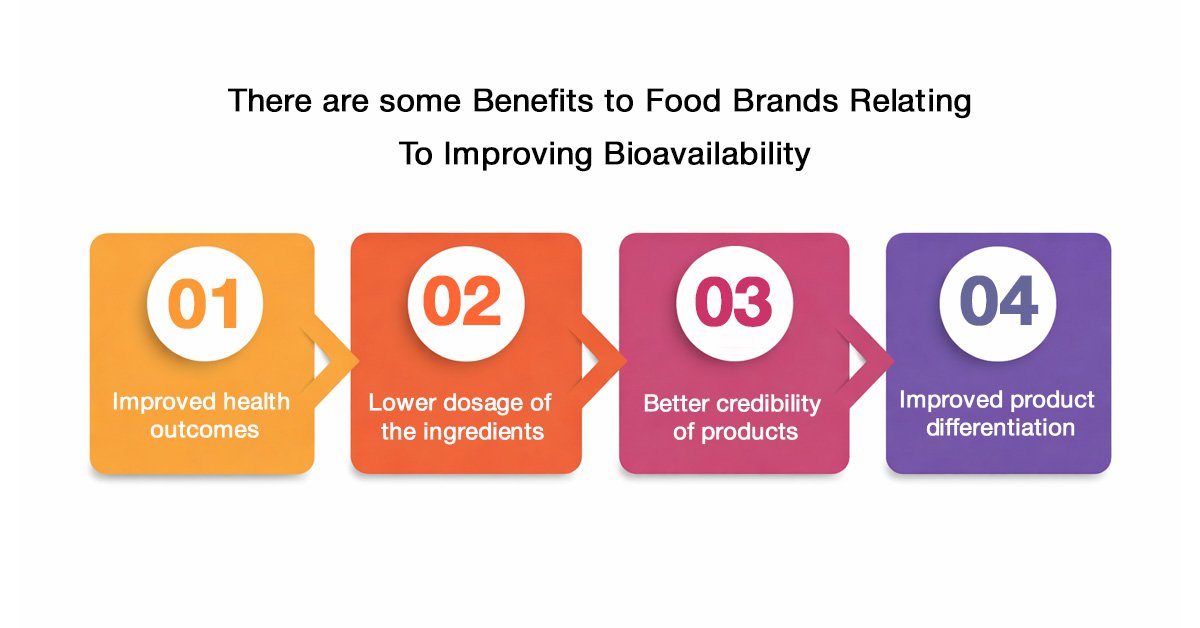
There are some benefits to food brands relating to improving bioavailability:
Improved health outcomes: When nutrients are appropriately absorbed, consumers have real benefits.
Lower dosage of the ingredients: The increased absorption should also be accompanied by a smaller amount of nutrients to provide the same effect.
Better credibility of products: Proven formulations enhance brand confidence.
Improved product differentiation: With increased delivery technologies, there is a competitive advantage in the saturated markets.
Due to these benefits, the nutrient delivery system has become one of the most important fields of study in the development of functional foods.
Key Factors Affecting Nutrient Absorption
There are a number of biological and formulation factors that affect the absorption of nutrients.
1. Nutrient Form
The chemical nature of a nutrient is what determines the ease with which the body can absorb a nutrient. Mineral salts are less absorbable, and organic complexes are better absorbed.
2. Food Matrix Interaction
The food components that are surrounding, i.e. fats, fibres, proteins and carbohydrates, can increase or decrease nutrient absorption.
3. Digestive Environment
pH, digestive enzymes, and gut microbiota have a major impact on the release and absorption of nutrients.
4. Processing Methods
Sensitive nutrients may be damaged by heat, moisture, oxygen exposure, and storage conditions, and become unavailable.
These are the reasons why mere fortification is not sufficient, and there is a need to be intelligent with formulation strategies.
Effective Nutrient Absorption Methods in Functional Foods
There are several nutrient absorption techniques applied by food scientists to enhance the absorption of nutrients in the human body.
1. Lipid-Based Delivery Systems
Vitamins that are fat-soluble need lipids to be absorbed. Oil-based carriers or emulsions may greatly enhance the absorption of vitamins, including vitamin D, vitamin E and carotenoids.
2. Enzyme-Assisted Processing
Some of the enzymes are able to degrade compounds that inhibit the absorption of the minerals, which enhances the nutritional status as a whole.
3. Food Pairing Strategies
Absorption can be improved by combining ingredients in a strategic manner. For example:
- Vitamin C enhances the absorption of iron
- Healthy fats enhance carotenoid uptake
- Anti-nutritional compounds can be decreased by fermentation
4. Particle Size Reduction
The smaller the size of the particle containing the nutrients, the bigger the surface area, the better the solubility and absorption.
These methods show that formulation science can be of great use in enhancing nutrient delivery.
Role of Microencapsulation Technology
Microencapsulation technology has been described as one of the most effective technologies that enhances the bioavailability of nutrients. It protects them against environmental degradation and regulates their discharge in the digestive system.
Advantages of Microencapsulation Technology –
Preservation against degradation: Sensitive compounds like probiotics, omega-3 fatty acids and vitamins are safeguarded against heat, oxygen and moisture.
Regulated release of nutrients: Encapsulation enables nutrients to be released at a certain stage of the digestive system where they are most effectively absorbed.
Better taste and shelf stability: Encapsulation covers bad flavour and enhances shelf life.
Increased food-compatibility: Encased nutrients do not interact with other ingredients as much, resulting in their activity being retained.
Applications of microencapsulation include functional drinks, fortified dairy substitutes and snack bars, as well as nutraceutical powders.
Significance of Chelated Minerals
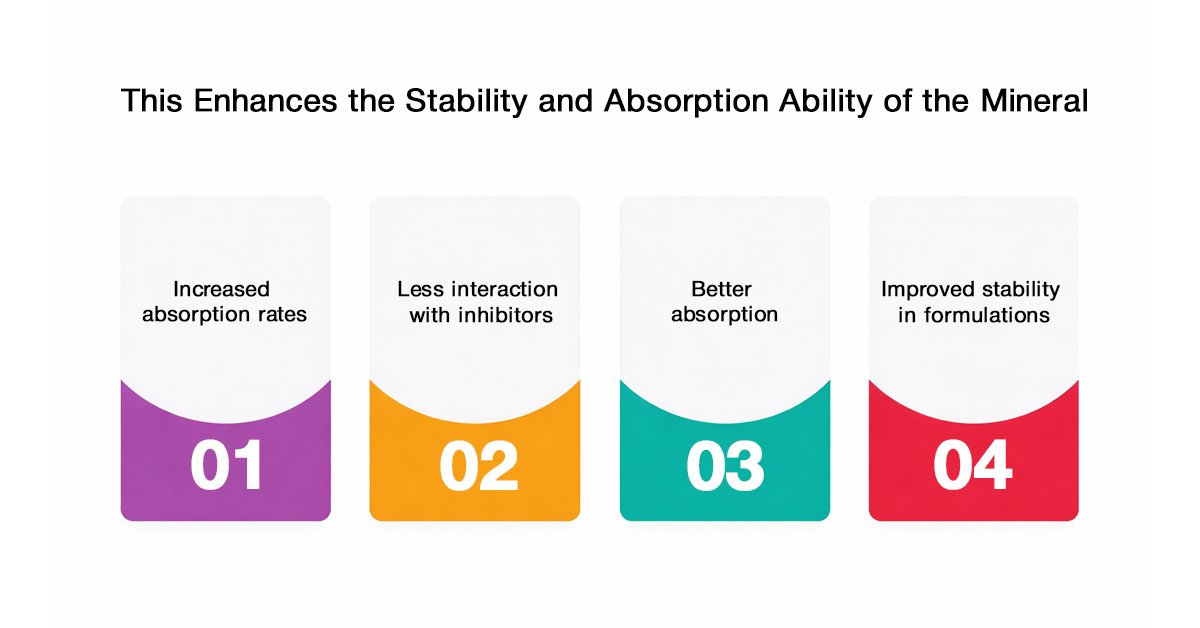
Chelated minerals are another key measure of enhancing nutrient bioavailability in foods. This enhances the stability and absorption ability of the mineral.
Increased absorption rates: Chelated minerals are absorbed by amino acid routes in the intestine and increase bioavailability.
Less interaction with inhibitors: They have lower probabilities of binding with such compounds as phytates or fibre.
Better absorption: Chelated minerals have fewer adverse gastrointestinal effects.
Improved stability in formulations: They are stable under different food matrices and processing conditions.
Common examples include:
- Iron bisglycinate
- Zinc amino acid chelate
- Calcium citrate malate
- Magnesium glycinate
Due to these merits, chelated minerals are being applied in functional foods and nutraceutical products at a higher rate.
Combining Technologies for Better Nutrient Delivery
Multisensory approaches to functional food are usually the most successful formulations.
As an example, a fortified drink would use:
- Protection of the vitamins through microencapsulation technology
- Minerals that are absorbed more effectively
- Fat-soluble vitamins Carriers
- Enzyme or fermentation to lower anti-nutrients
The combination ensures maximum nutrient bioavailability in food without affecting the stability, taste or shelf life of the products.
Foodsure’s Role in Functional Food Formulation
At Foodsure, we help brands improve nutrient bioavailability in foods through optimised food formulation, using chelated minerals and advanced microencapsulation technology to create stable and scalable functional food products.
Our services include:
- Formulation of functional food products.
- Optimising the delivery system of nutrients.
- Matching of ingredients by testing.
- Stability and shelf-life test.
- Commercialisation and regulatory advice.
With scientific innovation and industry experience, we help the brands to produce functional foods that actually live up to their nutritional claims.
Build Functional Foods That Deliver Real Nutrition
Expert formulation would make all the difference in case you are intending to develop functional foods with greater nutrient bioavailability in food.
Collaborate with Foodsure to maximise nutrient absorption, apply sophisticated food technologies such as the technology of microencapsulation, utilise significantly effective chelated minerals and develop market-ready, scalable functional food products.
Contact Foodsure to develop functional foods that truly deliver results today!
FAQs
What is the nutritional bioavailability of foods?
Nutrient bioavailability in foods defines the percentage of the nutrients that are absorbed into the body and put into physiological operations in the presence of food.
What are chelated minerals?
Chelated minerals are minerals attached to organic molecules like amino acids, making them more stable and absorbed within the body.
What is the relevance of the Nutrient Bioavailability in Food?
This is because high nutrient bioavailability in food guarantees that the nutrients actually translate to actual health benefits and not just appear on nutrition labels.
What are popular nutrient absorption procedures in food formulation?
The usual ways of nutrient absorption are lipid carriers, enzyme-assisted processing, reduction of particle size, and enhanced encapsulation technologies.
What is the advantage of microencapsulation technology?
It preserves the sensitive nutrients, preventing their degradation and allowing for the control of their release during digestion, which enhances absorption.