The health and wellness industry in India is changing quickly, which presents many opportunities for new business owners. The two most promising parts of the market right now are the Nutraceutical Food Business / Ayurvedic Food Business. Both categories aim to improve health through food-based solutions; however, they differ markedly in formulation strategy, regulatory processes, scalability, and consumer perception.
A lot of founders are confused about this space when they first start, the difference between ayurvedic and nutraceutical models. Picking the wrong path can slow down food product development, make it harder to follow the rules, and make it hard to figure out where your brand fits in.
This blog looks at both models from a business point of view to help founders choose the best one.
Understanding the Market Landscape
India has a solid base in both old and new health systems.
- People have trusted and accepted Ayurvedic products for hundreds of years, which drives the market.
- Urban lifestyles, fitness trends, and the need for easy nutrition are all driving the growth of nutraceutical products in India.
There is growth in both segments, but they appeal to different types of customers. When deciding between a and b, it’s important to know the difference between the Nutraceutical Food Business / Ayurvedic Food Business.
What is an Ayurvedic Food Business?
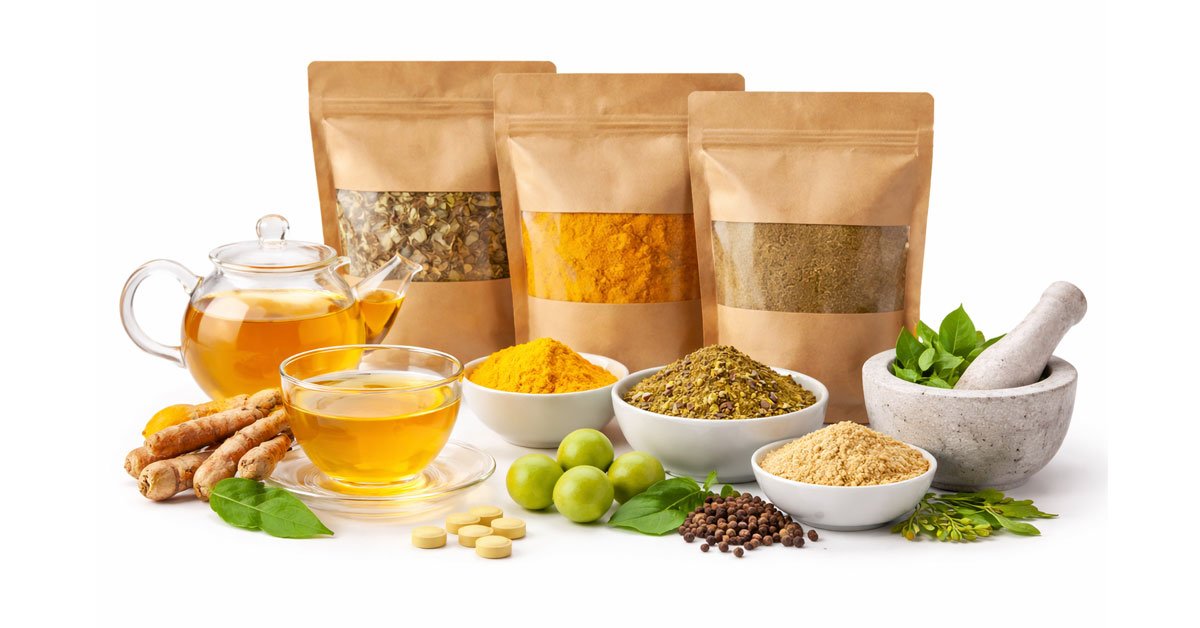
Ayurvedic food comes from traditional Indian medicine, so a business that sells it does too. Some of the main ingredients in these products are ashwagandha, giloy, tulsi, and triphala.
Some common kinds of things are:
- Ayurvedic drinks, kadhas, churnas, and herbal powders
- Things that boost your immune system
- Herbal spreads and functional foods
Additionally, Ayurvedic manufacturing in India has a well-established ecosystem, which makes it easier to find ingredients and help with production.
What is a Nutraceutical Food Business?
A nutraceutical food company makes foods that are scientifically proven to improve health in certain ways. Most of the time, these products have a mix of vitamins, minerals, proteins, and other good things.
Here are some examples:
- Extra-protein foods
- Snacks that work
- Nutrient-rich drinks
- Food-based dietary supplements
The Nutraceutical Food Business / Ayurvedic Food Business. This comparison gets clearer, nutraceuticals are made for measurable outcomes, for example, building muscle, boosting immunity, or increasing energy.
Key Differences Founders Must Understand
1. Product Development Complexity
The difference between Ayurvedic and nutraceutical formulations is based on their foundation: In an Ayurvedic model, formulations often come from traditional sources. Standardisation is important, but the R&D process is pretty easy if you’re working with combinations that are already known.
A nutraceutical business, on the other hand, needs the following:
- Exact amounts of each ingredient
- Testing for stability
- Validation of functionality
- Balancing taste and masking
From a formulation point of view, the Nutraceutical Food Business / Ayurvedic Food Business. This choice has a big effect on the costs and timelines of development.
2. Regulatory Considerations
A big part of it is clear rules.
- Health rules apply to Ayurvedic products.
- FSSAI rules apply to nutraceuticals.
This difference is very important when choosing between a Nutraceutical Food Business / Ayurvedic Food Business.
3. Market Demand and Consumer Perception
Ayurvedic products benefit from strong cultural acceptance in India. People think of them as a way to heal naturally and stay healthy for a long time.
On the other hand, people think of nutraceutical products as:
- New
- Focused on performance
- Easy to use
A lot of founders have to wait because of nutraceutical regulatory challenges, especially when going from an idea to a product that is ready for the market.
4. Scalability and Branding
From a branding point of view:
- Ayurvedic products commonly depend on heritage storytelling
- Nutraceutical products are all about performance, benefits, and innovation
Nutraceutical brands usually grow faster in:
- Online shopping
- Markets around the world
- Retail today
Ayurvedic brands are strong, but they may need better education and positioning to grow around the world.
5. Product Innovation Opportunities
Ayurveda’s idea of innovation usually has to do with changing the way things are made (for example, changing kadha to ready-to-drink forms).
In nutraceuticals, new ideas go even further:
- New ways to mix ingredients
- More advanced ways to deliver
- Specific health benefits
The herbal vs dietary supplements debate also plays a role here. Dietary supplements (nutraceuticals) often have broader global acceptance compared to herbal products, depending on regulations.
Real Founder Challenges
Founders usually have to deal with these problems on more than one project:
- Confusion between Ayurvedic and nutraceutical positioning
- It can be hard to get the right taste with functional ingredients.
- Not taking compliance requirements seriously enough.
Such decisions highlight the importance of understanding the difference between ayurvedic and nutraceutical business models early on.
Which Business Model Is Better for New Founders?
The choice between the Nutraceutical Food Business / Ayurvedic Food Business depends on your strategic goals.
Choose an Ayurvedic food business if:
You want to use traditional formulations to their full potential.
Your target audience likes natural and herbal remedies better.
Choose a nutraceutical food business if:
- You want to create a brand that is modern and can grow.
- You care about performance and benefits that can be measured.
Foodsure’s Role in Product Development
Foodsure works closely with brands in both the Ayurvedic and nutraceutical categories by:
- Help with product formulation from start to finish
- Advice on choosing and getting the right ingredients
- Help with rules and regulations
- Making and changing prototypes
- Help with scaling up for commercial production
Foodsure has helped founders shorten the time it takes to develop several products by finding formulation gaps early on and improving the structure of the product before scaling.
Practical Takeaways for Founders
Before you decide on a direction, think about these important steps:
- Clearly identify your target customer
- Choose whether you want to base your position on tradition or science.
- Get to know the rules early on.
Making the right choice early on can save you time and money when you carry it out.
Conclusion
There are great growth opportunities in both Ayurvedic and nutraceutical food businesses, but they need very different strategies. The Nutraceutical Food Business / Ayurvedic Food Business. Your choice of product type doesn’t just affect your brand positioning, development process, and scalability.
Call us at +91-8130404757 to start building your food brand with expert guidance.
FAQs
What’s the difference between an Ayurvedic food business and a nutraceutical food business?
The Nutraceutical Food Business and the Ayurvedic Food Business take different approaches. Nutraceuticals are based on science, while Ayurveda is based on tradition.
Which is easier for new founders to get going?
Starting an Ayurvedic food business is usually easier because the recipes are simpler and the references are more traditional.
Which model can grow more easily?
The comparison between the Nutraceutical Food Business and the Ayurvedic Food Business shows that nutraceuticals grow faster in modern retail and global markets.
Is it hard to get regulatory approval for nutraceuticals?
Yes, nutraceutical products must follow FSSAI rules very closely, especially when it comes to claims and how ingredients are used.
Which business model makes more money?
Both can make money, but how well you do in the nutraceutical food business or the Ayurvedic food business depends on where you put yourself, how you do things, and who you want to reach.