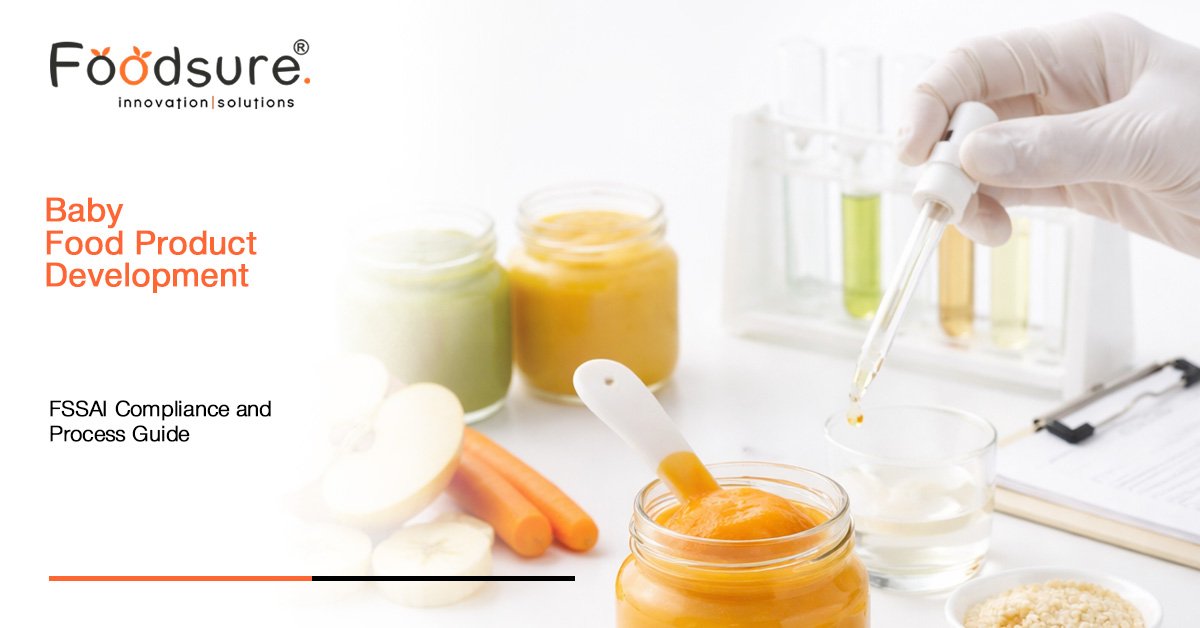
What actually makes a parent believe a baby food product? Is it the label that claims organic, the brand story, or the guarantee of safety? In the case of infants, any mistake in formulation or compliance will shatter such trust permanently.
This is when the baby food product development is not just the production of a product, but a duty. Science, safety, and strict compliance with FSSAI should be balanced, and brands should be ready to succeed in India, where the level of awareness about infant nutrition is growing at a high rate.
Why Baby Food Product Development in India Is Growing Rapidly?
The baby food market in India is developing positively due to urbanisation, nuclear families, and increasing working women.
Market Insights & Data
| Parameter | Data |
| Indian baby food market size | $9.97 billion in 2025 |
| CAGR growth | 5.8% |
| Increased demand for organic baby food | 15%+ annually |
| Key consumers | Tier 1 & Tier 2 urban parents |
There is a trend among the parents in India toward organic baby food products with clean-label ingredients, light processing, and no preservatives.
Understanding Baby Food Categories in India
The type of product should be defined before compliance or formulation.
Stage-Based Classification
| Stage | Age Group | Product Type |
| Stage 1 | 6 – 8 months | Purees and cereals |
| Stage 2 | 8 – 10 months | Mashed foods plus thicker blends |
| Stage 3 | 10 – 12 months | Finger food and chunky textures |
This distinction is needed for stage 1 and stage 2 baby food in India, as the nutritional needs and the texture needs are very different.
Step-by-Step Development Process of Baby Food Products
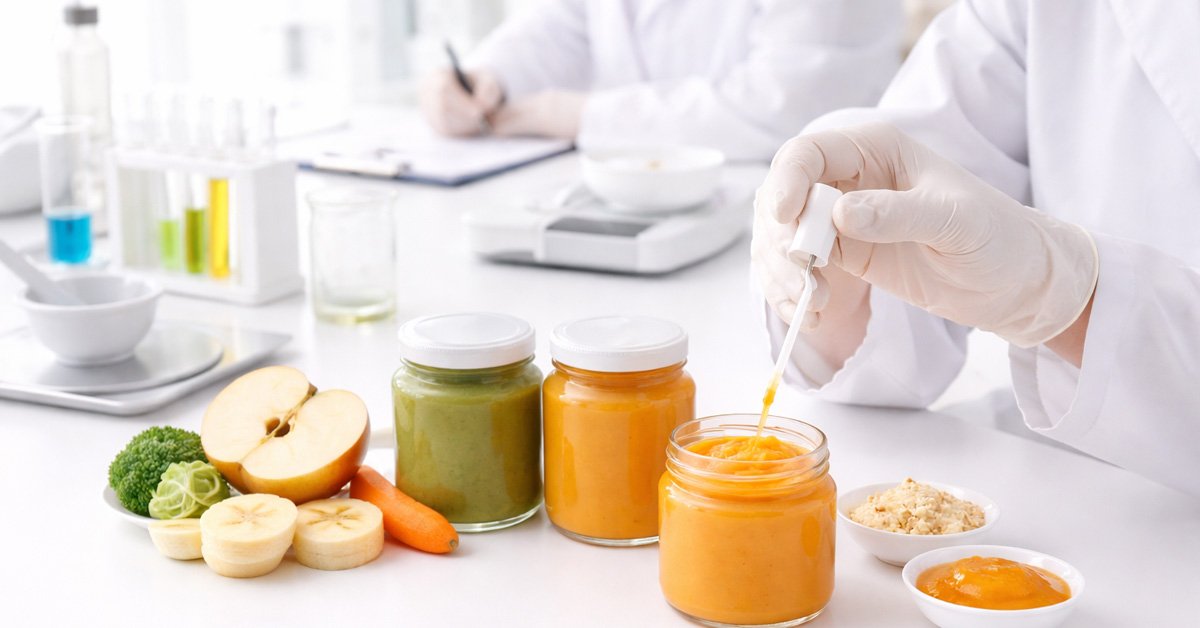
1. Market Research & Positioning
Start with identifying:
- Target age group
- Product brand (nutritional, healthy, low calorie)
- Positioning (organic, fortified, allergen-free)
Another specific aspect of the situation is the premiumization increase, as parents are willing to pay a higher price in case of traceability and safety claims.
2. Baby Food Formulation in India
Formulation is what makes baby food product development successful.
Key Considerations
- Adequacy (infant requirements)
- Digestibility
- Texture and mouthfeel
- Shelf stability
- No harmful additives
Common Ingredients
- Rice, oats, ragi
- Fruits (banana, apple)
- Vegetables (carrot, pumpkin)
- Milk powder (if applicable)
Infants are supposed to have a greater amount of sugar, salt, and additives than normal foods during the infancy period.
3. Infant Food FSSAI Compliance in India
It is the key stage of the introduction of the FSSAI baby food brand launch in India.
Key Regulations
- Should comply with Infant Nutrition Regulations in FSSAI
- Mandatory product registration of baby food
- Strict labeling guidelines
- No misleading health claims
Compliance Checklist
| Requirement | Details |
| Product approval | Mandatory before launch |
| Nutritional standards | Defined for infant foods |
| Labeling | Age group, method of preparation |
| Claims | Restricted and regulated |
| Testing | Microbiological/ heavy metals |
Failure to comply with the Infant Food FSSAI in India can lead to the denial of the product or incarceration.
4. R&D and Stability Testing
Before commercialization:
- Shelf-life (real-time and accelerated) testing
- Packaging compatibility
- Sensory evaluation
Baby food must be safe and healthy when it is on the shelf.
5. Manufacturing Setup
Options include:
- In-house manufacturing
- Third-party contract manufacturing
Key Requirements
- Healthy working environment
- HACCP compliance
- Government-favourable processing environments
6. Packaging & Labelling
Branding is not the only form of assurance of safety, but packaging assures safety as well.
Best Practices
- Make use of non-toxic food-grade materials.
- Ensure airtight sealing
- Provide guidance instructions.
Label Must Include:
- Age suitability
- Ingredients list
- Nutritional information
- Storage instructions
7. Go-To-Market Strategy
Channels
- E-commerce (Amazon, FirstCry)
- Pharmacies
- Modern retail
Marketing Trends
- Doctor recommendations
- Parenting communities
- Influencer marketing
Issues of development regarding the development of baby food products.
Challenges in Baby Food Product Development
| Challenge | Impact |
| Regulatory complexity | Launch is delayed |
| Shelf-life stability | The product is rejected |
| Ingredient sourcing | Quality varies |
| Consumer trust | Brand collapses |
What is happening with Organic Baby Food Products in India?
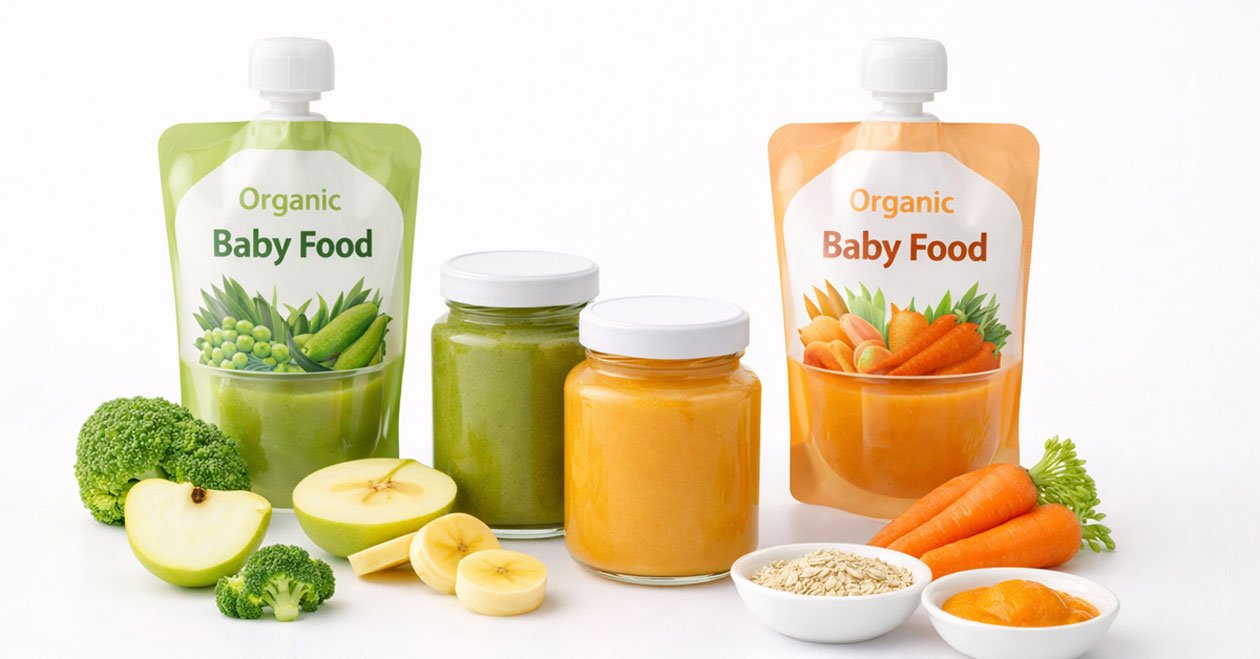
Parents today are:
- Label-conscious
- Ingredient-aware
- Safety-driven
Growth Drivers
- Chemical-free perception
- Clean-label demand
- Premium positioning
However, organic claims must be acceptable and valid; this can result in some regulatory issues.
Cost of Baby Food Product Development in India
| Component | Estimated Cost Range |
| R&D & formulation | ₹1.5 – 5 lakhs |
| FSSAI approval | ₹50,000 – ₹2 lakhs |
| Testing | ₹50,000 – ₹1.5 lakhs |
| Packaging development | ₹1 – 3 lakhs |
| Initial production | ₹3 – 10 lakhs |
Call Foodsure for Baby Food Product Development
The concept of starting a baby food business is not a mere thought; it is about doing everything correctly, beginning with baby food product development in India and ending with infant food FSSAI compliance in India.
At Foodsure, we specialise in:
- Baby food product development at the end-to-end level.
- Regulatory approvals and registration.
- Shelf-life test & scientific formulation.
- Product-ready strategies in the market.
“In baby food, you are not only creating a product, but you are also creating the confidence of the most vulnerable consumers. Accuracy, conformity, and science are inadmissible.”
Delays and rejection could be inevitable unless you plan the FSSAI baby food brand launch in India.
Contact Foodsure today to create a safe, compliant, and market-ready brand of baby food.
FAQs
What is the development of baby food products?
It is the process of developing infant food products, such as formulation, testing, compliance, and commercialisation.
Is the FSSAI approval compulsory for baby food in India?
Yes, infant food must be subjected to strict FSSAI before market entry.
What are the Stage 1 and Stage 2 baby foods?
Stage 1 consists of 6 – 8 months of purees, whereas Stage 2 is 8 – 10 months of thicker and textured food.
What is the length of time for baby food product development?
Average of 3 -6 months with R&D, testing, and approvals.
What are the most important issues with the baby food formulation in India?
Assuring nutritional value, safety, digestibility, and shelf stability.
Is it possible to introduce an organic baby food product in India?
Sure, and it has to be in line with organic certification and FSSAI standards.
How much do baby food brand startups cost in India?
Depending on scale and complexity, it may cost between 7 and 20 lakhs.