There is one particular supplement found in the bags of people working out in gyms ranging from Tier 1 cities down to Tier 3 towns in India. This supplement is the same product, with a very similar positioning strategy, and in many cases the same small number of contract manufacturing firms creating it. The market for whey protein in India has one of the highest consumer growth rates in Asia, but an underdeveloped manufacturing ecosystem. This situation is changing fast, and those founders that know the manufacturing processes behind the product are succeeding.
The whey protein production India market was valued at USD 266.6 million in 2024 and will reach USD 633.4 million by 2033 at a CAGR of 9.9%. India currently supplies 24% of the world’s milk output, making whey, in liquid form, a constant resource. It is not a matter of whether whey protein production in India is possible or feasible. It is a matter of whether the new brand coming into this product category knows how to do things properly.
Why Most Whey Protein Manufacturing India Struggle Beyond the Launch
Enter any supplement shop or visit any fitness direct to consumer company in India right now. You’ll find that the whey protein market is saturated with products that are virtually clones of one another when it comes to looks, benefits, and pricing. And most of these products have probably been launched the same way choose an OEM provider, take something from their existing portfolio, put your brand logo on it, and pay for influencer marketing. The result of such an approach is always lack of differentiation.
The entrepreneurs behind brands built to last know that it’s the formula itself that needs to be unique. The grade of protein, the risk management around amino acids, the flavor profile, the digestive enzymes, the texture in water vs milk, and product stability. These choices need to be made in the formulation & manufacturing process, not after you’ve received the product in your hands. This is precisely how companies create products that are worth the investment they make in acquiring customers in such an intensely competitive category.
Why Whey Protein Manufacturing India Has Both an Opportunity and a Quality Problem
India’s dairy sector generates enormous volumes of liquid whey as a byproduct of paneer and cheese manufacturing. This raw material base makes domestic whey protein production in India structurally advantaged compared to markets that must import feedstock. However, converting liquid whey into a finished supplement-grade protein powder at the quality level demanded by informed consumers requires investment in filtration technology, drying capacity, and quality systems that most small manufacturers have not made.
The result is a two tier market. At the top, a small number of manufacturers operating GMP certified facilities with modern ultrafiltration and spray drying equipment can produce WPC and WPI to export grade purity specifications. Below this tier, a much larger number of facilities produce lower grade concentrate using older technology, inconsistent quality control, and without the batch to batch protein content verification that serious brands require. The brand entering whey protein manufacturing India must know which tier their manufacturing partner sits in, because the consumer’s trust will eventually depend on it.
What Goes Wrong When Brands Skip the Manufacturing Due Diligence
- The amount of protein per serving is less than advertised since the batch is not independently tested in a lab prior to being labeled
- Amino acid additions using individual cheap amino acids such as glycine or taurine artificially increase the total protein nitrogen content without actually providing protein
- The taste is poor compared to what is benchmarked during brand approval before scaling to manufacturing the product
- There are problems with digestibility owing to the high lactose and fat content in the WPC used that leads to bloating in consumers and bad reviews
- There is no process for batch recall or traceability; any issue with one batch cannot be contained effectively
- License process is incorrectly structured according to FSSAI guidelines and creates compliance risk during retail listing or e-commerce approval
What Founders Experience When Whey Protein Manufacturing Goes Wrong
- First production batch does not pass the independent third-party lab test for the declared protein content, leading to a total re-launch
- Complaints pour in regarding the taste or digestibility of the product since the benchmark sample, which was approved, did not undergo the commercial filling process
- The contract manufacturer does not reveal the complete formula document, which means that switching manufacturing partners will result in the loss of all formulations
- Online marketplaces refuse to list the item due to an error in the FSSAI license category or due to non compliance with Nutraceuticals Regulations 2016
- The retail buyer demands a certificate of analysis for each batch, but the manufacturer is unable to produce one based on the specified criteria
- Discounted pricing becomes essential to stay competitive since there is nothing special about the whey protein compared to 15 other private label products manufactured by the same plant
How Whey Protein Manufacturing Actually Works: From Liquid Whey to Finished Product
Stage 1: Liquid Whey Collection and Pasteurisation
Liquid whey is obtained as a by-product of the manufacture of cheese and paneer. Sweet whey is obtained during the process of making rennet coagulated cheese products and has a higher pH and milder flavor. Acid whey is obtained during the process of making cottage cheese and Greek yogurt, and it has an acidic and bitter taste. In order to obtain whey protein supplement for consumption in India, the type of whey used as a raw material is sweet whey. This is due to the flavor it gives in the powder form.
Stage 2: Membrane Filtration to Produce WPC
The process of ultrafiltration involves filtration through membranes that allow water, lactose, and minerals to pass while retaining protein. The concentration of protein obtained at the end of this process is referred to as Whey Protein Concentrate and has about 70 to 80% protein content by dry weight. The amount of lactose and fat still present in the Whey Protein Concentrate is the reason why the product cannot be recommended for lactose intolerant users. However, the presence of lactose and other constituents makes it a cheap substitute in fitness protein supplements. Whey Protein Concentrate 80 or WPC 80 is the most common variant of WPC used in manufacturing whey protein in India.
Stage 3: Additional Filtration for WPI Production
Cross flow microfiltration or ion exchange chromatography is needed for WPI after concentrating whey protein to get Whey Protein Concentrate. This extra step results in the removal of fat and lactose from WPC, giving a protein content of 90% or more by dry weight. The lack of lactose makes Whey Protein Isolate a good fit for people who are lactose intolerant or need lean protein sources. Production costs of WPI are relatively high compared to WPC due to the additional processing step involved.
Stage 4: Enzymatic Hydrolysis for WPH Production
WP Hydrolysate is manufactured using particular protease enzymes to hydrolyse WPC or WPI partially to peptides. The level of hydrolysis affects the characteristics of the product. With low hydrolysis at 1 to 5%, WP Hydrolysate has enhanced functionality with no bitterness, making it ideal for infant formula and medical nutrition. Medium hydrolysis at 5 to 15% provides fast absorption along with an agreeable flavour, suitable for sports nutrition. High hydrolysis above 15% results in the most rapidly absorbed WP Hydrolysate; however, the product is bitter in taste, demanding costly flavour masking.
Stage 5: Spray Drying
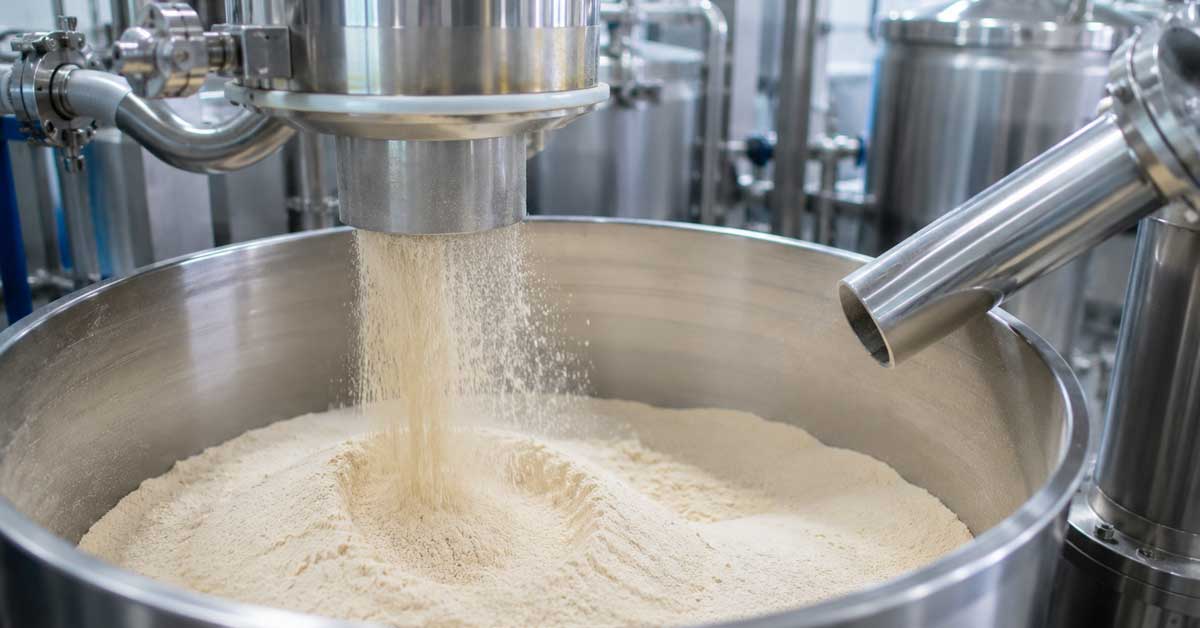
After filtration, the highly concentrated liquid protein suspension goes through a spray dryer, which atomises the liquid into tiny droplets, followed by exposure to a carefully controlled hot air flow. This process results in rapid evaporation of moisture, forming dry protein powder. Inlet temperature in the spray dryer is crucial since overheating will denature the protein, leading to reduced nutritional value and altered functionalities. Advanced manufacturing India technology ensures that the inlet temperature in spray drying of whey protein is kept between 180°C to 220°C and the outlet temperature is maintained at 80°C to 95°C. Finally, the product undergoes sieving, analysis, and flavouring blending.
Stage 6: Flavouring, Blending, and Finishing
Whey protein powder in its pure and unflavored form does not constitute a marketable product. The final step consists of combining the protein powder with flavorings, sugar, colorants, flow modifiers, and other ingredients like digestive enzymes or BCAAs. Most of the differences in taste between various products appear during this process, when inferior producers resort to low cost flavoring agents that work well enough initially but lose their taste after about the first month on the shelf.
Whey Protein Types: What Each Grade Delivers and When to Use It
| Type | Protein Content | Lactose Level | Best Use Case | Cost Position |
|---|---|---|---|---|
| WPC 70 | 70% protein | Moderate to high | Mass market & budget sports nutrition | Lowest |
| WPC 80 | 80% protein | Moderate | Standard fitness supplement & general use | Mid to low |
| WPI 90+ | 90%+ protein | Near zero | Clean label, lactose intolerant & lean muscle | Mid to high |
| WPH (Low DH) | Varies by base | Depends on base | Infant formula, clinical nutrition & RTD | High |
| WPH (Med DH) | Varies by base | Depends on base | Fast absorption & post workout sports nutrition | High |
| WPH (High DH) | Varies by base | Depends on base | Clinical, medical nutrition & specialised use | Highest |
Whey Protein Contract Manufacturing India: What to Evaluate Before You Commit
Finding the ideal contract manufacturing partner to manufacture the whey protein line in India is by far the most important decision a founder can make early on in the game. Selecting the wrong one leads to manufacturing a noncompetitive product, an unscalable supply chain, and a risk ridden compliance process with every retail placement.
GMP Certification and Facility Standards
Each whey protein contract manufacturing India plant considered by the brand must have GMP certification. This includes proper documentation of manufacturing processes, validated cleaning procedures, environmental monitoring, and an approved quality assurance team. FSSAI central license requires GMP certification for manufacture of nutraceuticals. Outside FSSAI certification, also look for ISO 22000 food safety management system and for brands looking to participate in premium or export category Informed Sport or NSF Certified for Sport batch certification, which involves batch testing of products for prohibited substances.
Formula Ownership and IP Protection
Many contract manufacturing plants in India tend to keep their ownership over the formulation created for their brand even if the contract manufacturer does not meet required quality, price or service expectations. It is critical to include in the commercial agreement from the beginning that ownership of complete formula development, which includes all process parameters, ingredients, sequence of addition and supplier list, transfers to the brand at the end of the project. Ownership of the formula provides flexibility and leverage for the brand in future decisions.
Batch Testing and Certificate of Analysis
Each batch of products should be accompanied by a certificate of analysis which includes at least: declared protein level by Kjeldahl or Dumas nitrogen testing with amino acid correction for high values, moisture levels, microbiological tests including total plate count and pathogenic bacteria, heavy metals tests, and an allergen declaration. Any company that can’t issue such certificates for each batch, as well as any company issuing in-house certificates, is not worth partnering with if you plan on building your brand in a serious way.
How to Start a Private Label Whey Protein Brand in India
The private label whey protein India pathway is the quickest and most capital efficient way into the market, but only works if the brand makes its own decisions, instead of relying solely on the manufacturer’s product range
Step 1: Define the Product Before Choosing the Manufacturer
In the product brief, the brand needs to clearly state the source of the protein as well as the grade, amount of protein content per serving, serving size, flavoring systems, be it natural or artificial flavors and sweeteners, functional additives such as electrolytes or enzymes and packaging type and materials and the desired shelf life of the product. With such a product brief, the brand receives better formulation quality and pricing than a brand that simply wishes to have a look at what is available.
Step 2: Obtain the Correct FSSAI License
Brands utilizing whey protein contract manufacturing in India and lacking their own manufacturing plant should apply for a reliable license on the FSSAI FoSCoS portal under the Kind of Business category. This relabler license allows the brand owner to act as a deemed manufacturer in the eyes of the law and should therefore have a manufacturing agreement with the manufacturer. Central FSSAI licenses should be acquired by brands having turnovers above Rs 20 crore or brands operating in more than one state. Whey protein falls under the Health Supplements category as per the 2016 FSSAI Nutraceuticals Regulations and the classification dictates claims, ingredients allowed, and labels.
Step 3: Pilot Batch and Independent Lab Testing
The pilot batch is not simply a formality. In fact, the pilot batch is the only place where the brand can confirm that the formula approved in the bench test is feasible for manufacturing purposes. All pilot batches must be independently analyzed in the lab to confirm conformance to the full COA specification prior to label approval. Any discrepancy between the nutrition facts declaration and the lab results must be corrected in the formulation before the first run into manufacture.
Step 4: Build a Stable Supply Chain for Raw Materials
The greatest supply chain risk associated with whey protein production in India is material variability. Protein levels and amino acid profiles of liquid whey vary seasonally depending on the make up of the dairy’s raw milk. A manufacturer that uses an audited, consistent supply of liquid whey from a dairy with a spec for incoming liquid whey is much less risky than a manufacturer that purchases liquid whey on the open market.
What Whey Protein Manufacturing in India Actually Costs
The manufacturing cost of a whey protein product, which is completely processed in India, will be dependent upon the protein grade, serving size, number of flavors in the mix, and packaging type used. As a general indicator, a finished product, say 1 kg WPC 80, in a regular packaging style with a simple flavor combination, minimum enzyme treatment, and FSSAI compliant labeling will cost anywhere between Rs 700 and Rs 1,100 per kilogram from a GMP certified contract manufacturer with a minimum order quantity of 500 kg. Products manufactured using WPI are estimated to cost 30% to 50% more expensive compared to WPC products due to an additional filtration process involved in their manufacture.
Total investment for a new brand looking to launch three SKUs using the private label whey protein India strategy will fall within the range of Rs 7 lakh to Rs 15 lakh for a Direct To Consumer (D2C) entry, assuming that the brand chooses to have custom flavor combinations made for its product line or if it has to use existing flavors. Additional costs for licensing such as FSSAI relabelling licenses will cost around Rs 50,000 to Rs 1.5 lakh.
How Foodsure Supports Whey Protein Brand Development in India
At Foodsure, we partner with our clients through all stages of whey protein manufacture in India from product briefing to successful commercialization. We develop our product formula including the determination of protein quality level, verification of amino acid composition method, flavor and functionality addition. Our pilot batch process involves independent analysis against full product specification prior to approval for commercial manufacture.
Our expertise spans mass market Whey Protein Concentrate 80% products through clean label Whey Protein Isolate formulations to clinical Whey Protein Hydrolysate blends. Our FSSAI compliance division handles Relabeler License application, Nutraceuticals Regulations 2016 compliance in labeling and ongoing compliance support throughout our client’s growth phase. In every case, our engagement is structured such that the brand retains ownership of their formula, full product specification, and supply chain partnerships independent of any particular manufacturing partner.
What Every Whey Protein Brand in India Needs to Know Before Launch
In the Indian whey protein market, the brands that are founded on quality will win out over those that are solely reliant on marketing campaigns. This consumer group knows more than ever. They review the list of ingredients, compare the profile of amino acids, see whether there are certifications that come from third parties, and discuss their findings in forums with thousands of other users. Brands that are transparent about their ingredients and dependable about their results will endure longer than any other brand with better funding but inferior formulation.
This quality of product relies entirely on the manufacturing process, long before printing the labels and selling the first kilogram of powder. Selecting the proper quality of whey protein isolate, collaborating with a GMP certified manufacturer, securing the rights to your formula, verifying each batch through independent testing, and constructing a solid FSSAI compliance structure are non negotiable requirements for a professional brand.
Are you planning on creating a whey protein brand in India? If you need assistance with the manufacturing and formulation process, our expert team can help.
Whey Protein Manufacturing India: Process, Cost & How to Start Your Own Brand
Explore whey protein manufacturing including sourcing, processing, cost factors, and strategies to launch your own supplement brand successfully.
FAQ’s (Frequently Asked Questions)
- What is the difference between WPC, WPI, and WPH in whey protein manufacturing India?
WPC comprises 70 to 80% protein and also includes fat and lactose; WPI comprises over 90% of protein, along with virtually no lactose. WPH comprises a predigested protein that can be quickly absorbed, formed by hydrolyzing WPC or WPI.
- How much does it cost to start a private label whey protein brand in India?
A D2C rollout using three SKUs by way of whey protein contract manufacturing in India normally costs between Rs 7 lakh and Rs 15 lakh.
- What FSSAI license does a whey protein brand need in India?
The brands which go in for contract manufacturing without having their own manufacturing unit have to get an FSSAI Relabeler License under the Nutraceuticals Regulations 2016, a Central FSSAI License becomes mandatory for sales above Rs 20 crore or if the business activity takes place across more than one state.
- How do I protect my formula when working with a whey protein contract manufacturer in India?
The manufacturing contract should clearly state that the formula is fully transferred, including the process parameters and vendor specifications, before entering into any commercial manufacturing.
- What quality checks must every whey protein production India batch pass?
Each batch should undergo an analysis certificate for protein content, moisture, microbiology, heavy metal content, allergen declaration, and amino acid profiling to verify amino acid spiking
- Why does the grade of liquid whey feedstock matter in whey protein manufacturing India?
Changes in seasonal milk composition cause changes in protein content and amino acid profile of the liquid whey; the manufacture of whey protein from audited dairies with incoming specifications produces better results.
- What does Foodsure do differently when supporting whey protein brands in India?
Our services involve the development of the entire product specification and formula ownership protection before choosing a manufacturing partner, and independent testing of pilot batches before approval of commercial production.