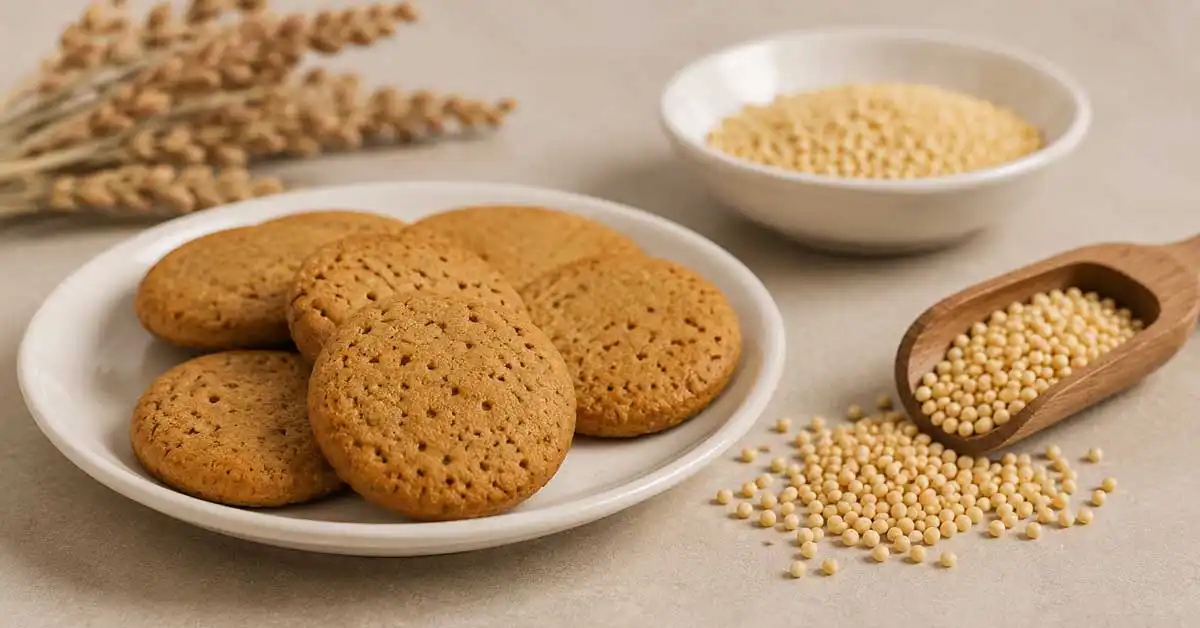
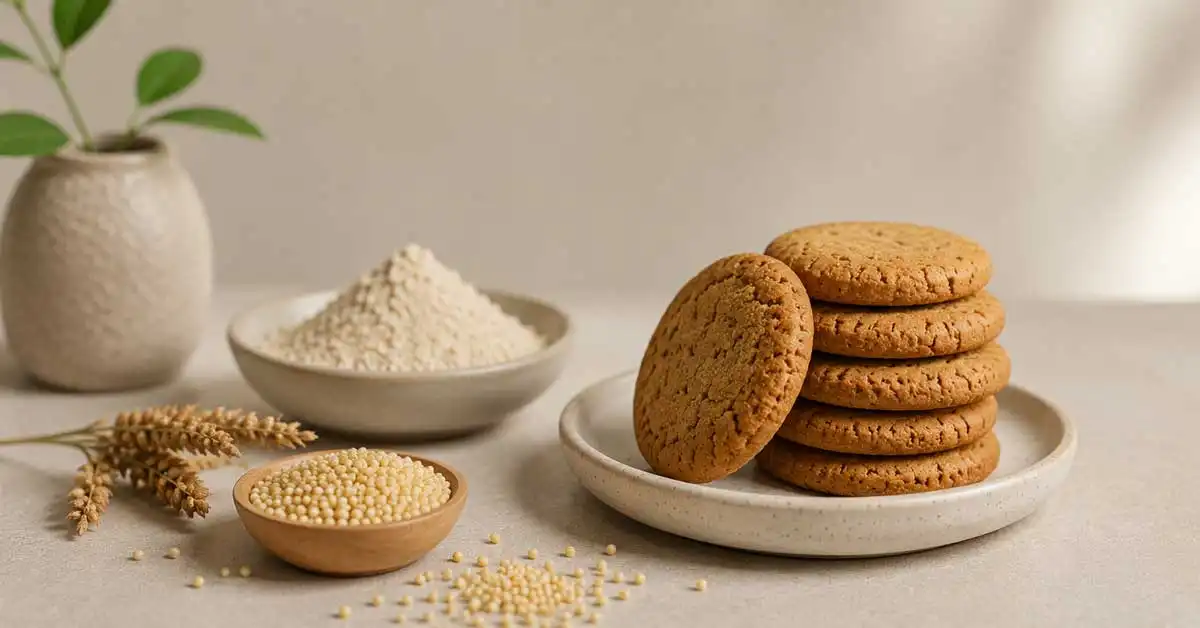
Consumers’ increased awareness about the quality of ingredients and nutrition is leading to a rapid growth in the market for healthier baking products. Millet-based food items have received much interest in the rapidly evolving categories owing to their nutritional value, sustainable attributes, and suitability for clean labelling trends. This trend has resulted in several brand names looking into millet cookies formulation.
But simply switching from wheat flour to millet flour does not guarantee the development of an outstanding millet biscuit. A perfect balance between taste, shelf life, consumer expectations, production processes, and labelling legislation must be found by those developing the product. This is where a well-planned millet cookies formulation becomes essential for developing commercially successful and consumer-friendly products. This comprehensive guide demonstrates how bakery companies, startups, and food manufacturers can develop a consumer-friendly millet cookie line at a profit.
Understanding The Clean-Label Trend
‘Clean labels’ are products that have been produced, keeping consumer satisfaction and transparency in mind. The millet-based product market is projected to grow from USD 43.38 million in 2024 to USD 86.88 million by 2032, with a compound annual growth rate (CAGR) of 9.07%. Today’s consumers prefer products containing clear ingredients, which is why they are paying attention to labelling. In baking, clean-label requirements usually include:
- Clear listing of ingredients
- Natural ingredients
- Limited perceptual manipulation
- No artificial preservatives
- No artificial colors
- No artificial flavors
- Reduced the number of additives
- Enhanced nutrition labeling
Utilising clean labelling techniques can provide cookie manufacturers with an opportunity to gain a competitive advantage.
Reasons Why Millet Has Become More Popular as a Cookie Component
While ancient grains have been replaced by modern grains such as millet, they offer many benefits related to nutritional composition and sustainability.
Nutritional Benefits
By nature, millets contain the following:
- Dietary fibre
- Proteins
- Essential minerals
- Complex carbohydrates
- Antioxidant elements
These features facilitate the development of products that focus on nutrition and well-being.
Benefits of Sustainability
In opposition to many ancient grains, millets usually require the following:
- Less water usage
- Fewer resources for agriculture
- Climate change resilience
- Ability to tolerate drought conditions
Sustainable products gain increasing popularity among environmentally concerned customers.
Unique Products
Thanks to the innovative millet cookies formulation, marketers can deliver a unique product different from ordinary cookies that are mostly made from highly processed wheat-based components.
Developing a successful millet cookies formulation
Commencing work on formulating without having clearly defined goals may be one of the biggest mistakes in product development. Before formulating the prototype, make clear:
Target customer
Ask some essential questions:
- What kind of customers will buy this product?
- Are they adults concerned about their health?
- Are they children?
- Fitness freaks?
- Bakery lovers?
- Clean label products?
Product Positioning
Determine whether the cookie will focus on:
- Daily snacking
- Prestige gifts
- Indulgence with health benefits
- Functional nutrition
- Family Consumer
Market Segment
The final formulation of the millet cookie depends greatly on the consumer market segment niche.
Choosing the Correct Millet for Cookie Production
| Millet Type | Taste Profile | Appearance | Key Benefit | Best For |
| Finger Millet (Ragi) | Earthy and nutty | Dark brown | Rich nutritional value and strong health appeal | Health-focused cookies |
| Pearl Millet (Bajra) | Robust and grainy | Light brown | Good nutrition and familiar taste | Traditional and regional products |
| Foxtail Millet | Mild and pleasant | Light golden | Better consumer acceptance and balanced texture | Mainstream healthy cookies |
| Little Millet | Light and neutral | Light cream | Easy formulation and versatility | Premium and clean-label bakery products |
Method of Formulating a Successful Millet Biscuit Recipe
It is necessary to balance a number of formulation aspects simultaneously in order to ensure that good cookies are formulated. The ingredients used in formulating a satisfactory millet biscuit recipe must include:
- Palatability and Mouthfeel
- Spreadability
- Crunchiness
- Shelf stability
- Manufacturing consistency
- Consumer acceptability
Recipe developers should ensure that the final output provides a positive sensory experience for consumers, not just nutritional value.
Addressing Texture Challenges Using Millet Cookies
One aspect that continues to influence consumers’ purchase decisions about baked products is their texture. Consumers expect that cookies will have:
- Crunchiness
- Good mouth feel
- A consistent texture
- Proper crumbling characteristics
Texture enhancement is a critical developmental challenge because millets exhibit properties distinct from those of conventional cereal systems.
Common Challenges Faced by Developers
Developers commonly face issues related to:
- High hardness
- Dry mouth feel
- Brittleness
- Low spreading ability
- Compact packing
Careful modification of ingredient interactions and processing conditions is necessary to address these problems.
Factors Involved in Developing the Flavour
The purchase of any item by customers depends greatly on the flavour. Of course, millets provide the following:
- Earthy notes
- Nutty character
- Grain complexity
If well-controlled, the above qualities have the potential to generate high-class sensations.
Matching the Taste of Millet
Developers of the products must focus on:
- Familiarity with the customer
- Flavour balance
- Sensory enhancement
- Taste consistency
An ideal clean-label cookie will showcase the advantages of millet without exposing new customers to sensory challenges.
Acquiring an Appealing Appearance
Appearance plays a major part in purchase decision-making. Customers tend to examine the following:
- Color
- Feel of the product
- Uniformity of shape
- Size of the cookies
- Appearance altogether
Millet-based cookies are more likely to appear darker than conventional cookies. The appearance should not be seen as a weakness but as a symbol of the whole-grain nature of the product.
Processing Parameter Optimisation
| Processing Stage | Key Factors to Monitor | Why It Matters |
| Dough Development | Dough consistency, handling properties, forming behaviour, process stability | Ensures smooth production and consistent cookie quality |
| Baking Conditions | Temperature profile, baking duration, moisture reduction, and product uniformity | Helps achieve the desired texture, colour, and crispness |
| Cooling Management | Structural integrity, texture development, packaging readiness, and shelf-life performance | Prevents breakage, maintains crunch, and improves product stability |
Creating an Ingredient Declaration with a True Clean Label
When purchasing products, most modern customers first check ingredient labels. What a true clean label strategy should focus on is the following:
- Simplification: Consumers appreciate ingredient declarations with fewer components.
- Transparency: All components must fulfil their purposes.
- Understanding: It builds consumer trust when all ingredients are easily identifiable.
- Have faith: Clear labelling makes a brand more trustworthy.
The aim of creating a clean-label product is not to reduce the number of ingredients but to make an ingredient declaration clear and meaningful to consumers.
Millet Cookie Considerations Regarding Shelf Life
An important consideration in terms of commercialisation is shelf life. Manufacturers have to look into:
- Texture retention
- Flavor stability
- Moisture migration
- Packaging performance
- Product freshness
With an appropriate formula of the millet cookie, this will help ensure product quality during storage and transportation.
Shelf Life Indicators
Consider:
- Crispiness
- Aroma and product retention
- Consumer acceptability
Shelf-life testing done regularly will provide valuable information for improvements in product development.
Clean-Label Millet Cookie Packaging Techniques
| Packaging Focus | Key Objective | Impact on Product |
| Freshness Protection | Control moisture and oxygen exposure | Maintains crispness and product quality |
| Physical Protection | Prevent breakage during storage and transport | Improves consumer satisfaction |
| Shelf Stability | Preserve texture and flavour over time | Supports longer shelf life |
| Clean-Label Communication | Highlight simple and natural ingredients | Builds consumer trust |
| Millet Benefits Messaging | Showcase nutritional and sustainability advantages | Strengthens product differentiation |
| Premium Branding | Reflect brand values and quality positioning | Increases perceived value and purchase appeal |
Sensory Tests and Consumer Research
Since companies are only using opinions from within their firm, many product introductions are unsuccessful. Consumer validation is used to determine:
- Taste preference
- Texture acceptance
- Purchase intent
- Product strengths
- Improvement opportunities
Important Criteria for Evaluation
Consider:
- Flavours loved
- Acceptance of smells
- Crunchiness
- Sweetness balance
- Satisfaction levels
Opportunities that may be missed through laboratory studies alone can be uncovered through consumer insights.
Market Trends Driving the Expansion of Millet Cookies
There are several market trends driving the expansion of baked products made from millet.
- Health Consciousness: There is a rising trend in consumers purchasing products to meet their health goals.
- Clean Eating: There is a rise in products made from clean ingredients.
- Functional Food Products: There is a rising trend in consumers purchasing nutritious food products.
- Environmentally Sustainable Consumption: Environmental consideration in ingredients affects consumer decision-making processes.
- Rediscovery of Ancient Grains: There is a renewed interest in traditional grains among modern consumers.
Millet cookies formulations are benefiting from such trends.
Common Mistakes to Avoid During Product Development
Such challenges are common among many product developers.
- Being too concerned about nutritional value: It does not matter that a product has nutritional value if it tastes bad.
- Ignoring Customer Needs: Quality technology has to match customer needs.
- Poor Optimisation of Texture: Poor optimisation of texture is still a major reason why consumers reject products.
- Poor Positioning of Products: Consumers have to have a good reason to buy your product over other similar products.
- Lack of Shelf-Life Testing: If you fail to conduct proper tests, then you will definitely encounter quality challenges after the launch.
By avoiding such mistakes, commercial success is almost guaranteed.
The Future Prospects for Millet Cookies
The product segment of millet cookies is still evolving. Emerging prospects include:
- Premium baked products
- Nutritious snacks
- Functional nutrition platforms
- Snacks for schools
- Wellness initiatives by businesses
- Bakery products focusing on exports
Brands that work on the innovation of millet cookie products will have a competitive edge when it comes to gaining a market advantage in the future.
Conclusion
The prospects for innovations based on millets are excellent because of increased demand for healthy baked goods. Yet, a winning combination will be achieved not only through the use of healthy ingredients but also in relation to taste, processing, texture, and other important aspects that contribute to the final product.
A well-developed millet cookies formulation enables manufacturers to create products that meet modern expectations for health, transparency, quality, and consumer satisfaction. With Foodsure’s expertise in product development and formulation, consistent efforts in creating quality products can result in a successful millet cookie brand for any company.
How to Develop Clean-Label Millet Cookies: A Complete Guide for Modern Food Brands
Develop clean-label millet cookies with functional ingredients, natural sweeteners, and balanced nutrition for modern health-conscious consumers. Create crunchy, shelf-stable bakery products with improved texture, millet-based formulations, optimized production systems, and scalable commercial manufacturing solutions suitable for D2C brands, healthy snack startups, retail expansion, and export-ready food businesses.
FAQs
- From what raw materials are millet cookies prepared?
The primary ingredient in such nutritionally valuable cookies is millet grains.
- What can be called a clean-label cookie?
Such cookies have simple and recognisable ingredients with little addition of artificial substances.
- Why use millet in cookies?
Millet encourages healthy snacking behaviour and provides the consumer with fibre and nutrients.
- Which types of millet are preferable for preparing cookies?
They include finger millet, foxtail millet, pearl millet, and tiny millet.
- How are millet cookies made?
It is about producing millet biscuits with the right proportions of components, taste, and shelf-life.