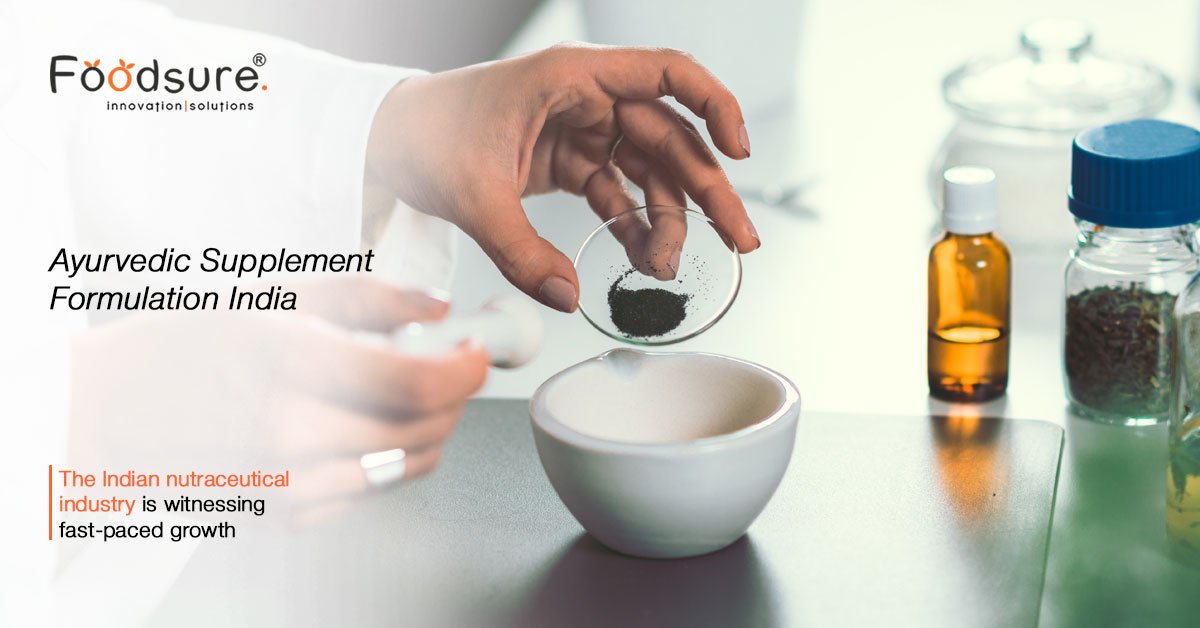
The Indian nutraceutical industry is witnessing fast-paced growth – and one of the key drivers for this growth has been the burgeoning trend of herbal nutraceutical product development that integrates the age-old wisdom of Ayurveda with modern-day scientific advancements. As a brand marketer, manufacturer, or raw material supplier in the B2B space, you cannot afford to overlook Ayurvedic supplement formulation.
Why Ayurvedic Supplement Formulation India Is a B2B Growth Driver
Modern-day consumers have developed an increasing desire for products based on traditional herbal medicines, and Ayurveda can give the desired authenticity to them. The companies involved in the nutraceutical industry have an opportunity to combine centuries-old knowledge of plants with modern scientific research through the use of Ayurvedic supplement formulation India. Indian producers are able to cater to both local requirements as well as international markets.
But developing an effective herbal nutraceutical product is much more complicated than simply obtaining the natural herbs themselves. It calls for a systematic approach to development rooted in scientific methods but still mindful of traditional Ayurveda practices.
The Science Behind Herbal Nutraceutical Product Development
Product development of a successful herbal nutraceutical formulation starts with the knowledge of bioavailability – the efficiency of the uptake and utilisation of the active botanical compounds within the body. In Ayurvedic medicine, ingredients like piperine from black pepper or ghee have been historically incorporated into formulations for the very reason of improving absorption – a concept which current science validates.
The beginning for any commercial venture aimed at creating Ayurvedic supplements in India has to be standardisation in which each batch produces a uniform amount of the important phytochemicals, like the withanolides in Ashwagandha, curcuminoids in turmeric, and bacosides in Brahmi. It is here that modern analytical chemistry comes into its own.
FSSAI Compliant Herbal Supplement: The Regulatory Landscape You Must Navigate
The single-most important and often underestimated aspect of manufacturing and commercialising a herbal nutraceutical in India is regulatory compliance. FSSAI regulates the manufacture, labelling, and marketing of nutraceuticals through the FSS (Health Supplements, Nutraceuticals, and Special Dietary Uses) Regulations, 2022.
Compliant manufacture of nutraceuticals requires stringent documentation procedures, including safety data sheets of ingredients, Certificates of Analysis (CoA) of all raw materials used, permitted lists of ingredients and validated health claims for the products.
Non-compliance at any of these steps can lead to disqualification of a product, its recall from the market and even reputational risks that no business-to-business brand will want to take on. Partnering with an experienced Ayurvedic product developer in India becomes imperative for such reasons.
Ayurvedic Supplement Formulation India: Choosing the Right Development Partner
The marketplace is full of contract manufacturers, yet not many have both knowledge of classical Ayurveda and nutraceuticals, which is vital for creating a quality Ayurvedic supplement in India. While choosing collaborators, B2B companies must consider their GMP accreditation, research and development capacity, regulatory knowledge, and experience working with herbal supplements approved by the FSSAI.
A professional ayurvedic product development consultant India will help you determine your dosage, use synergistic herbs, choose your excipients, conduct shelf life tests, and provide clinical evidence – all necessary to create a product that is both effective and successful. This is precisely what FoodSure excels at.
Key Herbal Nutraceutical Product Categories Gaining B2B Momentum
Many different segments in the formulation of herbal nutraceuticals are experiencing B2B success. Wellness supplements based on adaptogens, including Ashwagandha and Shatavari, are driving the global market for well-being supplements. Digestive health supplements based on Triphala and Trikatu are increasing their presence in the functional foods segment.
Cognitive wellness supplements based on Brahmi and Shankhpushpi are beginning their journey in the pharmaceuticals’ private labelling business. Immunity-based SKUs based on Tulsi, Giloy, and Amla are gaining popularity across pharmacies, direct-to-consumer brands, and HORECA distribution.
The formulation of Ayurvedic supplements in India requires a thoughtful process.
Key Takeaways
- Standardisation and phytochemical profiling cannot be bypassed in the development of any reliable herbal nutraceutical product.
- FSSAI certification for formulating Ayurvedic supplements in India demands paperwork at each level from raw materials to the end product.
- Bioavailability enhancement techniques play an important role in bringing together the classical efficiency of Ayurveda and modern pharmacology.
- Collaboration with an experienced Ayurvedic product development consultant in India saves both time and effort in overcoming regulatory hurdles.
- Adaptogens, digestive, cognitive, and immunity classifications provide the greatest potential for B2B business growth in herbal nutraceuticals.
Foodsure Takeaway
At FoodSure, our vision for the future of nutraceutical innovation lies with those brands which have the ability to honour the intelligence of traditional formulations through modern scientific validation and standardisation.
Whether you are a contract manufacturer planning to diversify your herbal supplement formulations from India, a D2C brand developing a private label line of herbs, or an ingredients company wanting to create ready-to-go formulations – FoodSure is what your team requires.
We are not only a consulting agency but also your FSSAI herbal supplement formulation development partners right from the beginning.
Conclusion: Herbal Nutraceutical Product Development Is a Long Game — Play It Right
Ayurveda and nutraceutical science converging into each other is no fad; rather, it represents a paradigm shift in consumer mindset towards health care products across the world, any business-to-business company looking for category leadership tomorrow will do well to formulate a scientifically proven Ayurvedic product in India today.
What does a well-designed herbal nutraceutical represent? The answer: a product that’s standardised, bioavailable, and completely FSSAI compliant.
Companies that manage to design their products well and with the help of a good Ayurvedic product development consultant in India can be sure that when they launch their products into the market, the market becomes theirs.
We at FoodSure are prepared to make that happen for you. Contact us at +91-8130404757.
FAQs
What does an Ayurvedic product development consultant in India really do?
The ayurvedic product development consultant in India helps organizations go through the entire product formulation cycle starting from the selection of herbs and dosage research up to FSSAI compliance and clinical proof of efficacy.
How can I be sure that my product is FSSAI-compliant?
To make sure that your product is an FSSAI-compliant herbal product, you should ensure that the herbs used are on the FSSAI-approved list and that they do not exceed the dosage limitations.
What is the average time span for the development of an Ayurvedic supplement formulation India?
The typical time span taken for developing an Ayurvedic supplement formulation India lies between 6 and 12 months.
Is it possible for a herbal nutraceutical product to claim its therapeutic benefits?
Yes, as it is possible for a herbal nutraceutical product to claim its structure function, provided it adheres to FSSAI guidelines for nutraceuticals and health supplements.
Can India be considered an effective location to manufacture herbal nutraceuticals to be exported?
Yes, it certainly can because of its effective availability of botanical raw materials, manufacturing facilities with GMP certifications, and high knowledge base on Ayurveda.