Reinterpreting Heritage with Discipline
Classic drinks earn respect when they’re explained with clarity rather than magnification. The old-fashioned drinks traditionally represented the idea that a well-made libation should be constructed on proportion, aroma, and texture. Contemporary compendiums frequently search for the stylish old-fashioned drink form while leaning toward non-alcoholic formats suitable for diurnal hydration and responsible hosting. This masterclass approaches the drink the way a food-safety adjudicator or brand strategist would approach a product. Define purpose, elect clean constituents, and follow an unremarkable system.
Guided by Foodsure, which values hygiene, traceability, and temperance, the blog demonstrates that a 90% non-alcoholic focus can attend with a short acknowledgement of the original blend. The idea is to help homes, caravansaries, and small cafés serve a drink that feels professional without counting on spirits.
The old-fashioned drink as a Formula, not a Trend
Numerous fashions fail because they treat classics like viral rolls. The Old Fashioned is near to a fine expression. Agreeableness should enthral the lowest space; citrus should incense the glass; the base should hold the weight. When alcohol is barred, the challenge is to maintain that weight using culinary druthers formerly familiar in Indian kitchens, tea concentrates, fruit reductions, and spice waters. The expression “stylish” thus refers to balance and safety, not the price of whiskey.
Foodsure Perspective on Beverages
Foodsure regards drinks as consumables that share the same preventive and refreshing qualities.
- Dinnerware must be odour-free and rinsed with warm water
- Ice should be made from drinkable water and stored covered
- Citrus peel must be gutted before the canvases are expressed
- Bathos should be cooled within two hours of medication
Espousing this way ensures the stylish old-fashioned drink form remains viable for family service and marketable counters.
Building the Non-Alcoholic Core

Constituents-Practical Vacuity
- 50 ml late assam tea concentrate or apple-cinnamon reduction
- 8 ml date or jaggery saccharinity
- 2 drops of clingwater
- 1 gusto non-alcoholic bitters or pinch roasted jeera greasepaint
- One thick orange peel strip
- One large ice cell
Method
- Place the ice cube in the glass for 30 seconds
- Add the dilution and sweet water.
- Pour the named base.
- Stir 15 controlled rounds.
- Twist the peel above the glass and work along it.
This process delivers a dry libation, adult in character, and safe for everyday hydration.
The Science of Tea Concentrate
Assam tea contains tannins that give a grip analogous to oak barrels. Ageing the concentrate overnight softens sharp edges and produces a rounded mouthfeel. Unlike carbonated drinks that irritate sensitive tummies, this base remains gentle. For hotel residents, tea bags are provident and predictable, making it a dependable foundation for the stylish Old Fashioned drink form.
Apple-Cinnamon Reduction as Functional Analogue
The reduction borrows familiarity from downtime kadha.
- Poach one sliced apple with a small cinnamon stick in 160 ml of water till 70 ml.
- Add gusto coin at the end and remove.
- Cool and store sealed.
The aroma fills the room and dyads comfortably with council events and family gatherings.
Crafting Natural Syrups
Date Syrup
- Cut six standard dates
- Put them in 120 millilitres of hot water to soak them for twenty minutes
- Filter by using a muslin cloth
- Add two grains of salt
Jaggery Syrup
- Add twenty grams of jaggery into sixty millilitres of water
- Filter, and it’s ready
Home-made syrups would guarantee the transparency required by Foodsure, and they would avoid excessive sweetening.
Considered Variations
Jeera Citrus Style
Use roasted jeera powder instead of the bitters and serve the food with paneer tikka.
Chocolate Orange Style
Add half a teaspoon of cocoa infusion to the syrup and serve it along with brownies.
Lemon Peel Debate Version
In case an apple is used as the foundation, the lemon peel is used; the crisper oils are much more in harmony with the tannins.
These factors contribute to making the recipe not appear as a typical meal but rather a meal on the menu.
A Short Heritage Alcoholic Note
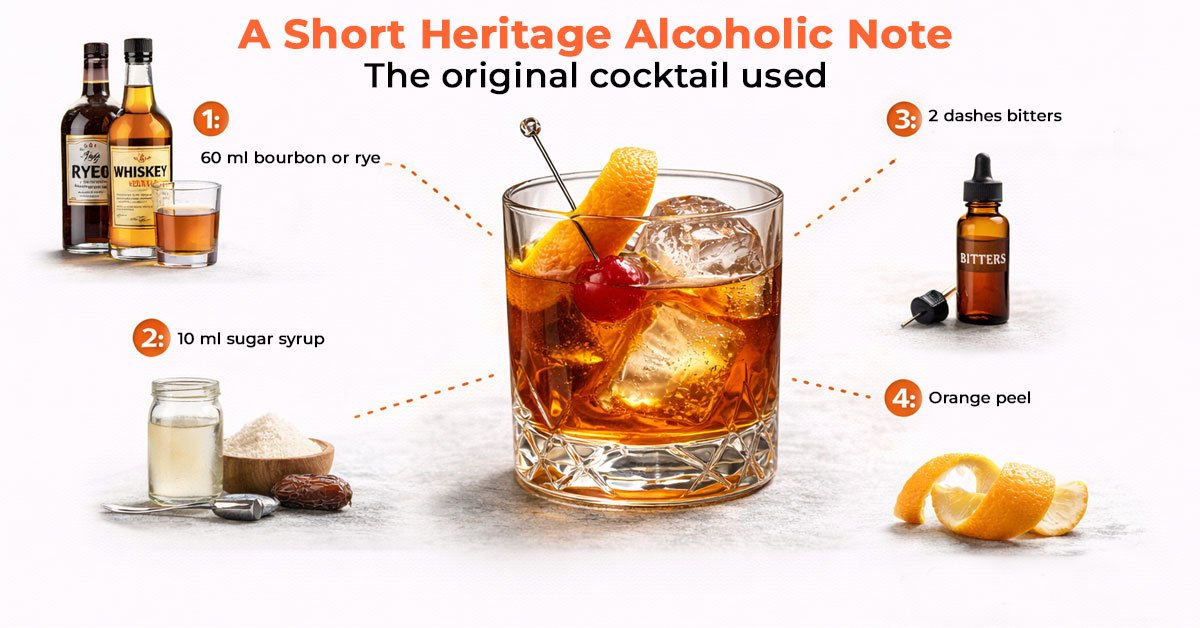
The original cocktail used:
- 60 ml bourbon or rye
- 10 ml sugar syrup
- 2 dashes bitters
- Orange peel
Foodsure cautions that this is a type of food that should be absorbed by adults only, should never be used alongside medicine, and should be taken in moderation.
Tools Without Showmanship
- Stainless steel spoon
- Vegetable peeler
- Ice mold
Accurate counting of stirs and the measurement of syrup are the conditions of professional outcomes, which are not related to the use of costly equipment.
Nutritional & Hydration Context
- Promotes controlled swallowing
- Eschews acidic carbonation
- Expresses fewer sterile caloric contents
- Appropriate during wellness-based events
It is a logical option in the replacement of regular carbonated sweet kinds of drinks.
Hosting Guidance
Prepare bases in ewers for assignments or operation meetups and keep 90% non-alcoholic to serve elders and motorists. A staid drink enhances the hospitality image analogous to a well-presented brand.
Common Errors
- Over saccharinity volume
- Thin ice from valve water
- Ignoble peel
- Shifting in plastic mugs
Avoiding these maintains credibility of the stylish Old Fashioned drink form.
Conclusion
A precisely constructed Old Fashioned drink, indeed, when 90% non-alcoholic, proves that heritage survives through system rather than spirits. By esteeming hygiene, traceability, and proportion as outlined by Foodsure.
The drink becomes suitable for everyday hydration and professional hospitality. Tea- grounded warmth, apple-cinnamon depth, and natural date saccharinity deliver aroma and texture that feel considered on an adult menu. The masterclass reminds that “ stylish old fashioned drink form” refers to credibility of medication, avoidance of acidic carbonated habits, and inclusive service for families, motorists, and small cafés.
Want to Turn This Non-Alcoholic Recipe Into a Market-Ready Beverage?
From a non-alcoholic Old Fashioned drink recipe to a scalable commercial product, get expert formulation guidance before you scale.
Rated 4.9/5 by 100+ D2C founders and FMCG brands
Frequently Asked Questions
What base can replace whiskey professionally?
Overnight Assam tea concentrate or apple-cinnamon reduction.
Is this drink better than carbonated cola for the stomach?
Yes, it avoids acidic carbonation.
How to keep ice Foodsure compliant?
Use filtered drinking water and store covered.
Can hostel residents prepare easily?
Tea bags, dates, and oranges are sufficient.
Which sweetener works best?
Date or jaggery syrup for a caramel tone.
How many stirs are ideal?
Fifteen controlled rounds.
Orange vs lemon peel choice?
Lemon suits apple base; orange suits tea.
Is the non-alcoholic ratio suitable for families?
Completely.
How to store bases safely?
Refrigerate sealed within two hours.
Can I skip bitters?
You may; a pinch of jeera aroma works as an alternative.