The taste is considered the final success when it comes to the founders of beverages. Confirmation is taken to be full when the flavour is similar. Friends authorise. Early buyers respond. Confidence builds. Beverage brand failure, however, still occurs even in those whose taste is objectively great.
As a founder, this is also one of the most difficult facts to digest: great taste does not build business; it makes people talk. The failure of a beverage brand usually kicks in once the taste issue has been resolved and more market reality has been revealed.
Great Taste Isn’t Enough for Market Success
If your beverage tastes great but hasn’t been commercially validated, hidden risks may still derail your brand.
The Core Problem: Taste Is Treated as the Finish Line
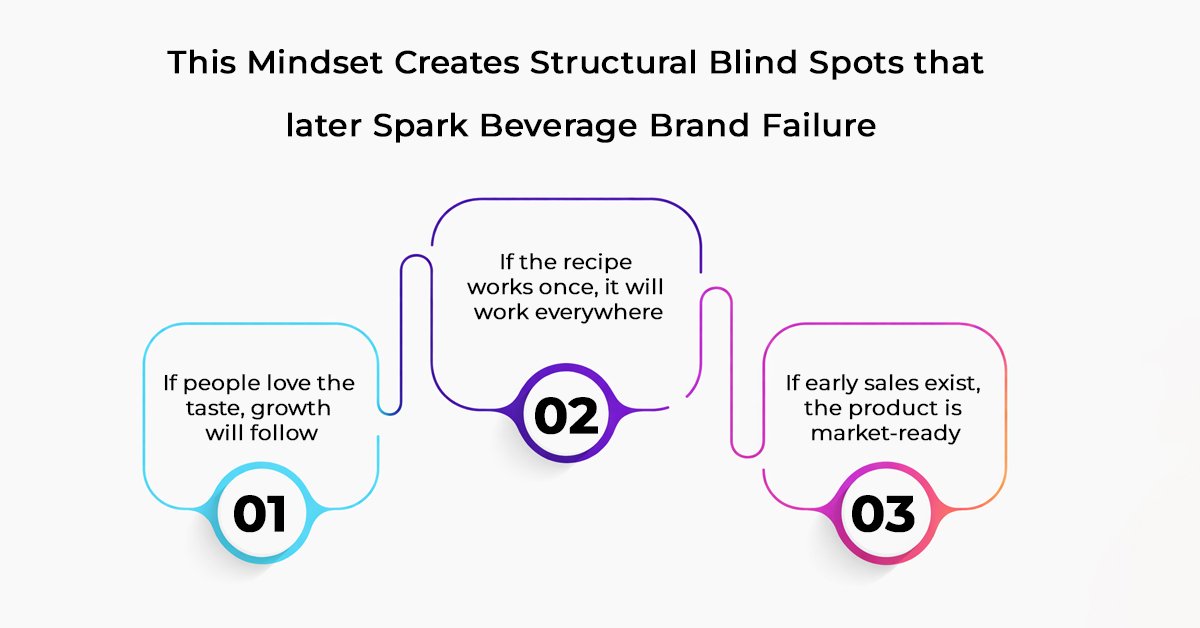
Numerous founders intentionally design their beverage journey from the end backwards. Flavour becomes the goal rather than the entry point. This mindset creates structural blind spots that later spark beverage brand failure.
What founders frequently believe:
- If people love the taste, growth will follow
- If the recipe works once, it will work everywhere
- If early sales exist, the product is market-ready
In reality, taste validation only proves one thing: the drink is pleasant to consume. It does not prove commercial reliability.
Why Beverage Brands Fail Despite Good Taste
Taste vs Repeat Purchase in Beverages
One of the most common causes of beverage brand failure is the gap between first-time approval and habitual buying. Taste influences trial, but repeat purchase depends on consistency, predictability, and trust.
| Factor | Trial Phase | Repeat Purchase Phase |
|---|---|---|
| Flavour | Primary driver | Expected baseline |
| Consistency | Often ignored | Critical |
| Shelf behaviour | Invisible | Non-negotiable |
| Consumption experience | Short-term | Long-term |
| Brand reliability | Assumed | Evaluated |
When repeat purchase weakens, beverage brand failure follows quietly, without obvious warning signs.
Founder Mistakes That Accelerate Beverage Product Failure
1. Scaling a Recipe Instead of a Process
Many drink brand mistakes stem from scaling flavour without spanning control. What tastes perfect in small batches behaves differently at volume, leading to beverage product failure through inconsistency.
2. Confusing Sensory Approval With Market Readiness
Positive tasting panels don’t simulate real-world storage, logistics, or repeated consumption. Beverage brand failure frequently appears only after these pressures act on the product.
3. Treating Variability as “Normal”
Small variations are often dismissed early on. Over time, these compound into trust erosion, a silent but powerful driver of beverage brand failure.
The Consequence: When Taste Can’t Protect the Brand
Having inconsistency to the consumer makes it an easy task to recover. Strategic signs of drink brand failure at this point are:
- A decline in repeat sales
- Distributor resistance.
- Increased batch rejections
- Functional costs are being escalated.
- Loss of brand credibility
Notably, their complaints are hardly ever raised by consumers; they just stop buying them again.
Recommended Read – Beverage Startup Failure Reasons
The Strategic Solution: Designing Beyond Taste
To prevent the collapse of the beverage brand, the founders should abandon a flavour-based approach switching to a system-based approach.
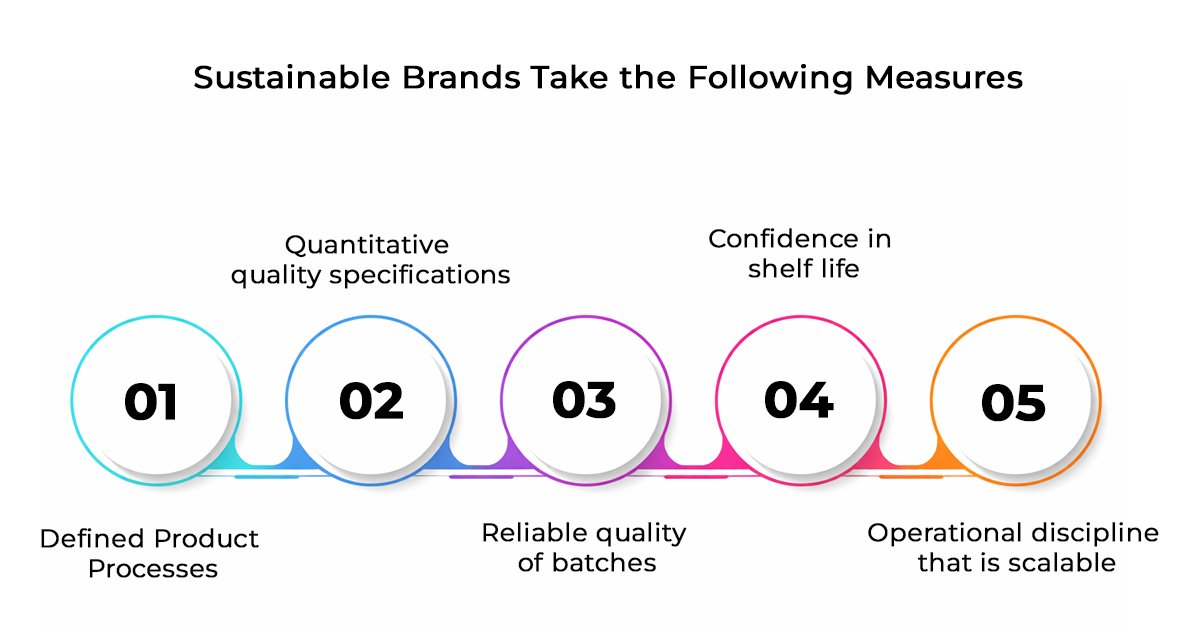
Sustainable brands take the following measures:
- Defined product processes
- Quantitative quality specifications.
- Reliable quality of batches.
- Confidence in shelf life
- Operational discipline that is scalable.
Looking attracts; systems maintain personality.
Proof: Why Process-Led Brands Scale More Reliably
Through the whole beverage ecosystem, the brands that survive the periods of growth are often the most creative in flavour, but the ones that are most disciplined when it comes to delivery. With process control, flavour is always constant; there is an improvement in repeat purchases and the chances of brand failure are reduced significantly.
Innovativeness is not the difference. It lies in preparedness.
Authority: Where Structured Scale Makes the Difference
Foodsure partners with beverage founders at a very precise point where taste validation has been realised, but commercial uncertainty begins. Instead of coming up with solutions to failures, focus is directed towards preventing the failure of the beverage brands by early coordination of formulation, process, and production behaviour.
How Foodsure Supports Brands
| Founder Challenges | Foodsure Intervention | Outcome |
|---|---|---|
| Great taste, inconsistent batches | Process standardisation | Predictable quality |
| Strong trials, weak repeat sales | Consumption behaviour analysis | Improved retention |
| Scale anxiety | Commercial readiness framework | Controlled growth |
| Rising production losses | Early-stage risk mapping | Cost stability |
Related Insights for Beverage Founders
Explore deeper strategic risks, scale-up realities, and operational blind spots that silently cause beverage brand failure.
Conclusion
Beverage brands are known to suffer failures often, which can be blamed on flavour. It deals with the consequences after successful flavour development. The originators who look beyond taste and put their money in repetition, consistency, and flexible processes are those who come up with long-lasting brands.
Foodsure helps founders make the jump between this tastes excellent and this scales reliably. When your drinks have flavour confidence but commercial uncertainty, then this would be a perfect time to build the foundation before growth can increase the inherent weaknesses.
Turn Taste Approval Into Market Proof
Strong flavour alone does not prevent beverage brand failure. Commercial readiness depends on consistency, scalability, and repeat consumer behaviour.
Talk to a Beverage Development Expert
Explore Product Development Services
Frequently Asked Questions
Why does beverage brand failure occur after a good market response?
Because early response reflects taste, not long-term reliability.
Is taste still important in preventing beverage brand failure?
Yes, but only as a baseline, not a differentiator.
How does repeat purchase impact beverage brand failure?
Low repeat purchase silently weakens sustainability.
Can a beverage product failure happen without consumer complaints?
Yes, most failures happen quietly through drop-offs.
What are common drink brand mistakes founders make?
Scaling flavour without scaling process.
Does consistency matter more than innovation?
For long-term survival, yes.
Why do beverages change after scale-up?
Because volume introduces mechanical and operational variables.
When should founders think beyond taste?
Immediately after initial validation.
Is beverage brand failure reversible?
It becomes harder once consumer trust is lost.
How can founders reduce beverage brand failure risk early?
By building systems alongside flavour development.