Still, you aren’t just dealing a drink; if you’re erecting a beverage brand moment.
You’re dealing with trust.
Clean-eating consumers don’t buy potables casually presently. They read markers. They question phrasings. They reject complexity. And most importantly, they award restraint.
Yet numerous beverage authors still believe success comes from adding further constituents, actives and claims. This thinking still inflates costs, slows scale, and weakens credibility.
The smartest beverage business ideas arising moment are doing the contrary. They’re abating. And in doing so, they’re winning shelf space, loyalty, and perimeters.
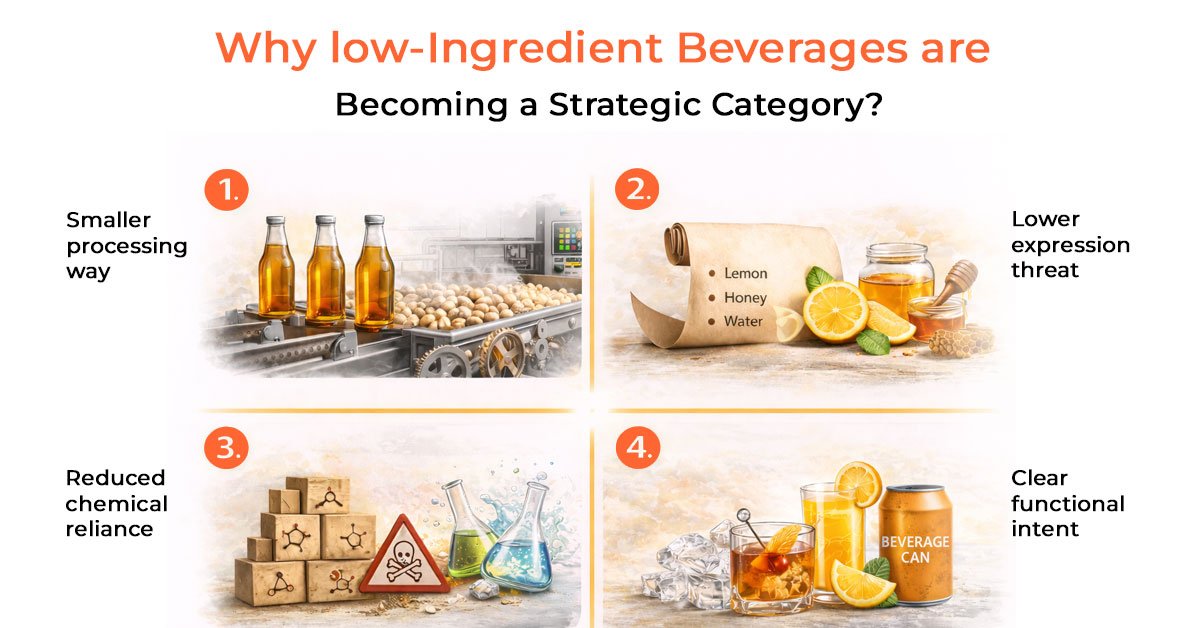
Why low-ingredient beverages are becoming a strategic category
Clean eating is no longer a niche gospel. It’s a functional sludge consumers apply before purchase.
Low-component potables gesture:
- Smaller processing way
- Lower expression threat
- Reduced chemical reliance
- Clear functional intent
For authors, this makes low-component formats one of the most defensible beverage business ideas in ultramodern portfolios.
The request is no longer impressed by complexity. It’s comforted by clarity.
Profitable beverage business ideas built on subtraction, not addition
Some of the most profitable beverage business ideas aren’t invention-heavy. They’re discipline-heavy.
Low-component potables induce profitability because:
- Raw material costs are predictable
- Quality thickness is easier to maintain
- Reformulation cycles are shorter
- Consumer trust composites briskly
When potables calculate on two to five constituents, brands spend less time fixing problems and more time expanding distribution. Profitability then’s structural, not promotional.
Have a beverage idea and need the right formulation to scale?
Beverage startup ideas that survive beyond launch hype
Numerous beverage startup deals fail not because demand doesn’t exist, but because phrasings are fragile.
Every fresh component introduces:
- Stability threat
- Regulatory complexity
- Force- chain reliance
Low-component startups reduce these failure points. They launch briskly, acclimatise hastily, and scale with smaller surprises. This adaptability is why minimum phrasings are increasingly favoured by serious authors, not trend chasers.
Beverage business ideas in India-style markets without regional dependence
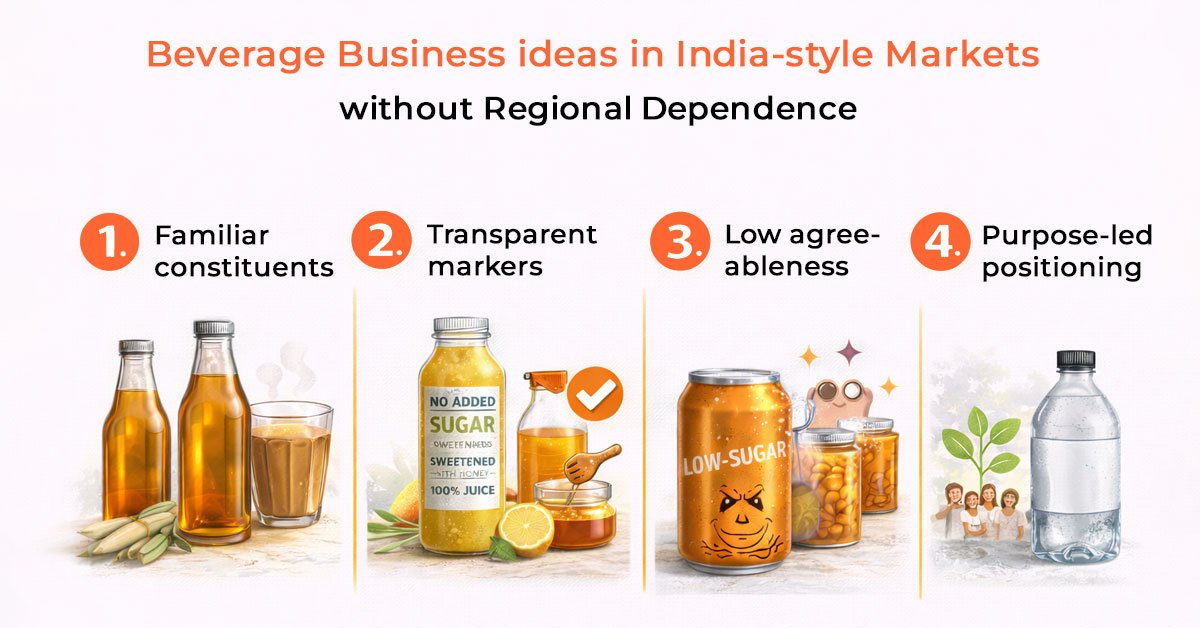
In price-sensitive, trust-driven requests frequently described as beverage business ideas in India-style ecosystems, simplicity performs better than complication.
Consumers in these markets reward:
- Familiar constituents
- Transparent markers
- Low agreeableness
- Purpose-led positioning
Low-component potables travel well across regions because they rely on behaviour, not terrain. This makes them adaptable global beverage business ideas rather than position-bound products.
Low investment beverage business models founders can actually sustain
A critical advantage of low-component formats is their compatibility with low-investment beverage business strategies.
They need:
- Lower airman runs
- Lower specialised outfit
- Lower quality- testing charges
This allows authors to validate demand before committing capital. Numerous successful beverage brands‘ moments started with deliberately subdued phrasings, using simplicity as a fiscal buffer.
Beverage business opportunities hidden inside clean labels
Clean Markers aren’t just consumer-facing tools. They’re marketable influence.
Low-component potables unlock beverage business opportunities across:
- Diurnal hydration programs
- Commercial and institutional force
- Fitness and recovery formats
- Cafés and foodservice integrations
Because these potables don’t overwhelm the palate or the body, they fit into diurnal consumption patterns where real volume lives.
Why branding works harder when ingredients work less
Low-component potables allow imprinting to carry meaning without contradiction.
They enable:
- Honest front-of-pack claims
- Strong visual minimalism
- Clear storytelling
When expression and brand language align, trust scales naturally. This alignment is what turns ordinary beverage business ideas into order leaders.
Operational discipline: the invisible advantage
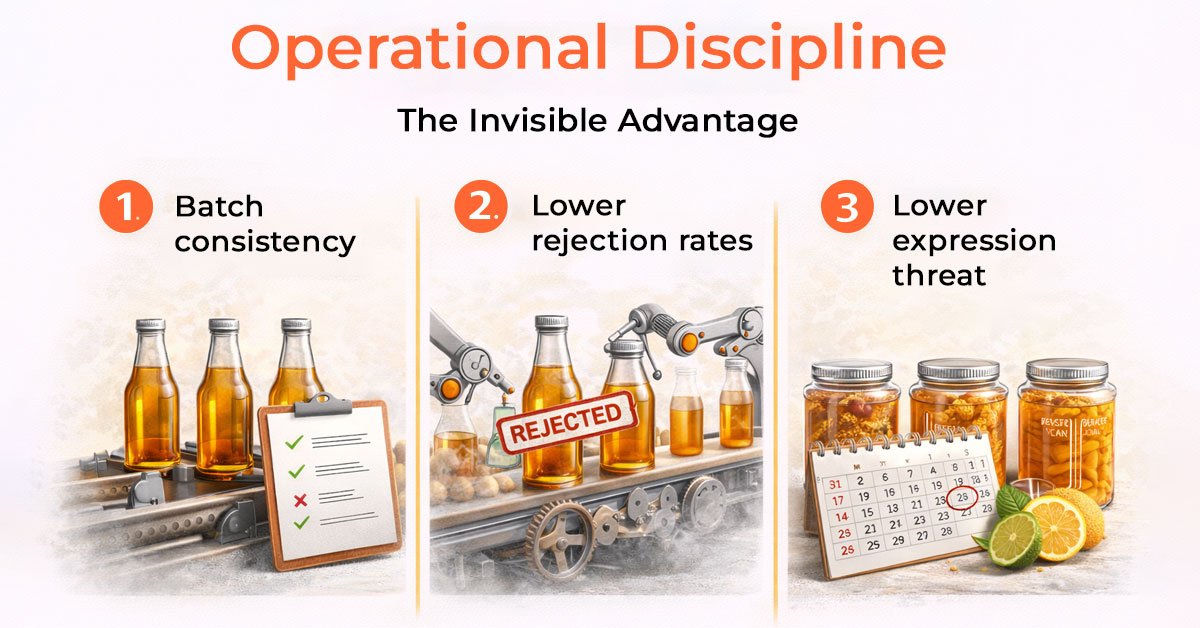
Behind the scenes, low-ingredient beverages outperform complex ones operationally.
They deliver:
- Batch consistency
- Lower rejection rates
- Easier shelf-life control
For growing brands, this operational stability is often the difference between surviving growth and collapsing under it.
Building a Beverage Brand Goes Beyond Just an Idea
If you are evaluating beverage business ideas, these resources will help you understand the full journey—launch planning, startup strategy, cost structure, and development fundamentals.
Designed for founders, D2C brands, and FMCG teams planning scalable beverage products.
Conclusion
Behind the scenes, the most flexible beverage business ideas are erected on expression discipline, not redundancy. Low-component potables reduce functional threat, cover thickness at scale, and allow brands to grow without compromising credibility. For authors navigating expansion, this stability frequently becomes the quiet difference between controlled growth and expensive breakdowns.
Brigades that approach beverage development as a structured expression system rather than a flavour trial tend to make brands that last, and mates like Foodsure live to bring that discipline beforehand into the process.
The smartest time to estimate your beverage expression is before scale turns opinions into arrears.
Planning a Simple, Scalable Beverage Brand?
Turn low-ingredient beverage ideas into a market-ready product with the right formulation, cost structure, and compliance strategy.
Trusted by 100+ beverage founders for formulation, compliance, and scale-up
Frequently Asked Questions
Do low-ingredient beverages attract clean-eating consumers?
Yes. Clean-eating consumers actively prefer short, readable ingredient lists that feel transparent and trustworthy.
Are low-ingredient beverage business ideas scalable?
Yes. They are often more scalable due to simplified operations, easier sourcing, and lower production complexity.
Can low-investment beverage businesses be profitable?
Yes. Reduced formulation complexity lowers both fixed and variable costs, improving margin potential.
Do these beverages limit flavour innovation?
No. Innovation shifts from additives to ingredient sourcing, processing techniques, and flavour balance.
Are low-ingredient drinks suitable for daily consumption?
Yes. Their simplicity makes them easier to integrate into daily routines compared to heavily fortified blends.
Do such beverages face fewer compliance challenges?
Generally, yes. Fewer ingredients mean fewer regulatory touchpoints and simpler compliance validation.
Are these beverage business ideas future-proof?
Yes. They align strongly with long-term clean-label, wellness, and transparency-driven consumer trends.
Can startups compete with large brands using simplicity?
Yes. Simplicity builds trust faster, which often outperforms scale in early-stage brand adoption.
Is minimal formulation a branding risk?
No. When positioned correctly, minimal formulation strengthens brand credibility and transparency.
What defines a low-ingredient beverage?
Typically, a formulation containing two to six purposeful ingredients with clear functional or sensory roles.