One of the major decisions that a new or growing beverage brand is going to make is to select a reliable Beverage Corporation. A proper partner can help you in maintaining the quality of the product, growing your business in a hassle-free manner, and keeping your business in line with the regulations as you expand. If you choose the wrong one, then you will be faced with situations of delays, mixtures of products that go to waste, and increasing your troubles instead of making progress.
The fact is that different beverage manufacturing partners have different standards of accuracy and openness in their operations. In this blog, you’ll learn how to spot the companies that truly support your growth and avoid the ones that quietly erode it. Whether you’re creating your first formula or ramping up for national distribution, these insights will help you choose with confidence.
Why Choosing the Right Beverage Corporation Matters
The choice of a Beverage Corporation seemingly determines everything that follows in the evolution of your brand. A partner who is strong technically, stable in execution, and clear in communication is what you gain by selecting the right one. They help you stay away from compliance errors that could stop your distribution and give you the freedom to grow without losing your flavor, safety, or consistency.
In fact, this signifies that your production partner is your beverage manufacturing partner, becomes your company partner, your business partner, your team member, your co-worker, your manufacturer, your Brand, your foundation. If they are stable, your Brand feels stable. If they are not stable, your whole business will be unstable.
Such a partner who you can always depend on not only produces your product. They safeguard your reputation, manage your expenses, and facilitate your planning for the following project.
Common Problems When Working With the Wrong Beverage Corporation
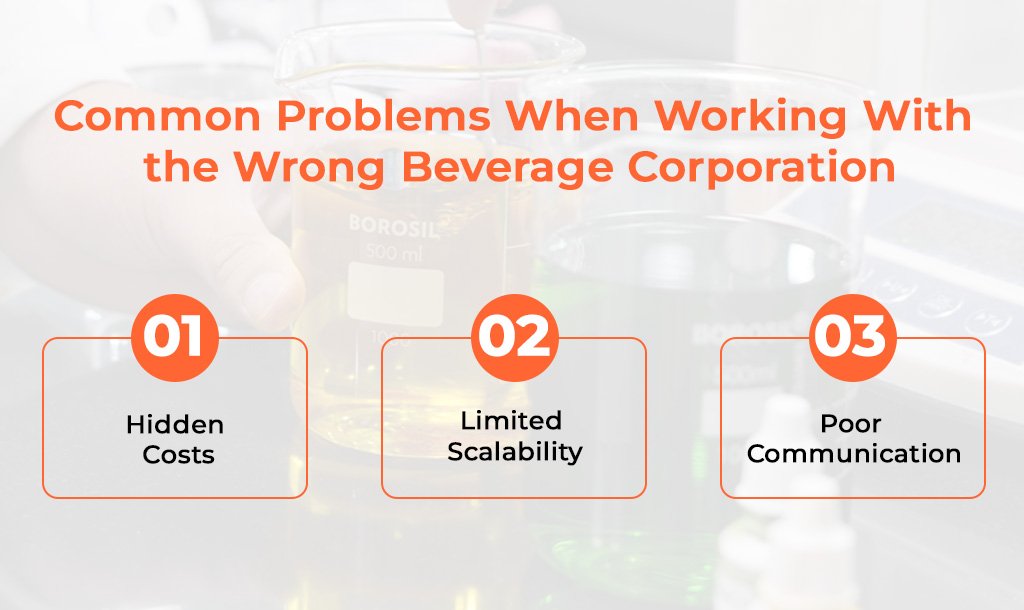
Working with the wrong manufacturer creates issues that show up fast and compound over time. The early signs can be subtle, but once production scales, those small problems turn into costly setbacks.
Hidden Costs
One of the most common issues is unexpected fees. These might be line charges, storage costs, or minimum run penalties that were never explained up front. This keyword variation often appears as brands search for “beverage production cost issues,” and it fits for a reason. Hidden expenses drain your margins and make planning nearly impossible.
Limited Scalability
Some partners simply can’t grow with you. Maybe they lack equipment, staffing, or capacity. This creates the classic “manufacturing bottleneck” problem, where demand rises, but your partner can’t keep up. Scaling should feel planned, not panicked.
Poor Communication
Slow response times, vague updates, or last-minute changes are all signs you’re working with a team that isn’t built for long-term partnership. Poor communication leaves you reacting instead of leading your production strategy.
Connect with Foodsure for the best food and beverage consulting services.
How to Identify a Trusted Beverage Corporation
We can separate reliable manufacturers from those you should definitely stay away from by understanding the differences they have. Firstly, consider openness. A partner whom you can trust will not only clarify the way things are done but also give you the cost and the time required without any surprises. If they are avoiding the questions or talking ambiguously, it is definitely the first red flag indicating that you should abstain from cooperating with them.
Check whether they have the experience to work in your category. A company that has dealt with the same type of product, packaging format, or has gone through the same volume of distribution will be able to lead you safely through the process without incidents, and thus, you will not be the first experimental production. You may also look for long-tail phrases like “best beverage manufacturing services for startups” or “how to find reliable drink production partners.” Such phrases usually refer to teams that build their expertise by supporting the new brands that they do not abuse.
Certifications are important as well. Food safety programs, GMP standards, and third-party audits are the pieces of evidence that the company you choose complies with all the rules and regulations, and therefore, you can trust them. Partners that you can rely on will not have any problems in providing the certificates to you.
If it’s possible, see the plant with your own eyes. No brochure, no video, no photos can tell you as much about their business as a personal visit can. You should be looking at how clean the place is, how work is done, and how the employees behave, and trying to figure out whether the environment is orderly or you could say chaotic.
If to reckon on transparency, capability with a proven quality control approach, that is the partner you can count on not only today but also when your brand will be expanding.
Here’s a complete and professionally structured resource on beverage formulation that could add more clarity to your project.
Benefits of Working With the Right Beverage Corporation
Working with the right partner simplifies your growth instead of complicating it. Here are the advantages brands feel almost immediately:
- Cleaner, more consistent product quality
- Fewer production errors and lost batches
- Predictable costs and budgeting
- Real support on compliance and quality control
- Smoother scaling from small runs to large orders
- Faster turnaround on questions and approvals
- A partner who invests in your long-term success
Next Steps for Your Brand
It is important to clarify your own production needs as the next step after understanding what to look for in the manufacturer. Specify your volumes, timeline, and quality requirements before contacting the manufacturers. This allows you to keep the discussions focused and compare the partners equally.
If you need assistance in organizing that process, we have created materials on compliance, quality control, and scaling production, which guide you through each stage. When you have everything in order, get in touch with Foodsure, and we will fit in with your objectives instead of you settling for less because you are in a hurry.
Contact Foodsure for all the food and beverage consulting services and beverage manufacturing services at +91 8130404757.
Frequently Asked Questions
Q1. How do I choose a trusted Beverage Corporation?
Pick a partner that’s transparent with pricing, communicates clearly, and has real experience with drinks similar to yours. A quick facility visit also tells you a lot about how they operate.
Q2. What certifications should a Beverage Corporation have?
Look for GMP, HACCP, and recognized food safety certifications. These confirm they follow proper safety and quality standards.
Q3. What are the main red flags when evaluating a manufacturer?
Unexpected fees, vague answers, slow communication, and regular production delays are all signs you may need to keep looking.
Q4. How can I tell if a manufacturer can scale with my brand?
Ask about their maximum capacity, lead times, and equipment. A scalable partner will clearly explain how they handle increasing volume.
Q5. Why do hidden costs show up with some beverage manufacturers?
They often come from charges that weren’t discussed upfront, like minimum run fees, storage costs, or packaging add-ons.
Q6. What should I look for during a facility tour?
Notice the cleanliness, how organized the workflow is, how staff operate, and whether the environment feels controlled and consistent.
Q7. How does the right Beverage Corporation support brand growth?
They keep your product consistent, help you stay compliant, prevent costly mistakes, and make it easier to plan for future demand.
Q8. When should a brand switch to a different beverage manufacturer?
If your current partner can’t keep up with your volume, struggles with quality control, or keeps missing deadlines, it’s time to explore new options.
Q9. What questions should I ask before signing a manufacturing agreement?
Ask about pricing, production timelines, certifications, quality checks, and how they handle issues like batch failures or delays.
Q10. How can I avoid production delays?
Choose a manufacturer with a strong track record and set clear expectations about timelines, approvals, and communication before production begins.