Launching a beverage brand frequently feels deceptively straightforward during early development. The formulation works in the lab, the airman batches taste consistent, and the figures appear manageable. Yet for numerous founders and brand teams, costs surge suddenly right after airman trials conclude. The beverage pilot trial cost becomes the first major financial shock in the journey from concept to market launch.
This escalation isn’t random. It’s the result of structural gaps between the airman’s surroundings and the commercial beverage production. Understanding why beverage pilot trial cost rises after airman testing helps founders make smarter decisions, control burn rates, and avoid misinterpreting airman success as market readiness.
This blog unpacks the real drivers behind post-pilot cost overruns and explains how to plan for them strategically.
Why Pilot Trials Feel Affordable: Until They’re Not
Airman trials are designed to test feasibility, not profitability. During this phase, small batches are produced under controlled conditions using flexible experiments, close supervision, and simplified force chains. At this stage, the beverage pilot trial cost appears predictable and relatively contained.
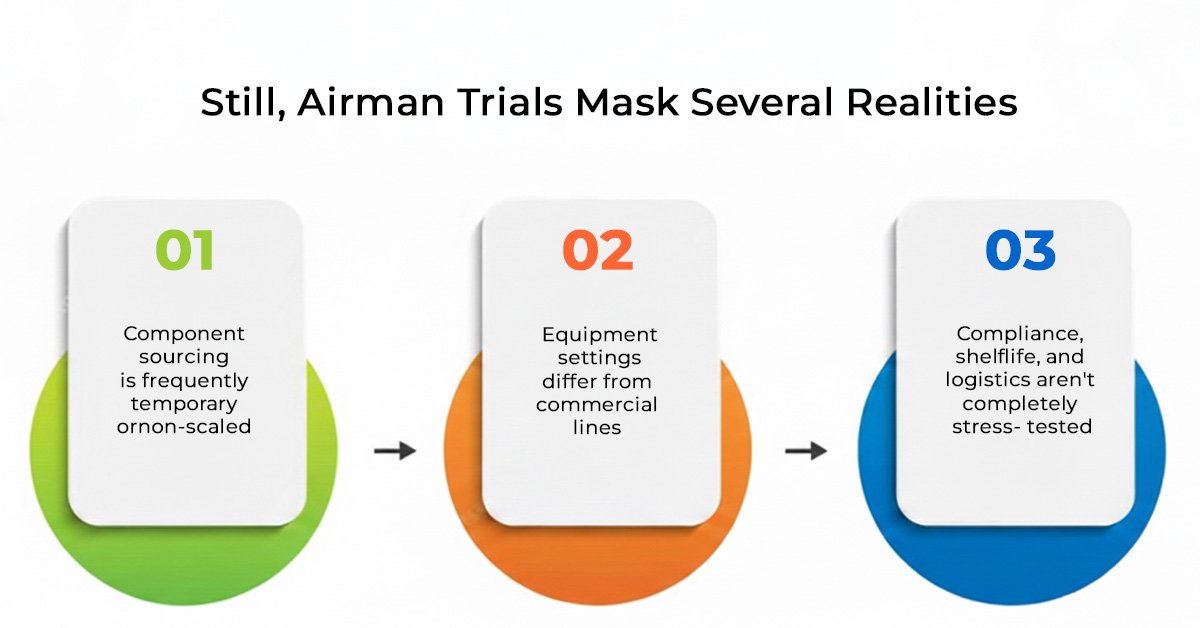
Still, Airman trials mask several realities:
- Component sourcing is frequently temporary ornon-scaled
- Equipment settings differ from commercial lines
- Compliance, shelf-life, and logistics aren’t completely stress- tested
As a result, the jump from airman success to market execution exposes retired cost layers that were never accounted for during airman factory trials.
Beverage Pilot Testing vs Commercial Reality
Scale Changes Everything
One of the biggest contributors to rising beverage pilot trial costs is scale mismatch. A formula that performs well at an airman scale may perform differently when produced in larger volumes. Heating curves, mixing times, carbonation immersion, and emulsification effectiveness all change.
This leads to:
- Additional reformulation cycles
- Repeat pilot plant trials
- Higher ingredient wastage
Each iteration adds cost, time, and functional complexity.
Ingredient Economics Shift After Pilot Trials
Small-Batch Pricing Illusions
During beverage pilot testing, ingredients are frequently sourced in limited amounts, occasionally at decoration prices or through short- term suppliers. Once commercial beverage production begins, minimal order amounts, storehouse conditions, and long- term supplier contracts come into play.
This directly impacts the beverage pilot trial cost by:
- Forcing ingredient substitutes
- Triggering formulation optimisation work
- Increasing working capital conditions
What looked affordable in airman form may not be feasible at scale without changes
Equipment Compatibility and Line Constraints
Pilot Equipment Is Forgiving: Production Lines Are Not
Pilot plants allow flexibility. Commercial lines do not. Fillers, pasteurizers, carbonation units, and labelling machines have fixed tolerances. When a beverage formula doesn’t align properly, adjustments are needed.
These adaptations frequently mean:
- Additional pilot trials to revalidate the formula
- Line testing fees
- Temporary product inefficiencies
This is a major reason the average pilot trial cost increases after airman completion rather than during it.
Shelf-Life Validation Adds Hidden Cost
Stability Testing Is Not a One-Time Exercise
Pilot trials rarely complete full shelf- life studies. Once a brand moves near launch, extended stability testing becomes obligatory. Changes in packaging, storehouse conditions, or distribution plans need fresh confirmation.
Shelf- life failures lead to:
- Reformulation
- Retesting
- Packaging variations
Each step adds to the overall beverage pilot trial cost, frequently months after the founders believed the airman’s work was finished.
Regulatory and Compliance Adjustments
Compliance Becomes Real After Pilot Trials
Regulatory conditions intensify as soon as market intent is declared. Ingredient disclosures, nutritive panels, permissible claims, and process validations all need alignment.
This phase frequently introduces:
- Adviser Fee
- Documentation costs
- Rework of labels and formulations
These compliance- driven changes contribute directly to post-pilot budget expansion.
Packaging and Process Interdependencies
Packaging Is Not Just a Design Choice
Packaging opinions are frequently perfected after airman trials. Still, packaging impacts carbonation retention, oxygen doorway, shelf stability, and filling speed.
When packaging changes:
- Airman trials must be repeated
- Process parameters need recalibration
- Shelf- life tests renew
This ripple effect significantly increases the beverage pilot trial cost beyond the original prospects.
Underestimated Operational Learning Curve
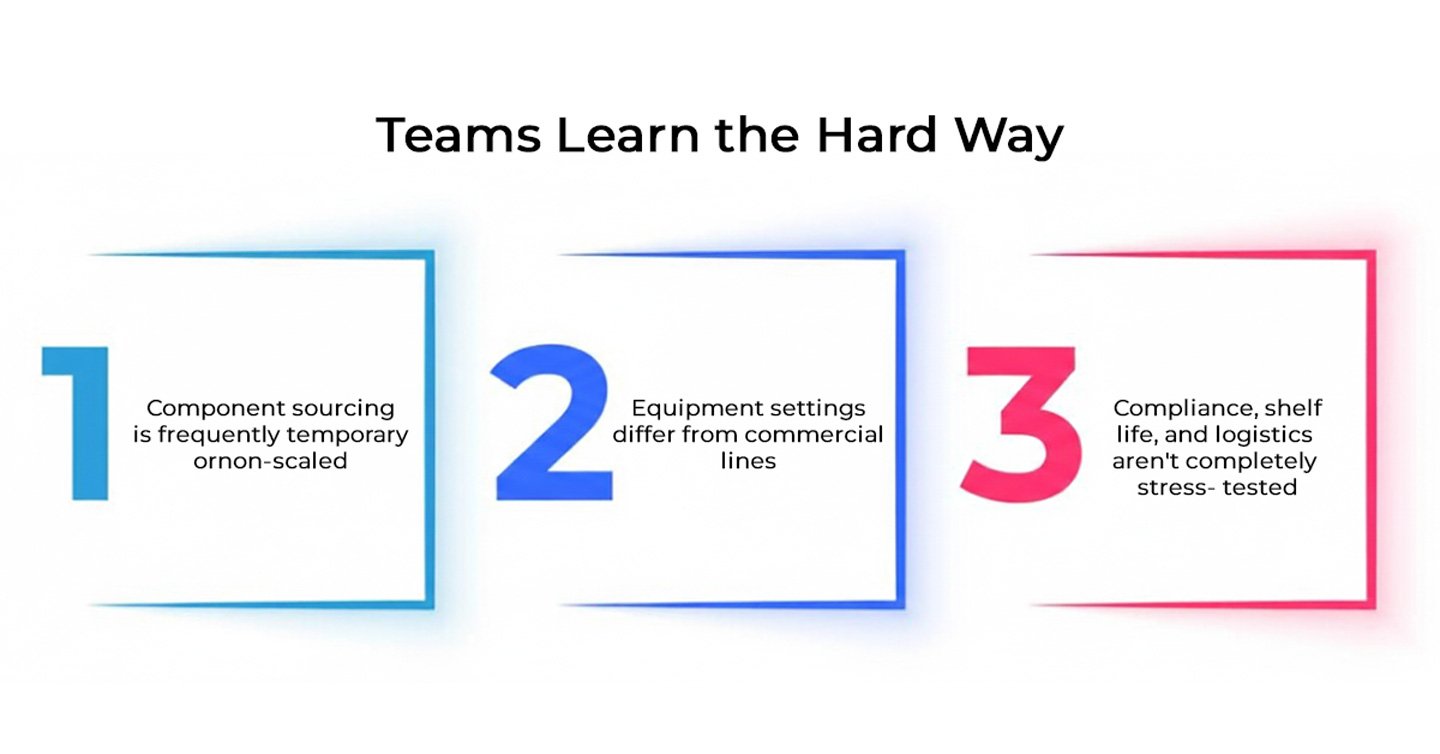
Teams Learn the Hard Way
Airman trials are frequently run by R&D teams. Commercial production involves operations, procurement, quality assurance, and logistics. Misalignment between these functions leads to inefficiencies.
Common outcomes include:
- Over-ordering ingredients
- Excess trial batches
- Product downtime
All of these inflate the beverage pilot trial cost without perfecting product quality.
Why Beverage Scale-Up Cost Is Rarely Linear
Many founders assume costs will increase proportionally with volume. In reality, the beverage scale- up cost is step-based. Each new product threshold introduces fresh requirements, from equipment calibration to supplier audits.
This non-linearity explains why the beverage pilot trial cost feels manageable originally but escalates sharply once scale-up begins.
Planning for Pilot Trials With Commercial Intent
The real issue isn’t trial trials themselves, it is treating them as an endpoint rather than a transition phase. Beverage brands that plan pilot trials with market constraints in mind experience fewer budget shocks.
Key planning principles include:
- Designing formulations for scale from day one
- Validating ingredient availability beforehand
- Aligning packaging, process, and compliance decisions before the final airman runs
These steps reduce the gap between airman success and market readiness.
Related Blogs
Drink Formulation Cost
Beverage SkU Costing
Beverage Scale-up Failure
Commercial Beverage Production
Beverage Manufacturing SOP
Conclusion
Rising beverage pilot trial cost isn’t a failure; it is a signal. It reveals where assumptions made in early development collide with market reality. Brands that understand this dynamic stop replying to cost overruns and start designing around them.
By approaching pilot trials as part of an integrated commercialisation strategy, beverage teams can reduce unnecessary iterations, shorten timelines, and protect capital. Strategic partners who understand both formulation and manufacturing realities can help bridge this gap and help avoid budget escalation.
For brands looking to move from airman to production with clarity rather than correction, working with experienced food and beverage specialists like Foodsure can make the difference between controlled growth and expensive surprises. If your next pilot trial is meant to lead to the market, or another revision, it may be time to rethink how you plan and execute the journey forward.
Struggling With Rising Beverage Pilot Trial Costs?
Foodsure helps beverage founders design scale-ready pilot trials that reduce rework, control formulation changes, and prevent costly pilot-to-production surprises.
Trusted by beverage founders and FMCG brands for scale-ready pilot trials and commercial product development.
FAQs
What does beverage pilot trial cost typically include?
It includes pilot plant usage, ingredients, labor, testing, and initial process validation.
Why does beverage pilot trial cost increase after trials are completed?
Because commercial constraints expose formulation, equipment, and compliance gaps.
Is beverage pilot testing enough to confirm launch readiness?
No. Pilot testing confirms feasibility, not commercial scalability.
How many pilot trials are usually required before production?
This varies, but multiple iterations are common when scaling up.
Can formulation optimization reduce beverage pilot trial cost?
Yes, scale-ready formulations reduce rework and repeated trials.
Does packaging impact pilot trial budgets?
Absolutely. Packaging changes often trigger new pilot runs.
Are shelf-life tests part of pilot trials?
They usually begin after pilot trials, adding post-pilot cost.
Why is beverage scale-up cost unpredictable?
Because it increases in stages, not linearly.
Can early supplier alignment control pilot trial expenses?
Yes, it minimizes ingredient and MOQ-related surprises.
How can brands prevent pilot-to-production cost overruns?
By planning pilot trials with commercial manufacturing in mind from the start.