For numerous first-time founders, beverage development begins with sanguinity. The conception feels clear, early samples taste promising, and the supposition is that the product is just a few months away. Yet by month three, anxiety sets in. Costs rise, timelines stretch, and progress feels slower than anticipated.
This emotional drop-off isn’t a coexistence; it’s a predictable outgrowth of misknown beverage R&D timelines. Most authors are never tutored on how beverage development time actually unfolds, nor why formulation delays are a normal part of establishing a production-ready drink.
This composition breaks down the real beverage R&D timeline, stage by stage, to explain where time goes, why delays happen, and how founders can manage prospects without losing momentum.
Why the Beverage R&D Timeline Is Commonly Misunderstood
The first reason authors fear is that beverage R&D timelines are frequently confused with product ideation timelines. Creating a great-tasting conception sample can happen quickly. Transforming that sample into a stable, compliant, scalable product can not.
Crucial misconceptions include: Assuming taste blessing equals R&D completion
- Believing libation development time is direct
- Awaiting expression to be perfected in one cycle
In reality, the beverage R&D timeline is iterative. Each decision constituent, processing system, packaging, and claims affects every other variable. When authors anticipate speed rather than replication, frustration becomes inevitable.
Struggling to manage beverage R&D timelines and formulation delays?
Phase 1: Concept Translation (Weeks That Feel Invisible)
The foremost phase of the beverage R&D timeline rarely looks like “progress” to authors. This stage involves rephrasing a brand idea into technical parameters.
Activities include:
- Defining product function and operation environment
- Mapping component constraints
- Establishing cost and shelf-life targets
Because there’s no physical output yet, authors frequently underrate this phase. Still, skipping clarity then leads directly to formulation delays. Beverage development time increases dramatically when early hypotheticals are vague or conflicting.
Phase 2: Early Formulation and First Delays (Where Panic Begins)
This is where most formulation delays first appear and where authors start questioning the beverage R&D timeline.
Early expression challenges include:
- Component incompatibility
- Stability issues under processing
- Unanticipated flavour declination
Numerous founders anticipate formlations to be a one-step process. Rather, the beverage R&D timeline requires multiple formulation rounds to balance taste, function, cost, and manufacturability. Each round adds time, but each also reduces long-term threat.
Phase 3: Stability, Shelf-Life, and the Reality of Beverage Development Time
One of the least explained aspects of beverage development time is shelf-life validation. A drink that tastes perfect on day one may fail within weeks.
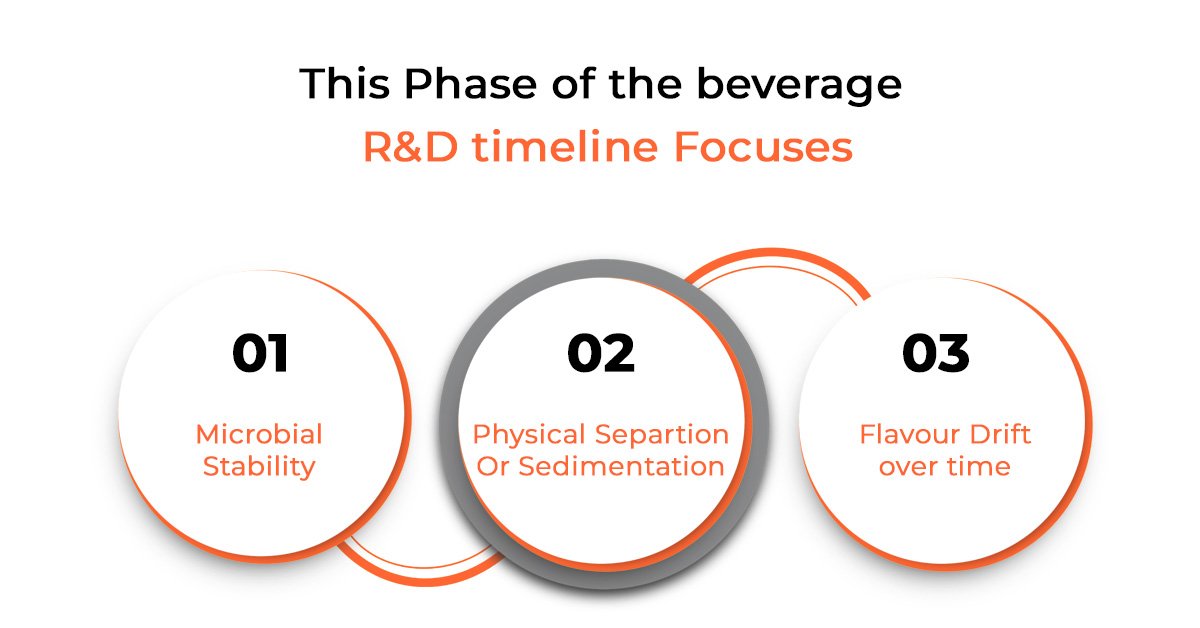
This phase of the beverage R&D timeline focuses on:
- Microbial stability
- Physical separation or sedimentation
- Flavour drift over time
These tests can not be rushed without compromising product safety or credibility. Formulation delays often occur here, not because of mistakes, but because time itself is a needed input.
Phase 4: Packaging Compatibility (An Overlooked Source of Formulation Delays)
Packaging is frequently treated as a branding decision, but it plays a major part in the beverage R&D timeline.
Common issues include:
- Component commerce with packaging material
- Carbonation loss or pressure changes
- Light or oxygen perceptivity
When packaging opinions are made late, beverage development time expands suddenly. Founders often panic here because they believed formulation was “done”, only to discover packaging creates new constraints.
Phase 5: Scale-Up Readiness and Manufacturing Alignment
A major reason beverage R&D timelines stretch is the gap between lab-scale success and manufacturing reality.
This stage addresses:
- Process compatibility
- Outfit limitations
- Batch consistency
Formulation delays at this stage are common and necessary. A beverage that can not be produced constantly isn’t product-ready, anyhow of how good it tastes. The beverage R&D timeline exists to face these pitfalls before capital is committed.
Why Month 3 Feels Like a Crisis Point
Across beverage startups, month three of the beverage R&D timeline is where emotional strain peaks.
By this point:
- Original excitement has faded
- Costs are visible
- Delays feel particular
What founders witness as “slow progress” is generally the most critical part of beverage development time. Decisions made here determine whether the product survives scale-up or collapses later.
Understanding this psychological curve helps founders stay rational rather than reactive.
Want a clear visual overview of how beverage formulation timelines actually work?
Managing Expectations Without Compressing the Beverage R&D Timeline
Speed isn’t the enemy; misalignment is. Successful founders don’t exclude beverage R&D timelines; they manage them intelligently.
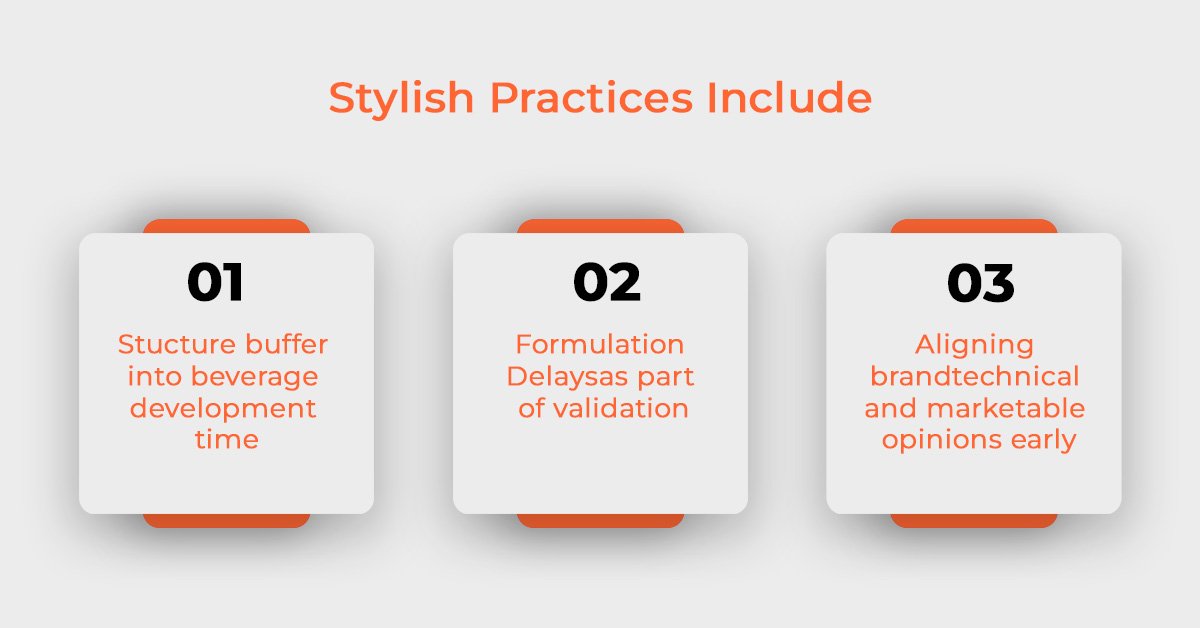
Stylish practices include:
- Structure buffer into beverage development time
- Formulation delays as part of validation
- Aligning brand, technical, and marketable opinions early
A realistic timeline prevents panic-driven decisions that often cause greater delays later.
Related In-Depth Reads
These resources dive deeper into beverage formulation, R&D execution,
and the challenges that shape real development timelines.
Conclusion
The beverage R&D timeline isn’t a sign of inefficiency; it is a threat-operation frame. Formulation delays aren’t failures; they’re signals that the product is being tested against reality before expensive mistakes occur.
Authors who understand beverage development time move forward with confidence rather than fear. This is where a structured development partner like Foodsure quietly adds value by guiding founders through each stage with clarity, alignment, and marketable foresight.
If you are currently navigating month three or planning your R&D journey, approaching the beverage R&D timeline with the right expectations can save time, capital, and credibility. Aligning early with the right expertise can turn uncertainty into momentum.
Bring Structure and Clarity to Your Beverage R&D Timeline
Beverage R&D takes time—but delays become costly when formulation,
packaging, compliance, and manufacturing are misaligned.
Get expert guidance to manage development timelines with confidence.
Trusted by beverage startups and FMCG brands for structured R&D and scale-up planning.
Frequently Asked Questions
How long does a typical beverage R&D timeline take?
The beverage R&D timeline varies by product complexity, but it typically spans several months due to formulation, stability testing, and scale-up validation.
Why do formulation delays happen even with simple beverages?
Even simple beverages face challenges related to shelf life, ingredient interaction, and processing stability, all of which extend beverage development time.
Can beverage development time be shortened safely?
Timelines are optimised through early alignment, but skipping critical steps increases long-term risk and cost.
Is it normal to reformulate multiple times during R&D?
Yes. Multiple iterations are a standard part of the beverage R&D timeline and help ensure commercial viability.
Why do founders panic around month three of R&D?
This is when hidden complexity becomes visible, expenses increase, and progress feels slower—despite critical validation taking place.
Does packaging choice affect the beverage R&D timeline?
Absolutely. Packaging compatibility often introduces new constraints that influence formulation and stability.
Are formulation delays a sign of poor planning?
Not necessarily. Many formulation delays are essential checkpoints that prevent larger failures post-production.
When should manufacturing considerations enter the beverage R&D timeline?
Manufacturing alignment should begin early to prevent scale-up issues later in development.
How do beverage R&D timelines differ between functional and non-functional drinks?
Functional beverages typically have longer beverage R&D timelines due to ingredient validation, stability testing, and higher chances of formulation delays compared to non-functional drinks.
What role does expert guidance play in managing beverage development time?
Expert guidance helps align formulation, compliance, packaging, and manufacturing decisions early, reducing unnecessary formulation delays and keeping the beverage R&D timeline commercially realistic.