The Hidden Gap Between Trial and Loyalty
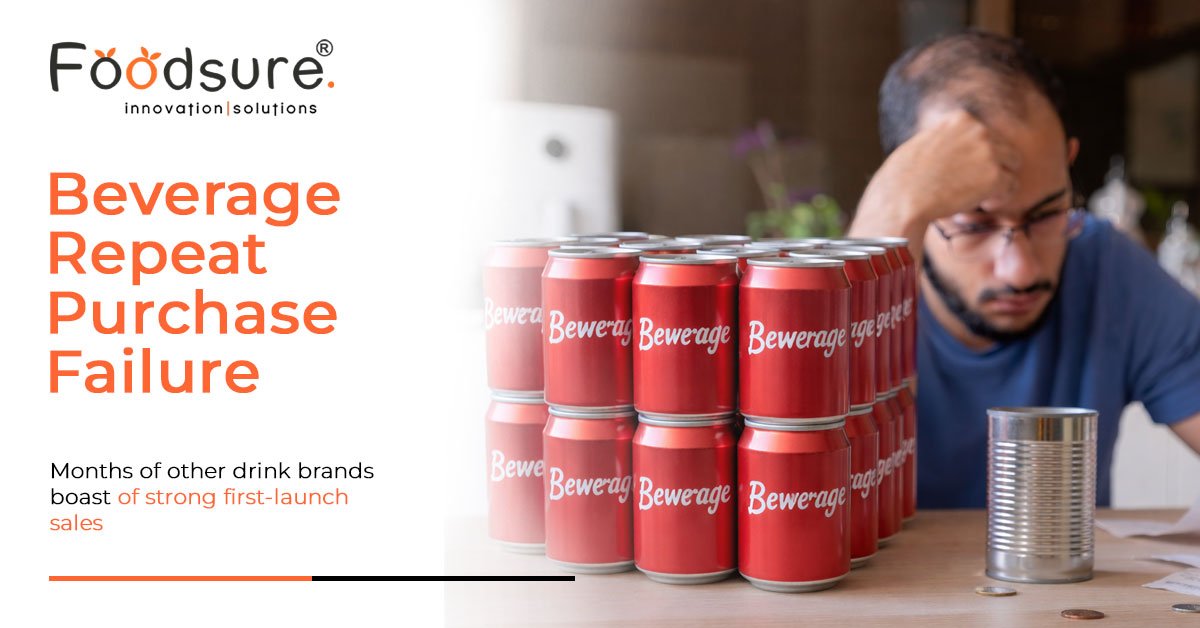
Months of other drink brands boast of strong first-launch sales. Sample workshops. Promotional activities are converting. Retailers express interest. On the surface, everything is favourable.
However, other months later, growth slows down. Reorder rates diminish. Customers do not return.
The gap in trial and beverage loyalty is the birthplace of failure to repeat purchase. It can seem that the first sales are great, but it is usually a pretext for deeper structural issues that hamper the success in the long run.
Why First Sales Are a Poor Indicator of Success
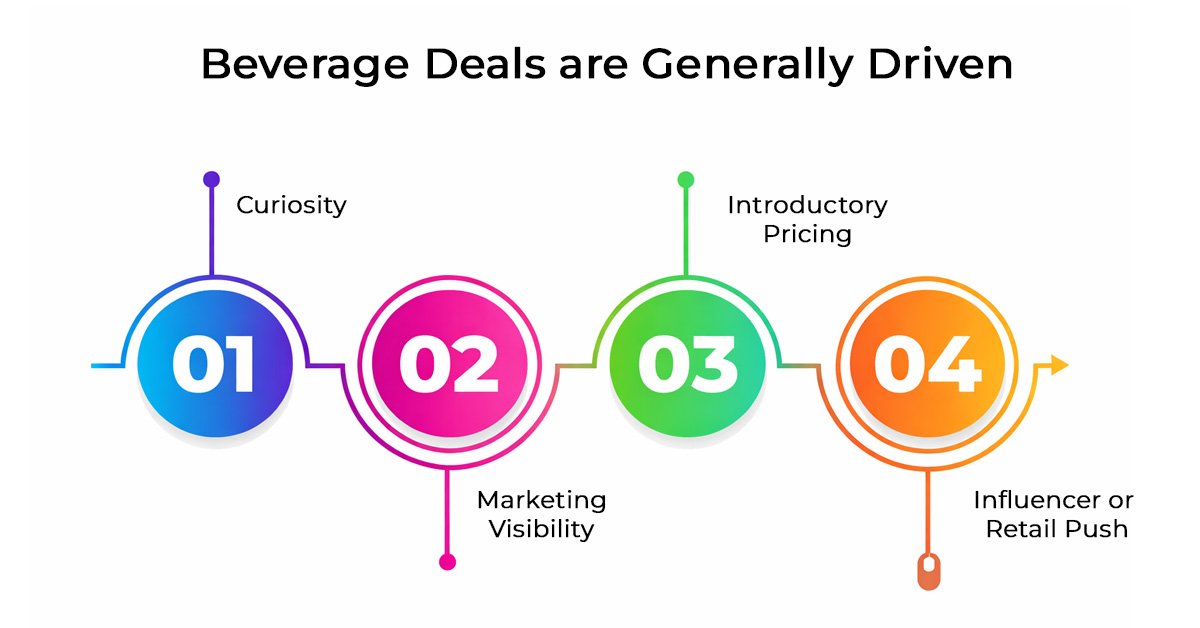
Beverage deals are generally driven by:
Curiosity
Marketing visibility
Introductory pricing
Influencer or retail push
What they don’t prove is whether consumers actually want the product again.
This is why many founders struggle to understand why beverage customers don’t repurchase. The product isn’t rejected, it’s simply not remembered.
Understanding the Repeat Purchase Problem in Drinks
Reprise purchase in beverages isn’t a good decision. It’s a habitual one.
Consumers rebuy drinks that:
Fit naturally into their diurnal routine
Deliver the same experience every time
Create a sense of comfort or trust
Solve a clear, recurring need
When these conditions aren’t met, reprise purchase drops, no matter how good the first experience was.
Where Beverage Brands Commonly Go Wrong
Trial Is Driven by Marketing, Not Experience
Testing and promotions bring consumers in, but they don’t guarantee retention. A reprise purchase depends entirely on what happens after consumption.
No Clear Consumption Moment
If consumers don’t know when to drink it, morning, workout, break, or evening, the product never becomes habitual.
Sensory Inconsistency
Small variations in taste, sweetness, or mouthfeel create doubt. Consistency builds trust, and trust pushes repeat buying.
Benefits Are Claimed but Not Felt
This is especially common in functional beverages. However, they see no reason to repurchase if consumers don’t feel a clear outgrowth.
Brand Promise Doesn’t Match Reality
When packaging, positioning, and experience don’t align, the product loses credibility over time.
Together, these issues fuel the reprise purchase problem in drinks.
Founders Experience
“ People say it’s good, but they don’t buy again ”
“ Retailers need constant schemes to reorder ”
“ Marketing costs keep rising ”
“ We don’t know what exactly is broken ”
These aren’t demand problems.
They’re retention design problems.
Repeat Purchase Explained in Simple Human Terms
A beverage must earn a mental shortcut in the consumer’s mind.
If the brain doesn’t associate your drink with:
a specific moment
a harmonious taste
a predictable benefit
It won’t spark repeat behaviour.
That’s the simplest explanation behind the beverage repeat purchase failure.
A Common Market Pattern
A beverage brand launches with strong visibility and early purchase. First-month deals look promising.
Within a quarter:
Repeat buying slows
Retail velocity drops
Marketing ROI declines
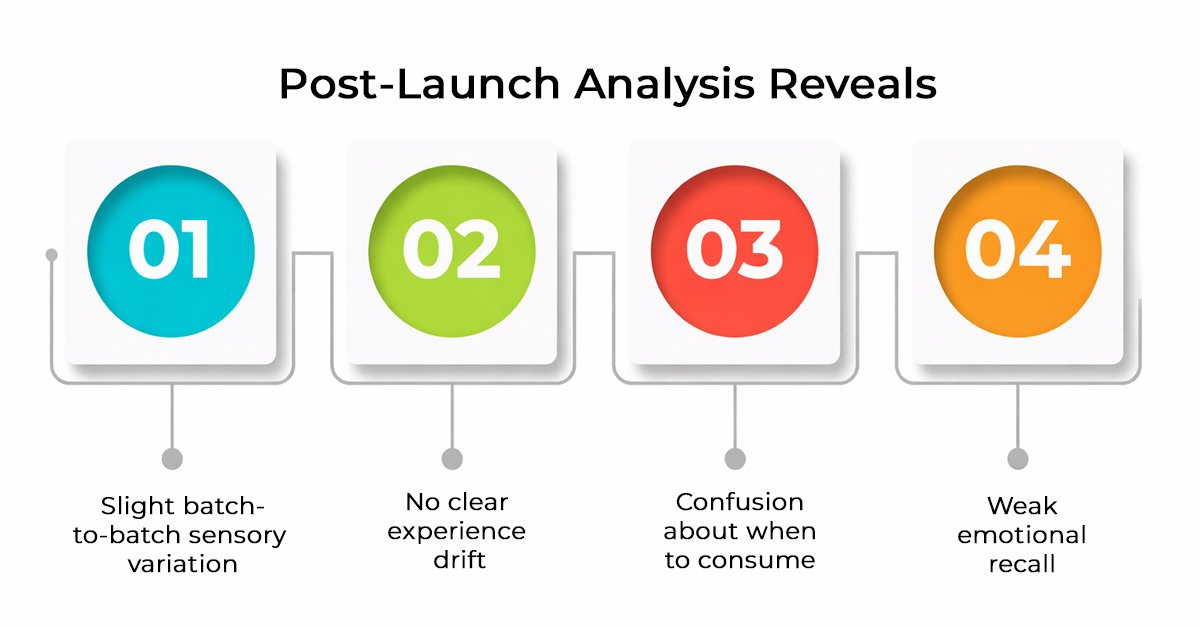
Post-launch analysis reveals:
Slight batch-to-batch sensory variation
No clear experience drift
Confusion about when to consume
Weak emotional recall
The product didn’t fail in quality.
It failed on repeat relevance.
What Actually Improves Repeat Purchase
| Principle | One-Liner Insight |
| Own One Clear Consumption Moment | Beverages that have a specific use case are remembered; vague ones are forgotten. |
| Make Consistency Non-Negotiable | Average taste is forgivable; inconsistency is not. |
| Deliver Benefits Consumers Can Feel | Loyalty is driven by felt benefits, not label claims. |
| Reduce Cognitive Load | The simpler it is to understand when and why to drink, the higher the repeat rate. |
| Align Brand Story With Experience | A gap between promise and experience silently erodes repeat sales. |
Related Blogs :
Beverage Startup Failure Reasons
Where Foodsure Fits In
Many founders sense that repeat purchase is breaking, but lack clarity on why.
Foodsure works with beverage brands to identify gaps in sensitive consistency, formulation behaviour, consumption relevance, and expectation alignment, which, ahead of scale amplifies the problem.
The focus is’t faster launches, but products consumers naturally return to.
Founder’s Real Takeaway
Early purchase is a way of showing consumer presupposition.
A follow-up purchase is a sign of a relationship with the brand.
In the event of failure of repeat purchases, the market is not rejecting the product.
It means that the product has not become a part of the routine of the consumer.
Predicting failure in beverage repeat purchase in advance is a factor that makes scalable brands different to short lived product launches.
A Thoughtful Next Step
Prejudiced marketing approaches will never address the problem if your drinks are being tried but not bought.
Clarity, in fact, will.
This clarity is usually initiated by being able to find out where the repeat behaviour breaks and correction before the growth halts.
FAQs
What is a beverage repeat purchase failure?
It refers to a situation where a beverage sells well initially but fails to generate consistent repeat buying from customers over time.
Why do beverage brands struggle with repeat purchases?
Most brands focus on first-time trial through marketing but fail to build habit, consistency, and relevance that drive repeat behaviour.
Does good taste guarantee repeat purchase in drinks?
No. Taste helps with trial, but repeat purchase depends on consistency, consumption occasion, and perceived benefit.
Why do customers buy a beverage once and never again?
Often because the product doesn’t fit into a routine, lacks a clear purpose, or delivers an inconsistent experience.
How can founders identify repeat purchase problems early?
By tracking reorder velocity, sensory consistency, and consumer usage patterns, not just sales numbers.
Is discounting an effective solution for repeat purchase issues?
Discounts increase trial but rarely fix long-term repeat purchase problems in drinks.
What role does sensory consistency play in repeat sales?
A major one. Even small variations in taste or mouthfeel can break trust and reduce repeat buying.
Why do functional beverages face higher repeat purchase failure?
Because claimed benefits are often not felt clearly, consumers question the need to repurchase.
Can branding alone improve customer retention for beverages?
Branding helps, but only when it aligns with the actual consumption experience and outcome.
How can beverage brands improve repeat purchase sustainably?
By anchoring the product to a clear moment, ensuring consistency, and delivering a benefit that consumers truly experience.