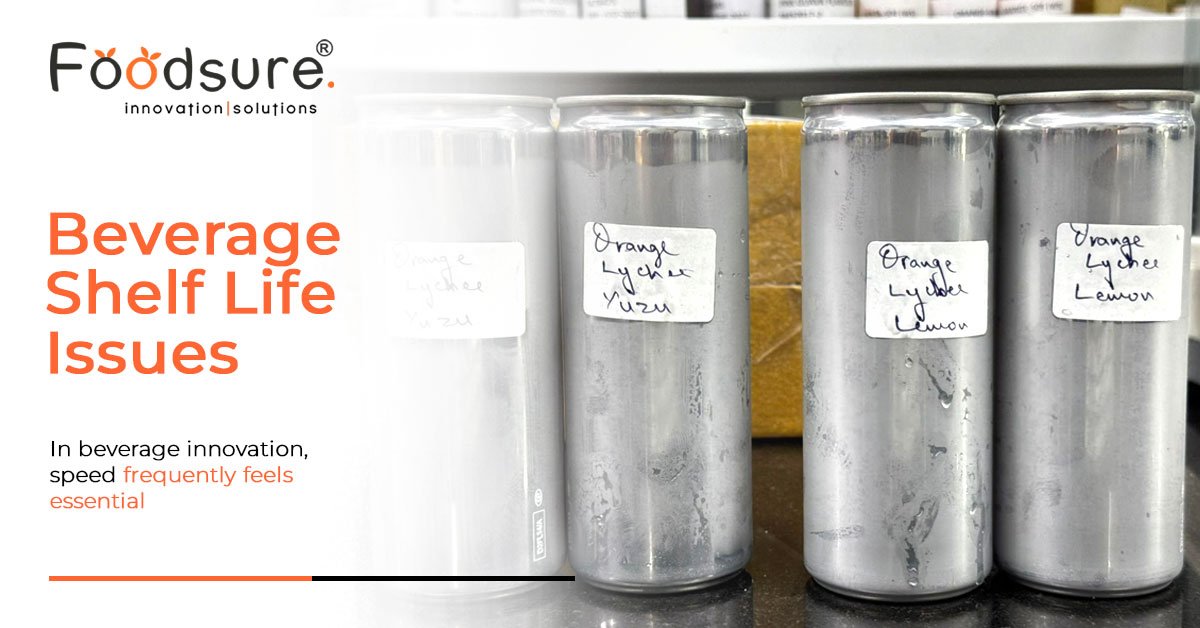
In beverage innovation, speed frequently feels essential. Teams push aggressively toward flavour lock, label approval, and early market confirmation. Still, one overlooked shortcut constantly causes beverage shelf life issues that surface only after launch, treating shelf life as a testing phase instead of a design principle.
Beverage shelf life isn’t just a specialised milestone; it is the backbone of shelf life stability, brand consistency, and distribution readiness. When shelf life fails, the consequences are expensive: rejected batches, reduced expiry dates, flavour complaints, and lost market momentum.
This blog explains why beverage shelf life fails, how shelf life problems in beverage formulation are created beforehand in R&D, and why ignoring beverage-sensitive evaluation and consumer confirmation during stability planning leads to avoidable failure.
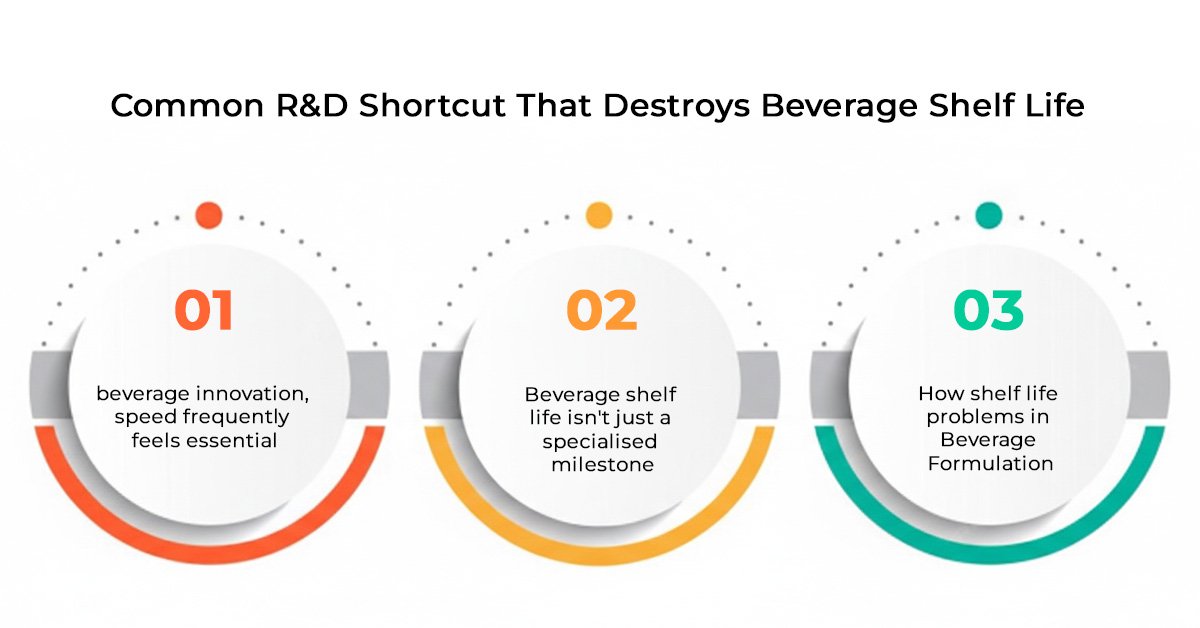
The Shortcut That Creates Beverage Shelf Life Issues
The most common R&D shortcut is finalising taste before engineering shelf life stability. Many formulations are approved based on flavour, mouthfeel, and appearance, then transferred for shelf life testing as a confirmation step. This approach has vital flaws.
Shelf life stability can not be added after formulation lock. Beverage preservation must be bedded into the recipe architecture from the prototype. When preservation systems, pH control, component compatibility, and processing stress aren’t considered together, beverage shelf life issues are inevitable.
This shortcut explains why shelf life problems in beverage formulation frequently appear after pilot trials or during scale-up, not in initial lab testing.
Why Beverage Shelf Life Fails Despite “Passing” Lab Tests
One of the most misinterpret realities in beverage development is that early stability results can be misleading. Products may pass short- term microbial tests, show no separation, and maintain flavour under controlled storehouse conditions.
Yet months later, insecurity appears.
This happens because lab conditions infrequently reflect real-world distribution. Temperature abuse, oxygen ingress, light exposure, and transit vibration all accelerate degradation. This gap explains why beverage shelf life fails even when original results look positive.
Shelf life stability requires stress resilience, not just baseline safety.
Shelf Life Problems in Beverage Formulation Begin with Ingredient Interactions
Shelf life problems in beverage formulation frequently appear at the ingredient level. Functional constituents, botanicals, fibres, and natural extracts are frequently selected for benefits or flavour impact without assessing long- term compatibility.
These constituents interact with acids, sweeteners, minerals, and preservatives over time. When those relations aren’t studied beforehand, beverage preservation weakens invisibly. The result is haze formation, sedimentation, flavour drift, or microbial vulnerability, classic beverage shelf life issues that surface late. Formulation isn’t additive; it’s systemic.
Why Beverage Shelf Life Fails During Scale-Up
Scale- up is where theoretical stability meets industrial reality.
Heat transfer, mixing shear, oxygen pickup, and hold times differ dramatically between bench- scale and market production. However, declination accelerates if shelf life stability wasn’t designed to repel these stresses.
This explains why beverage shelf life fails at the first factory run. Shelf life problems in beverage formulation are amplified, not created, during scale-up.
The Overlooked Role of Beverage Sensory Evaluation in Shelf Life
Many teams define shelf life only in microbiological terms. Still, beverage sensory evaluation is inversely critical.
A product may remain technically safe while being unacceptable. Sweetness perception shifts, acidity sharpens, bitterness emerges, or aromas fade. These changes often occur well before the expiry date.
When beverage sensitive evaluation isn’t integrated into shelf life studies, brands discover too late that their product no longer tastes the way consumers anticipate. Shelf life stability must cover sensitive consistency, not just safety.
Consumer Validation Is Often Missing from Shelf Life Decisions
Another major gap is the absence of consumer validation during shelf life planning. Internal panels may tolerate subtle flavour changes that consumers reject instantly. Without consumer validation at multiple shelf life intervals, brands risk launching products that technically “pass” but commercially fail.
This disconnect explains why beverage shelf life fails in the market even when compliance boxes are checked. Consumer perception defines success and not lab thresholds.
Preservation Systems Are Commonly Underdimensioned
Preservatives are frequently selected based on label friendliness or minimum sensory impact rather than system performance. When preservation systems are underdesigned, they may work temporarily but degrade over time.
This leads to inconsistent batch performance and changeable failures, hallmark beverage shelf life issues caused by early R&D shortcuts. Effective beverage preservation requires holistic system design, not minimum intervention.
Why Packaging Cannot Fix Shelf Life Problems in Beverage Formulation
Packaging is frequently treated as a corrective measure rather than a complementary system. While barrier properties matter, packaging can not compensate for weak formulation design.
Still, ultra-expensive packaging only delays failure if shelf life problems in beverage formulation already exist. True shelf life stability must appear inside the formulation itself.
Shelf Life Stability Is a Strategic Design Choice
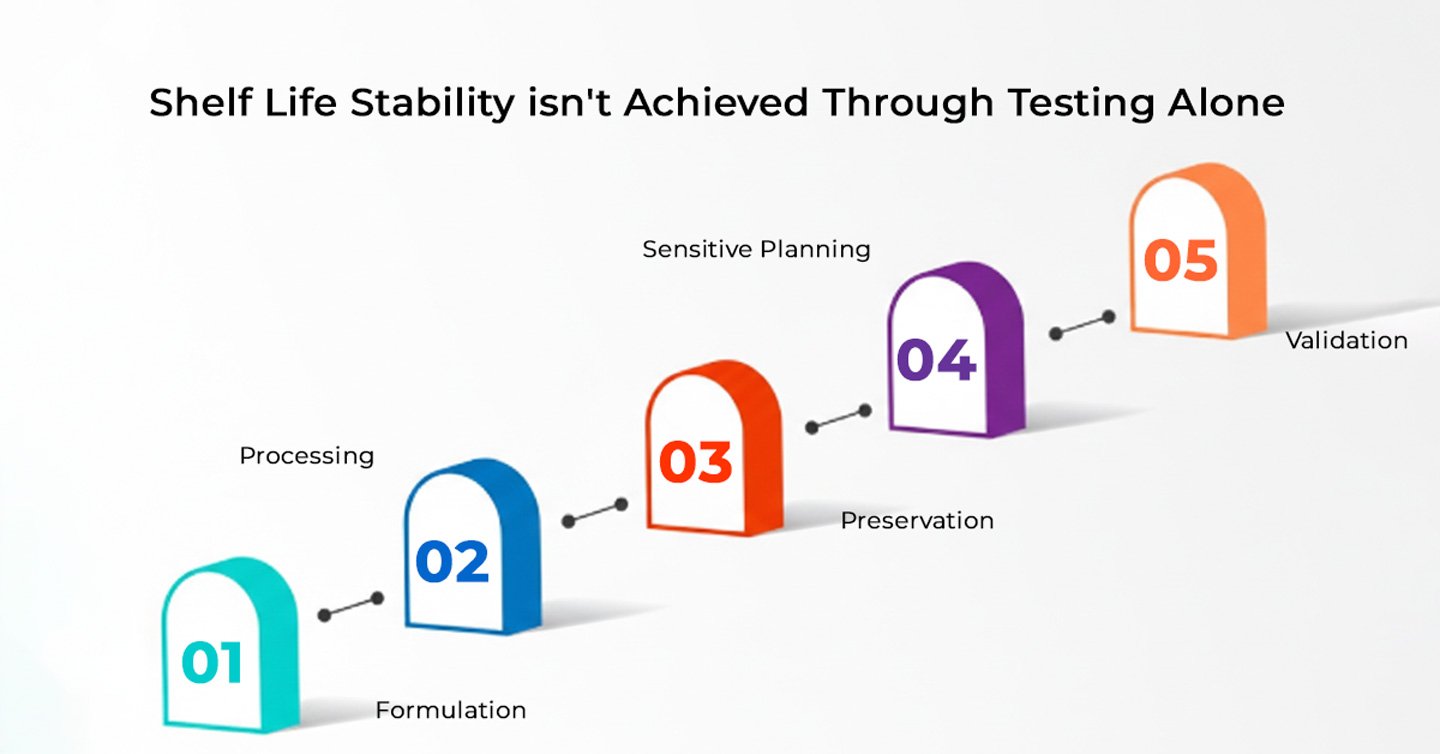
Shelf life stability isn’t achieved through testing alone. It’s created through deliberate decisions across formulation, processing, preservation, sensitive planning, and validation.
Brands that understand why beverage shelf life fails treat shelf life as a strategic foundation, not a final checkpoint. This shift separates scalable products from fragile ones.
Related Blogs
Preservatives in Functional Beverages
Conclusion
The most damaging R&D shortcuts in beverages are assuming shelf life can be validated after flavour approval. Beverage shelf life issues are rarely accidental; they are engineered unintentionally through rushed opinions and deficient system thinking.
Shelf life stability, beverage preservation, beverage sensory evaluation, and consumer validation must be aligned from the prototype. When they’re not, shelf life problems in beverage formulation face at the worst possible time, after launch.
This is where educated formulation partners like Foodsure add value still but decisively, by embedding shelf life extension into R&D rather than repairing failures later.
If your objective is to launch beverages that scale confidently, maintain sensory integrity, and earn long-term trust, the next step is clear: design shelf life stability first, not last.
Facing Beverage Shelf Life Failures After Launch?
Foodsure helps beverage brands eliminate shelf life risks by fixing formulation gaps, strengthening preservation systems, and validating sensory stability before scale-up.
Trusted by beverage founders and FMCG brands for shelf life engineering and commercial-ready formulations.
FAQs
What are the most common beverage shelf life issues?
Microbial growth, flavour drift, sedimentation, colour changes, and carbonation loss are common beverage shelf life issues.
Why does beverage shelf life fail after launch?
It fails because real-world conditions expose formulation weaknesses not identified during lab testing.
What causes shelf life problems in beverage formulation?
Poor ingredient compatibility, weak preservation systems, inadequate pH control, and scale-up stress.
How does beverage sensory evaluation affect shelf life?
It ensures flavour, aroma, and mouthfeel remain acceptable throughout the product’s shelf life.
Why is consumer validation important for shelf life?
Consumer validation reveals perception thresholds that internal panels often miss.
Can a beverage be safe but still fail shelf life?
Yes. Products often remain safe but become sensorially unacceptable.
How early should shelf life be addressed in R&D?
Shelf life should be engineered from the first formulation iteration.
Why does shelf life stability break down during scale-up?
Processing stresses amplify weaknesses created during formulation.
Can packaging alone ensure beverage preservation?
No. Packaging supports but cannot replace formulation-level stability.
How can brands reduce beverage shelf life failures?
By avoiding R&D shortcuts and integrating formulation design, sensory evaluation, and consumer validation early.