With each beverage brand that manages to make it to a store shelf, dozens of them slowly close down before their first commercial delivery. The irony is that the majority of these failures are not due to a deficiency in passion, creativity and even funding. They are the consequence of early and invisible choices, which lead to irreversible losses.
Understanding of beverage startup failure reasons at the pre-production phase is pivotal for the founders who are willing to move their idea stage of scaling to a reality. Before there is a need to book machinery, print labels, or contact distributors, there are some strategic blunders that can silently take a good idea of a beverage to its grave.
The article discusses the most prevalent yet neglected reasons for a beverage startup failure, stating that beverage launch and food and beverage startups, which seem innocuous at the start, turn out to be deadly later. By tackling these challenges at an early stage, the founders will have a great opportunity to succeed in reaching first production and more.
Struggling to avoid costly beverage startup mistakes?
Misjudging the Real Market Problem
The second possible cause of failure in the beverage startups is the fact that one of them is built based on its own preference and not on a market need that has been validated. The most common mistake that most founders make is to assume that a drink that is merely good-tasting will immediately lead people to demand it. Unfortunately, taste is not a guarantee of repeat buying and business sustainability.
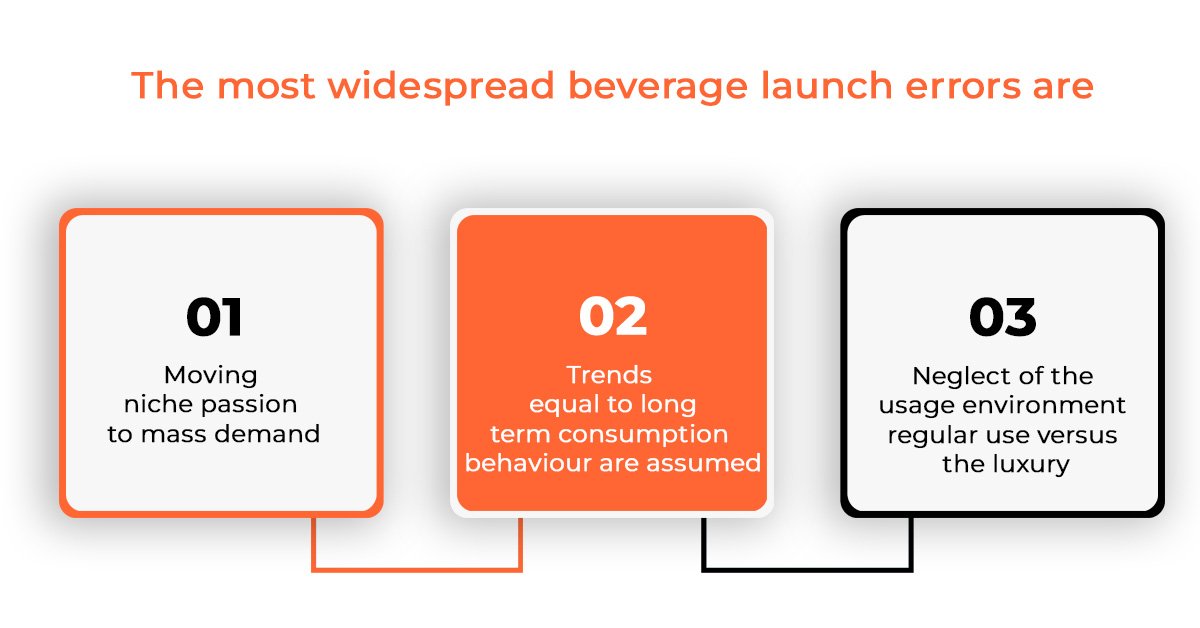
The most widespread beverage launch errors are:
- Moving niche passion to mass demand
- Trends equal to long-term consumption behaviour are assumed
- Neglect of the usage environment (regular use versus the luxury)
The risks faced by food and beverage startups are aggravated by the fact that anecdotal feedback is supported by not following structured consumer insights. Brands with no indication of who the product is targeting and why the product is being applied find it difficult to explain pricing, positioning and volume expectations before production starts.
Overengineering the Formula Too Early
The other major cause of failure in the start-up of drinks pertains to struggling to achieve perfection in the formulation before outlining commercial constraints. Creators frequently pursue complicatedness in the form of superfoods, rare extracts, and functional blends without a clear understanding of whether they can be manufactured.
This results in beverage launch errors, which include:
- Ingredients that are unstable at scale.
- Formulas that cannot be handled by standard processing
- Expenses that are not viable and beyond the cost of prices.
The risks in food and beverage start-ups increase as the formulation decisions are made without taking into consideration the production realities. A formula that passes a laboratory or kitchen test can fail a shelf-life test, compliance test or even cost modelling, thus necessitating expensive reformulation.
Ignoring Regulatory and Compliance Strategy
Among the most underestimated factors that lead to the failure of a beverage start-up are regulatory blind spots. Most founders assume that the problem of compliance can be resolved later, only to realise that initial actions have put them into non-compliant routes.
The common errors of beverage launch are:
- Utilisation of limited ingredients is unverified
- Making early functional or health claims
- Decreasing the regulation of labelling
Food and beverage startup risks only increase with a general approach of compliance when treated as a checkbox and not a strategic framework. Misalignment in regulators may delay production in a never-ending cycle, destroy capital and brand credibility before it even starts.
Choosing the Wrong Manufacturing Path Too Soon
The choice of a manufacturer without understanding the volume strategy has become a critical component of the failure of beverage startups. Some founders run into partnerships that are not suitable at the period they are in.
Common mistakes when launching beverage inclusions:
- Booking high-MOQ plants beforehand
- Focusing on cost and not focusing on technical ability
- Assuming that formulation problems will be solved by the manufacturer
The risks of a food and beverage startup trigger when the choice of production partner-mades done reactively instead of being strategic.The wrong manufacturing options can trap a brand into having underutilized capacity and unsustainable costs even before the first batch of product has been made.
Underestimating Cost Structures and Unit Economics
The existence of flawed financial modeling is one of the worst causes of failure of beverage startups. Most of the start-up businesses set prices according to their hopeful estimates instead of actual production conditions.
The common beverage launch mistakes include:
- Failure to control wastage and failure
- Ignoring loss due to neglect
- Neglecting the second-order expenses like testing, storage, and transportation
- Incorrect pricing of products on aspirational margins.
The risks inherent in food and beverage startups are made worse by the fact that the founders learn too late that the product can not be profit-making on a large scale. Lack of favorable unit economics may lead to a sudden end to production schemes, though market demand is available.
Branding Before Business Logic
The weakness of the structure is not filled up with a beautiful brand. A minor cause of failure in beverage start up is over hypothetically investing in branding prior to the operational understanding.
Mistakes in the launch of beverages:
- The packaging is designed before finalizing the fill volumes.
- Coming up with brand stories that are not connected to claims compliance.
- It is more about beauty over practicality.
The risks linked to food and beverage startups are magnified, whereby the formulation, packaging, or pricing flexibility is restricted by the branding choice or decision. A brand must be used to bring out a viable product and not to conceal unacceptable fundamentals.
Misaligned Go-To-Market Assumptions
Most beverage start-ups are abandoned before production due to the distribution planning without attaining operational readiness. Such failure is normally blamed on unrealistic schedules.
Common errors encountered in launching a beverage:
- Making assumptions of retail acceptance
- Failure to consider cold-chain or shelf-life restrictions
- Excessively underestimating initial reorder speed
The risks in the food and beverage market are even heightened where the go-to-market plans are founded on wishes and not reality. Deviations in this segment can grind production to a halt and wipe out the working capital.
Fragmented Decision-Making Across Partners
Another hidden bevetrage startup failure reason is managing development through disconnected merchandisers, one for formulation, another for compliance, another for manufacturing, without a centralised strategy.
Beverage launch mistakes in this area include:
- Clashing specialised recommendations
- Repeated variations due to miscommunication
- Lack of responsibility across stages
Food and beverage startup pitfalls grow when no single frame governs opinions from concept to product. Fragmentation leads to detainments, cost overruns, and strategic drift.
Delaying Commercial Validation Until After Production
Any founders believe validation comes post-launch. In reality, this assumption is a core beverage startup failure reason.
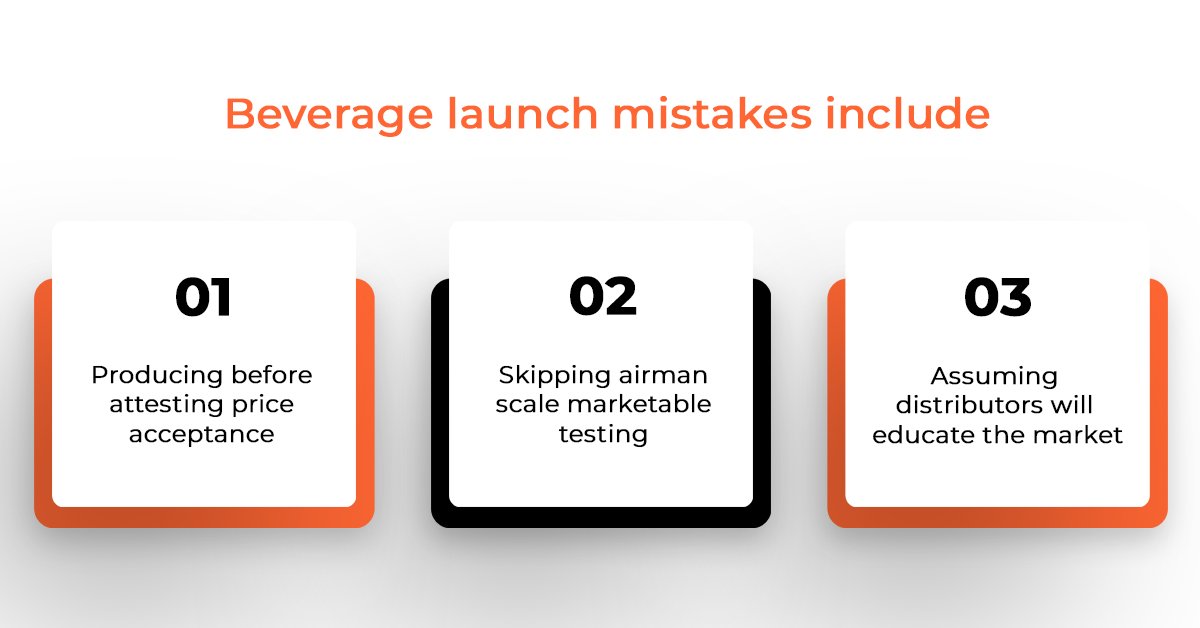
Beverage launch mistakes include:
- Producing before attesting price acceptance
- Skipping airman- scale marketable testing
- Assuming distributors will educate the market
Food & beverage startup pitfalls spike when production is treated as the starting point instead of a milestone. Without pre-production confirmation, brands frequently stall with unsold force or paused manufacturing plans.
Related Insights for Beverage Founders
Conclusion
Most beverage startups don’t fail because of a single disastrous error. They fail because of a sequence of hidden opinions made too beforehand, too fast, or in isolation. Feting these beverage startup failure reasons before first production is what separates scalable brands from stalled ideas.
Avoiding common beverage launch mistakes and managing food & beverage startup pitfalls requires an intertwined approach where formulation, compliance, cost, manufacturing, and market strategy move together. This is where structured development mates like Foodsure play a critical part, helping authors navigate early opinions with marketable clarity rather than trial and error.
If you’re planning your first production and want to reduce risk while accelerating readiness, aligning with the right strategic expertise early can make the difference between delay and launch.
Avoid Beverage Startup Failure Before Production
Foodsure helps beverage founders eliminate early-stage risks by aligning formulation, manufacturing, and compliance into one structured development system.
Trusted by D2C founders and FMCG brands across India
Frequently Asked Questions
What are the most common beverage startup failure reasons before production?
The most common reasons include poor market validation, unrealistic cost structures, regulatory oversights, and misaligned manufacturing decisions.
How do beverage launch mistakes impact long-term scalability?
Early beverage launch mistakes often lock brands into expensive formulas, non-compliant claims, or inefficient production models that limit future growth.
Why are food & beverage startup risks higher before first production?
Because early decisions shape compliance, cost, and scalability. Mistakes at this stage are expensive and difficult to reverse later.
Should regulatory compliance be addressed before formulation is finalized?
Yes. Ignoring compliance early is a major beverage startup failure reason that can delay or completely block production.
How can founders reduce beverage startup failure risks early?
By validating demand, aligning formulation with manufacturing realities, modeling realistic unit economics, and working within an integrated development framework.
At what stage do most beverage startups realize they are not production-ready?
Most founders discover production gaps after formulation sign-off, when manufacturing constraints, compliance requirements, or unit economics no longer align—making this a common beverage startup failure reason.
How early should beverage startups think about manufacturing partnerships?
Manufacturing strategy should be considered during formulation planning, not after. Delaying this often leads to beverage launch mistakes related to MOQ pressure, cost overruns, and reformulation.
Can strong branding reduce food & beverage startup risks?
Branding alone cannot reduce food & beverage startup risks. While it supports market perception, operational readiness, compliance, and cost structure ultimately determine whether a beverage can reach production.
Why do beverage startups struggle even after a successful pilot batch?
Pilot success does not guarantee scalability. Differences in processing, sourcing, and shelf-life behavior often expose hidden beverage startup failure reasons during scale-up.
How can first-time founders avoid repeating common beverage launch mistakes?
First-time founders can reduce risk by validating demand early, aligning all technical decisions with commercial goals, and following a structured development pathway rather than fragmented execution.