By the time a beverage startup comes to us in the middle of its downfall, the indicators are already evident. Selling is no longer selling, distribution talks have ceased, inventory is growing, and founders are working on burnout, not clarity.
This phase is seldom concerned with poor timing or luck in the marketplace. It is nearly always due to foreseeable gaffes in the development, positioning, and operations of products.
Here, this article is the plan of our What We Fix First playbook, which is a successful beverage turnaround strategy that will help stabilise the brands before it is too late.
pricing pressure, and weak repeat purchase. A structured beverage turnaround strategy
can correct course before losses compound.
Why It Went Wrong: Beverage Brand Turnaround Traps
The majority of beverage failures follow a common pattern. The founders are pursuing viral flavour narratives without establishing consistency in their supply. Premium packaging is being spent without being aware of shelf economics. Pricing is determined without taking into consideration the velocity expectations or the retailer’s margins.
Unstable sourcing of natural ingredients usually exacerbates these problems.
In our case, it was almost 70 per cent of the struggling brands of beverages, which were at fault due to the lack of fit between what the customers expected and what the products were actually delivering. A health beverage is medicinal. A mass-market product has a similar price to a premium product. Retailers do not feel the motivation to carry it.
In the absence of an effective beverage turnaround strategy, such misalignments multiply rapidly.
The Pain Points that Founder Notices Often
At this stage, founders will be stressed both professionally and personally:
- The inventory accumulates, and the storage and rent charges are high
- Confidence is undermined by distributor rejections
- Under family compelling pressure and investor silence, decisions are second-guessed.
- The constant adjustment of recipes consumes R&D funds.
- Quick growth will compromise quality, which causes adverse feedback.
These are not one-time issues; they are indicators of an issue that requires redressing.
A Simple Human Explanation
Reimagine your beverage brand as a first date.
You appear overdressed, you select the incorrect price range, you talk about yourself, you do not listen, and you select a flavour that nobody requested.
There is no second date.
Beverage brands break down in the same manner, as they are not a bad idea, just a poor fit.
Our Beverage Recovery Plan
The first step to recovery is a quick diagnosis, which is then followed by targeted correction in three domains:
positioning, partnerships and product.
We do not have cosmetic relaunches or haste rebrands. Stability comes first. Scale comes later.
Case Study: Resurrection of the ZestLife Juice Brand
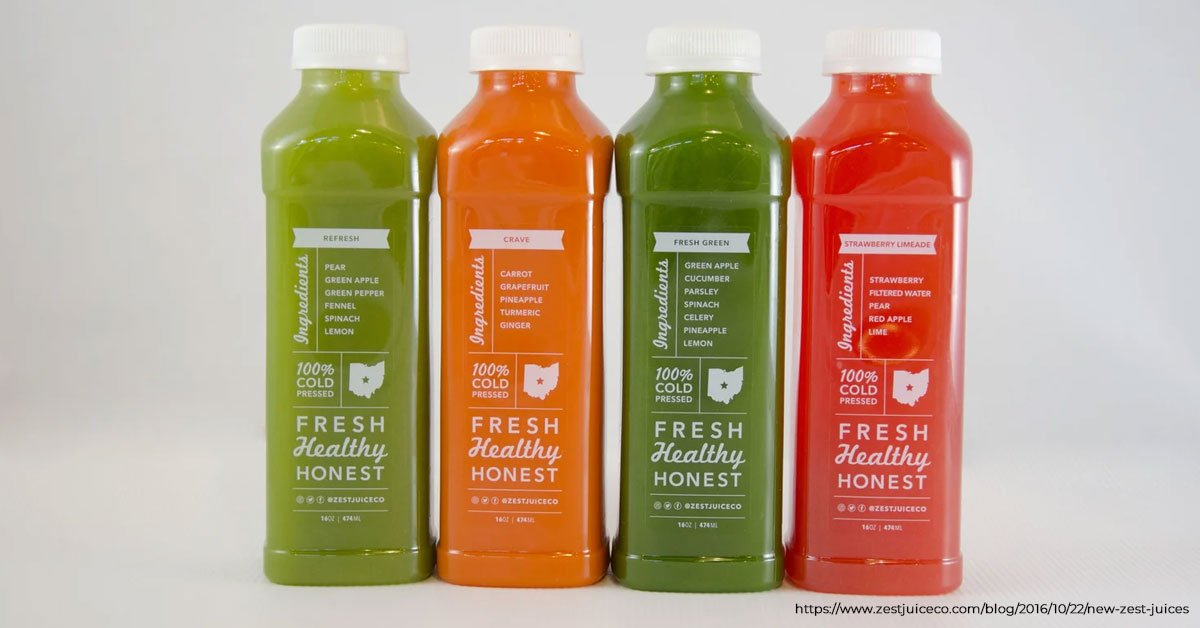
The case of ZestLife is a rapidly expanding drink start-up (2024) that came to an abrupt halt. As the founders nailed a tropical flavour profile, distribution was not successful. This hit 10,000 monthly sales instead of the forecasted 100,000, and cash reserves eroded in 18 months.
What Went Wrong
- False and unsubstantiated claims of being a superfruit
- Selling at triple the price of the competitors
- Poor retailer margin and velocity tale
How We Fixed It
- Repackaged to be crisp and clean
- Blind taste tests of 200 shoppers
- Rebated the product at 2.99 per unit
- Re-established the retailer pitch on a clear basis of 40% margin
Outcome
Throughout 2025, Q3, ZestLife’s count of retail outlets was 500 and increased to 250,000 units a month. The brand became stable and is currently making plans to go national.
The interlude was in a plain duple:
Diagnosis (Week 1), Prototyping (Week 2), Pitching (Month 1).
What We Fix First: Beverage Recovery Plan Step-by-Step
At the stage of a beverage startup failing midway, we do not guess but act.
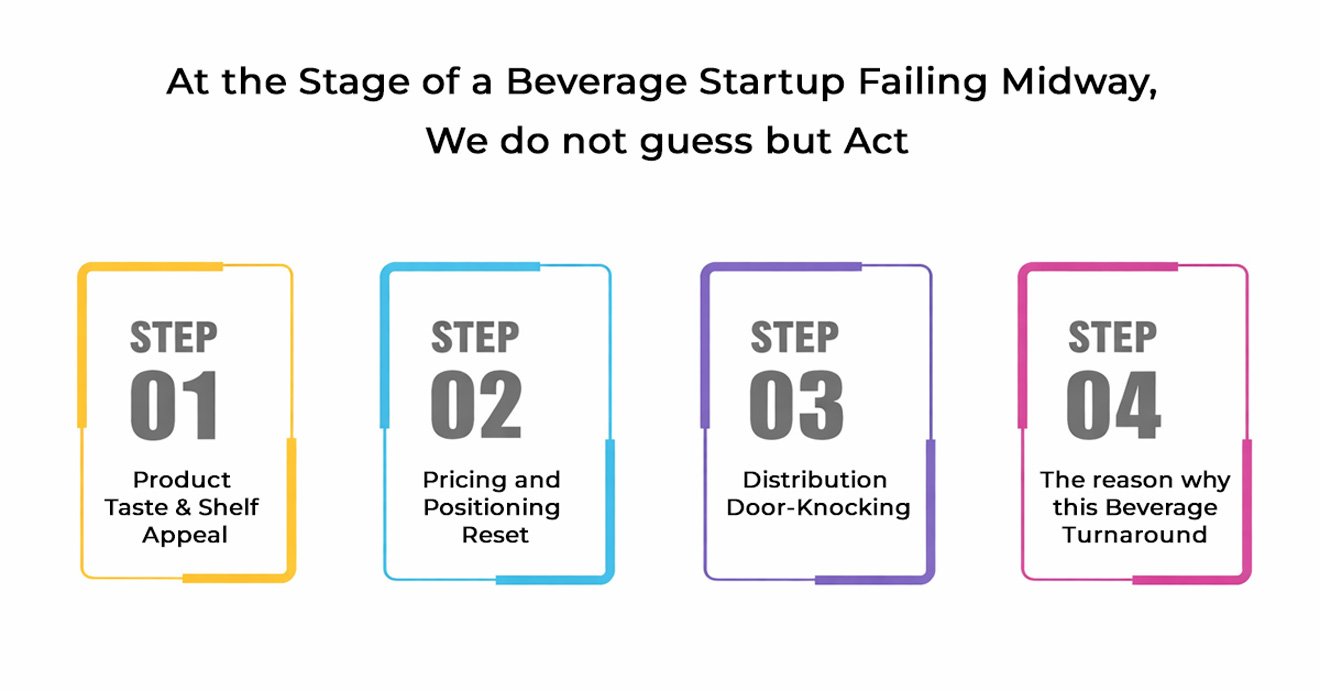
Product Taste & Shelf Appeal: To the extent of almost 60 per cent, poor taste contributes to the underperformance of beverages. Not too much lab work, but human sensory feedback. In one instance, the use of monk fruit instead of stevia saw a 25 per cent growth in sales.
Pricing and Positioning Reset: Mean taste at a high price is a swift path to destruction. We use 20 similar products that we benchmark to get realistic price bands. One brand experienced a decrease in volume due to a decline in the price of one brand from 3.49 to 2.79.
Distribution Door-Knocking: No product is available on the shelves. We map over 100 local buyers and assist founders with pitches that are supported by data. This has increased the placement rates by 2 per cent to more than 30 per cent.
That is the way unsuccessful beverage startups can turn into a business.
The reason why this Beverage Turnaround Strategy is better than DIY Fixes
Experimental fixes, rebranding, influencer campaigns, or social media drives are all attempts founders make. These seldom look at the actual issues.
Well-organised recovery plans provide four times higher results. Renaming of the brand is not always the solution. The recovery is motivated by the quantifiable indicators such as velocity per store and repeat sell-through.
The Foodsure Role
Foodsure has assisted more than fifty recoveries of beverages without hard sell and equity grabbing. We are an inconspicuous operating partner, audit honestly, repair cooperatively and share success, not ownership.
Turnaround efforts often fail when formulation issues are patched instead of fixed. Brands that succeed usually revisit their formulation with a systematic beverage formulation process that aligns taste, cost, and manufacturing reality.
Founder Takeaway
Failure is never the solution to a beverage start-up, but as feedback.
Begin with the What We Fix First checklist:
- Taste
- Price
- Partners
Fix one of these this week.
To have a realistic beverage turnaround strategy, you should ask someone to audit your company free of charge within a 15-minute timeframe and address the actual problems before it is too late.
pricing alignment, and lean scale decisions. Foodsure helps brands recover
before cash, credibility, and distribution are lost.
Related Blogs for Beverage Founders
- Beverage Startup Failure Reasons
- Beverage Scale-Up Failure
- Beverage Brand Failure
- Beverage Repeat Purchase Failure
- Beverage Unit Economics Failure
FAQs
When do most beverage startups fail and why?
Their main reasons include that there is a poor correlation of flavour profile to the requirements of that market, their prices are higher than what is acceptable by the consumer, and they have limited distribution channels. The shortcomings can be addressed by having a structured beverage turnaround strategy.
What time does it take to revolve around a beverage brand?
The first increase is usually only in the third to the sixth month, depending on our case studies of the recovery plan; maximum recovery can be established at a length of twelve months.
What can be done to salvage a crumbling beverage start-up?
Make instant sensory analysis and price against competitor products to determine the viability of the product.
Can a beverage startup revive after losing its cash?
Yes, as long as a fast strategic pivot is implemented, dozens of such projects can be saved through lean interventions before being totally shut down.
How expensive is a beverage turnaround strategy implementation?
The do-it-yourself model is free, and professional services start with free audits and increase depending on the budget limit.