If we just observe the surface reality of the scenario, it appears that everything is going fine, orders are coming in nicely, distributors are ordering repeatedly, and maps for deals are moving towards overhead. And recognition for brands is happening. But underneath it all, cash flow is apparently short in the pocket. And boundaries are shrinking daily, and every scale-up effort is triggering a heightened degree of stress and dissatisfaction rather than a feeling of confidence and happiness.
What is often lost on too many drink-related companies is the point at which the business achieves speed or progress within its market and at which the business is actually a healthy profit-making vehicle. Often, the financial viability of the business can mask a fundamental problem within its unit economics for a full period of time, such that it gets to a breaking point before the entrepreneurs understand the issue.
It breaks down what unit economics failure looks like in a good-sounding deal, where leaks are hidden, and how unit position profit is just one of the most dangerous mistakes that a beverage business could make.
Understanding Beverage Unit Economics Beyond Revenue
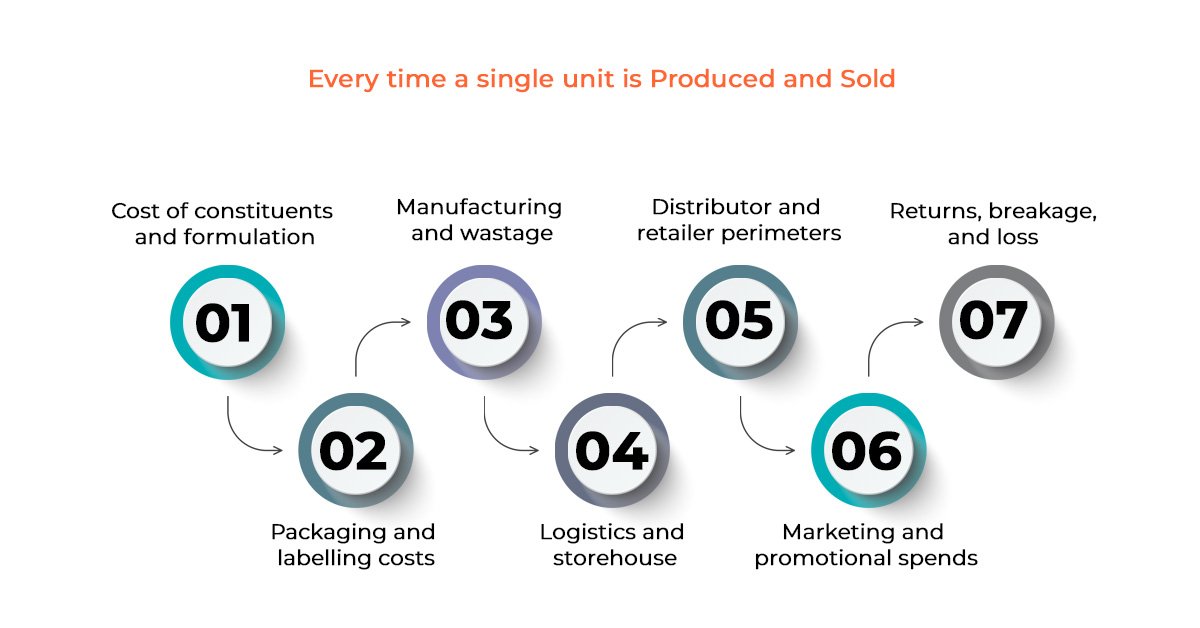
Beverage unit economics explain what happens financially every time a single unit is produced and sold. This includes:
Cost of constituents and formulation
Packaging and labelling costs
Manufacturing and wastage
Logistics and storehouse
Distributor and retailer perimeters
Marketing and promotional spends
Returns, breakage, and loss
When beverage unit economics are healthy, scaling improves profitability. When beverage unit economics failure exists, spanning amplifies losses.
Sales growth doesn’t fix broken economics; it accelerates their impact.
Why Beverage Unit Economics Failure Often Goes Unnoticed Early
Early-stage beverage brands frequently operate in airman or niche market. Costs feel manageable because volumes are low and problems are absorbed informally. As sales increase, structural inefficiencies arise.
Common reasons the beverage unit economics failure remains retired:
Founders track profit, not contribution margin
Airman costs differ from market production costs
Discounts and schemes are treated as “temporary”
Logistics inefficiencies grow quietly with volume
The business looks successful externally, but internally, each unit vended contributes less to sustainability.
Pricing That Looks Competitive but Destroys Margins
One of the biggest drivers of beverage unit economics failure is pricing that ignores full cost structures.
Numerous brands price their products based on:
Competitor shelf prices
Distributor prospects
Perceived consumer willingness to pay
What gets missed is whether the price supports:
Manufacturing variability
Promotional burn
Returns and expiry losses
Future scale efficiencies
When pricing is set without a unit, position profitability model, even strong sales volumes can not help beverage unit economics failure.
The Silent Killer: Variable Costs That Scale Faster Than Revenue
In theory, scale should improve perimeters. In practice, numerous beverage brands see the contrary.
Reasons include:
Ingredient costs are increasing with quality consistency
Packaging minimal order amounts, locking cash
Freight and cold wave, chain costs rising with distance
Advanced rejection rates at scale
Still, beverage unit economics failure becomes ineluctable if variable costs rise faster than price consummation. What looked like a small per-unit gap becomes massive at volume.
Promotion, Led Growth and the Illusion of Profitability
Discounts, schemes, free stuff, and samplings are common growth tools. The problem arises when these become permanent.
Promotion- heavy strategies cause beverage unit economics failure when:
Discounts aren’t modelled at the unit level
Schemes are funded from formerly thin perimeters
Repeated purchase depends on continued impulses
Sales teams celebrate volume growth, but finance still absorbs the damage. Over time, the business trains the market to anticipate low prices while bleeding internally.
Distribution Math That Works on Paper but Fails in Reality
Distribution is essential in beverages, but it’s also one of the most misunderstood cost centres.
Beverage unit economics failure frequently stems from:
Overestimating distributor efficiency
Undervaluing secondary logistics costs
Ignoring breakage, expiry, and credit risk
Each layer in the channel takes a margin. However, unit economics weaken further if the brand absorbs fresh costs to keep mates motivated. Strong sales content doesn’t equal healthy beverage unit economics.
Manufacturing Decisions That Lock in Losses
Early manufacturing choices have long-term consequences. Numerous brands choose co-packers or processes grounded in speed rather than sustainability.
This leads to beverage unit economics failure through:
High per-unit conversion costs
Inefficient batch sizes
Excess waste and rework
Limited inflexibility in component sourcing
Once locked in, changing manufacturing economics requires renegotiation, reformulation, or relocation, none of which are cheap.
Ignoring Contribution Margin in Favour of Gross Margin
Gross margin looks cheering on paper. Contribution margin tells the truth.
Beverage unit economics failure persists when brands:
Ignore post-manufacturing costs
Exclude marketing and logistics from unit analysis
Treat overheads as “future problems”
Contribution margin reveals whether each unit sold actually helps cover fixed costs and generates profit. Without it, growth decisions are grounded on deficient data.
Scaling Magnifies Beverage Unit Economics Failure
Growth doesn’t heal broken economics. It magnifies them.
As volume increases:
Cash cycles outstretch
Inventory threat grows
Operational complexity rises
If beverage unit economics failure exists, scaling creates stress instead of leverage. Brands often respond by pushing for more sales, deepening the problem.
Why Beverage Unit Economics Must Be Designed, Not Discovered
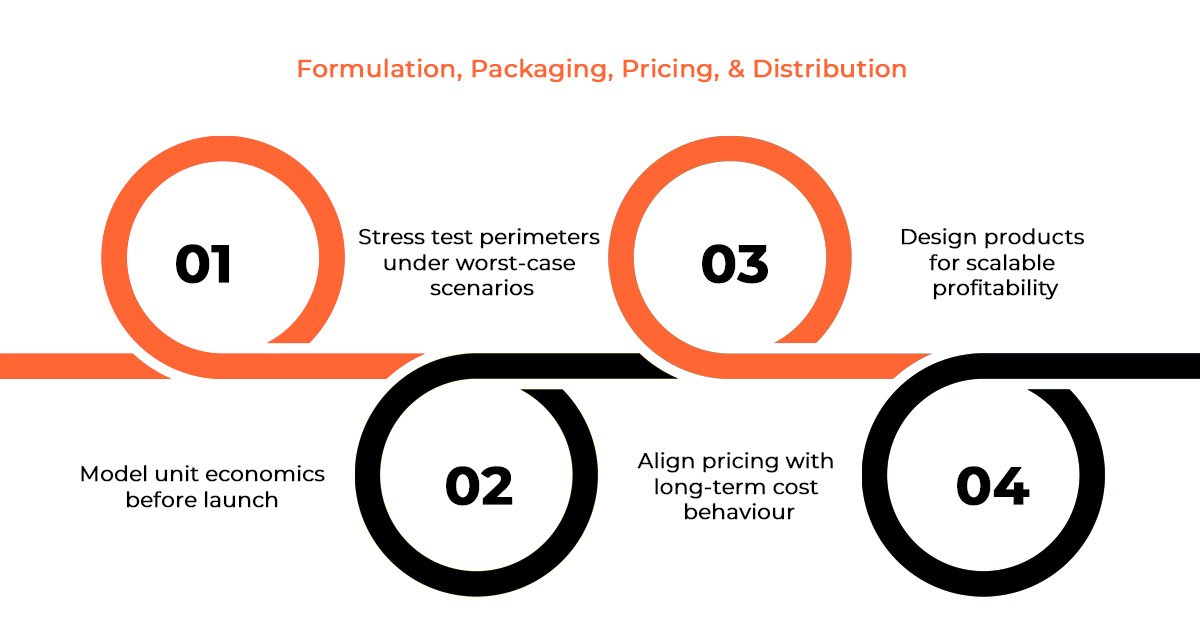
Healthy beverage unit economics don’t happen accidentally. They’re designed through purposeful decisions across formulation, packaging, pricing, and distribution.
Strong brands:
Model unit economics before launch
Stress test perimeters under worst-case scenarios
Align pricing with long-term cost behaviour
Design products for scalable profitability
When unit economics are treated as a design constraint, sales growth becomes an asset rather than a trouble.
Related Blogs:
Conclusion
The economics of the beverage unit failing is one of the hardest realities that a successful or profitable beverage brand must face, because it conceals the failure behind highly successful factors such as profit and visibility. Successful deals can be made with ‘poor economics.’ However, this can be only a short-term experience.’
However, the concern arises where the growth itself results in the inability of each unit sold to drive value for the profit statement. In order for the unit economics of the beverage business to be improved, it’s necessary to take a step back and not get blinded by the numbers of growth.
At Foodsure, beverage economics are analysed from a systemic perspective. This combines formulation and production cost structures with pricing dynamics within a unit economics framework. Maybe it is high time you did a unit economics analysis before growth multiplies your error. Your growth revenues might look healthy, but perhaps your profitability is fugitive.
FAQs
What is beverage unit economics failure?
It occurs when each unit sold fails to generate a sustainable contribution despite strong sales.
Can high sales hide beverage unit economics failure?
Yes, revenue growth can mask underlying margin erosion for long periods.
Why do beverage margins shrink as volume grows?
Because variable costs, promotions, and logistics often scale faster than price realisation.
How does pricing cause beverage unit economics failure?
Pricing that ignores full cost structures leads to losses at scale.
Are discounts a major cause of unit economics issues?
Yes, when they become permanent rather than strategic.
Why is contribution margin more important than gross margin?
Because it reflects the true profitability after all variable costs.
Can manufacturing choices affect unit economics long-term?
Absolutely—early decisions often lock in cost inefficiencies.
How does distribution impact beverage unit economics?
Margins, logistics, breakage, and credit risk significantly affect per-unit profitability.
When should brands evaluate beverage unit economics?
Before launch and continuously as scale increases.
Can beverage unit economics failure be corrected?
Yes, but earlier intervention is far less costly than post-scale correction.