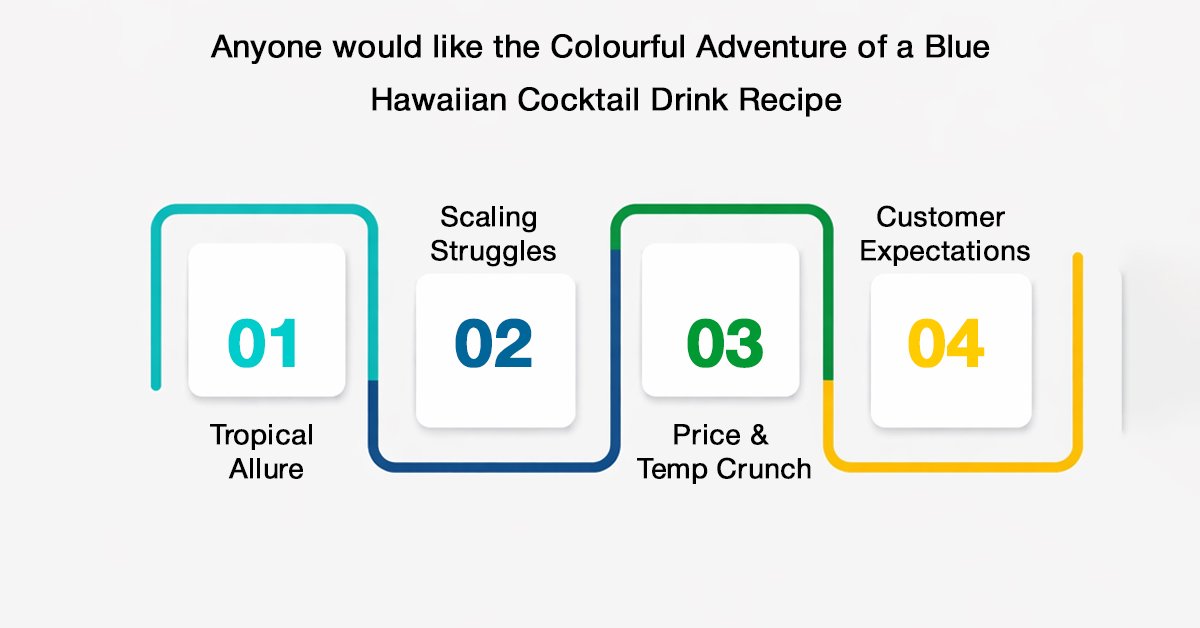
Anyone would like the colourful adventure of a Blue Hawaiian cocktail drink recipe, and the commercial kitchens are under real pressure to make it the size it needs to be.
- Tropical Allure: Its pineapple-coconut punch and turquoise light will give one the feeling of the beach with every swallow.
- Scaling Struggles: Bulk batches lose their consistency, flavour goes away, cream separates, and the blue colour goes dull quickly.
- Price & Temp Crunch: Quality food items are getting costly; sluggish blending slows big volume bar service.
- Customer Expectations: Diners want Instagram-worthy tropical beverages; losses in reviews and sales.
Challenges in Scaling a Blue Hawaiian Drink Recipe
- Flavour Imbalance in Bulk: Pineapple juice is made diluted and watery when scaled; cream of coconut drowns or curdles, imbalancing the sweet-tart tropical flavour that founders are seeking to make their signature menus with.
- Colour Fading Crisis: The bright colour of the Blue Curacao oxidises/fades in the light/heat, resulting in cloudy beverages that are bad on Instagram, bad Instagram tests kill the visual spiciness that is the motivator of impulse purchasing.
- Ingredient Instability: Coconut milk separates in moist Indian kitchens; in batches with no PH adjustments (should be 3.5-4.0), the product goes bad 2 times quicker, increasing waste expenses.
- Batch Inconsistency Shams: Blue Hawaiian drink recipe doubling changes ratios, too boozy, excessively sweet, or icy, annoying to bartenders during busy times and results in a 20-30% loss of yield.
Want to Scale This Blue Hawaiian Recipe for Commercial Use?
Turning a bar-ready cocktail into a shelf-stable commercial product requires flavour stability, batch consistency, and regulatory alignment. Foodsure helps brands standardise tropical cocktail recipes for large-scale production with full R&D validation.
Why Blue Hawaiian Drink Recipes Fail in Commercial Settings
- Single-Serve Design Flaw: Blue Hawaiian drink recipe at home does not consider the physics of volume, which is ratios not the same with large blends, as with small blends, shaking levelizes volume.
- Ingredient Chemical: Fats in Cream of coconut do not mix with emulsifiers, envelope-size; the pineapple enzymes digest sugars, sour flavour within 2-4 hours.
- Oxidation & Light damage: The dyes in Blue Curacao deteriorate 30% more quickly in highly exposed batches, losing colour whilst waiting to be served.
- Temperature Fluctuations: Moist Indian kitchens (25-35 °C) spoil faster. No chilling will cause emulsions to break, which results in oiliness or wateriness.
Founder Challenges in Scaling a Blue Hawaiian Drink Recipe
- Flavour Inconsistency: Single recipes do not scale, and make the signature Blue Hawaiian drink recipe an inconsistent menu filler.
- Colour Fading Fast: The bright blue fades out in volume, killing Instagram popularity and high prices power
- Ingredient Spoilage: Coconut cream goes sour very fast in moist storage, which adds to the COGS of the founders.
- Large Wastage Rates: 20-30% batch loss due to separation forces is expensive to make remakes when at peaks.
A Simple Breakdown of Blue Hawaiian Cocktail Scaling
- Flavour Fade Analogy: Pineapple juice behaves like hyperactive children at a party, fresh with small portions, but in a conglomerate (mass), they quickly become tired, growing tangy to flat as the enzymes dissolve the sugars with time.
- Colour Bleed Reality: Go and think of blue paint on wet paper; in the smallest drop it remains clear, but in a bucket it goes through and becomes grey, oxidation and light strike great quantities worse.
- Texture Trap: Coconut fat is like oil and water. It shakes like fine dust when used individually, but large pitchers allow it to split, leaving the water on the bottom and oil on the top.
- Human Fix Insight: Like family recipes, when prepared in large groups, they must be adjusted (adding extra eggs to hold them together), so put in lime to make it acidic and on ice to hold it together.
Proven Methods for Blue Hawaiian Drink Recipe for Restaurants
Standardize Ingredients
Use high-quality, accurately weighed staples for uniformity:
- Light rum (or coconut rum): Stable on shelf, 40% ABV.Bols
- Blue Curaao: Has the best colour retention; stay away from cheap generics.
- Unsweetened pineapple juice: Frozen puree for bulk stability.
- Cream of coconut (Coco Lopez, style): Shake well; buy bulk cans.
- Add 0.25 oz of lime juice per serving to help with emulsification and to remove tartness.
| Ingredient | Single Serving (oz) | Scaling Notes (per 10 servings) |
| Light Rum | 1 | 10 oz; sub coconut rum for depth |
| Blue Curaçao | 1 | 10 oz; store dark to prevent fade |
| Pineapple Juice | 2 | 20 oz; use puree, chill pre-mix |
| Cream of Coconut | 1 | 10 oz; emulsify with lime |
| Lime Juice (add) | 0.25 | 2.5 oz ; stabilizes pH |
Mixing Methods
- Blend (Classic): Using a blender, mix the ingredients on high speed for 10 to 15 seconds with crushed ice. This method is perfect for a single serving or a small batch.
- Shake: Place ice and ingredients in a tin, shake hard for 8-10 seconds, double strain; quicker if producing volume. Layer Pre, Mix: Non, ice base in a pitcher (stable 24h chilled). Add ice to each glass so that it doesn’t dilute.
Alcohol-Free/Mocktail Option
Replace rum/Curaçao with:
- Coconut water or syrup (1 oz)
- Blue Curaçao syrup (1 oz, e.g., Monin)
- Same juices; top with soda for fizz
- The family version costs ₹150 less than the original.
| Ingredient | Amount (Single Serving) |
| Coconut Water | 1 oz |
| Blue Syrup | 1 oz |
| Soda Topper | 2 oz |
Flavor/Color Stability
- The pre-mix needs to chill until it reaches 4°C, which results in a pH 3.5-4.0 through lime application that stops separation from occurring.
- The facility keeps Curaçao products in dark storage while it vacuum-seals complete batches.
- The emulsification process requires two options, which include blending for 30 seconds or using 0.1% xanthan gum.
- The test requires a 48-hour sample observation period, which allows for colour adjustments when the sample shows more than 10% color loss.
Scaling Formula Example
10-Serving Batch (Prep: 10 min, Yield: ~2.5L):
- The base recipe requires 10 ounces of rum, 10 ounces of Curaçao, 20 ounces of juice, 10 ounces of coconut and 2.5 ounces of lime.
- The base needs to be chilled for 1 hour, and then 3.5 ounces of the base should be served with 1 cup of ice for each glass.
- The drink should be served after blending or shaking it. The total cost amounts to ₹800, which results in a serving cost of approximately ₹80.
- The 50-Serving Punch requires five times the above ingredients, which should be lightly aerated before being served with a ladle over ice. The product maintains its quality for 4 hours when it is kept at a chilled temperature.
These steps cut waste by 25%, making the Blue Hawaiian drink recipe for restaurants.
How Foodsure Supports Commercial Cocktail Recipe Formulation
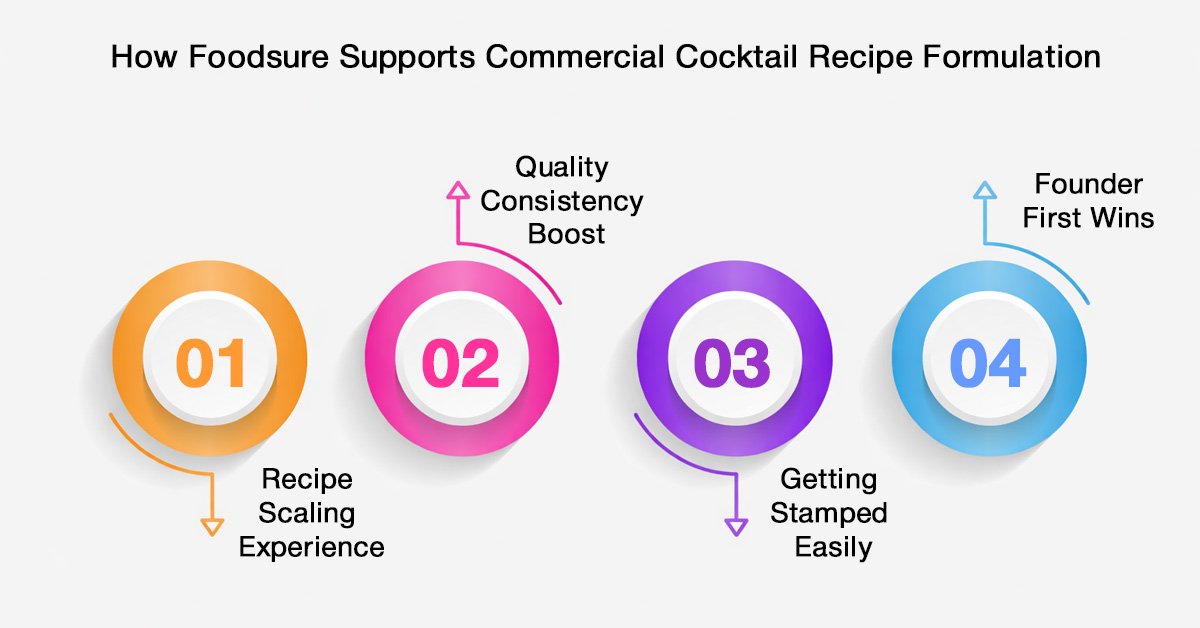
- Recipe Scaling Experience: Foodsure optimises the Blue Hawaiian drink recipe to 10x-100x volume, yielding flavour and colour to withstand under real bar conditions, no more trial and error on the part of founders.
- Quality Consistency Boost: We run pilot batches at the kitchens, and this ensures consistency against humidity and heat of any pour.
- Getting Stamped Easily: Skip the hassles of FSSAI, excise and labelling and see your tropical drinks on the legal and launch list.
- Founder-First Wins: Grow your F&B business with established R&D, which leaves innovation to deal with expansion and not formulation headaches.
Founder Takeaway
- Write Down Each Formula: Lock ratios (e.g. 1:1:2:1 rum-Curacao-pineapple-coconut) scale by a factor of 10, scale an entire production batch in 10x batches; scale by a factor of 50 in 50x batches.; avoid guesswork; force staff to learn immediately.
- Test Pilot Batches: Conduct 5-10 serving trials in your kitchen environment- test pH (3.5-4.0), hold colour (24h), and taste; make lime less unstable, and then roll out full portions.
- Focus on the quality of Ingredients: Stock bulk frozen Pineapple puree, Bols Curacao; keep chilled/dark cuts, spoilage by 50 per cent, gives Instagram-worthy blue color high-end ₹300+ price.
- Checks: Labelling allergens (coconut), check FSSAI low-alc, partner professionals such as Foodsure to help with seamless launches.
Launch Your Own Signature Tropical Drink Brand
From cocktail recipe development to commercial beverage manufacturing, we help you convert bar concepts into scalable beverage products.
Related Beverage Formulation Insights
- Mocktail Recipe Formulation for Commercial Scaling
- Non-Alcoholic Cocktail Mixers Recipe Development
- Aerated Drinks Recipe Formulation Guide
- Beverage Shelf Life Study: Why Stability Matters
- Cocktail Drink Contract Manufacturing Services
FAQs
How do I scale a Blue Hawaiian drink recipe for restaurants?
Try with a pilot batch before full commercial production by holding all ingredients constant except for changes in ratios.
What is commercial cocktail recipe formulation?
The Blue Hawaiian cocktail is standardised for consistency and ease of large-scale production.
Can I make a Blue Hawaiian mocktail recipe?
The following tropical mocktail recipe can be created by replacing pineapple extract with club soda and using non-alcoholic blue curaçao.
How do I keep the Blue Hawaiian cocktail colour consistent?
Keep a bottle of blue curaçao closed and store it in a cool, dark place in anticipation of some holiday-themed beverages.
What are common issues in scaling a tropical drink recipe?
Flavour imbalance, ingredient separation, and shelf-life instability are common foes.
Is the Blue Hawaiian drink recipe suitable for bulk events?
Your commercial cocktail recipes are properly made by product and batch testing.
How can restaurants ensure consistency in Blue Hawaiian drink recipes?
Measure in standardised procedures and ingredients of quality and stability.