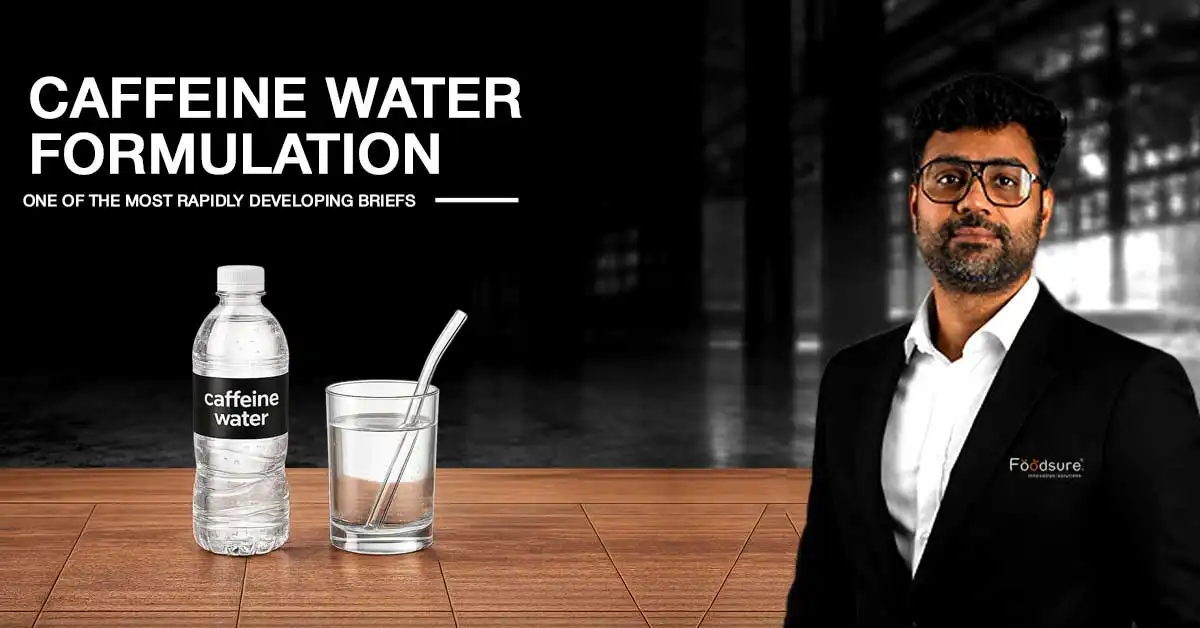
One of the most rapidly developing briefs in the functional beverages category in India is caffeine water formulation. The very essence of caffeine formulation lies in the type of caffeine that you use for it, and here comes the role of green tea extract and yerba mate extract. Each of these extracts brings a unique element of caffeine formulation in terms of its characteristics, taste profile, antioxidants and regulatory compliance. Here’s how you go about choosing between them to formulate caffeine water products.
Caffeine Water Formulation Starts With One Decision: Your Source
- It’s important to note that green tea and yerba mate cannot be used interchangeably in the formulations of a beverage.
- The delivery of caffeine differs between green tea and yerba mate within both the human body and the finished product.
- The wrong caffeine source for your channel could mean reformulating in six months.
- This isn’t only a technical issue. Caffeinated beverages require the right positioning as well.
- First get the source right. Everything else will fall into place from there.
The global functional water market is forecast to reach USD 19.8 billion by 2030, with caffeinated and nootropic formats among the highest growth subcategories.
Why Caffeine Water Formulation Goes Wrong Early
- Founders select green tea for being a common term that suggests safety.
- Founders select yerba mate for suggesting high quality and international appeal.
- Neither constitutes a formulation reason.
- A high concentration of green tea extract causes bitterness.
- The taste of plain yerba mate is earthy and foreign to Indians.
- Both can be solved, but need different solutions.
- Founders who fail to select sources find themselves with a tricky reformulation situation.
Why Caffeine Source Selection in Water Formulation Is Misunderstood
- Founders consider caffeine more as an ingredient than a functionality component.
- Green tea caffeine is bound with L-theanine, which delays its absorption and reduces jitters.
- Yerba mate caffeine is bound with theobromine and theophylline.
- These substances affect the way caffeine is received and perceived.
- In water, every unpleasant taste becomes much more noticeable.
- Different categories require different FSSAI dosage levels for caffeine claims.
What Founders Face During Caffeine Water Formulation
- Sourcing standardized extracts of green tea or yerba mate with stable amounts of EGCG.
- Maintaining caffeine stability under acidic conditions with high moisture activity.
- Aiming for flavor purity when working with tap water without sugar or flavors.
- Determining appropriate dose of caffeine that is safe & effective according to FSSAI guidelines.
- Stating the amount of caffeine content on the packaging according to FSSAI labeling guidelines.
- Preventing precipitation or haze due to extract compounds under acidic conditions.
- Balancing energy claim compliance with simple ingredients list
Green Tea vs Yerba Mate: What Each Brings to Caffeine Water Formulation
Green Tea Extract in Caffeine Water
- Standardized to 40-98% polyphenol and 20-50% caffeine content.
- Contains L-theanine, which gives a calming, concentrated energy boost.
- Provides support for the antioxidant claim in addition to energy marketing.
- Has a slight grassy taste when steeped in water; easily masked by citrus or mint.
- A well known additive in Indian products; easier to educate consumers about.
Yerba Mate Extract in Caffeine Water
- Standardised to 0.5% to 2.0% caffeine content, with theobromine present.
- Stimulant action is rapid and intense compared to that of green tea caffeine.
- Polyphenolic compounds aplenty, but no L-theanine; hence energy is invigorating rather than calming.
- Strongly earthy flavor, requiring heavy masking in pure water preparation.
- Global positioning strategy effective for use at gyms and for exports.
Formulation Stability Considerations
- UV-sensitive; opaque or can packaging more desirable.
- Oxidation of green tea catechins occurs above pH 5.0; maintain formula below 4.5.
- Yerba mate extract may cause haziness at low pH when no clarification process is used.
- Antioxidant protection for both ingredients through the addition of ascorbic acid at 100-200 ppm.
| Factors are : | Green Tea Extract | Yerba Mate Extract |
| Caffeine per 100ml (typical) | 20 to 40 mg | 30 to 50 mg |
| Caffeine Release Profile | Moderate & L-theanine modulated | Fast &stimulant forward |
| L-Theanine Present | Yes (calming co factor) | No |
| Antioxidant Profile | EGCG & catechins | Chlorogenic acids & polyphenols |
| Taste in Water | Mild & slightly grassy | Earthy, bitter & bold |
| Flavour Masking Needed | Low to moderate | High |
| FSSAI Status | Approved, well established | Permitted & less common |
| Cost per kg (extract) | Rs. 800 to 2000 | Rs. 1200 to 3500 |
| Consumer Recognition in India | High | Low to moderate |
What works for the Caffeine Water Formula?
Fix the Dose Before Fixing the Flavour
- Caffeine dose to acquire 50 to 80 mg in 250 ml of the beverage.
- FSSAI recommends a maximum caffeine content of 150 mg per serve of energy drinks.
- Ensure the amount does not go beyond 80 mg except for the case where your beverage is an energy drink.
- The dose entirely depends upon the caffeine extract.
Solve Taste Before Pilot Batch
- Taste test on 3 concentrations of extract involving 5-8 participants.
- In case of green tea extract, choose lemon, yuzu, and non-flavored to find the minimum amount required to mask.
- In case of yerba mate extract, use mint, lime, and tropical flavoring to reduce earthy taste.
- Do not move to pilot studies until your taste test score is above 7 out of 10.
Use Clean Label Stabilisers Only
- Avoid using preservatives which have chemicals in them but use pH control along with hot filling methods.
- The recommended pH is between 3.5 and 4.0. Ascorbic acid will act as an antioxidant and also pH control agent
How Foodsure Delivers Your Caffeine Water Formulation Ingredient Review
- Evaluating your caffeine source in comparison to your target platform and claims.
- Our caffeine water formulation review will consider dose, stability, and taste.
- We procure standardised green tea and yerba mate extracts from reliable suppliers.
- Taste masking brief on your selected extract will be provided within the scope.
- FSSAI certification regarding caffeine declaration and categorisation evaluated initially.
- You get an ingredient review report before spending any money on R&D.
- Foodsure has experience of developing caffeine water formulations for direct to consumer,
- gym, modern trade, and export routes throughout India.
What Successful Founders Do Differently in Caffeine Water Formulation
- They pick their caffeine source based on the medium and the claim and not just because it is a trend.
- The first thing they do is have a review of the ingredient before even approaching the copacker.
- They fix the dosage for their caffeine through an extract and not the entire herb.
- They test the three dosage amounts in taste panels prior to spending money in pilot testing.
- They check if their label for the caffeine is going to conform to FSSAI guidelines before designing the packaging.
- They reserve 4 to 5 months for research & development for the caffeine water recipe.
- They compare themselves with three other imported caffeine water beverages.
India’s energy and functional water category saw new product launches grow by 27 percent in 2023 .
Looking for an ingredients analysis for your caffeine based water preparation containing green tea and yerba mate?
Contact us at +91 8130404757 or [email protected]
FAQs on Caffeine Water Formulation
- Which caffeine source is better for a caffeine water formulation in India, green tea or yerba mate?
- Green tea is more suitable for products targeted at the wellness, D2C, and pharmacy markets in India.
- Yerba mate is ideal for products marketed in the gym and sports segment.
- Product recognizability and taste suitability make green tea more appropriate for initial launches.
- How much caffeine per serving is safe and compliant in a caffeine water formulation?
- 50-80 milligram per 250 ml constitutes a safe and functional level.
- According to FSSAI, beverages above 150 milligram per serving come under the category of energy drink.
- Higher than 80 mg, a labeling standard for energy drinks becomes applicable.
- Does green tea extract cause bitterness in a plain water base?
- Yes, when used at a concentration greater than 0.05 percent extract without flavoring.
- Citrus or mint in 0.1-0.2 percent will mask green tea bitterness.
- Lowering the pH to 3.8-4.0 also helps in decreasing the perceived bitterness.
- Is yerba mate extract approved by FSSAI for use in beverages?
- Yes, extraction of yerba mate is allowable under FSSAI regulations as a food ingredient.
- This is less frequently seen on Indian labels but entirely acceptable.
- Approval from a regulatory consultant advised before finalizing label content.
- How do I keep caffeine stable in a water-based formulation over shelf life?
- Maintain pH within the range of 3.5 to 4.5 to avoid decomposition of caffeine.
- Include ascorbic acid as an antioxidant at a concentration of 100-200 ppm.
- Employ opaque or canned containers for protection from UV light exposure.
- How does Foodsure’s ingredient review for caffeine water formulation work?
- This includes analysis of your caffeine source, dosage, stability, and taste profile in one assessment.
- We give advice on your choice of standardised ingredients from approved vendors.
- You will receive a written review of your ingredient before any R&D costs are incurred.