India’s food market is growing fast, and many new brands are entering with fresh ideas. However, along with this growth come several challenges in food industries, especially for new entrepreneurs. Taking a recipe from a home kitchen to a commercial product is not easy. Strong planning and a clear food product development process help Food Industries founders avoid common mistakes and move faster in the food industry. Many new entrepreneurs face issues with safety, taste, packaging, and production because the process is not fully understood.
Below is a simple look at the main challenges food startups face, along with practical examples and solutions.
1. Challenge: Moving from Home Recipe to Commercial Scale

One of the biggest challenges food startups face is scaling a home recipe into commercial production. What works in a small kitchen often behaves differently in large batches, this is one of the common challenges in food industries.
- Example:
A snack that tastes perfect at home may turn dry or oily when produced in bulk. - Solution:
A proper method of Food Formulation helps standardize recipes and improve batch stability. Working with an experienced food consultant reduces risks, controls ingredient ratios, and prevents costly trial-and-error losses. With structured measures solutions, Food Product Development becomes smoother and more predictable in the competitive food and beverages sector.
2. Challenge: Meeting Safety Standards and fssai Rules
Compliance is among the biggest challenges to food safety in India. Many founders are unaware of required tests, documentation, and regulatory approvals needed in the food and beverages industry.
- Example:
A juice startup may skip stability tests and later face separation or spoilage after packaging. - Solution:
Safety validation should begin early. Shelf-life studies, microbial testing, ingredient verification, and documentation are essential measures solutions. A knowledgeable food consultant can guide startups through FSSAI approvals and regulatory compliance, reducing food safety risks and building long-term brand trust.
3. Challenge: Getting the Same Taste in Every Batch
Consistency is one of the major challenges in food industries. Customers expect identical taste, texture, and quality every time.
- Example:
A snack may taste great initially but later become too salty or bland due to poor measurement control. - Solution:
Standard operating procedures, exact ingredient ratios, and quality checks are critical measures solutions. Proper food processing technology ensures uniformity, making Food Product Development more reliable in the competitive food and beverages market.
4. Challenge: Making Functional Foods That Taste Good

The demand for functional foods is increasing, but balancing health and taste remains one of the serious challenges food startups face.
- Example:
A protein drink may taste bitter or feel grainy due to certain nutrients or plant proteins. - Solution:
Ingredient optimization, flavour masking techniques, and structured taste trials improve acceptability. With expert support from a food consultant, brands can overcome formulation barriers and create successful functional products in the growing food and beverages category.
5. Challenge: Selecting the Right Manufacturer
Choosing the wrong manufacturing partner is a hidden yet critical challenge in food businesses.
- Example:
A manufacturer with poor hygiene or weak quality systems can compromise an entire batch. - Solution:
Startups must evaluate certifications, hygiene audits, sample quality, and production systems before finalizing partners. Strong quality control measures solutions are essential to overcome operational challenges in food industries and maintain safety standards.
6. Challenge: Keeping Up With Food Product Development Trends
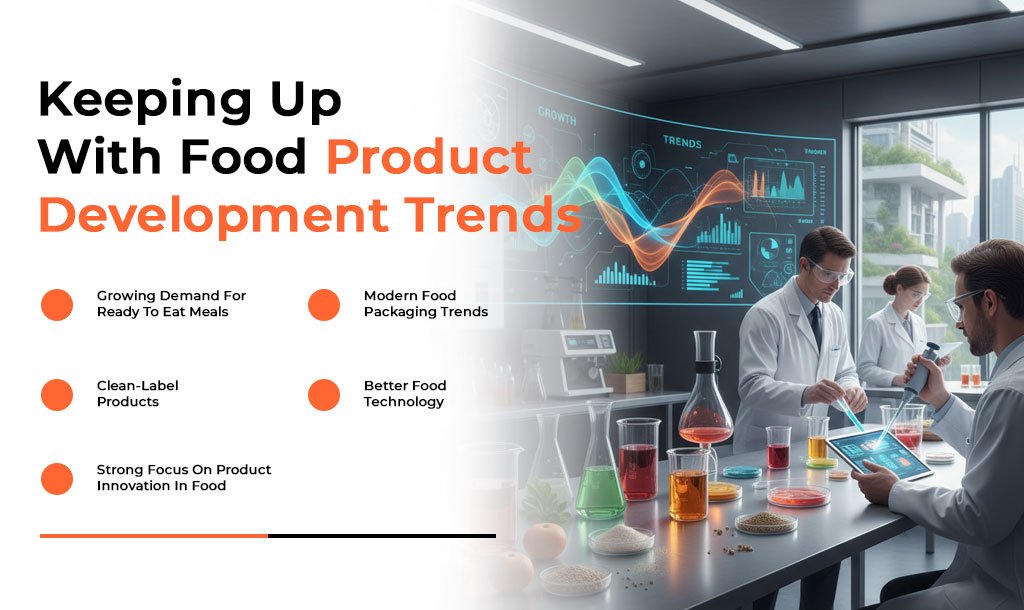
Market trends evolve rapidly, creating constant challenges food startups face in staying competitive.
Current trends include:
1. Growing demand for ready to eat meals
2. Modern food packaging trends
3. Clean-label products
4. Better food technology
5. Strong focus on product innovation in food
- Example:
A brand using outdated packaging may lose customers to competitors with better shelf presence and safety features. - Solution:
Regular market research, packaging upgrades, and ingredient innovation are practical measures solutions. A strategic food consultant can help align products with new trends in the food and beverages industry for sustainable growth.
7. Challenge: Limited Market Understanding
Many founders understand product formulation but lack knowledge about pricing, distribution, and category behaviour, another major challenge in food industries.
- Example:
A high-quality product may fail because it is priced above customer expectations. - Solution:
Understanding customer demand, supply chain costs, and competitor positioning is essential. Strategic planning and expert guidance help brands overcome these challenges food startups face and build stronger long-term foundations in the food and beverages sector.
Also Read About: https://foodsure.co.in/blog/trends-in-food-product-development/
How Foodsure Helps Food & Beverage Entrepreneurs

Foodsure supports new and growing brands with complete Food Production services. Many founders come with strong ideas but need help with testing, stability, safety, and scaling. Foodsure helps by offering:
- Recipe testing and stable Food Formulation
- Full support with FSSAI documentation and safety checks
- Guidance for developing functional foods
- Technical support for production and scale-up
- Help with packaging selection and quality control
- End-to-end consulting for Food and Beverage startups
- Foodsure helps brands avoid common mistakes and launch safer, better, and more stable products.
Food Market Research and Updates
India’s economy has once again surprised us positively. The National Statistics Office reported that GDP grew by 7.8% in real terms in Q1 FY 2025-26, with nominal GDP expanding by 8.8%.
Market research helps brands understand customer habits, pricing trends, ingredient demand, and competition. Regular Food market research makes Food Product Development easier and supports smarter decisions.
Our expert team works closely with brands to turn insights into scalable products.
Ready to build what the market truly wants?
Contact our team now!
Launch Your Food Product with Zero Compliance Hassles – Get Expert Help Today!
(4.9 Rating)
FAQ’s
Q1. What are the biggest challenges faced by the food industry today?
The major challenges include food safety issues, rising raw material costs, supply chain disruptions, labor shortages, and changing consumer expectations.
Q2. How does inflation affect the food industry?
Inflation increases production costs, packaging expenses, transportation charges, and ingredient prices, making it harder for brands to maintain affordable pricing.
Q3. Why is food safety a major concern for manufacturers?
Food safety is critical because contamination, poor hygiene, and improper storage can lead to health risks, product recalls, and damage to brand reputation.
Q4. What supply chain issues impact the food industry?
Common issues include delayed transportation, poor cold-chain management, limited storage facilities, and unpredictable availability of raw materials.
Q5. How does changing consumer behavior impact the food industry?
Consumers now prefer healthier, cleaner, and more sustainable food choices, forcing companies to innovate and reformulate products.
Q6. Why is sustainability challenging for food companies?
Sustainability requires eco-friendly packaging, waste reduction, renewable energy use, and ethical sourcing—often increasing operational costs.
Q7. How does technology help solve food industry challenges?
Technology improves quality control, enhances traceability, automates production, and reduces human error across various stages of food processing.
Q8. Why do food companies struggle with regulatory compliance?
Frequent updates in FSSAI, labeling rules, ingredient restrictions, and safety standards make compliance complex and time-consuming.
Q9. How does quality control impact food manufacturing?
Strong quality control reduces contamination, improves consistency, prevents recalls, and ensures products meet safety and taste standards.
Q10. What steps can companies take to overcome food industry challenges?
Brands can improve processes through better supply chain planning, technology adoption, strong QA systems, employee training, and expert consultancy.