
Behind every silky spoon of yogurt, every creamy dip, and every frothy plant-based latte lies a complex design of how ingredients work. For food product developers, chefs-turned-entrepreneurs, and R&D experts, using emulsifiers and stabilizers in recipe formulation is important for the ability to succeed in the food market.
As the expectations or preferences of consumers have shifted towards clean labels and multi-sensory experiences, formulating a recipe with the right food emulsifiers and food stabilizers becomes more necessary in food science. Depending on the behavior of molecules, the recipe formulation process, and regulatory compliance, these functional ingredients are the best for modern food systems.
Understanding Emulsifiers And Stabilizers In Food Formulation
Emulsifiers and Stabilizers in recipe formulation are important ingredients that help improve the texture, appearance, stability, and taste experience of the food recipe.
Emulsifiers
Emulsifiers have a special structure that allows them to connect oil and water, which normally don’t mix. One part of the molecule is attracted to water, and the other part is attracted to oil. This helps mix the two molecules and keeps them mixed to formulate the smooth and stable products like mayonnaise, milk, salad dressings, and plant-based drinks.
Stabilizers
Stabilizers don’t mix oil and water, but they help to keep the mixture stable after it is formulated. They are substances like xanthan gum, guar gum, carrageenan, and pectin that make the mixture thicker or form gels. This stops ingredients from settling at the bottom or separating in the longer time.
When used together, emulsifiers and stabilizers in recipe formulation help make food products look good, taste consistent, last longer on shelves, and feel pleasant for consumers when they eat the food.

The Science Behind Using Emulsifiers And Stabilizers In Food Formulation
The use of emulsifiers and stabilizers in food recipe formulation is based on how they work in mixtures, especially how well they hold the ingredients together and keep the food product development stable.
Use Of Emulsifiers In Food Recipe Formulation
Emulsifiers form a thin layer by settling between oil and water around the tiny droplets. This thin layer helps keep the droplets from mixing. How well an emulsifier works depends on its balance between molecules that are attracted to water or fat. For example, some emulsifiers like polysorbate 80 work better in oil-in-water mixtures (like milk), while others are better for water-in-oil mixtures (like margarine).
Use Of Stabilizers In Food Recipe Formulation
Stabilizers make the mixture thicker, which helps to slow down the movement of particles and stops them from settling or separating. Some stabilizers, like carrageenan and pectin, can form gel-like structures that hold water and other ingredients in place and give the food recipe product more stability.
Role Of Both Emulsifiers & Stabilizers When Used Together
In many foods, emulsifiers and stabilizers are used together. The emulsifier helps mix the ingredients evenly and properly, and the stabilizer helps keep them stable, even during food processing or long storage.
This teamwork is very important in modern food production, where products go through heating, cooling, mixing, and need to last longer on the shelf without losing their quality.

Applications Of Emulsifiers And Stabilizers In Recipe Formulation
The increased usage of emulsifiers and stabilizers in recipe formulation has been witnessed in multiple food categories. Some of the most common applications of emulsifiers and stabilizers are:
1. Dairy and Plant-Based Drinks- In drinks like milk, chocolate milk, or almond milk, the lecithin emulsifier helps mix the fat evenly and properly so it does not float or settle in the food recipe. Carrageenan stabilizer stops cocoa or protein from sinking to the bottom.
2. Baked Foods- In bread, cakes, or muffins, emulsifiers make the dough more stable and the texture softer. The guar gum stabilizer helps keep moisture in the product, so it stays fresh for a longer time.
3. Ice Cream And Frozen Desserts- Emulsifiers make sure the fat spreads out properly and evenly and stop ice crystals from forming. Locust bean gum stabilizer helps the food product recipe development stay smooth after freezing.
4. Sauces and Salad Dressings- In food products like ketchup or mayonnaise, emulsifiers keep oil and water mixed. Stabilizers like xanthan gum make the sauce thicker and easier to pour, especially in low-fat versions.
5. Processed Meats and Spreads- In food items like sausages or sandwich spreads, emulsifiers help mix fat and water evenly. Stabilizers keep the texture firm and help hold in water so the product doesn’t dry out.
6. Chocolates and Sweets- Emulsifiers like soy lecithin make melted chocolate flow better during shaping. Stabilizers help give fillings the right texture and prevent sugar from turning grainy.
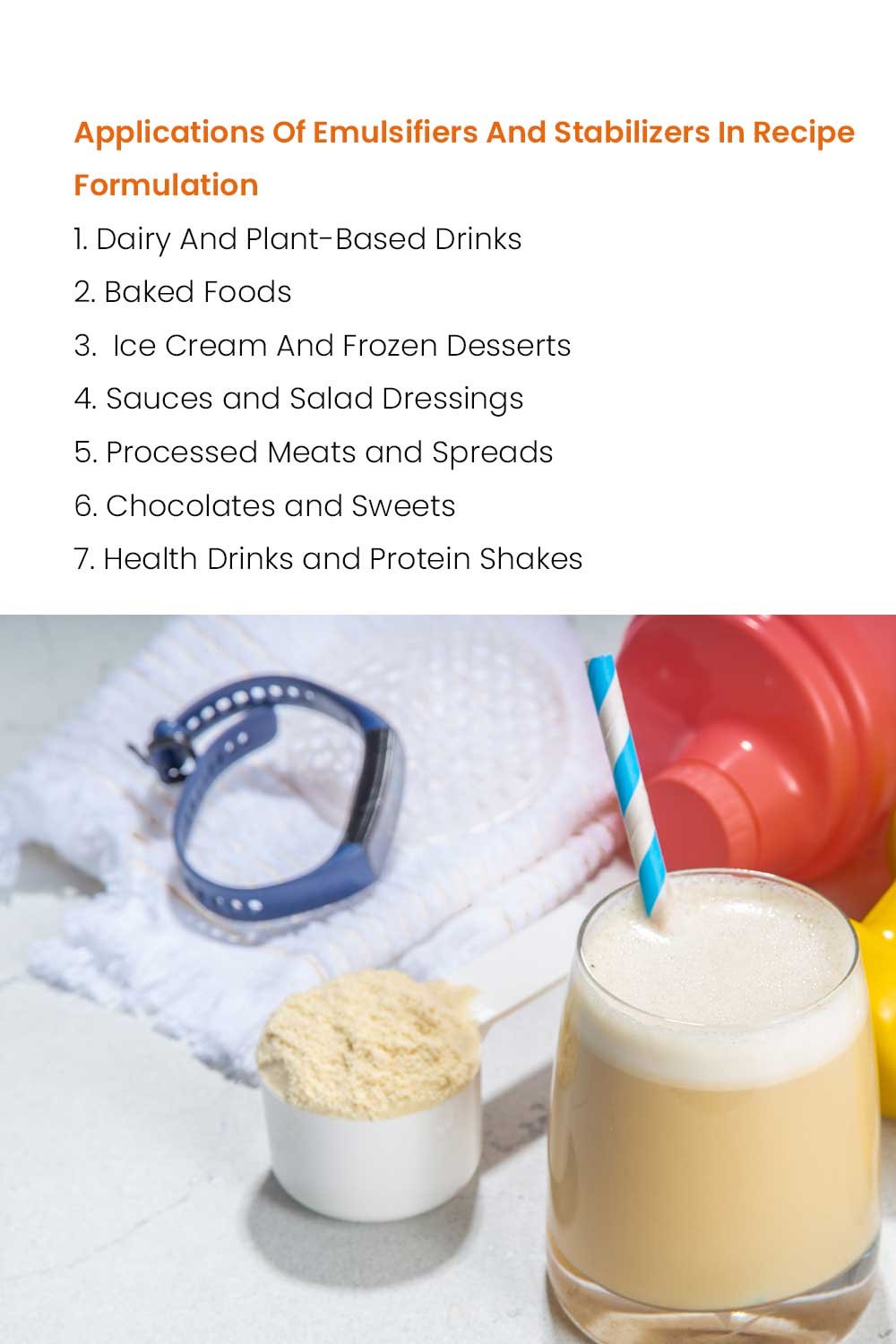
7. Health Drinks and Protein Shakes- In shakes and fiber-rich drinks, emulsifiers and stabilizers keep ingredients like protein or fiber from clumping or settling at the bottom. This keeps the drink smooth and enjoyable.
These applications show that emulsifiers and stabilizers in recipe formulation are important for making modern food taste better, look better, and last longer, especially in clean-label, plant-based, and functional food products.
Role Of Emulsifiers And Stabilizers In Food Recipe Formulation
When it comes to food product formulation, emulsifiers and stabilizers are strategic tools for achieving specific technical and sensory outcomes. The role of emulsifiers and stabilizers in food product development is:
1. Enhancing the texture and mouthfeel of the food recipe – Emulsifiers and stabilizers provide creaminess, smoothness, and body to foods. Stabilizers control the thickness and flow of liquids, while emulsifiers ensure consistent fat distribution.
2. Preventing phase separation in recipe formulation- In multi-phase systems like salad dressings or milk alternatives, emulsifiers keep oil and water uniformly mixed, and stabilizers prevent breakdown over time.
3. Improving the shelf life of the food product development – Stabilizers slow down moisture migration, reduce microbial spoilage risk, and help maintain the appearance of the product during storage.
4. Helping to make low-fat and low-sugar food recipes- The stabilizers and emulsifiers help replace lost sensory attributes in low-fat or low-sugar recipe formulations by giving creaminess to its texture.
5. Supporting clean-label and natural claims in food formulation- Natural emulsifiers like mustard flour, acacia gum, and sunflower lecithin support clean-label claims without compromising the performance of the food recipe formulation.
6. Enhancing the freezing stability of the food product development – Products like frozen sauces or ice creams remain stable through freezing and reheating cycles because of the stabilizers that prevent ice recrystallization and emulsifiers that retain fat dispersion.
7. Providing consistent processing behavior in food recipe formulation- Emulsifiers help reduce thickness in certain systems, which makes pumping and filling processes easier. Stabilizers prevent phase changes during thermal processing.
These roles of emulsifiers and stabilizers are important in modern food formulation, especially in an industry focused on product consistency, consumer satisfaction, and regulatory compliance.

Got Separation Issues? Let’s Fix It Together!
If your food product development keeps splitting, settling, or losing texture, you’re not alone. From plant-based drinks to creamy sauces, getting the right stability of the food recipe formulation needs proper guidance. It takes a complete food recipe formulation strategy. Our food recipe formulation experts will work with your food brand to solve real-world challenges using the right emulsifiers, stabilizers, and expert guidance. Let’s bring stability to your formulation. Reach out now for a free consult or project brief. Send us your query on +91 8130404757.
FAQs
Why are both emulsifiers and stabilizers essential in recipe formulation?
Emulsifiers help water and oil mix seamlessly, while stabilizers maintain texture and prevent separation over time. Using both delivers creamy consistency, enhanced mouthfeel, and long-term shelf stability in your formulations.
How do synergistic blends of emulsifiers or stabilizers improve food texture?
Combining ingredients like xanthan and guar gum or lecithin with other gums creates texture synergy—improving thickening, mouthfeel, and structural integrity while reducing usage levels and cost.
What’s a general usage guideline for emulsifier and stabilizer levels in high-water or high-fat recipes?
For high water-content or dairy-based recipes, stabilizer levels are often around 0.15–0.5% by weight. Emulsifiers typically range from 0.15–0.45%, with adjustments based on fat content to ensure smooth texture and emulsion stability.