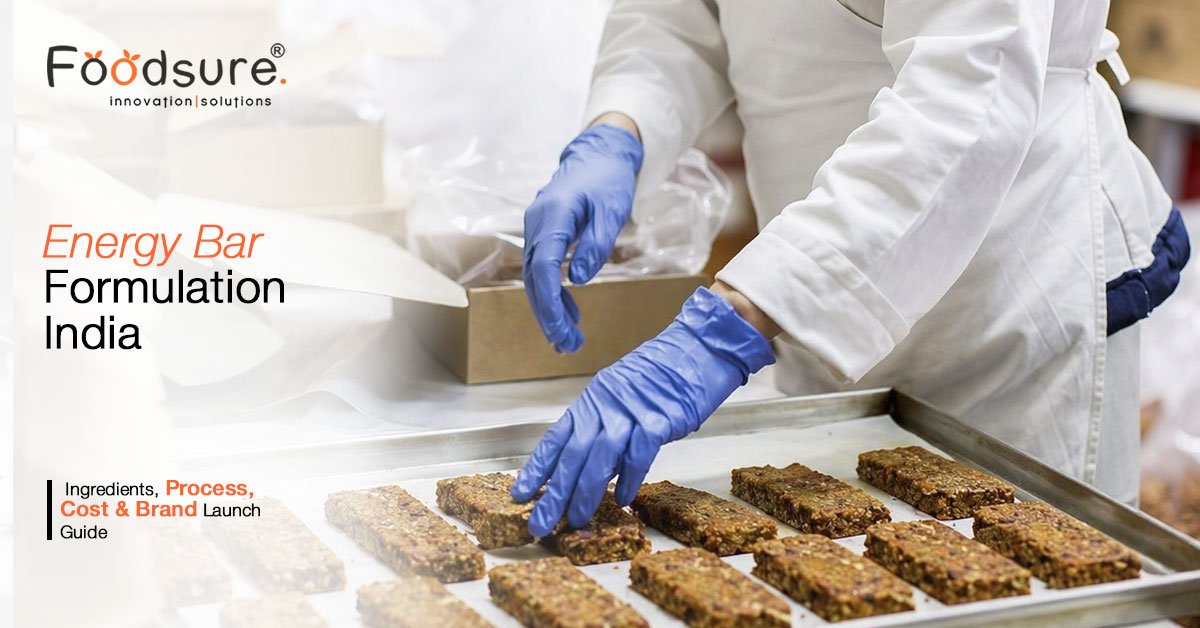
Imagine two energy bars that are available for purchase from a sports supplement store located in Bengaluru. These bars cost the same amount. They look almost the same too. They have 20 grams of protein and an ingredient list free of any synthetic products. The first bar had undergone formulation development, binding system assessment, water activity assessment, and shelf life assessment. The second one, which was made using a catalogue of a contract manufacturer, became crumbly and slightly sticky after two months.
Growth of Energy Bar Formulation in India
The India energy bar market is projected to grow at a CAGR of 13.74% to reach USD 54.36 million by 2031, With protein bars taking up a market share of 43%, the sector is definitely moving forward. However, there are many other products that do not meet the criteria for repeat purchases within the first six months of their release. It all boils down to the formulation of energy bars in India.
Here are the Top 10 Protein bars in India
The Questions Every Energy Bar Founder Asks, and What the Answers Actually Require
The majority of founders coming into India for energy bar formulation India development have just a few basic questions. The answer to their questions explains why formulation challenges are usually under estimated.
Can I just use dates and nuts as the base?
But yes, and some of the cleaner label energy bar products do. However, the problem lies in the fact that dates and nuts based bars have water activity between 0.65 and 0.75, which means that while microbial growth will be controlled, mould will still be able to grow over a period of six to twelve months if there isn’t a package design that takes this fact into account.
Can I add whey protein for the high protein claim?
But whey reacts in different ways in bar matrices compared to powders. Whey proteins in concentrated amounts denature when baked and create chewy and even rubbery textures in the process. Whey that hasn’t dissolved in the cold pressed bar clumps together if the binding system fails to dissolve it uniformly. Even the grade of the whey is important to the end product.
Can I make it a clean label and shelf stable?
This is the formulation tension that characterizes the custom energy bar India market segment at present. Clean label involves replacing synthetic preservatives, artificial emulsifiers, and processed binding agents with their natural counterparts. The natural system of binding and preservation may achieve what the maltitol syrup, modified starch, and sodium benzoate system could. However, it will need better water activity management, improved packaging, and enhanced process control to match the shelf life performance of the latter. It is possible. It demands greater formulation expertise, not less.
How to Think About Ingredients in Energy Bar Formulation India
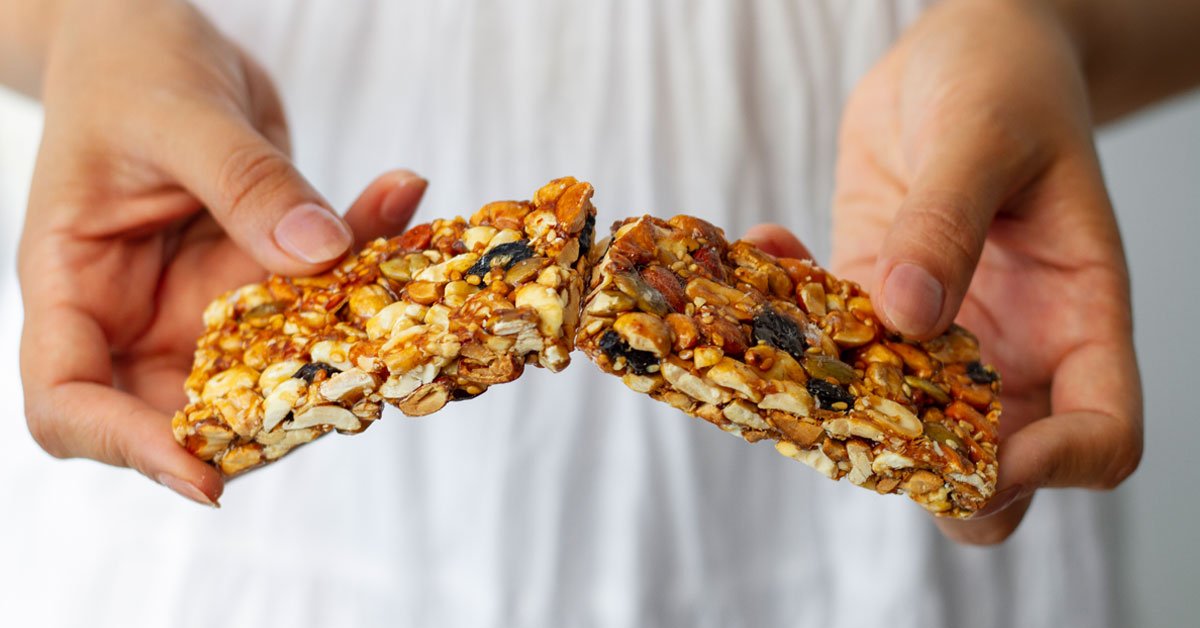
An energy bar formulation india has four layers that have to interact in order to be effective. These include the structural layer, the binder layer, the protein layer, and the flavoring layer. Being able to formulate all these four layers and ensuring stability among the four during the indicated shelf life period constitutes the formulation challenge.
The structural layer is usually the carbohydrate layer. Rolled oats, puffed rice, puffed quinoa, millet flakes, and granola constitute the structure. Each ingredient has distinct properties regarding its density, moisture uptake capacity, and interactions with oils. While rolled oats are highly versatile in their ability to produce energy bars in India, they constitute the most popular ingredients, thereby hindering differentiation. Millet and quinoa bases command a premium health position and are compatible with low moisture binders.
The binding system is usually the area where first-timers fail for lack of know how. The binder unites the ingredients throughout the entire process of manufacturing, handling, transportation, and the product’s interaction with consumers. In a case of cold press bars, binders involve a mixture of syrup (such as honey, date syrup, brown rice syrup, or tapioca syrup), along with a fat phase consisting of either nut butter, coconut oil, or cocoa butter.
This layer builds upon the underlying base which was developed in the previous one. Indian energy bars typically incorporate whey, pea, soy, brown rice, and hemp proteins. They are all subjected to a unique processing procedure when blending. Powdered proteins are usually hygroscopic, and their hygroscopicity affects water activity and consistency. This means that the protein needs to be dispersed uniformly before the addition of the binding agent.
Core Ingredient Options by Function in Energy Bar Formulation India
| Function are | Common Options in India | Key Formulation Variable |
|---|---|---|
| Structural base | Rolled oats, puffed millet, puffed rice & puffed quinoa | Density, moisture absorption & oil uptake at blending |
| Syrup binder | Date syrup, honey, brown rice syrup & tapioca syrup | Hygroscopicity, water activity contribution & stickiness |
| Fat binder | Peanut butter, almond butter, coconut oil & cocoa butter | Melting point, oil migration & temperature stability |
| Protein source | WPC 80, WPI, pea isolate, brown rice protein & soy isolate | Hygroscopicity, texture effect & dispersibility in matrix |
| Sweetener or flavour | Jaggery, date paste, stevia, dark cocoa & vanilla | Interaction with binder, moisture contribution & claim impact |
| Inclusion or texture | Raisins, cranberries, chia, flaxseed & dark chocolate chips | Water activity compatibility & oil migration into coating |
| Natural preservative | Vitamin E (mixed tocopherols), rosemary extract, citric acid | Activity level, flavour neutrality & label declaration |
Baked vs Cold Press: Choosing the Right Process for Your Formula
Process technology Energy bar manufacturing India can happen through one of two processes. Both influence the formulation, production method, shelf life, and cost of production simultaneously.
The cold-pressed bar is manufactured in such a way that the mixture is prepared at low temperatures. It is then formed into the mold or pressed in a continuously produced block form. The mixture is then cooled, which causes setting. No heat is added to the product during the manufacturing process. As a result, the heat sensitive nutrients remain intact along with the protein structures. The cold-press process is suitable for products where dates are used in the product. It is also good where the product contains whey as a protein source and a certain texture is preferred. It can also be used in the case of a clean-label product where binding properties of the product come from natural ingredients rather than baking processes.
The baked bar takes the slab or extrusion form and then proceeds to the oven. During baking, the water on the surface is evaporated, the binder is set using heat treatment, and a drier and more stable matrix results. The baked bar will be much easier to manufacture consistently compared to cold-press bars since baking helps attain the desired moisture content, whereas in the cold-press process, moisture control needs to be carefully managed. The drawbacks of baking include alteration of the protein structure, flavor change of the syrup, and fat system, and inability to utilize some heat sensitive ingredients.
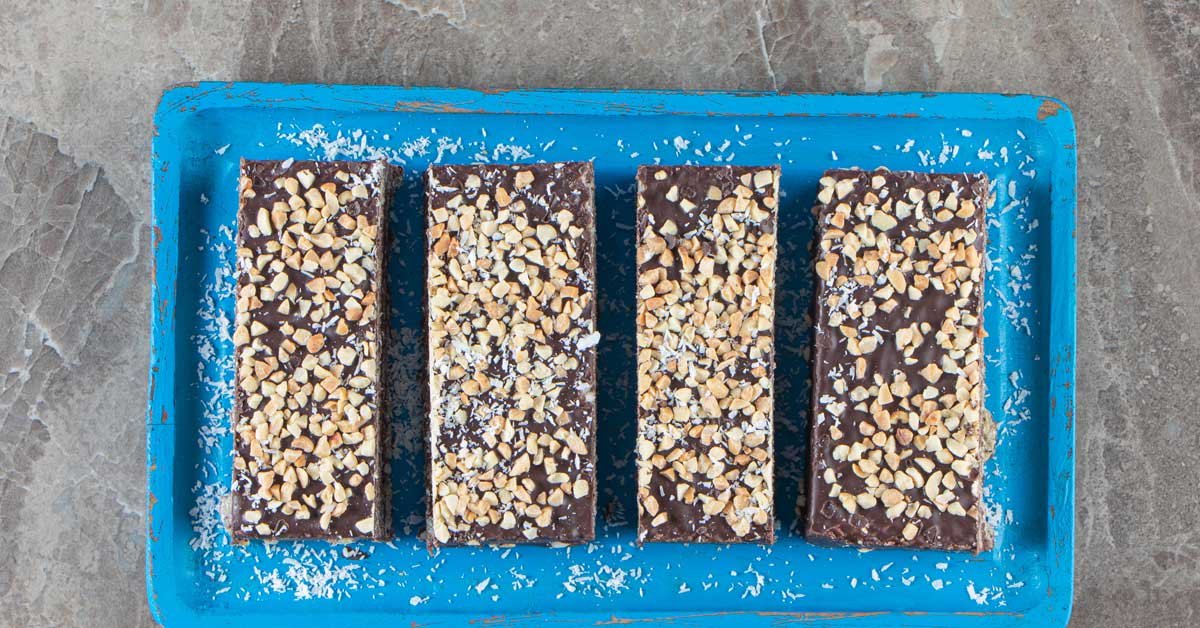
A third approach to creating the product would be through enrobing of a core bar with chocolate. This approach sees the core being considered to be a cold-pressed or baked core, which then gets coated with chocolate after manufacturing. The coating acts as a moisture barrier, helps increase the shelf life of the core since it delays its exposure to oxygen, and enhances the quality of the consumer experience. However, formulation-wise, the difficulty lies in achieving moisture equilibrium between the coating and the core. The core should have reached stability in water activity before coating.
The Shelf Life Problem and What FSSAI Requires
Shelf life design in India for an energy bar formulation india depends on the combined effect of water activity, oxygen exposure, and fat stability. Any water activity above 0.75 allows fungal growth. Oxygen exposure leads to fat oxidation leading to a rancid taste for bars with higher amounts of nuts, seeds, and oils. This is the point where most brands find out after introducing their products into the market because they did not carry out testing under their conditions of transportation and storage.
The realistic method of shelf life design begins with determining the water activity of the final formulation following manufacturing and after one month of equilibration in the intended packaging. In case the water activity of the formulation is above 0.72, then a hurdle technique will be necessary by combining low MVTR packaging, nitrogen flushing, and inclusion of a humectant. If the water activity is below 0.65, then the bar is microbiologically safe at ambient temperatures and the critical factor becomes fat oxidation through tocopherol inclusion and oxygen scavenger packaging.
What Energy Bar Formulation India and Launch Actually Costs in India
The cost structure associated with bringing an energy bar India brand via contract manufacturing depends on three considerations that need to be taken into account before production can commence, namely, whether the brand is developing its own formula or working off a contract manufacturer’s base formula, the number of SKUs involved, and if the bars need to be enrobed or coated to increase complexity.
Development of an energy bar India recipe for one SKU that involves developing the formula brief, sourcing of ingredients, prototype development, water activity, shelf life assessment, and FSSAI approval would cost between Rs 1.5 lakh and Rs 4 lakh. Brands that are introducing three flavors of a common formula would likely be priced anywhere between Rs 2.5 lakh and Rs 6 lakh as much of the common formulation cost would already be taken care of. The cost of manufacturing each unit of an energy bar India that weighs 40 to 50 grams in minimum order quantity by a GMP-certified manufacturer would generally range anywhere between Rs 35 and Rs 90.
How Foodsure Approaches Energy Bar Formulation India
Foodsure’s energy bars have been formulated over cold pressed fruits and nuts base, bakery multigrain and millet variants, high protein whey and plant based bars, and chocolate coating on their performance bars. The initial interaction on formulation is through the briefing, which involves details about the targeted customer segment, the nutritional claim for the label, processing route to adopt, shelf life requirement, and FSSAI category. Formulation based on such briefing results in a fully detailed specification, not merely a recipe, of ingredient quality, binder ratios, processing conditions, water activity, packaging specifications, and claims support.
The Stroom protein bar line developed by Foodsure follows a similar route. In this case, the initial briefing included the need for a clean label formulation, texture profile, and shelf-life at retail without resorting to chemical preservatives. This required a synergistic approach with formulation, process, and packaging to achieve all three requirements. This is the kind of energy bar formulation India !
One Thing Every Energy Bar Brand in India Must Understand
The energy bar that tastes good the very first day and maintains this taste on day 120, when packed up in a gym bag, when delivered in a box, when on a retail store shelf in Chennai during June, is the product that will build the consumer following. Making that happen is a question of science, not of quality of ingredients used or of the narrative of the brand. Water activity levels, formulation of the binding system, fat stability and other factors are those that will decide the success of a bar after the initial purchase or become a lesson in differences between an interesting concept and a workable product.
The money spent on energy bar recipe development India in the formulation phase cannot be considered an expense that might come later. It is the only investment in the brand that leads to its product being developed.
If you want to develop an energy bar brand and need to get your formula right, our specialists can help you with it.
Energy Bar Formulation in India: Ingredients, Process, Cost & Brand Launch Guide
Partner with Foodsure for R&D, formulation insights, and launch-ready energy bar solutions designed for quality, consistency, and market success.
FAQ’s (Frequently Asked Questions)
1. What is the difference between a baked energy bar and a cold-press bar in energy bar formulation India?
In baked energy bars, the binder setting and dehydration processes take place via baking, resulting in a dry energy bar that can be stored for extended periods.
2. What is the recommended protein source for custom energy bars in India?
The WPC 80 source is widely used due to its availability and affordability, WPI protein is suitable for clean label energy bars, while pea protein isolate is ideal for energy bars with vegetarian ingredients.
3. What is your strategy to obtain a one-year shelf life in energy bar manufacturing India without artificial preservatives?
Water activity should be kept below 0.65. In addition, natural antioxidants like tocopherols should be included during formulation.
4. What FSSAI license does an energy bar brand need in India?
For an energy bar that is going to be marketed as a protein or a health supplement bar, one needs the Central FSSAI license based on the health supplement criteria.
5. How much does it cost to develop energy bar recipe India for a new brand?
Development for one SKU would be between Rs. 1.5 lakhs and Rs. 4 lakhs and would include development on the bench, water activity measurement, shelf life analysis, and FSSAI compliance before first commercialization run.
6. Why do so many energy bars in India get crumbly or soft within two months of shelf life?
Mostly due to non-measurement and control of the water activity at launch, lack of validation of the binding system under temperature range, and no specification of MVTR of the packaging as per moisture sensitivity of the formula.
What makes Foodsure unique in developing energy bar formulas in India?
We provide a full product specification covering ratios of binding agents, water activity target.