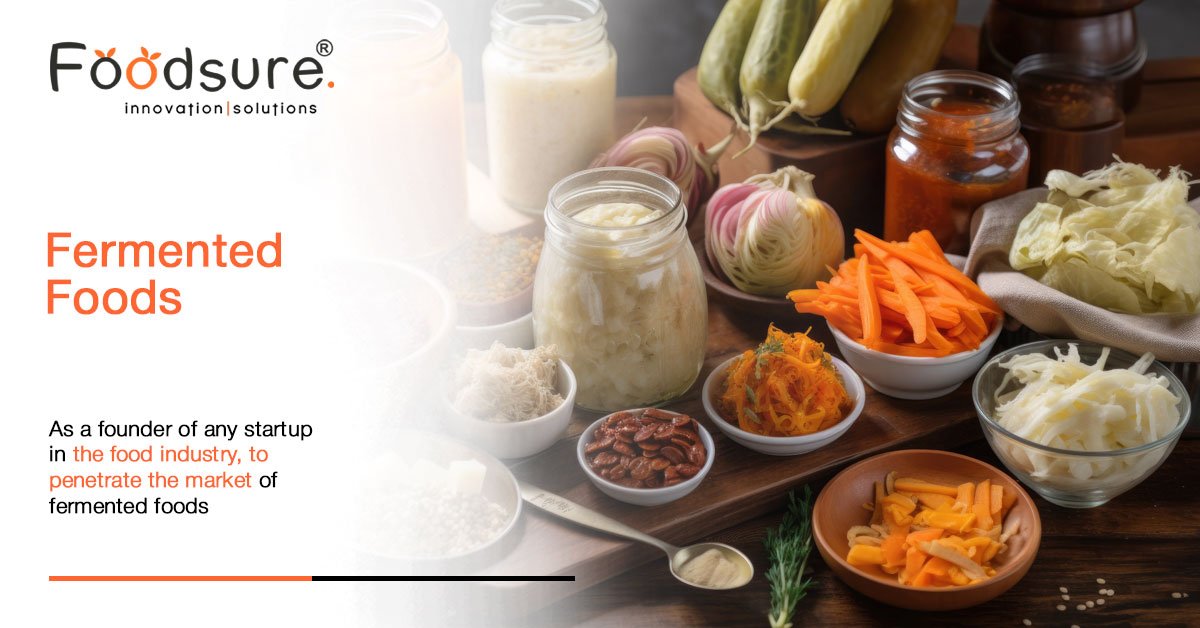
Fermented foods have become more than a trend; it is a revolution of the microbiome. Kimchi and kombucha are just some of the fermented foods that are transforming diets, improving gut health, and creating limitless consumer demand. As a founder of any startup in the food industry, to penetrate the market of fermented foods, it is not only about taste and technique, but it is also about psychology, production issues, and how to make customers emotionally connected with the products.
This blog will deconstruct what makes fermented foods so special as a consumer psychology concept, discuss some of the most common startup issues, make a list of fermented foods to focus on as a startup, and understand the benefits and the role of Foodsure using expert Food consultant and food fermentation processes.
You May Also Like: Food Technology Consultant in India: Food Technologist
Understanding the Psychology Behind Fermented Foods
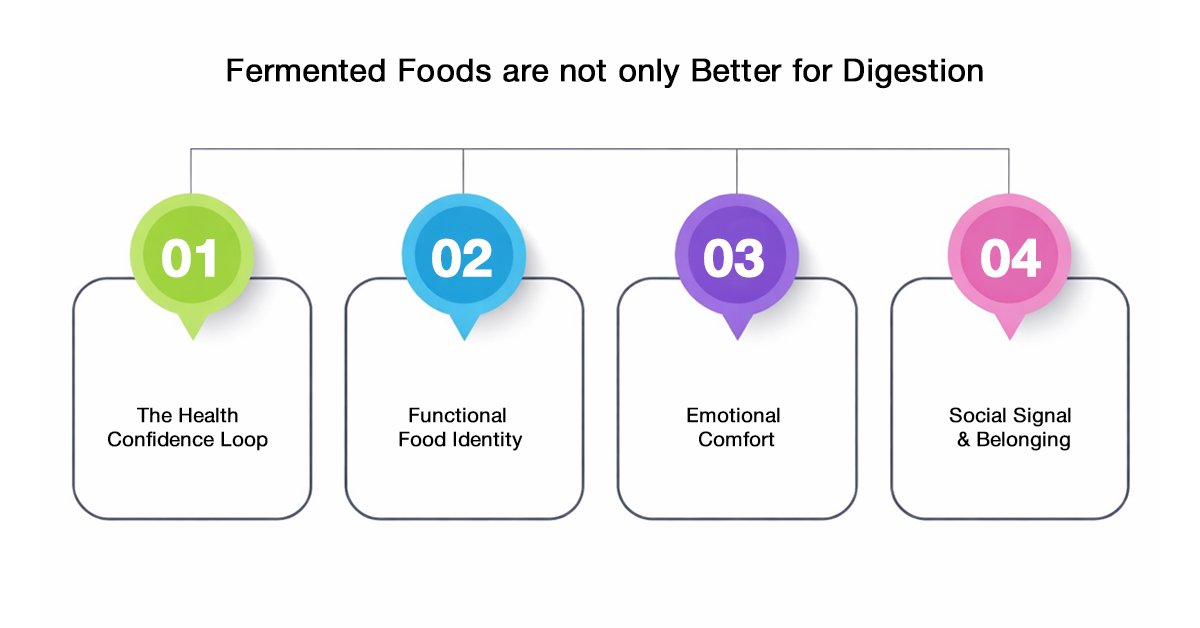
Fermented foods are not only better for digestion, but they also get to the heart of deeper psychological motivations:
The Health-Confidence Loop
The empowerment is pushing the consumers towards buying foods that will make them feel proactive, and health-forward gives them the assurance that their well-being is at stake.
“Functional Food” Identity
Consuming fermented foods makes individuals feel intelligent and deliberate, as part of the growing movement of thinking of food as medicine.
Emotional Comfort
Probiotic flavours such as miso, yogurt or kefir are associated with nostalgia and comfort, which is key in habit making and motivation to buy repeatedly.
Social Signal & Belonging
When people prefer fermented products, this habit becomes an indicator of their lifestyle, which is associated with wellness, sustainability and responsible eating.
In the case of startups, these psychological drives can well be tapped to render your product significant, memorable, and sellable.
Common Problems Startups Face With Fermented Foods
The introduction of fermented foods is associated with some peculiarities, even though interest in this idea increases:
Complex Production Requirement
Fermentation entails accuracy of microbial situations, salinity, temperature and humidity, which demands technology and skills.
Regulatory Compliance
Different regions have different food safety requirements for live cultures and probiotics, which also pose a barrier to entry.
Consumer Education
Fermentation, its nature, its flavour, and its significance continue to be misconceived by many consumers, and therefore, it is more challenging to communicate.
Quality Consistency
The processes are needed to scale the fermentation without loss of taste or functionality.
Shelf Life & Packaging
Live cultures are delicate. The packaging has to be able to preserve viability and be sustainable.
All these stress points render professional advice of Food consultants critical, particularly in the areas of food fermentation and food product development.
List of Best Fermented Foods for a Startup
The following is a selective list of fermented foods that are most suitable for the startup in terms of growth, differentiation, and good consumer interest.
1. Kombucha
Kombucha is the perfect choice when starting a business in the functional beverage industry due to its high demand and easy scalability. Its digestive health benefits as well as its hippy probiotic attractiveness appeal to consumers.
2. Kimchi
The iconic taste and versatile recipes can enable the startups to develop exclusive high-end variations. Its strong taste and cultural identity are adored by consumers.
3. Kefir
The probiotic value is high and there are liquid alternatives as flexible dairy or plant-based which aid in product innovation. It is a gut-friendly substitute of milk that consumers like.
4. Sauerkraut
It is startup-friendly since it can undergo simple fermentation with high value positioning. Customers identify it with comfort food and immunity benefits.
5. Miso
Food versatility presents the opportunity to be used with soups, sauces and ready meals. The consumers value its depth and flavour of umami.
6. Tempeh
In line with the trend of plant-based proteins, it is suited to the expanding vegan markets. Its customers appreciate its functional, protein-infused profile.
7. Yogurt (Cultured)
The existing product with live cultures lowers the risk associated with new entrants in the market. It is a trusted daily food with digestive properties to consumers.
8. Sourdough Bread
Premium positioning is generated through artisan touch and the use of natural fermentation. It is associated by consumers with improved digestion and workmanship.
9. Pickled Vegetables
Product launches are favoured by easy processing and innovative flavour selections. Customisation and seasonality gives pleasure to consumers.
10. Fermented Hot Sauce
It is commercially viable, as it has shelf stability and good flavour. Niche spicy branches are consumers who demand fermented hotness.
This list is a combination of market demand, technical viability, and consumer psychology, which allows you to choose the direction that would fit in the brand name, along with its operating strengths.
Benefits of Fermented Foods
Why fermented foods? The essence of the advantages, both operational and emotional, is as follows:
Digestive & Gut Health
Probiotics help maintain a healthy microbiome that helps with digestion and the absorption of nutrients.
Increased Complexity of Flavours
Fermentation opens up flavour profiles of depth and umami that products with a difference require.
Functional Positioning
Fermented foods are functional foods in a world of commodities, and have an advantage (a value proposition) that competitors can hardly replicate.
Natural Preservation
Fermentation is a natural way of increasing shelf life, minimising wastage, and facilitating clean labelling.
Emotional Satisfaction
Customers have a positive attitude toward the consumption of products related to health, life-span, and cultural customs.
As the startup food companies adopt these advantages in product communication, they will be able to appeal to consumers on an emotional and logical scale, which is a potent mix.
Foodsure’s Role in Supporting Fermented Food Startups
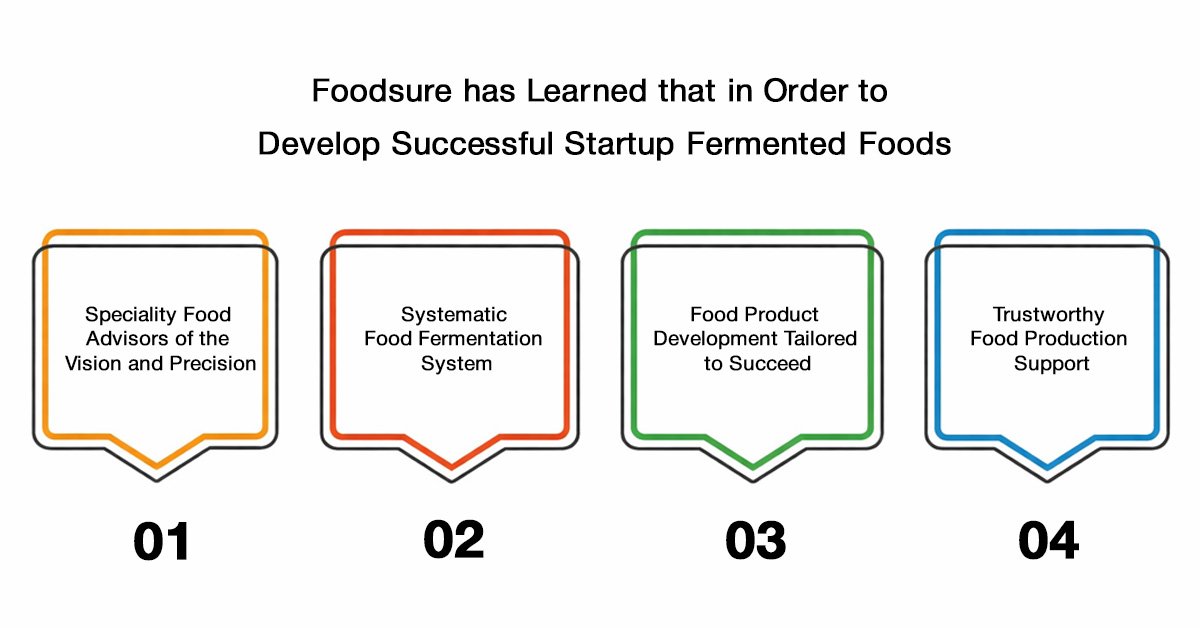
Foodsure has learned that in order to develop successful startup fermented foods, technical knowledge is not the only solution, but strategic foresight.
Speciality Food Advisors of the Vision and Precision
We are united in the best Food consultants who are experts in fermentation science, sensory optimisation and market strategy. They help startups:
Develop effective fermentation.
Assure quality and safety.
Make products in line with consumer trends and demand.
Systematic Food Fermentation System
To develop fermentation methodologies that are:
- Scalable
- Safe
- Flavor-forward
- Brand aligned
Food fermentation experience assists with the reduction of risk and speeds up product preparation.
Food Product Development Tailored to Succeed
Foodsure food product development services contain:
- Recipe development and prototyping.
- Pilot production runs
- Consumer feedback and Sensory testing.
- Nutritional optimization
- Packaging consultation
Trustworthy Food Production Support
The partnerships of Foodsure are involved in production facilities that are optimised towards live cultures, regulatory compliance, and quality control and assurance to ensure that startups do not have to compromise on their scale.
Start with Fermented Foods That Resonate!
By 2026, fermented foods will no longer be a niche, but they will be the core of modern food culture. You complete your startup by exploring psychology, solving pain points in your startup, and leveraging the experience and knowledge of Food consultants and advanced food fermentation.
It could be kombucha lines, artisanal kimchi, probiotic yogurt or fermented sauces, but the point is that there must be a purposeful innovation, supported by science and consumer understanding.
Are you willing to start your fermented food business?
Access food expert knowledge, market research and custom solutions through fermentation specialists, product developers and production partners of Foodsure. And make your fermented food dream a successful brand.
Want to Launch Your Own Fermented Food Brand?
Talk to food experts for product development, shelf life testing, and FSSAI compliance.
FAQ’s
What are fermented foods?
Fermented foods are foods that have been converted by useful microorganisms, which increases flavour and digestive value.
What is so good about fermented foods as a startup?
They ride on the health trend, provide functional positioning, and satisfy the rising consumer demand for gut-healthy products.
Which are the best fermented foods to begin with?
Among the most promising ones are kombucha, kimchi, kefir, miso, tempeh, yogurt, sourdough, and pickled veggies.
What can I be doing to create a fermented food product?
Recipe development, control of fermentation, safety and sensory optimisation with Food consultants.
What are the typical fermentation problems of startups?
Top hurdles include quality consistency, regulatory compliance, packaging, microbial control and consumer education.