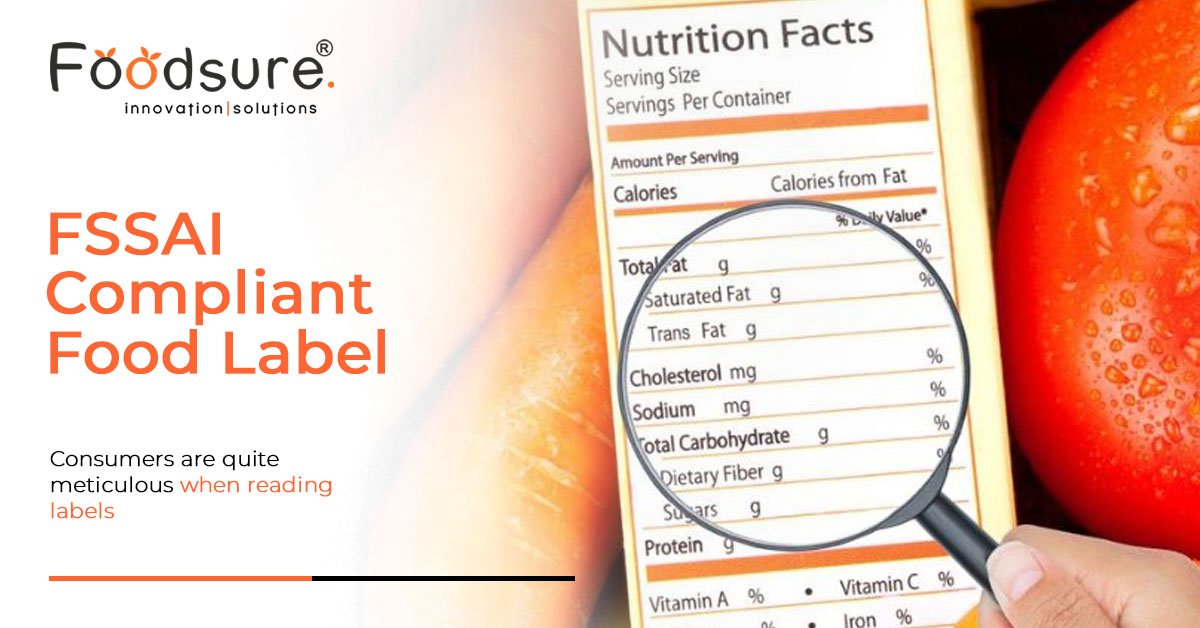
A food item may be delicious, have a competitive price, and even get a great initial reaction. Still, a lot of these products don’t grow or don’t even get into organised retail because of one simple reason: the label is not compliant. An FSSAI-compliant food label, in today’s Indian food market, is not just an administrative detail; it is a requirement for the business.
Consumers are quite meticulous when reading labels. Retailers also check them thoroughly. Distributors point out inconsistencies. Regulators enforce the rules strictly. A missing declaration or an unsupported claim, in fact, can be the reason for a delayed launch, receiving penalties, or being forced to do costly reprints.
This blog elaborates on changes in the situation when your food label fails to meet FSSAI requirements and the reasons for labelling to be considered a natural continuation of food formulation, food product development, rather than a last-minute design task.
What Makes an FSSAI-Compliant Food Label Strong?
Essentially, a food label that complies with FSSAI will not simply be at the legal minimum level, but will clearly show transparency, trustworthiness and a strong desire for growth. The aim should not be merely to “pass the inspection”, but to keep the same level of performance during audits, at different points of sale, and even at various locations.
Here are the major elements that determine a compliant, reliable label:
- Exact listing of ingredients and allergens
- Commonly formatted nutritional facts
- Claims that can be verified and are appropriate for the category
- Traceability is clearly indicated through batch and license number details
- Packaging that is compatible with the product’s shelf life
Compliant labelling is where the distinction lies. Home-style or informal labels are basically gadgets for getting attention. On the other hand, compliant labels are a sign of responsibility and the capability to deliver the same quality over and over again.
Stage-Wise Process of Building an FSSAI-Compliant Food Label
| Stage | Key Action | Purpose |
|---|---|---|
| Category Identification | Correct FSSAI category selection | Prevents label invalidation |
| Ingredient Check | Approved ingredient verification | Avoids regulatory rejection |
| Allergen Mapping | Mandatory allergens declared | Consumer safety compliance |
| Nutrition Calculation | Accurate nutrition values | Audit-ready labels |
| Claim Review | Legal claim validation | Prevents penalties |
| Label Structuring | Mandatory details in the correct format | Ensures compliance |
| Packaging Validation | Food-grade material check | Protects product quality |
| Final Review | Pre-print compliance audit | Error-free launch |
What Happens When This Process Is Ignored?
Non-compliant labels rarely fail immediately. Rather, the issues show up during:
- Distributor onboarding
- Retail audits
- E-commerce approvals
- Regulatory inspections
Some of the common consequences are:
- Launch delays caused by rework
- The inventory spoiled because of the reprinting
- Penalties or notices
- Decrease of retailer’s confidence
- Loss of consumer trust
Usually, the recipe is not the problem. The problem arises because labelling was separated from the food product development.
Why FSSAI Labelling Must Align with Food Development
Certain categories are under the spotlight more than others:
- Packaged snacks and confectionery become a focal point if declared claims do not correspond to the formulation data
- Dairy and beverages, whose storage and shelf life declarations are of great concern, may be scrutinised
- Functional and fortified foods are still the subject of the closest scrutiny, as their claims are strictly regulated
Without compliance with regulations at the stage of food formulation and testing, these products are bound to have problems over and over again, no matter how much money they spend on marketing.
Foodsure’s Integrated Approach to FSSAI-Compliant Labelling
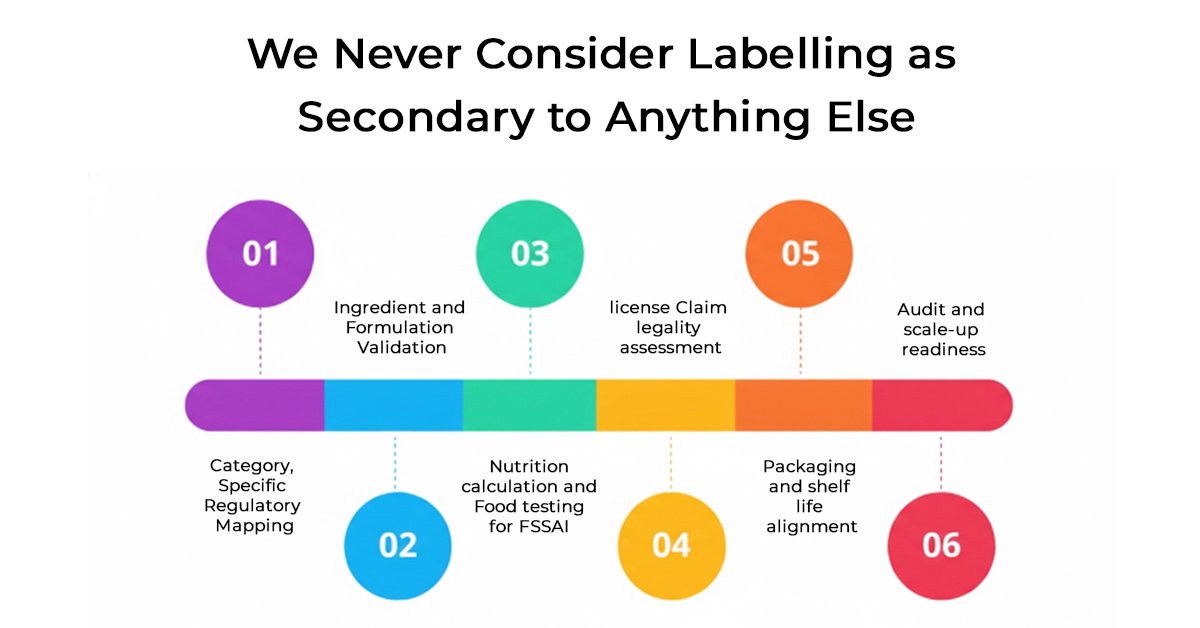
At Foodsure, we never consider labelling as secondary to anything else.
Our method consists of:
- Category, specific regulatory mapping
- Ingredient and formulation validation
- Nutrition calculation and food testing for FSSAI
- licenseClaim legality assessment
- Packaging and shelf life alignment
- Audit and scale-up readiness
By making regulatory compliance a part of food formulation and new new food product development, Foodsure can provide a label that acts as an opportunity rather than a barrier to growth.
Commercial Reality for Food Brands
A label that is not in compliance with the regulations will slow down growth, use up your resources, and it will be detrimental to your goodwill. Marketing is not the solution to regulatory gaps. Only well-defined development can handle them.
A food label that complies with FSSAI helps in the smooth flow of products through distribution, retail, and inspections, while, at the same time, it establishes brand trust over the long term.
Final Note
Food labels might seem straightforward, but making a correct and scalable label is a matter of accuracy at each step. It is, in fact, a technical, regulatory, and commercial process combined into one.
At Foodsure, we consider FSSAI compliance as a product strategy rather than a mere tick in the box. When your label is done perfectly, it doesn’t merely inform, it safeguards, works, and grows.
Foodsure is the perfect partner in developing food products that are compliant and naturally trustworthy, and market-ready in India, if you are planning a new food product launch or if you have been through the process of label corrections several times.
Create an FSSAI-Compliant Food Label That Passes Approval?
Foodsure helps food brands build FSSAI compliant food labels that meet regulations, avoid errors, and support smooth approvals — backed by regulatory expertise and labelling science.
Explore Product Development Services
Trusted by beverage founders and FMCG brands for flavour innovation and commercial readiness.
FAQ’s
What are the consequences of not having an FSSAI-compliant food label?
Your product could be delayed at launch, declined by retail, result in fines, or lead to forced re-labelling. If necessary, the product can be removed from the market until the issue is fixed.
Is it possible to sell food products online without an FSSAI-compliant food label?
No, both e-commerce and quick commerce platforms mandate FSSAI-compliant labels for onboarding and the continuous listing of products.
Are there any exceptions for small or home-based food brands regarding FSSAI-compliant labels?
No, any brand selling packaged food commercially is required to comply with FSSAI labelling regulations.
Can food labels carry claims such as “high protein”?
Certainly, provided that the product complies with the FSSAI limits and the statements are supported by the product formula or testing.
Can improper font size or label placement be reasons for non-compliance?
Indeed, using an incorrect font size, format, or placement can render a label, which is otherwise accurate, non-compliant.
Is food testing necessary for the FSSAI labelling market?
Mostly yes, particularly to corroborate the nutrition facts and back up the claim made on the packaging.
At what stage of product development should FSSAI labelling be considered?
While creating and developing a food product, not after the packaging design.
In what way does Foodsure facilitate FSSAI-compliant food labels?
Foodsure merges compliance with formulation, testing, and packaging to produce labels that are ready for audit.