
Food safety audit evaluates your complete food operations through direct observation to verify your compliance with safety regulations and legal requirements. The examination assesses how food is prepared and handled while also evaluating the conditions of food storage and the temperatures of chilling, the hygiene practices of staff and the effectiveness of wash-down procedures, the contents of logs and files and the overall compliance with food regulations.
Types of Food safety audit
| Audit Type | Conducted By | Purpose |
| Internal Audit | Business or internal team | Self-assessment and gap identification |
| External Audit | Regulatory bodies/certification agencies | Legal compliance and certification |
| Supplier Audit | Buyer or third party | Verify raw material safety and quality |
Core Objective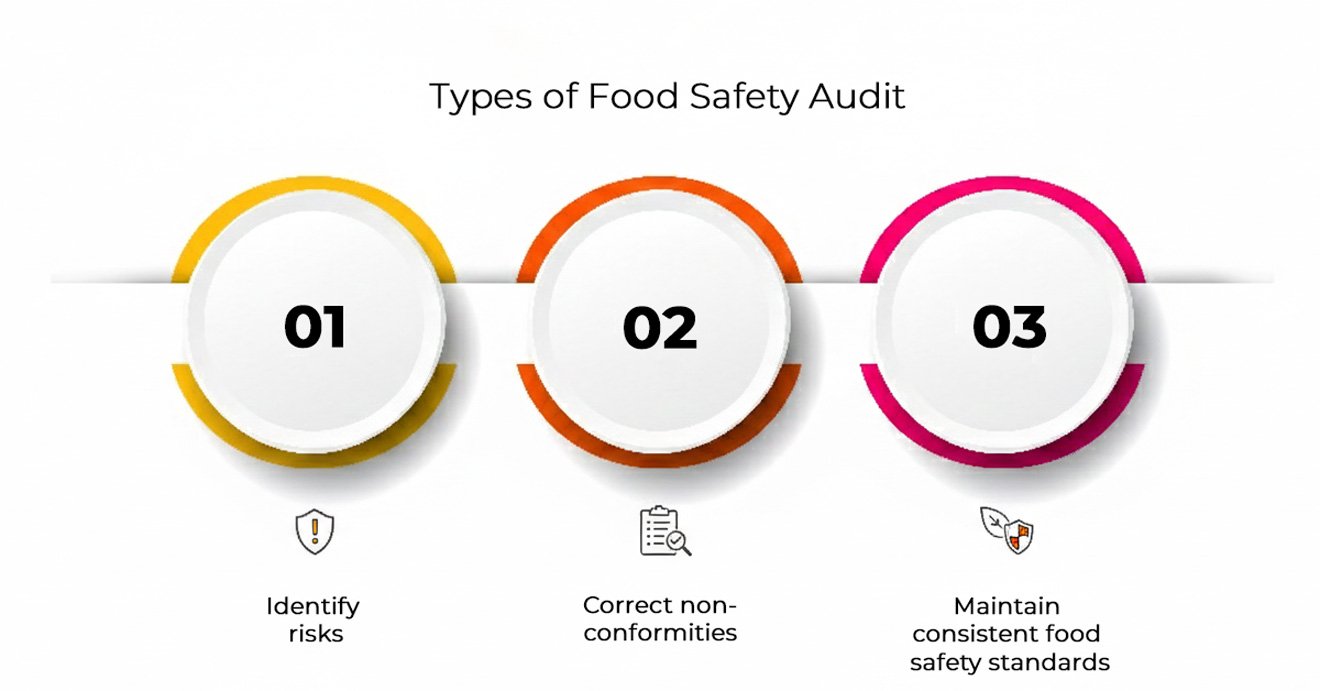
- Identify risks
- Correct non-conformities
- Maintain consistent food safety standards
Importance of Food Safety Audit
More so than merely systems of bureaucratic control, food safety audits establish the conditions and standards that are vital for the continuous operation of a business.
The main reasons businesses conduct audits are:
- It helps to prevent foodborne diseases and food contamination.
- They require its staff members to follow food safety regulations.
- The process enables businesses to protect their brand image while maintaining customer loyalty.
- The organisation will experience reduced legal and financial risks while achieving better operational efficiency.
Business effects
- They will experience reduced operational efficiency.
- It needs to resolve its refrigeration problems.
- The organisation will experience reduced operational costs through improved storage methods and better handling techniques.
- The process establishes customers’ trust, which leads to their return.
Step-by-Step Process to Conduct a Food safety audit
Get Your Ducks in a Row (Prep Phase): The audit process starts with your choice of which operational area to inspect, between kitchen operations, warehouse inspection, and production area assessment or loading dock evaluation. You need to review current food safety regulations. Create a checklist which includes hygiene standards, storage system requirements, equipment upkeep procedures, documentation processes, and employee work practices.
Hit the Ground Running (On-Site Walkthrough): The observation area allows viewers to observe food preparation activities and food handling processes. The team needs to clean both the counters and machines because they have accumulated dirt. The team needs to search through all available storage areas.
Dig into the Paper Trail: Your daily recordkeeping establishes your legitimacy throughout every 24-hour period, not only during your performance display. The training files show that staff members possess the necessary knowledge for their positions. Your organization needs to maintain a list of approved suppliers who have been verified through a vetting process. The cleaning schedules show both the frequency of cleaning activities and the specific cleaning methods used for each cleaning task.
Chat with the Team: The success of the process depends on the performance of the people who work directly with customers. The researchers will check their knowledge of handwashing procedures, basic regulations methods to prevent cross-contamination and equipment usage which includes gloves and nets.
Spot the Screw-Ups: The process needs to identify all areas where the actual situation differs from what should exist according to established standards. The minor issues include two things: the labels have inconsistencies and the documentation needs to be completed.
Wrap with a Bang (Report Time): The document should concentrate on creating solutions instead of assigning responsibility to specific individuals. The document contains essential discoveries which include an inventory of issues classified by their danger level together with proposed solutions and specific completion dates.
Circle Back (Follow-Up): The first visit should not be your only appointment. The team needs to return to verify that the solutions have taken effect together with the results which have persisted while all former issues remain resolved.
Common Areas Checked During Food safety audit
| Area | What Is Reviewed |
| Personal hygiene | Handwashing, uniforms, and medical fitness |
| Food storage | Temperature, FIFO, labelling |
| Cleaning & sanitation | Equipment cleaning schedules |
| Pest control | Monitoring and prevention |
| Food preparation | Cross-contamination control |
| Waste management | Disposal and segregation |
Best Practices for a Successful Food Safety Audit
- Use standardised audit checklists
- Train internal audit teams
- Keep documents updated and accessible
- Encourage open communication with staff
- Conduct audits regularly, not only before inspections
Key Principle
Consistency builds compliance and confidence.
Benefits of Regular Food safety audit
| Benefit | Business Impact |
| Customer trust | Higher loyalty and brand credibility |
| Operational efficiency | Less waste, better workflow |
| Staff accountability | Improved discipline |
| Market advantage | Easier certifications and partnerships |
Example
- Catering companies with strong audits win hotel, airline, and corporate contracts faster.
Challenges Faced During Food safety audits
Common Issues
- Inadequate staff training
- Missing or outdated records
- Resistance from employees
- Cost concerns for small businesses
Solution
- Build awareness that audits protect jobs, customers, and brand value
Tips to Prepare for a Food safety audit
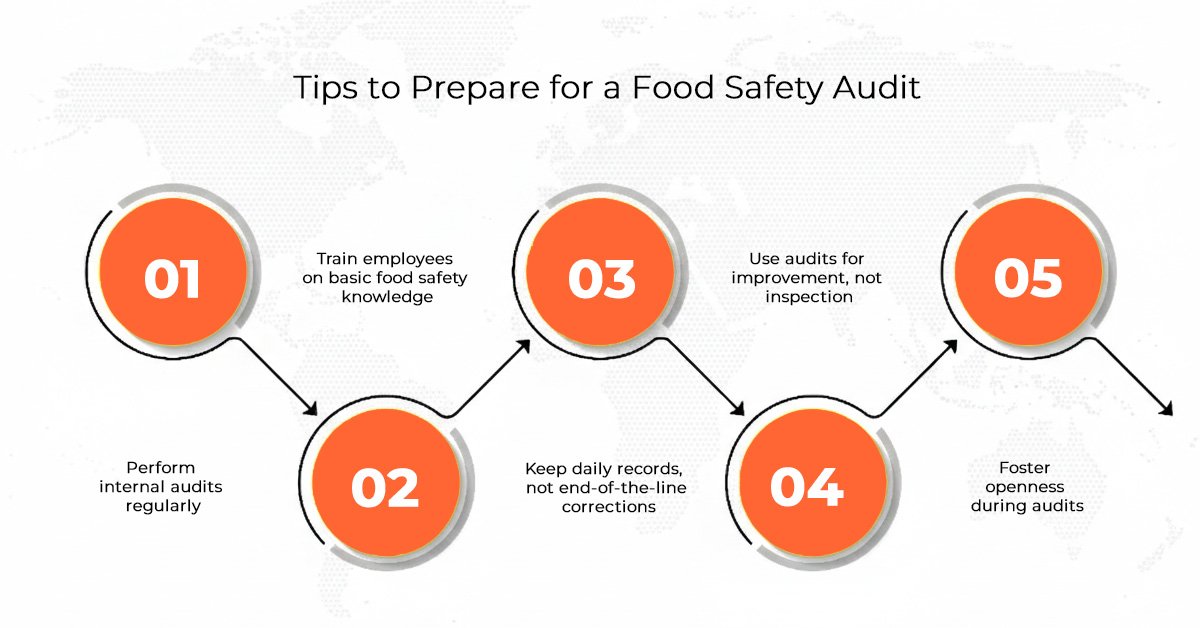
- Perform internal audits regularly
- Train employees on basic food safety knowledge
- Keep daily records, not end-of-the-line corrections
- Use audits for improvement, not inspection
- Foster openness during audits
The Food Safety Audit is not only a test of compliance. It is a statement of the concern of an enterprise for the health and quality of its products to consumers. Food enterprises that implement a well-organised audit system will be able to reduce risks, enhance the efficiency of operations, and ensure a perfect brand name.
Consumer food safety is currently viewed as an investment factor rather than a cost in the competitive food industry. The outcome of this investment is expected to provide returns in the form of loyal customers and success in the long run.
FAQ’s
What is the main purpose of a food safety audit?
The system inspects all areas of your food operation, including food preparation and food handling and food storage and staff hygiene and staff cleaning practices, food safety documentation and food safety regulations.
What types of audits exist in businesses today?
Organizations conduct internal audits for self-evaluation while government authorities perform external audits to grant compliance certifications and buyers conduct supplier audits to assess the quality of raw materials that suppliers provide.
What reasons exist for conducting these audits?
The procedures protect against foodborne illnesses while maintaining employee compliance and protecting your business reputation and reducing legal complications and increasing operational effectiveness and enabling customer retention through trust.
How do you actually run one step-by-step?
The process requires you to create checklists which define the examination boundaries between the kitchen and warehouse areas and your team will observe all operational activities which include monitoring storage conditions and assessing the cleanliness status.
Which locations receive the greatest amount of examination?
The inspection process focuses on areas such as handwashing practices and uniform usage and storage practices which include temperature control and first-in-first-out procedures and labeling requirements.
What strategies can lead to success in the test?
The team should develop standardized checklists while teaching their workers and they must maintain accessible and current documentation while maintaining open communication channels.
What happens when things fail in operations?
The main problem arises when training programs lack depth and when documentation fails to meet required standards and when employees refuse to comply with regulations.