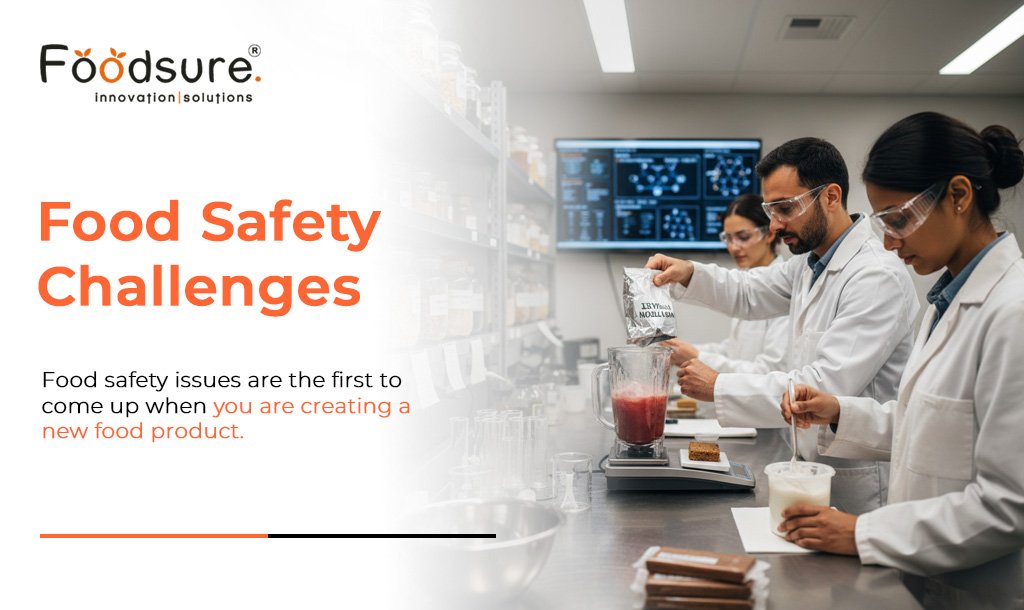
For emerging food brands, Food Safety challenges are often the first real barrier in product development. Retailers want proof that your product meets strict food safety standards, regulators require complete documentation, and even a small mistake can delay your launch.
Many startups underestimate how early formulation or processing errors can become serious food safety challenges later in production. These issues often evolve into expensive new product development mistakes that take time and resources to fix. Unlike large manufacturers with established systems, new brands face stronger pressure because they must build food safety processes from scratch.
The good news is that these challenges to food safety can be managed effectively with the right systems, documentation, and expert validation. At Foodsure, we help brands integrate food safety early so innovation and compliance move forward together.
The 5 Biggest Food Safety Challenges in New Product Development
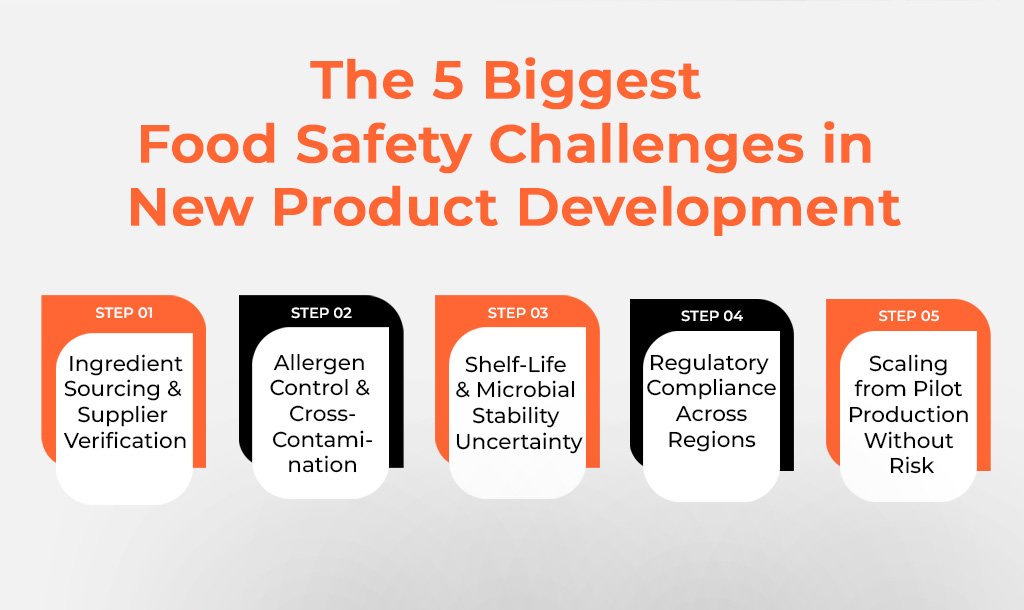
1. Ingredient Sourcing & Supplier Verification
Ingredient sourcing may look simple initially, but verifying suppliers is one of the biggest food safety challenges for new brands.
Many startups rely on brokers or regional suppliers without verifying their safety systems. Without proper supplier validation, risks such as contamination, poor storage practices, or inconsistent ingredient quality can enter the supply chain.
A reliable supplier approval process should include:
- Verified Certificates of Analysis (COA)
- Supplier process documentation
- Traceability systems
- Secondary supplier planning
Proper verification helps prevent contamination risks before they enter the manufacturing process.
Read more: Food Product Development.
🚀 Ready to get the best Food Safety Solutions?
Get expert help with Food Innovation, compliance, and market-ready strategies. Book a FREE 30-minute consultation with our team today.
2. Allergen Control & Cross-Contamination
Allergen mismanagement is one of the most common reasons for food product recalls worldwide.
During product development, teams frequently test multiple formulas, ingredients, and small production batches. Without proper allergen mapping, the risk of contamination and cross-contamination in pharma and food environments increases significantly.
Effective allergen control should include:
- Ingredient allergen mapping
- Dedicated tools and equipment
- Cleaning validation procedures
- Accurate labelling verification
Managing these challenges to food safety early prevents costly recall risks later.
3. Shelf-Life & Microbial Stability Uncertainty
Another common food safety challenge is incorrectly estimating shelf life during the R&D stage – This is where a professional food consultant can help ensure accurate validation and compliance
Many brands assume shelf life based on ingredient stability rather than scientific testing. However, true product stability requires laboratory validation.
Key tests include:
- Microbial challenge studies
- pH level testing
- Water activity (aw) analysis
- Temperature stability testing
Without this data, products may fail retailer reviews or spoil earlier than expected, creating serious food safety risks.
Read more: Food Production.
4. Regulatory Compliance Across Regions
Food products must comply with regulatory standards before entering the market.
When brands plan to distribute across regions or internationally, they must ensure compliance with multiple regulatory systems. These often include:
- HACCP implementation
- FSMA guidelines
- Local food labelling regulations
- Documentation for audits
Ignoring regulatory differences is one of the biggest challenges to food safety for startups expanding their market reach.
5. Scaling from Pilot to Production Without Risk
Scaling production introduces new variables that can affect food safety.
Changes in equipment, production speed, ingredient sourcing, or workforce training can create unexpected hazards during large-scale manufacturing.
A structured scale-up process should include:
- Pilot production validation
- Process control documentation
- Risk analysis updates
- Manufacturing partner verification
Managing this stage carefully helps avoid major food safety challenges during commercialisation.
Read more: Trends in Food Product Development.
How to Solve Food Safety Challenges Before Launch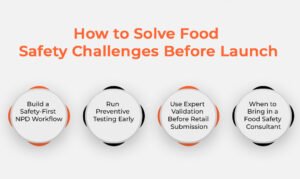
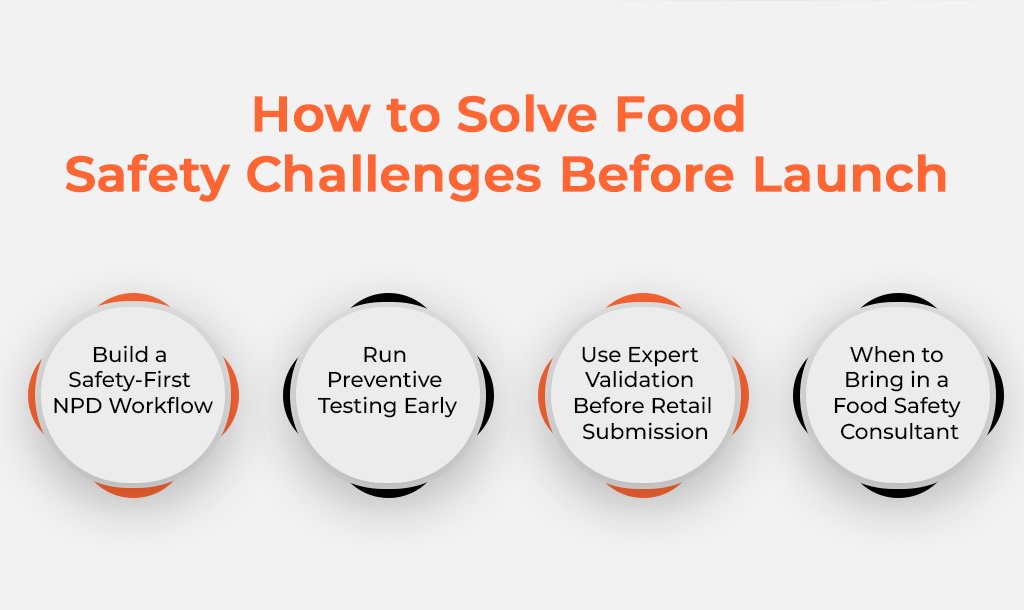
1. Build a Safety-First NPD Workflow
A clean workflow removes guesswork. At a minimum, include:
- A documented hazard review at the concept stage
- Supplier verification before pilot batching
- Allergen and label checks tied to each formula revision
- pH, water activity, and preliminary microbial testing while still in R&D
- A formal review of all food safety challenges before any production trial
- A single person is accountable for the sign-off
This keeps your development work anchored in real safety expectations, not assumptions.
2. Run Preventive Testing Early
Early testing protects you from redesigns that chew up time and money. Conduct your pH and water activity studies, challenge tests, and preliminary shelf-life checks as soon as your formula is stable. You’ll catch risks long before they hit the pilot line.
3. Use Expert Validation Before Retail Submission
Retailers want more than an idea. They want proof that your process is safe and repeatable. A pre-submission review from a qualified expert gives you a clean HACCP plan, validated controls, and a package you can hand to any buyer with confidence. This is often the difference between a quick yes and a long delay.
4. When to Bring in a Food Safety Consultant
Bring in a food safety consultant when your team lacks time, regulatory experience, or the capacity to manage complex safety questions across suppliers and production partners. A specialist can close knowledge gaps, validate your controls, and help you avoid hidden food safety challenge variations that stall launches. The right food expert protects your brand and accelerates your path to retail.
Read more: Food Consultant.
Strong Food Safety, Faster Market Access
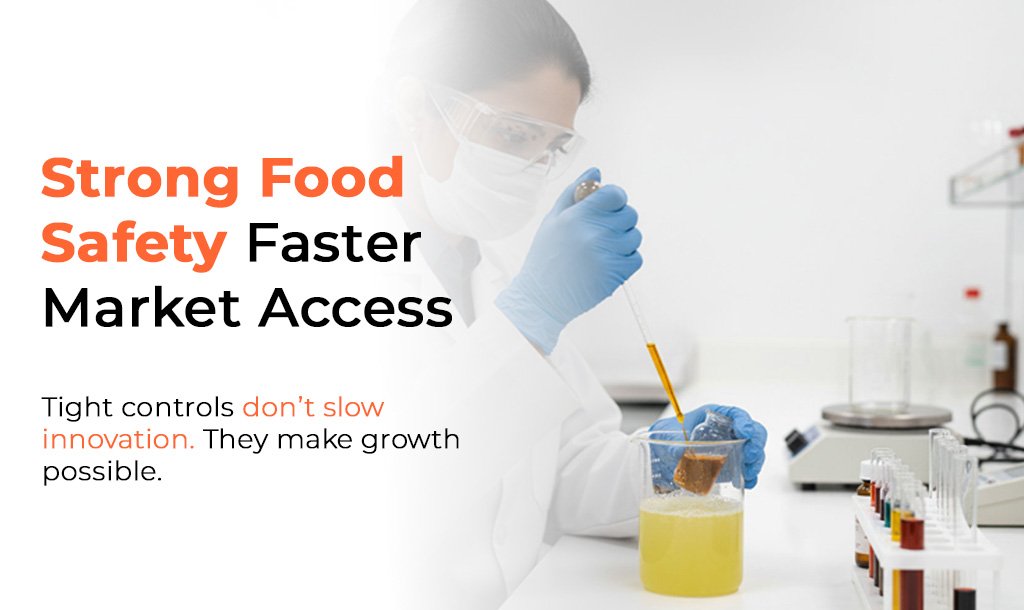
Strong food safety systems do not slow innovation—they enable faster and safer market entry.
When food safety is built into product development from the beginning:
- Retailers trust your product
- Regulators approve faster
- Production risks are minimised
By addressing food safety challenges early, brands can launch with confidence and scale sustainably.
At Foodsure, we help emerging brands overcome the biggest challenges to food safety through expert consulting, regulatory guidance, and product development support.
Also Read: Food Packaging and Labelling Regulations

🚀 Free Food Safety Consultation
Trusted by 500+ D2C Brands
FAQs
Q1. What is a food safety challenge?
A food safety challenge refers to any risk that threatens the safety of food products, including contamination, improper handling, poor storage, or a lack of hygiene during production.
Q2. What are the most common challenges to food safety?
The most common challenges to food safety include poor hygiene, cross-contamination, unsafe ingredient sourcing, improper temperature control, and inadequate regulatory compliance.
Q3. What is contamination and cross-contamination in food production?
Contamination occurs when harmful microorganisms, chemicals, or foreign materials enter food. Cross-contamination happens when these hazards spread from one food product, surface, or piece of equipment to another.
Q4. Why is food safety important for new brands?
New brands must prove their food safety systems to retailers and regulators before entering the market. Strong safety controls reduce product recalls, protect consumer health, and improve brand trust.
Q5. How can startups manage food safety challenges?
Startups can overcome food safety challenges by implementing supplier verification, conducting early product testing, following regulatory guidelines, and working with experienced consultants like Foodsure.