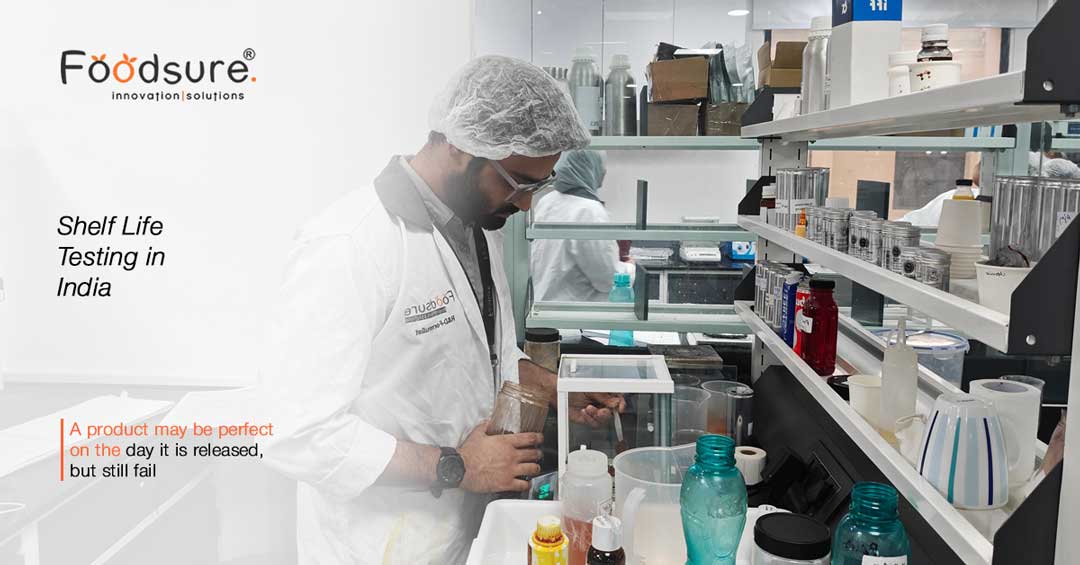
A product may be perfect on the day it is released, but still fail in the market in a few weeks. The sauce separates in transit, the chips lose crispness in humid conditions, and the drink develops a different flavour when left on the shelf in the supermarket. Even the nutrition claim may no longer match the actual product after storage.
That’s why shelf life testing in India is becoming crucial these days in the development of food products. Shelf life testing is not just about adding an expiry date to packaging. It assists brands in determining whether a product can be safely stored, transported, and sold in the retail environment.
Food shelf life testing in India checks whether a product can maintain its taste, texture, aroma, nutritive value, microbial safety, and packaging stability during storage. If brands do not conduct a shelf life study in India, they are at risk of product spoilage, customer complaints, retailer rejection, compliance issues during audits and recalling products at great costs. Therefore, modern brands have embraced food stability testing in India as a significant business and compliance process instead of it being merely a laboratory routine.
This blog will explain how shelf life testing in India works, the significance of shelf life testing for FSSAI compliance and how food brands can scientifically test the product stability before launching the product into the market.
Why shelf life testing in india Matters for Food Brands ?
Many startups focus heavily on flavour and packaging but ignore stability planning until the end stages. This often leads to costly challenges in future. The use of appropriate shelf life testing in India techniques assists brands in –
| Benefit | Why It Matters |
|---|---|
| FSSAI Compliance | Required to ensure that expiration dates are correct |
| Consumer Safety | Prevents bacterial growth and contamination |
| Retail Acceptance | Retailers prefer products with a stable shelf life |
| Export Readiness | Essential in overseas cargo transportation |
| Reduced Product Returns | Avoids financial losses due to spoilage |
| Better Inventory Planning | Helps manage storage and logistics |
| Brand Trust | Consistent quality leads to repeat purchases |
In today’s market environment, most retailers require proof of stability before introducing their products. This is one of the reasons why food shelf life testing in India is crucial for start-ups too.
Why Food Products Fail shelf life testing in india ?
Some products appear stable during initial testing but fail under real market conditions. The reason for this instability lies in the fact that the product was not properly subjected to stability studies in real-world storage conditions. The following parameters influence the stability of products-
- Moisture transfer
- High water activity
- Exposure to oxygen
- Variations in temperature
- Inadequate packaging barrier properties
- Ingredient interaction
- Preservative systems failure
- Exposure to light during transport
- Degradation of nutrients with time
Even the slightest formulation or packaging defect can lead to shorter shelf life. Examples are-
- Protein drink develops sediments.
- Snacks lose crunch during humid monsoon storage.
- Sauce gets separated post-transport.
- Beverage loses carbonation on its way to stores.
This is precisely why food stability testing in India is essential.

Founder Pain Points
Most food startups don’t fail due to problems with the concept. They face difficulties due to shelf-life issues occurring only after production and market distribution commenced. Mostly, the founders’ challenges are –
- Not sure about the methodology to be followed for shelf life testing of food products in India?
- Confusion between real-time and accelerated testing.
- Failure to know which parameters to test.
- Difficulty in selecting a trustworthy shelf life testing lab.
- The quality of the product changes during transportation.
- Retailers requesting shelf life validation reports
- Packaging not performing properly under heat and humidity.
- High reformulation costs after failed testing.
- Uncertainty on the shelf life testing cost and process in India
- Functional ingredients degrading faster than expected
These problems can slow down the product launch process, drive up operating expenses, and diminish retailer and consumer trust in the brand.
>Helpful Guide:- How Food Formulation Impacts Your Product’s Shelf Life
Types of shelf life testing in India
Different products require different types of stability studies-
| Testing Type | Purpose | Best For |
|---|---|---|
| Real-Time Testing | Test the product under realistic storage conditions | Final commercial validation |
| Accelerated Shelf Life Testing | Performs tests at elevated temperature/humidity levels to speed up the process | Early launch planning |
| Microbiological Testing | Checks bacterial, yeast, and mould growth | Perishable foods |
| Sensory Evaluation | Evaluates flavour, odour, appearance, texture | Consumer acceptance |
| Packaging Compatibility Testing | Checks the packaging interaction with product | Export and retail products |
Most brands start their evaluation using the accelerated method and then validate it simultaneously with real-time testing. It is among the most popular methods in contemporary food shelf life testing in India projects.
Real-Time vs Accelerated Shelf Life Study India
The first issue faced by founders is between accelerated testing and real time testing. This is a basic comparison-
| Parameter | Real-Time Testing | Accelerated Testing |
|---|---|---|
| Storage Condition | Actual market conditions | Elevated temperature/humidity |
| Duration | Long | Faster |
| Accuracy | Very high | Predictive |
| Best For | Final validation | Early decision making |
| Cost | Higher | Moderate |
The correct way for shelf life test in India would be a combination of both, depending upon the product type.
What Parameters Are Checked During Food Stability Testing in India?
Professional Food Stability Testing in India includes the evaluation of various technical factors. Such as –
Microbiological Testing
- Total Plate Count (TPC)
- Yeast & mould
- Coliform bacteria
- Pathogen testing
Chemical Testing
- pH stability
- Acidity
- Oxidation
- Nutrient degradation
- Moisture levels
Physical Testing
- Texture changes
- Sedimentation
- Colour variation
- Product separation
Sensory Testing
- Taste
- Aroma
- Mouthfeel
- Consumer acceptability
Packaging Testing
- Seal integrity
- Oxygen permeability
- Moisture barrier performance
- Light protection
This is the reason for shelf life testing in india being more than just determining expiry dates. It evaluates the complete stability profile of the product.
How To Do Shelf Life Testing For Food Products India
The process usually follows these steps-
Step 1 – Finalise Product Formula
The product formulation must be finalised before starting any tests. Minor changes to ingredients could necessitate repeating the entire process.
Step 2 – Select Final Packaging
Packaging influences stability greatly, so all tests should be performed in the final commercial packaging.
Step 3 – Define Storage Conditions
The laboratory selects suitable conditions for testing as follows-
- ambient storage
- refrigerated storage
- frozen conditions
- transportation simulation
Step 4 – Choose Reliable Shelf Life Testing Labs India
One should always select NABL-certified laboratories for reliability and FSSAI approval. Trustworthy shelf life testing laboratories in India provide reliable results and compliance with regulations.
Step 5 – Conduct Stability Testing
Tests are conducted at predetermined time intervals during stability testing.
Step 6 – Analyse Results
The laboratory analyses when test parameters breach permissible limits.
Step 7 – Declare Shelf Life
The validated duration is then declared on the product packaging.
These are the standard shelf life testing costs and procedures in India

Shelf Life Testing Cost and Process India
Cost associated with shelf life testing India is determined by multiple elements. Those include product type, number of testing criteria, package types, microbiology needs, shelf life period, and sample size. In general, the pricing scheme differs based on whether the brand opts for a real time, accelerated, or both kinds of testing processes at once.
| Product Type | Approximate Cost Range |
|---|---|
| Simple dry snacks | ₹5,000 – ₹20,000 |
| Sauces & beverages | ₹15,000 – ₹50,000 |
| Functional foods | ₹25,000 – ₹1,50,000+ |
The exact cost of shelf life testing India changes based on various criteria.
Why NABL Shelf Life Testing Labs India Matter
Selecting the right shelf life test laboratory in India is very crucial. Laboratories that are accredited by the National Accreditation Board for Testing and Calibration Laboratories are usually preferred since:
- The FSSAI recognizes their test results.
- Retailers have faith in their reports.
- It becomes easy to export your products.
- The testing methods used are scientifically proven.
Most companies tend to choose cheap laboratories and end up facing issues when auditing their shelf life study in India or getting onboarded by retailers.
What Actually Works
The successful brand strategies for shelf life management typically involve:
- Planning for stability at the formulation stage
- Choosing their packaging ahead of time
- Conducting accelerated testing before the product launches
- Testing products under real transportation conditions
- Verifying ingredient compatibility
- Refusing to make exaggerated shelf-life promises
- Collaborating with certified laboratories
- Considering shelf life as part of their business strategy rather than mere documentation
This is where professional shelf life testing services India become valuable for growing brands.
>Read Also:- Why Sensory-Approved Products Still Fail Shelf Life Tests
How can Foodsure help you?
Handling shelf-life testing in India can be hard for new ventures dealing with formulation, packaging, production, and regulatory requirements at once. Foodsure helps brands with-
- formulation assistance
- stability assessment
- packaging advice
- lab facilitation
- shelf-life studies in India
- regulatory preparation
- product launch preparation
Brands in search of a food stability testing consultant India can benefit from proper planning that avoids costly reformulation later on.
Founder Takeaway
A product does not survive in the market simply because it tastes good on Day One. Long-term success comes from stable formulation, properly tested packaging, well-understood storage conditions, and scientifically validated shelf life before launch. This is the real purpose of shelf life testing in India. It helps brands reduce product failures, improve retailer confidence, maintain product quality during distribution, and build long-term consumer trust.
Contact us at [email protected]

FAQs
- What is shelf life testing of foods?
Shelf life testing is a scientific method used to assess the storage period of a food during which it can be assured to remain safe, stable and palatable.
- In India, what is the time taken for shelf life testing?
A real-time test can take months, depending on the product category, and accelerated testing can give valuable stability information within a few weeks or months.
- Where to get shelf life testing done in India?
Brands will be given the best choice when they select NABL-accredited and FSSAI-recognised shelf life testing labs India to ensure they receive accurate and compliant reports.
- Is it obligatory to conduct shelf life testing in India?
Yes. For packaged food brands, FSSAI stipulates that scientific evidence be provided to back up claims of shelf life and date of expiration.
- Could packaging impact the shelf life?
Absolutely, the stability of the product is directly influenced by the exposure to oxygen, moisture migration, light exposure and the integrity of the seal.
- What do the terms “Best Before” and “Use By” mean?
“Best Before” is a quality statement, and the “Use By” is a food safety and consumption control statement.
- What exactly does accelerated shelf life testing entail?
Accelerated testing is intended to predict the product stability over the long term at higher temperature and humidity levels.
- Why is food stability testing important for startups in India?
It can minimise the risk of spoilage, build retailer trust, meet statutory requirements and prevent product failures.
- Is there a potential to increase shelf life following testing?
Yes, Formulation optimisation, packaging improvement and processing improvement are strategies through which brands can enhance their shelf life.
- Why choose NABL Accredited labs?
NABL Accredited laboratories are compliant with validated scientific standards, and reports are accepted by FSSAI, retailers and export authorities.