In India, there has been an exponential rise in the demand for nutraceuticals and functional foods, which is expected to touch the mark of $18 billion by 2025. There are many regulatory standards associated with the sector. For any company functioning within the sector, it becomes imperative to understand everything about the FSSAI regulations. This article aims at helping people understand the new FSSAI guidelines of 2026.
Understanding FSSAI Regulations for Nutraceuticals and Functional Foods
What must be mentioned at this point is that there is an optimal set of laws that have been suggested by the Food Safety and Standards Authority of India (FSSAI) regulations. As per the definition given by FSSAI, nutraceuticals are those compounds derived from or purified from food products that offer health benefits and protect against any chronic diseases.
Various changes have been made to the Nutraceuticals Regulations 2026, issued by the Food Safety and Standards Authority of India (FSSAI) regulations. These regulations primarily concern the classification of products, their safety assessment, packaging, labelling, and manufacturing based on international guidelines but adapted to Indian conditions.
Key Categories Under FSSAI Regulations
Classification of health foods according to FSSAI guidelines:
“Nutraceutical” is used for health supplements and functional or novel food products. Health benefits/therapeutic uses come under this classification. This indicates that these functional foods must have health benefits apart from nutrients without changing their physical properties.
These functional foods may also be prepared using dietary supplements comprising minerals, amino acids, herbs, etc.

FSSAI Health Claims Approval Process
The first issue that arises relates to the health claim approval procedure as per the rules and regulations of FSSAI. According to FSSAI regulations guidelines on the health claim approval process, it becomes necessary that there is enough scientific proof regarding the benefits provided by various types of food.
The data obtained from clinical studies, data obtained from research on the topic, and data obtained from the literature available on the topic can be utilised. The period of time to go through the approval process ranges from 90 to 120 days. FSSAI regulations approves basically three kinds of claims, including the nutrient content claims, function claims, and disease risk reduction claims, among others.
Approvals for claims are strictly scientific according to FSSAI regulations; otherwise, there will be repercussions.
Obtaining Nutraceutical Product Licence
Licensing of nutraceuticals is compulsory for the manufacture, import, and marketing of nutraceuticals in India. As per the rules of FSSAI regulations, it becomes obligatory for the companies to obtain licences from state or central government departments based on the yearly sales figures.
Some of these are listed below:
- A plant that adheres to Good Manufacturing Practices (GMP)
- Trained people who are knowledgeable in food sciences or pharmacology
- Testing labs or association with NABL-certified testing labs
- Safely documented assessment
- Regular auditing/renewal for compliance
The changes made in 2026 have simplified the process of applying online, allowing for faster application processing without compromising on the quality factor.
Food Supplement FSSAI Rules and Compliance Requirements
It is evident that there are some instructions regarding the intake of vitamins, minerals, and other active ingredients, which are mentioned in the FSSAI regulations food supplements regulation. These instructions give a description of the amount of vitamins, minerals, and other active ingredients that can be consumed without having any detrimental impact on the health of a person.
The following are the conditions that have to be fulfilled:
Quality Control: The raw materials utilised in the production process must only be sourced from authorised suppliers. The finished product must be examined with respect to quality and purity.
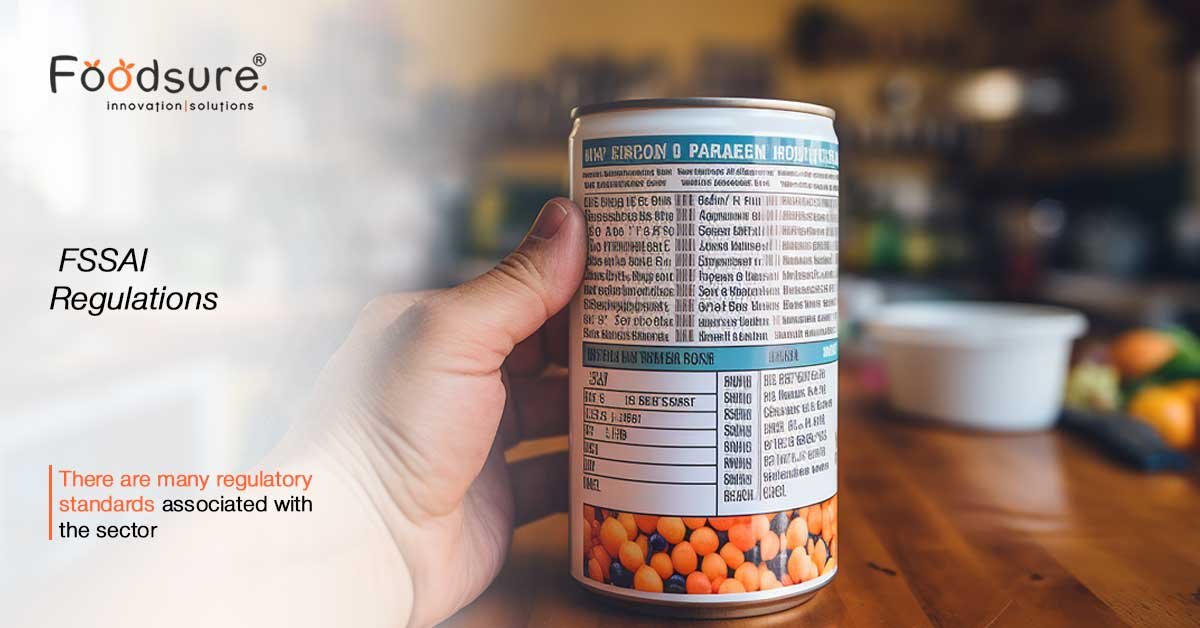
Labelling requirements: Labels should have full details regarding nutrition, dosage, warnings, and FSSAI regulations licensing number. The upcoming revisions in 2026 will further highlight the necessity of labelling the allergens and contraindications as well.
Manufacturing standards: All the terms and conditions mentioned in Schedule 4 of the FSS Regulations should be fulfilled by the factories.
Recent Updates in FSSAI Regulations for 2026
The recent changes to the regulations of FSSAI regulations comply with the needs of consumers and technological advancements. The changes made are:
A greater emphasis on probiotic and prebiotic assessment due to the fact that there is a need to carry out strain-specific assessments along with counting the number of viable microorganisms.
Strict compliance for e-commerce companies because there is a requirement to provide all necessary information about the nutraceutical products being sold online, including FSSAI registration and claims.
Regulation regarding importation to make sure there is an efficient process.
Key Takeaways
- Nutraceutical companies are expected to have proper FSSAI licences and adhere to GMP requirements
- Health claims need to be approved first by FSSAI, supported by science
- Packaging should clearly mention all components, dosage instructions, and potential side effects
- Regular quality control tests and inspections are necessary for compliance
- Online retailers should conduct proper checks on sellers and approved products
Challenges in Functional Food Compliance
Despite the presence of guidelines for functional foods, there exist several difficulties with achieving compliance within organisations. The guidelines issued by FSSAI could be perceived and implemented differently in different states, leading to inconsistencies in the process. The high costs of conducting health claim trials could pose an issue for small and medium enterprises.
Since the domain of nutraceuticals keeps on evolving, it is imperative that companies remain updated with regard to policy and regulation changes. Organisations that manufacture their products abroad and wish to sell them in India require the development of formulations for India.

Foodsure Takeaway
In Foodsure, we understand that it may not be easy for organisations to maintain FSSAI guidelines while working in the field of nutraceuticals. We possess deep insight into FSSAI guidelines and guide our clients through all FSSAI rules without having to affect their business operations.
Our professionals make sure that all your products follow the requirements of the FSSAI nutraceutical regulations 2026 guidelines.
Conclusion
The legal framework for functional foods and nutraceuticals under the FSSAI is a coordinated response for consumer protection and development in business. The changes that are going to happen with FSSAI in 2026 indicate how evidence-based and innovation-promoting legislation the FSSAI tries to have.
One should take the legal framework into consideration not as an obstacle but as a way to ensure quality. Such compliance guarantees access to the local and international market and ensures the quality of the product and customers’ trust.
FAQs
- What is the difference between nutraceuticals and functional foods according to FSSAI regulations?
Nutraceuticals involve the use of pure or isolated ingredients which are helpful to health, while functional foods include ordinary food items that have added nutrition value.
- What is the time frame required to acquire the health claims approval of nutraceutical items from FSSAI?
The average time required is 90-120 days after presenting the scientific data showing that those health claims can be obtained.
- What will be the penalty for the sale of nutraceuticals without a nutraceuticals product licence?
The offender will face a penalty of up to ₹10 lakh, along with seizure of their products, cessation of their business, and imprisonment of up to 6 months.
- Do food supplements imported from abroad fall under the FSSAI food supplements regulations?
All foreign nutraceuticals are covered under the guidelines provided by the FSSAI with respect to licensing, labelling in English/Hindi languages, and formulations, no matter where they have been produced.
- Do existing health claims need to be approved again by FSSAI nutraceutical regulations 2026?
There is no need for existing health claims to get a fresh approval, but new products and formulations need to be granted approval based on changes in scientific standards.