Consumers across the world are searching for drinks that meet their religious, ethical and clean-label standards. As a result, there is an increasing number of people who want to buy Halal energy drinks and this demand is growing rapidly. For beverage entrepreneurs in India, acquiring halal certification for their energy drinks is not only about meeting religious requirements but also about accessing potentially trillions of dollar in global Halal markets. Halal compliant energy drinks have now become commonplace across all parts of the globe; including in South East Asia, the Middle East and Europe.
Nevertheless, many manufacturers and suppliers are unsure how to proceed with obtaining Halal beverage certification in India and how to comply with the proper steps, compliance regulations and the costs involved in acquiring Halal beverage certification. This guide serves as a comprehensive overview of everything an entrepreneur needs to know about Halal drinks and their manufacturing processes, compliance and certification costs and the various export opportunities that are available to them.
Understanding Halal Certification for Energy Drinks
Halal certification for energy drinks refers to the ingredients of the beverage, how they are manufactured, and their supply chain conforming to Islamic dietary law. For energy drinks, halal compliance primarily involves verifying four areas:
- The ingredients in the energy drink, such as the source of caffeine and the carriers for the flavor(s).
- The energy drink does not have any alcohol or any non-halal ingredients/additives.
- The equipment used to manufacture the energy drink is properly sanitized.
- The storage and supply chain of the energy drink are segregated from any non-halal products.
When a beverage is certified halal in India, it allows for a beverage to be sold in halal-conscious markets and exported to Muslim predominant markets.
Problem Statement: Why Energy Drink Brands Struggle with Halal Certification
While the demand for halal drinks is growing, many beverage start-ups have difficulty obtaining certification as they can’t understand the regulatory complexities.
Among the issues faced by beverage startups when obtaining halal certification are:
- unclear requirements around halal ingredient compliance
- misunderstanding the sources of caffeine and taurine
- confusion between FSSAI and halal certifications
- uncertainty about costs associated with halal certification
- difficulty in finding approved certifying bodies
Consequently, many brands are unable to take advantage of potentially lucrative opportunities to export their products to Middle Eastern and Southeast Asian markets.
GET HALAL CERTIFICATION SUPPORT
Planning Halal Certified Energy Drinks? Let’s Simplify It
From ingredient verification to certification approval — Foodsure helps you navigate halal compliance, documentation, and export requirements.
Why This Happens in Halal Drink Manufacturing
Energy drink formulations often contain multiple ingredients sourced from different suppliers. Some of these ingredients may raise halal compliance questions.
Examples include:
| Ingredient | Halal Concern |
| Flavor carriers | May contain alcohol-based solvents |
| Taurine | Source verification required |
| Emulsifiers | Could be animal-derived |
| Colorants | Must not be derived from non-halal animals |
| Stabilizers | Need halal verification |
Even if the final product seems compliant, the entire supply chain must be halal-certified.
This complexity makes beverage halal compliance more technical than many founders expect.
Founder’s Dilemma of understanding Halal Drinks
There is confusion among juice and energy drink manufacturers with respect to halal certification requirements in India, including the halal certification process for energy drinks; uncertainty in verifying halal ingredients; difficulties in coordinating with halal audit firms; concerns about costs of halal certification for beverage products; concern of export rejection due to not meeting halal requirements; confusion between halal versus vegan versus clean label; and lack of documentation on halal drinks for export purposes.
Explanation of Halal Beverage Certification
Halal certification can be understood as a quality assurance system for fulfilling religious obligations.
The halal certification system for energy drinks verifies that:
- All components are approved as halal.
- No alcohol or prohibited (haram) materials have been used.
- Equipment has been sanitized and separate from non-halal products.
- Storage and shipping have complied with the requirements for halal.
- All records and the ability to trace each ingredient have been maintained.
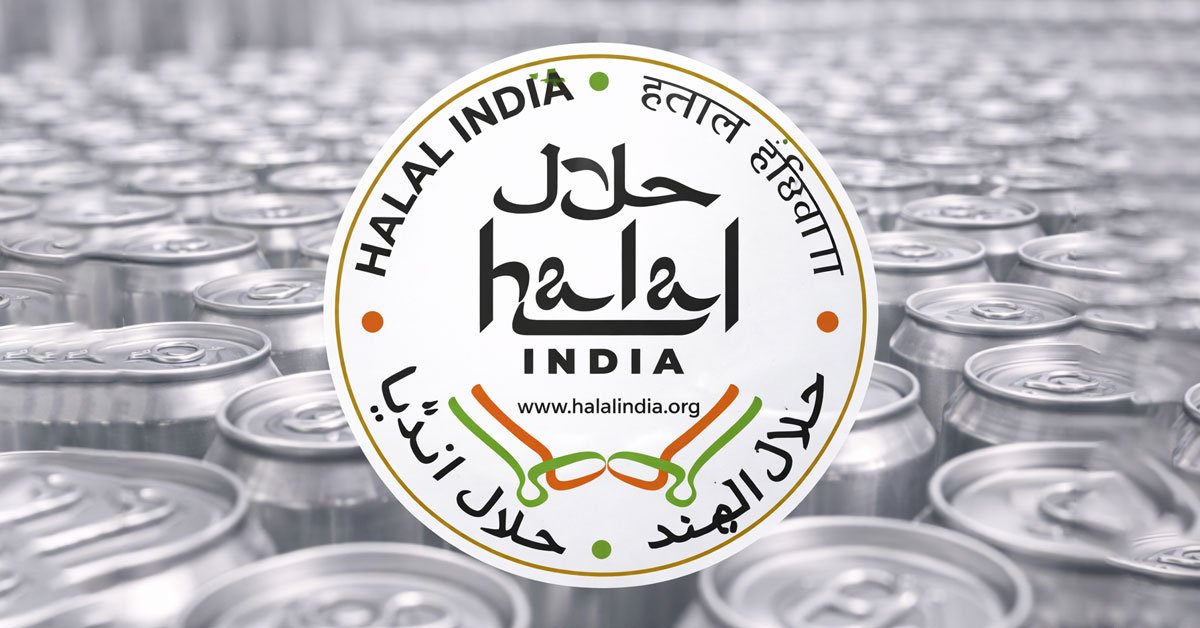
Once approved, the beverage manufacturer will receive a halal certification and logo to use on their product labels. The logo provides at a glance assurance to consumers and importers that the product meets the halal certification requirements.
Global Market Opportunity for Halal Energy Drinks
The halal food and beverage market is one of the fastest-growing sectors in the world.
Estimated Global Halal Food Market
| Year | Market Size |
| 2022 | $2 Trillion |
| 2025 | $2.8 Trillion |
| 2030 | $4 Trillion (Projected) |
Energy drinks are increasingly entering this market due to:
- Growing Muslim youth population
- Rising sports nutrition demand
- Functional beverage innovation
Countries importing halal energy drinks from India include:
- UAE
- Saudi Arabia
- Malaysia
- Indonesia
- Qatar
- Kuwait
How to Get Halal Certification for Energy Drinks in India
Typically, these are the steps in the process of obtaining halal certification:
Things that must be checked to confirm the ingredient is halal:
- source of caffeine
- source of taurine
- sweeteners
- flavoring agents
- coloring and stabilizing agent
- Supplier must provide halal declaration or certificates for their products
The halal certifying body carries out an audit of the production facility. Some of the checks done during an audit include;
- cleanliness of the production equipment
- separation of ingredients
- ensuring there is no cross contamination
- proper cleaning procedures in place.
The manufacturer submits the following documents to the certifying body:
- list of ingredients
- declarations from suppliers
- manufacturing process flow chart
- product formulation
- FSSAI license.
After the halal certifying body has reviewed the documentation and completed the site inspection the halal certifying body will issue the halal certification to the manufacturer and the brand may label their products as halal-certified energy drinks.
Key Halal Compliance Requirements for Energy Drinks
Manufacturers should ensure their products meet halal compliance by meeting the following requirements:
Ingredient compliance
- No alcohol-based solvents.
- No non-halal animal based ingredients.
- Halal certified additives used.
Manufacturing Compliance
Dedicated equipment or proper cleaning in place to prevent contamination.
No contamination with non-halal products.
Packaging Compliance
- Location of halal logo.
- Ingredient transparency.
Supply Chain Compliance
- Sourcing from halal certified suppliers.
- Providing traceability documentation.
What Actually Works for Beverage Founders
When beverage brands want to sell their drinks in the halal market they do things.
- They make sure their drinks are halal from the beginning.
- They get ingredients from suppliers who’re halal certified.
- They keep good records of how they make their drinks.
- They work with people who know a lot about the rules.
- They get certified before they start planning to sell their drinks in countries.
This way beverage brands can get approved faster. Be ready to sell their halal drinks in other countries sooner. Beverage brands that do this have an easier time selling their halal drinks.
Foodsure’s Role in Halal Beverage Certification
People who start beverage companies can get help from Foodsure to make it easier to get the certificates.
Foodsure does things like:
Check if the ingredients are okay to use in halal products
Get all the paperwork ready
Work with the people who give out halal certificates
Make sure the factory is ready, for an inspection
Give advice on what to do to export products to countries
This way the people who start the company can think about making new products and make sure they are making halal drinks the right way. Foodsure helps with this. Makes it easier for beverage startups to follow the rules and make halal drinks.
Conclusion
People are looking for energy drinks that have halal certification because they want drinks that fit with their beliefs and are of good quality. For companies in India that make drinks, getting halal certification for their beverages means they can sell their products in countries, in the Middle East and Southeast Asia. At first the process of getting halal certification might seem hard to understand.. If you know what ingredients are allowed and you have people check your factory and you do the right paperwork and you know how much it will cost then it is not so difficult. Energy drink companies can make drinks that follow halal rules and work with people who know about these rules so they can sell their drinks all over the world and people will trust them.
BUILD EXPORT-READY BEVERAGE BRAND
From Compliance To Export — We Handle Your Beverage Journey
Whether you’re launching energy drinks or expanding globally — we manage halal certification, FSSAI compliance, and manufacturing support.
✔ Halal Certification Support
✔ FSSAI Compliance
✔ Export Documentation
✔ Contract Manufacturing
FAQ
What is halal certification for energy drinks?
It verifies that ingredients and manufacturing processes comply with Islamic dietary laws.
Can energy drinks be halal certified?
Yes, if all ingredients and production processes meet halal requirements.
How long does halal beverage certification take in India?
Usually between 2–6 weeks depending on documentation and audit readiness.
What is the halal certification cost for beverage products?
It typically ranges from ₹50,000 to ₹1,50,000 depending on facility size.
Is halal certification required for exporting drinks to the Middle East?
Most Middle Eastern importers require halal certification for beverage imports.
Can caffeine be halal?
Yes, caffeine is halal if derived from permissible sources.
Who provides halal certification in India?
Several accredited halal certification bodies provide certification for food and beverages.
Does halal certification expire?
Yes, certification usually requires annual renewal.