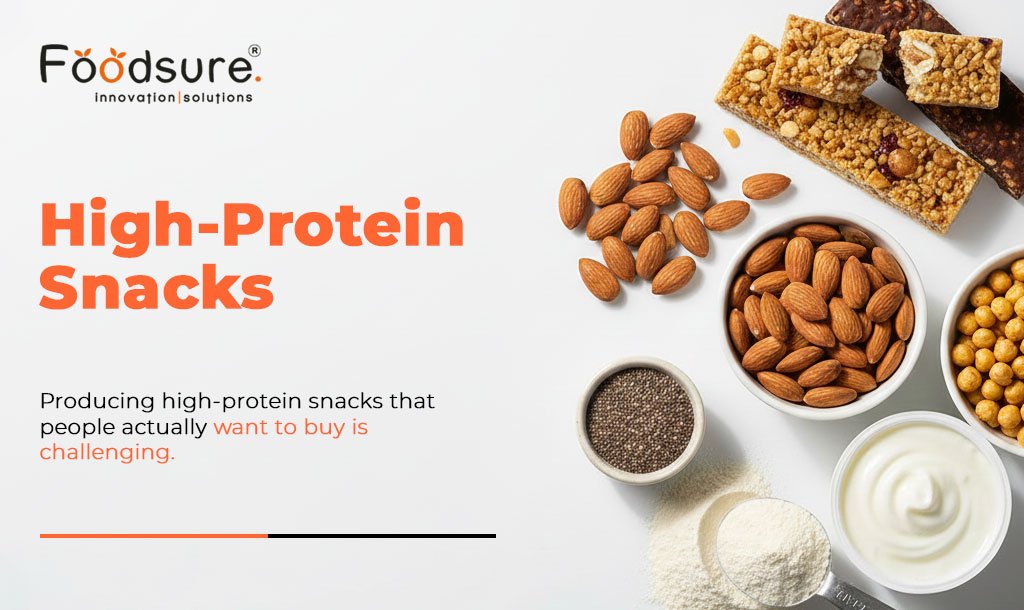
Producing high-protein snacks that people actually want to buy is challenging. Startups often struggle with choosing the right ingredients, creating flavours that stay, and ensuring the product is market-ready. Balancing protein content with flavour may seem like you are walking on a tightrope. Casually, putting protein powder in a bar is not enough. You need a plan, trial and error, and a definite understanding of what customers want. In this blog, you’ll get to know the key steps to help you move from idea to product without getting stuck.
Common Challenges in High-Protein Snacks Development
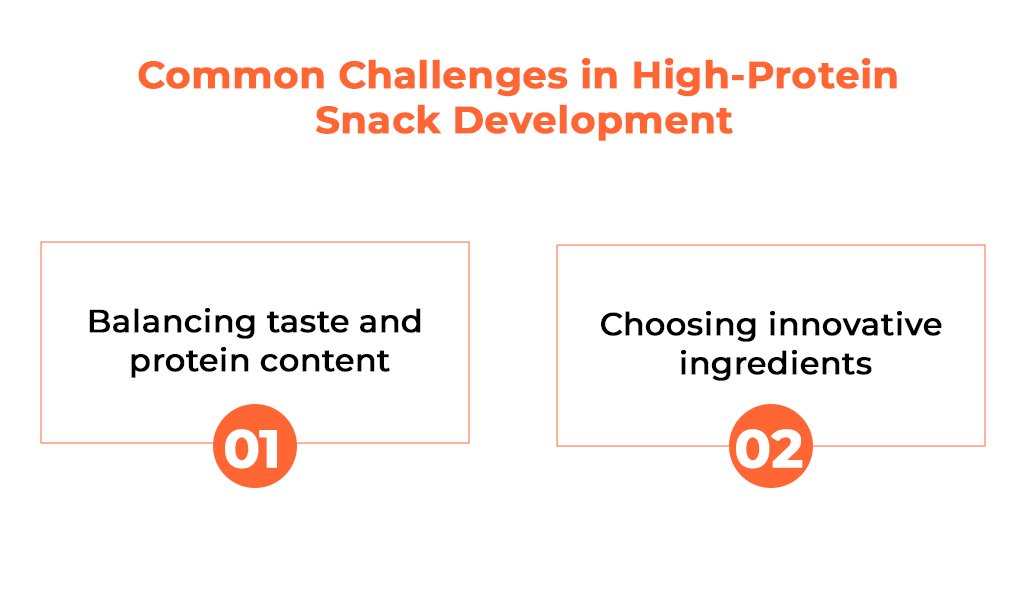
1. Balancing taste and protein content
Protein ingredients are dense and can sometimes create a chalky texture or overpower flavours. If not handled correctly, the snack may feel more like a nutritional supplement than an enjoyable food product.
During high protein snacks development, brands must experiment with ingredient ratios, flavour systems, and texture modifiers to achieve the right balance between taste and protein content.
The goal is simple: deliver strong nutrition without compromising the eating experience.
2. Choosing innovative ingredients
Today’s consumers expect more than basic protein bars. They want snacks that feel exciting, natural, and functional.
Brands are exploring a wide variety of ingredients such as:
- Nuts and seeds
- Legume-based proteins
- Plant proteins like pea and rice
- Emerging sources like algae or insect protein
These ingredients open the door to creative protein snacks ideas, but they must also work well in large-scale production.
The real challenge is finding ingredient combinations that deliver taste, nutrition, and manufacturability at the same time.
Want to optimise your Food Business? Request a free consultation!
Food Product Development Services – Click Here
Key Steps for High Protein Snacks Development
Step 1: Identify the Right Protein Sources
The first step in high protein snacks development is selecting the right protein base.
Common protein sources include:
- Whey protein
- Pea protein
- Soy protein
- Rice protein
Each source behaves differently in flavour, texture, and solubility. For example, plant proteins can introduce bitterness or graininess if not balanced properly.
Careful food formulation and testing help achieve the right texture and nutritional value.
Step 2: Incorporate Functional & Trendy Ingredients
Protein may be the core component, but additional ingredients create product differentiation.
Brands often add:
- Fibre for digestive health
- Probiotics for gut wellness
- Natural sweeteners for better taste
- Adaptogens for functional benefits
These ingredients can elevate simple protein snacks ideas into premium health-focused products.
However, they must complement the protein base rather than overpower it.
Step 3: Innovate Formats & Packaging
Protein snacks are no longer limited to bars. Modern high protein snacks appear in many formats such as:
- Protein bites
- Crispy protein chips
- High-protein cookies
- Ready-to-mix protein beverages
- Protein-packed granola clusters
These formats also help brands compete with traditional snacks and even fast food protein options that consumers often rely on.
Packaging plays an equally important role. Portable, attractive, and sustainable packaging improves shelf appeal and encourages impulse purchases.
Step 4: Test Market & Optimise Recipes
Even the best recipe needs real consumer validation.
Before full-scale production, startups should conduct:
- Blind taste tests
- Focus group feedback
- Small batch online launches
These trials reveal how consumers perceive flavour, texture, and overall product value.
Testing also helps refine the product before scaling production, ensuring the final snack competes with existing fast food high protein options and other convenience snacks.
Suggested Read: What is Food Production? Complete Overview
Protein Snacks Ideas for Emerging Brands
Startups exploring protein snacks ideas can consider innovative formats such as:
- Millet-based high protein snack bites
- Chickpea protein chips
- Protein-packed nut clusters
- Plant-based protein cookies
- Functional granola with added protein
These products combine convenience with nutrition, making them ideal alternatives to traditional fast food protein meals.
Conclusion
Formulation of high-protein snacks does not come with shortcuts; it’s about understanding ingredients, experimenting boldly, and keeping track of the consumer market. Start with the right protein, add functional ingredients, explore formats, and test relentlessly. If you follow these steps, your startup can build products people actually reach for.
Book a Product Development Consultation to get expert guidance on your next snack.
Contact Foodsure to turn your protein snack idea into a market-ready product.
Need Help Developing Your Food Product?
Foodsure helps startups and FMCG brands turn food ideas into successful, market-ready products. From formulation to manufacturing, we simplify the entire journey so you can launch faster, safer, and more profitably.
Why 500+ Brands Choose Foodsure
- R&D and product formulation support
- Cost optimization without quality compromise
- Private label and co-manufacturing solutions
- Regulatory and compliance guidance (FSSAI, labeling)
- Pilot trials, shelf-life testing, and stability studies
- Packaging, scaling, and go-to-market support
Who We Work With
- D2C founders launching their first product
- FMCG companies expanding product lines
- Restaurants & cloud kitchens creating packaged foods
- Health, fitness, and Ayurveda-focused brands
- Export brands needing compliant formulations
Book a Free Consultation
Tap into expert guidance for your food product. Whether it’s R&D, formulation, scaling, or manufacturing, our team will help you build the perfect solution.
Frequently Asked Questions
What is the highest protein snack?
Protein powders, beef jerky, and roasted chickpeas are some of the highest protein snacks.
How can I get 30g of protein in a snack?
You can combine Greek yoghurt with nuts, have a protein shake, or eat a large protein bar to get 30g of protein.
How can I hit 100g of protein easily?
You can hit 100g of protein by spreading intake across meals and using lean meats, eggs, dairy, and protein shakes.
Which Indian snack has the most protein?
High-protein Indian snacks include roasted chana, paneer tikka, and moong dal chilla.
What are 7 foods rich in protein?
Chicken, eggs, Greek yoghurt, lentils, cottage cheese, almonds, and fish are rich in protein.
How can I get 30g of protein easily?
A whey protein shake or two boiled eggs with a handful of nuts can easily provide 30g of protein.
What is the number one protein food?
Eggs and chicken breast are commonly considered the top natural protein foods.