Simply mixing vodka with lemon and sugar won’t really help in making a lemon drop drink that stands out. Layered flavours, texture, and consistency are what consumers now demand with every sip. Small beverage startups might find that expectation to be a very difficult one. However, it is possible if you take it strategically.
This blog is neither about theory nor about giving indefinite advice. It is a practical guide for small brands that want to make lemon drop drinks that grab attention, taste great, and can be produced. We’ll talk about the major challenges facing in the formulation of the product and, what’s more, ways to get over them. By that time, you will have lots of practical strategies to try out, perfect, and get your product ready for the market.
The Common Challenges in Lemon Drop Drink Formulation
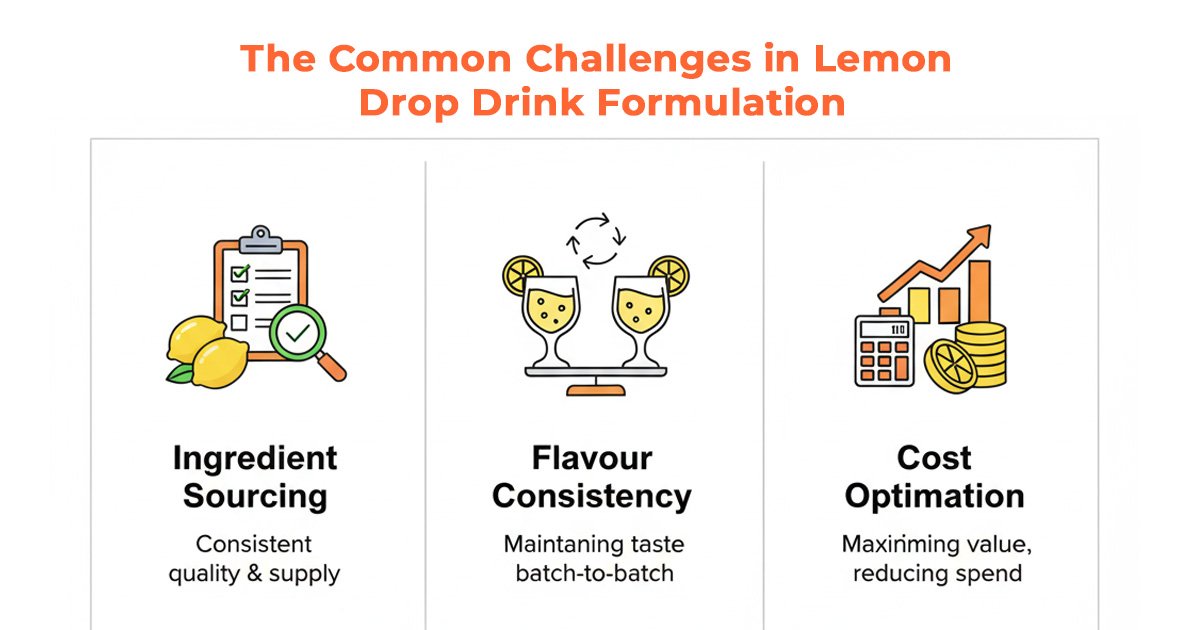
Formulating a lemon drop drink might seem straightforward until you run into real-world challenges. Let’s break down the three most frequent ones.
Ingredient sourcing
It is more difficult than it looks to just buy lemons and sugar and get the right ingredients. What you need is top-quality citrus with consistent acidity and aroma, sweeteners that balance the flavour without overpowering it, and spirits that balance rather than clash. Even very small variations in the quality of the ingredients can have a drastic effect on the taste of your drink.
Flavor consistency
It’s a necessity that each batch should be of the same flavour, no matter if ten or ten thousand bottles are produced. Slight differences in the acidity of the citrus juice or the concentration of the sugar can make the balance quite off. It is very important to measure everything very carefully and to keep a record of every step.
Cost optimisation
We acknowledge that you want a great-tasting beverage; however, money should still be taken into consideration. Premium ingredients naturally stand out, but a brand that is small has to keep the flavour and the price at a reasonable level. Majorly, it means that they have to find some creative ways to substitute ingredients or buy in bulk without compromising the taste.
If you work on these three points directly, it will be a first step towards a lemon drop cocktail that not only tastes great once but also every time it is served.
Proven Strategies for Innovative Formulation
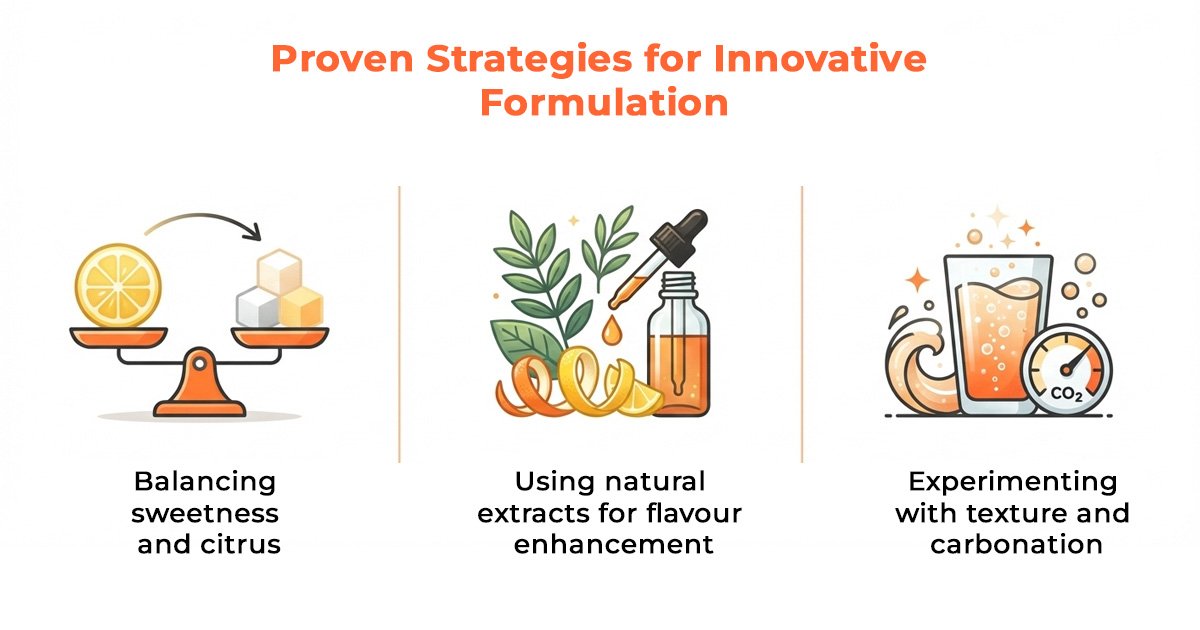
Once you’ve addressed sourcing, consistency, and cost, it’s time to get creative. Here are three key strategies to elevate your lemon drop recipe.
Balancing sweetness and citrus
Balancing is the essence of a great lemon drop. If it’s too sweet, it tastes artificial; if it’s too sour, it’s harsh. Start by adjusting the sugar-to-lemon ratio incrementally. Consider using simple syrups with varying sugar concentrations or blending citrus types for a more complex, layered acidity. What this does is give your drink depth without relying on artificial flavouring.
Using natural extracts for flavour enhancement
Natural extracts can amplify flavours in ways fresh ingredients alone can’t. Lemon zest oils, a hint of vanilla, or even subtle herb notes can make your drink distinctive. The key is subtlety. You want the enhancement to complement, not dominate. Try small amounts, taste, and adjust.
Experimenting with texture and carbonation
Texture is ignored when it comes to cocktail formulation. Carbonation gives lively character and texture to the drink, while things such as sugar crystals, fruit pulp, or a little bit of bitters can make every sip seem intentional and new. Minor changes, such as shaking instead of stirring or changing carbonation levels, can totally change a basic lemon drop into a sensory experience that one will remember.
By continuously applying these methods, experimenting with combinations, and recording the outcomes, you will be able to determine the unique flavour and texture that distinguishes your brand.
Testing and Repeating Recipes
Great ideas still need to be enhanced by trying out small batches. Alter the sweetness, acidity, or texture slightly, and then ask for opinions. You want to see patterns: which ones work consistently and which ones don’t.
Trustworthy opinion is extremely valuable. Writing down impressions is good, but don’t be that person who only follows others’ preferences; instead, look for the repeated trends that fit your brand’s vision. When a version becomes the right mix, scaling should be done with care. If you scale quickly, you will be inconsistent, so slow, controlled adjustments are safer.
Conclusion
Creation of a lemon drop drink that really stands out involves a combination of science, creativity, and repetition. Initially, use good ingredients, keep the quality same, and control the expenses. After that, add flavour boosters, harmony, and texture experiments. Try it, improve it, and expand it carefully.
With the implementation of these tactics, your drink business will be able to produce lemon drop cocktails that go beyond being simply nice; they become unforgettable.
Want to Launch Your Own Beverage Brand?
From lemon-based drinks to ready-to-drink cocktails and functional beverages,
Foodsure helps you with expert formulation, compliance,
and complete go-to-market support.
Frequently Asked Questions
What is the recipe for a lemon drop drink?
Mix vodka, fresh lemon juice, and simple syrup. Shake well with ice and strain into a sugar-rimmed glass.
How to make a lemon drink?
Combine fresh lemon juice, cold water, and sugar to taste. Stir well until fully mixed and serve chilled.
What type of alcohol is used in a lemon drop?
Vodka is the standard alcohol used in a classic lemon drop cocktail.
What are common lemon drop mistakes?
Common mistakes include over-sweetening, using bottled lemon juice, or skipping the sugar-rimmed glass.
How to make sugar syrup?
Heat equal parts sugar and water until the sugar dissolves completely, then allow it to cool before use.
What do lemon drops contain?
Lemon drops typically contain vodka, fresh lemon juice, sugar or simple syrup, and sometimes triple sec.
Is there a lemon drop mix available?
Yes, pre-made lemon drop cocktail mixes are available in stores for quick and convenient preparation.
How much sugar is in a lemon drop?
A standard lemon drop usually contains around 1–2 teaspoons of sugar or simple syrup per serving.
How do you make a lemon drop mojito?
Mix rum, fresh lemon juice, sugar syrup, mint leaves, and soda water over ice for a lemon-flavored mojito.
Which alcohol pairs well with lemon?
Vodka, gin, rum, tequila, and whiskey all pair well with lemon in cocktails and mixed drinks.
How do I make a lemon drink at home?
Mix fresh lemon juice with water, sugar, and ice. You can also add soda water or herbs for extra flavor.