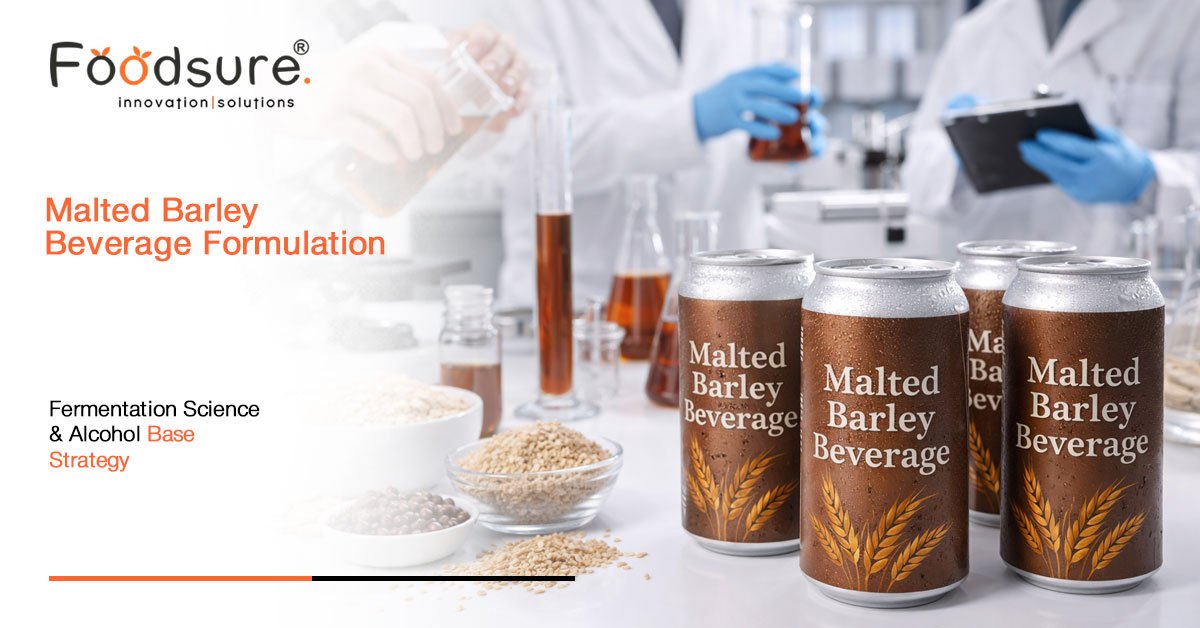
Founders believe that malted barley serves no purpose except to create beer. The substance functions as a controllable alcohol foundation, which businesses use to create their products because it controls their flavour development, fermentation process, carbonation level and manufacturing expenses.
This blog assists beverage founders in understanding malted barley beverage formulation, including fermentation control, flavour development, and alcohol production. Building a stable product requires a structured approach from the beginning, and working with malt beverage formulation services helps ensure better control over sugar conversion, flavour balance, and scalable production outcomes.
Problem in Malt Beverage Production Process
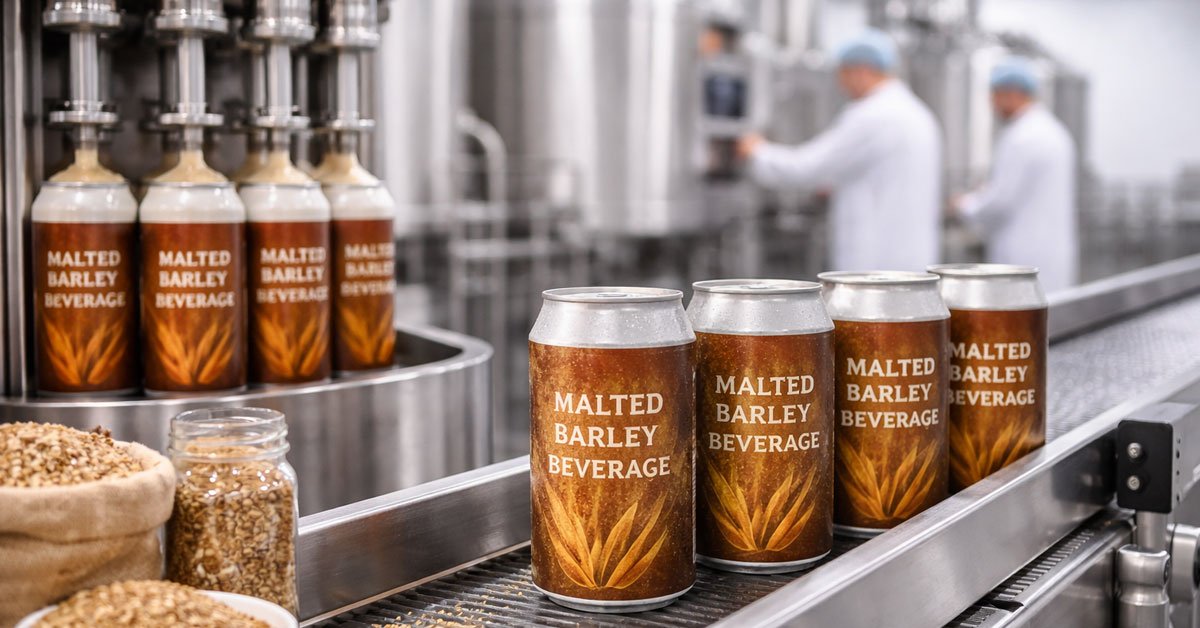
Many brands entering malted barley beverage formulation struggle with inconsistent alcohol levels, unstable carbonation, and unpredictable flavour. The problems arise during scale-up because small formulation and fermentation inefficiencies lead to major production and cost problems.
These challenges often become more severe during scale-up, where small formulation inefficiencies turn into major production failures. Following a structured
commercial beverage development process helps identify and resolve these issues early, ensuring consistency in alcohol levels, carbonation, and flavour across batches.
Why Malt Fermentation Control Becomes Complex
Malt-based fermentation stands as a controlled biochemical operation that depends on multiple variables working together to produce uniform results. The balance of these elements needs to be maintained because any disruption will result in flavour changes and carbonation problems, together with alcohol production issues.
- Enzymes are required to convert starch into fermentable sugars
- Yeast uses these sugars to produce alcohol and carbon dioxide
- A proper balance is needed to achieve the desired carbonation and flavour
- Sugar composition must be tightly controlled for consistent fermentation
- The strict limits define all operational parameters, which include temperature, oxygen and other factors
FORMULATE YOUR MALT BEVERAGE
Build a Stable Malt Beverage — Before You Scale Production
Malt formulation isn’t just about fermentation — sugar conversion, flavour balance, and alcohol yield define your final product. Get it right early to avoid costly scale-up failures.
Founder Pain Points in Malted Barley Beverage Formulation
- The alcohol yield from different batches of production shows inconsistent results.
- The team faced challenges when they tried to achieve a proper balance between the two opposing flavour profiles of sweetness and dryness.
- The final product experiences carbonation problems, which lead to inconsistent bubbling levels.
- The company faces high expenses during production because of its operational shortcomings.
Simple Explanation of Malted Barley Beverage Formulation
Malted barley serves as the main ingredient for beverage production because it determines both fermentation processes and the sensory characteristics of the finished product.
- Malted barley is barley that has been germinated and dried to activate natural enzymes.
- The enzymes, which mainly include amylases, work to convert starch into sugars that can be fermented.
- The process of conversion takes place during the mashing stage of production
- Yeast uses these sugars to produce alcohol and carbon dioxide
Malted Barley Beverage Formulation Process Explained
The malted barley beverage formulation includes a series of regulated steps that greatly affect the quality, yield, and stability of the end product.
|
Stage |
What Happens |
Why It Matters |
|
Malting |
Enzymes are activated by germinating barley. |
Enables starch conversion |
|
Mashing |
The starch is broken down to sugars using enzymes. |
Defines sugar profile |
|
Boiling |
Refining and stabilisation of liquid. |
Impacts flavour and safety |
|
Fermentation |
Sugar is transformed into alcohol by the yeast. |
Determines ABV and taste |
|
Conditioning |
Clearness and effervescence are enhanced. |
Final product quality |
All parts of the process need to perform at their best because this will help maintain uniformity throughout the entire process. The production of alcohol and the carbonation process both experience major changes from even the smallest alterations in mashing and fermentation.
Enzyme Conversion in Malted Barley Beverage Formulation
Enzyme activity during mashing is a very important aspect of the formulation of malted barley beverages.
- Alpha-amylase splits the large starch units (dextrins) into smaller units.
- These are fermented into sugars with the help of beta-amylase.
- The proportion of these enzymes defines the end product of the sugar composition.
An increased beta-amylase activity produces increased fermentable sugars, which translates into increased alcohol yield and decreased body. Conversely, an increase in alpha-amylase activity produces more non-fermentable sugars, making the beverage have a richer mouthfeel.
This balance is not due by chance, but one that is regulated by mash temperature and time. Those founders who overlook the optimisation of enzymes usually experience problems related to erratic flavour and inefficient fermentation.
Sugar Profile Impact on Carbonation in Malt Drinks
The type of sugars produced during mashing directly affects fermentation and carbonation.
|
Sugar Type |
Fermentability |
Impact |
|
Glucose |
High |
Rapid fermentation |
|
Maltose |
Medium-high |
Stable alcohol production |
|
Dextrins |
Low |
Increases body, decreases dryness |
The fermentation process produces carbon dioxide from fermentable sugars, which creates natural carbonation. Excess non-fermentable sugars will lead to unstable carbonation and create a heavy sensation for the drinker.
The production of CO₂ during fermentation depends on a balanced sugar profile, which improves the drinking experience. The stability of the final product depends on the formulation decisions made during the early product development process.
Malt Fermentation Control for Better Efficiency
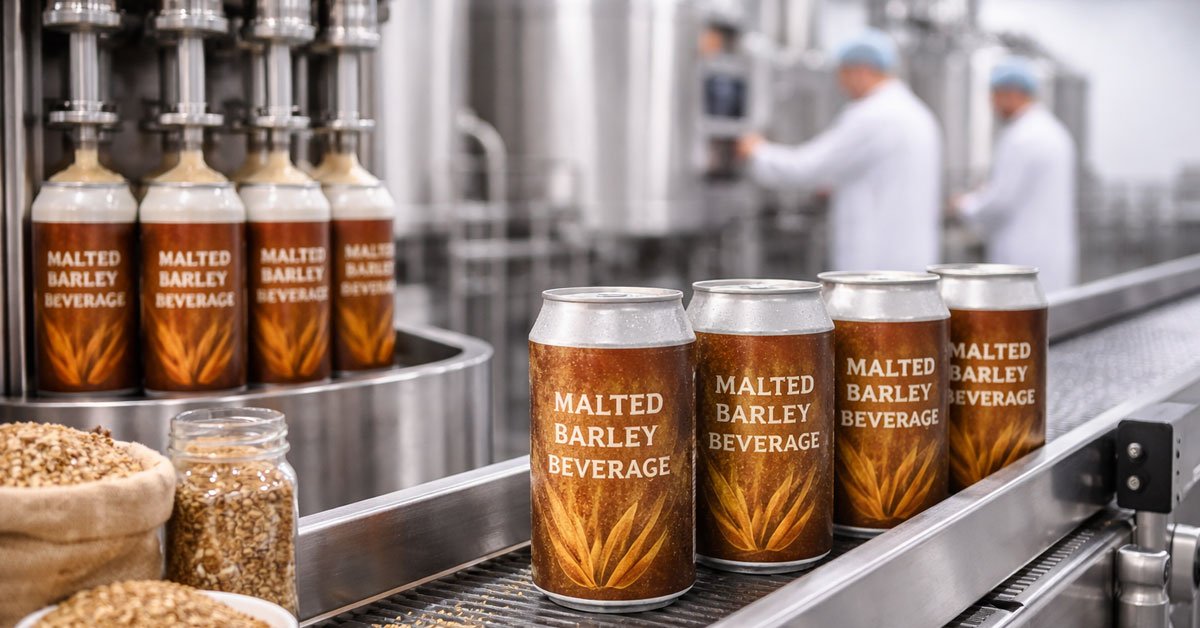
The process of malt fermentation needs proper monitoring to produce results that remain constant throughout the entire process.
The main factors that determine the outcome of the process are:
- The maintenance of temperature at a constant level
- The choice of yeast strain
- The control of oxygen levels
- The measurement of sugar levels
When fermentation processes lack effective control, the yeast will not function properly, and this results in incomplete sugar conversion, which decreases alcohol production. The presence of this issue creates a greater danger of developing off-flavours.
The process of fermentation achieves its goal when all sugar transforms into alcohol, which results in better product quality and cost-effective production. The process decreases batch failures, which are essential for the expansion of business operations.
Alcohol Yield Optimisation in Malt Fermentation
An efficiently designed malting process provides the highest possible conversion of barley starch into sugar with minimum hindrances.
|
Factor |
Impact on Yield |
Optimization Tip |
|
Sugar composition |
Direct |
Balance all fermentable sugars |
|
Maintain yeast health |
High |
Apply appropriate nutrients |
|
Fermentation temperature |
Medium |
Maintain consistent operation |
|
Enzyme efficiency |
High |
Control all conditions in the mash process |
By improving these variables, brands can increase alcohol output without increasing raw material costs. This directly improves margins and makes malt-based beverages commercially competitive.
Malt Base vs Neutral Spirit: Strategic Formulation Choice
The decision between starting with malt or neutral spirits is very crucial to the product strategy.
|
Parameter |
Malt Base |
Neutral Spirit |
|
Flavour |
Complex, grain-forward |
Clean, neutral |
|
Mouthfeel |
Fuller, smoother |
Light, sharp |
|
Production Complexity |
High |
Low |
|
Cost Structure |
Moderate |
Lower initial |
|
Brand Positioning |
Premium/craft |
Mass / RTD |
Malt base provides a more complex sensory experience, which works best for products that require differentiation and premium quality. The production of neutral spirit offers better scalability and initial cost savings. The decision-making process requires assessment of your brand positioning and target audience, and your company’s future strategic plans.
Production Cost Implications of Malt-Based Alcoholic Drinks
People think that malt-based drinks cost too much, but their actual cost depends on how efficiently they are produced.
The main factors that determine costs are:
- Quality of barley
- Enzyme performance
- Fermentation efficiency
- Processing time
The optimised systems decrease costs per litre through better yield performance and reduced material waste. The strong natural flavour of the product decreases the requirement for additional ingredients, which results in permanent cost benefits.
What Actually Works in Fermented Malt Beverage Development
- The process of mashing requires optimisation of enzyme activity.
- The sugar profile needs to be designed according to the product development objectives.
- The process of yeast selection requires choosing a strain that will achieve specific alcohol and flavour objectives.
- The process of fermentation requires operators to follow established procedures without exception.
- The execution of work activities holds greater importance than theoretical knowledge.
The process control that brands establish at their operational start leads to improved product consistency and financial success, according to their operational results.
Expert’s Role in Malted Barley Beverage Formulation
The structured development partnership with Foodsure enables the transformation of intricate malt science into a commercially successful beverage.
- Foodsure helps optimise enzyme activity for efficient starch-to-sugar conversion.
- Design sugar profiles aligned with flavour and alcohol goals
- The process ensures accurate fermentation control, which produces uniform results for each production batch
- The process aids in selecting yeast based on its ability to produce both performance and taste results
Founder Takeaway
The process of creating malted barley extends beyond its function as a basic material because it serves as a controlled process that determines three essential production factors. The complete product quality depends on each step of the process, which includes enzyme activity measurement, and sugar content assessment and yeast performance evaluation. When malt-based systems reach their optimal state, they produce reliable alcohol outputs and maintain constant carbonation levels while creating unique mouthfeel sensations that help products succeed in the marketplace.
Our team helps you design and scale malt-based beverages with precision and commercial viability.
Planning to launch a malt-based beverage? Connect with us to develop a formulation that delivers on flavour, efficiency, and scalable production from day one.
SCALE YOUR MALT BEVERAGE
Take Your Malt Beverage From Lab to Commercial Production
From fermentation control to flavour stability and alcohol consistency — we help beverage brands move from pilot to market-ready production without failure risks.
Deepen your understanding of malt & fermentation systems:
- Flavoured malt beverage development insights
- Fermented beverage formulation fundamentals
- End-to-end beverage production process
FAQs
What is malted barley beverage formulation?
Beverage creation through malted barley requires professionals to control sugar transformation and fermentation processes and the resulting product attributes.
How does malted barley affect alcohol flavour?
Malted barley creates natural grain flavors which form sophisticated taste profiles that produce complete drinking experiences beyond what standard alcohol bases offer.
What is the malt beverage production process?
The process includes five steps, which include malting and mashing, boiling and fermentation and conditioning to produce alcoholic beverages and create distinctive flavours.
Why is malt fermentation control important?
Malt fermentation control establishes a standard alcohol output while stopping unwanted flavours and bringing stability to the complete product.
What are fermented malt beverages?
Fermented malt beverages are alcoholic drinks that use malted grains to create alcohol through fermentation instead of using distilled spirits.
What is the difference between malt baseands neutral spirit?
Malt base delivers both taste and texture to beverages, while neutral spirit provides a pure flavour profile that facilitates easier manufacturing processes.
How can the yield be optimised in malt fermentation?
Alcohol yield optimisation during malt fermentation requires three elements: proper sugar distribution, yeast maintenance and fermentation environment management.