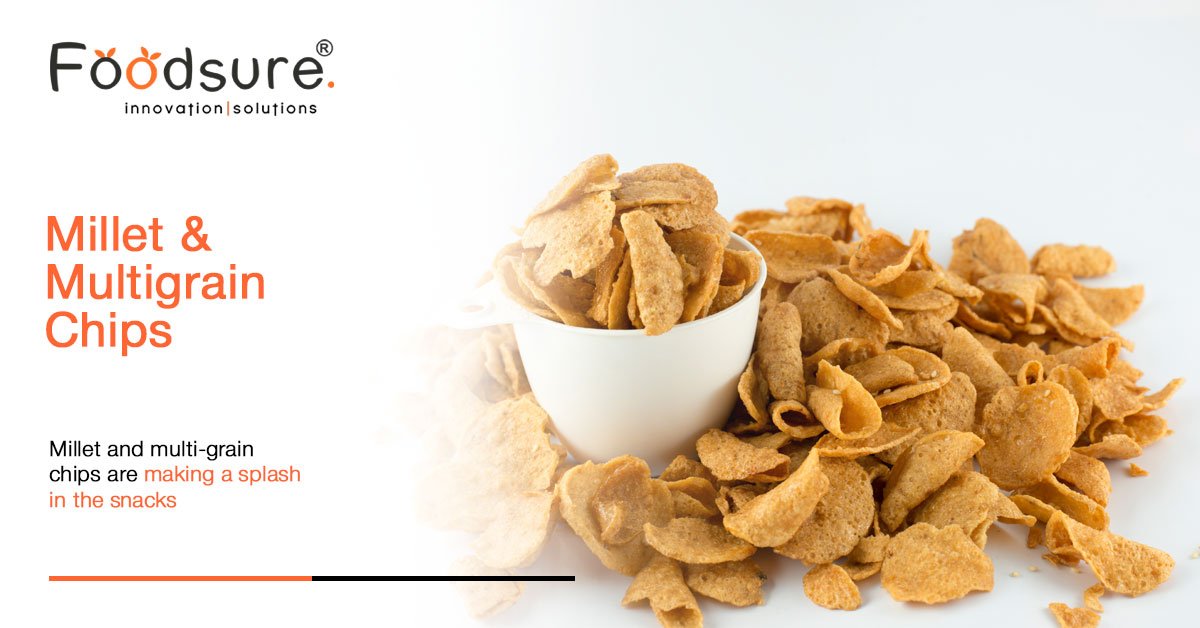
Millet & multigrain chips are making a splash in the snacks aisle in the health-conscious market today as a nutritious and tasty alternative to fried potato chips. With consumers in need of a guilt-free indulgence that is full of protein, fibre, and ancient grains, SME founders in the food production business are scrambling to cash in on the trend.
However, it is not only a great recipe that will lead to the successful launch of a product, but rather the knowledge of user psychology, avoiding formulation traps, and efficient scaling. This manual explores the recipe formulation process of Millet and multigrain chips through the eyes of an SME founder, with its problems, solutions in stages, advantages, and the manner in which Foodsure produces flawless and market-ready formulations.
You May Also Like: Best Selling Food Products in 2026
What Drives Demand for Millet & Multigrain Chips?
People are not purchasing snacks anymore, but they are making an investment in wellness. This is due to the direction of user psychology, which is in favour of functional foods that are in line with the busy lifestyle, which are fast, portable, and rich in nutrients. In 2025, more and more people are searching for healthy snacks online instead of those deep-fried, sugar-loaded ones. Snacking habits are becoming smarter, and health-conscious consumers are driving this shift.
This is a common mistake of SME founders. Your target buyers are fitness enthusiasts, working parents, and diabetics who want to have chips that will provide them with a feeling of indulgence and long-lasting energy. They refuse the dull health food and want something with a vibrant taste, such as peri-peri or masala and a clear label on the pack. A failure to fit into this psychology results in shelf-warmed products. The solution is about balanced crunch, taste and nutrition formulations, making impulse purchases turn into diehards.
Common Problems SME Founders Face in Food Product Development
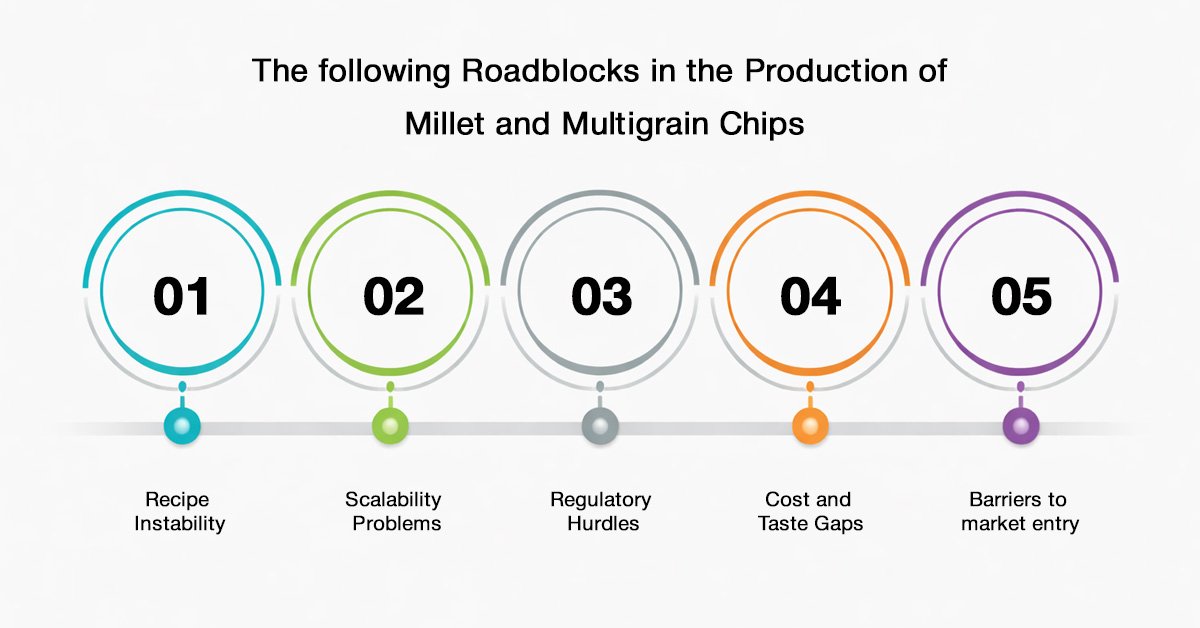
In developing a food product or starting up as an entrepreneur, you have probably bumped into the following roadblocks in the production of Multigrain and Millet Snacks:
- Recipe Instability: Millets such as ragi or jowar do not take up water in the same manner, resulting in chips crumbling or getting soggy during the preparation of food.
- Scalability Problems: Lab recipes do not scale because of unreliable sourcing with high rejection rates.
- Regulatory Hurdles: The FSSAI standards on labelling, shelf-life (45 Days), and the limits on acrylamide trigger 40% of new entrants.
- Cost and Taste Gaps: To trade off affordable multigrain blends (foxtail millet, oats, chickpeas) with high-end flavours is a cost of 20-30.
- Barriers to market entry: SMEs waste ₹5-10 lakhs in prototyping without expert advice, and when the prototype fails sensory tests or consumer trials.
These pain points are based on the absence of a methodology of food formulation, which compelled founders to pivot or fail.
Real-World Struggles and the Need for a Food Consultant
From the perspective of an SME founder, the process of launching Millet and multigrain chips resembles walking on fire. A Delhi-based founder, whom we spoke to, mentions that he had spent months perfecting recipes, but that the chips would break during frying, and investors were freaking out at the fact that the shelf-life would be short. But there is an element of psychology: founders are after perfectionism, which causes delays in launching, even during crises of financing. SMEs require responsive food production strategies in the competitive world of Indian food tech, which is dominated by giants such as Haldiram.
Go in the service of the food consultant, your shortcut to approved recipes. You lose margins without one, and you cut development time by half with one and enter the market earlier.
The Staged Approach to Millet & Multigrain Chips Recipe Formulation
Slay these by means of an effective 5-stage Millet and multigrain chips recipe development roadmap, adapted to SMEs:
| Stage | Description | Key Actions | Outcomes |
|---|---|---|---|
| Research & Ingredient Sourcing | Analyse user psychology and source millets/multigrain. | Surveys, select blends, partner for organic supply. | Cost savings and nutrient profile locked. |
| Base Dough Development | Create a stable dough for consistent texture. | Mix flour, water, oil, salt, and guar gum; test moisture. | Pliant dough prevents cracks and sogginess. |
| Flavour Infusion & Shaping | Add taste and form chips. | Infuse spices (e.g., peri-peri), extrude to 0.5 mm sheets, cut shapes. | Dopamine-triggering flavours and uniform sizing. |
| Processing & Quality Control | Cook and test for market readiness. | Air-fry or bake; check crispness and moisture. | Optimized yield; FSSAI-compliant (low acrylamide). |
| Packaging & Validation | Finalise product for shelf-life and sales. | Nitrogen packs, consumer panels, audits. | 9-month shelf-life and consumer acceptance. |
This food formulation is staged to yield a guarantee that meets FSSAI and export requirements.
Key Benefits of Millet & Multigrain Chips in Food Production
Millet multigrain chips are fashionable, but profitable:
- Nutritional Benefit: high protein/low calorie, high fibre, low GI, fights obesity.
- Market Boom: The global millet market reached USD 14.0 billion in 2025, and is targeting to reach USD 19.7 billion by 2034 with a growth rate of 3.38%.
- Flexibility: Vegan, keto; their schemes, such as schezwan, are Gen Z-friendly.
- Sustainability: Millets consume 70% less water than rice, which suits the eco-friendly customers.
- Profit Margins: 50-80 retail price will give 35-40 margins after scaling.
The SMEs acquire a competitive moat, and the inventory turnover is 2x faster.
Foodsure’s Role: Your Partner in Perfect Millet & Multigrain Chips Formulation
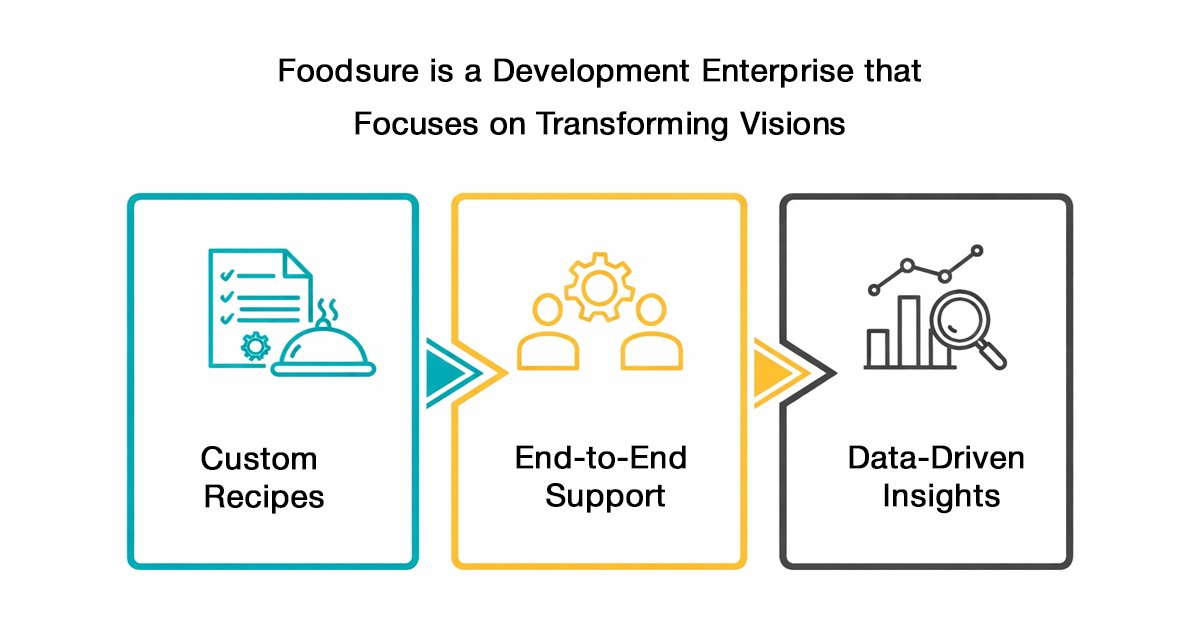
Foodsure is a development enterprise that focuses on transforming visions of SMEs into ready products on shelves. Being professional food advisors, we have developed 50+ Millet and multigrain chip versions in brands throughout India. Our process?
- Custom Recipes: Made to your budget, 200+ experiments to be crunchy and tasty.
- End-to-End Support: R&D to FSSAI certification: 10x increase in food production.
- Data-Driven Insights: AI-based user psychology mapping to achieve 85% acceptance rates.
We deal with complexities in order to allow you to concentrate on growth.
Founder Takeaways: Actionable Insights for Success
- Make Psychology a Priority: Early tests with real users are important- taste wins over nutrition claims.
- Wise on Stage: Pilots are not to be neglected; 80% of failures occur at scale.
- Partner Smart: A food consultant, such as Foodsure, will save 6-9 months and 3-5 lakh.
- Watch Trends: Use the millet push (UN Year extension) of Leverage 2026 to win PR.
- Measure ROI: Intend to have <₹10/pack production cost to take control of e-com.
Use these, and your Millet as well as multigrain chips would be the snack revolution.
You May Also Like: Nutraceutical Product Consultant
Ready to Launch Your Hit?
Tired of formulation failures? Foodsure offers food consultancy services on recipes of Millet chips as well as multigrain chips, FSSAI-ready after 8 weeks.
Call us on +91 8130404757, drop us an email at wecare@foodsure.in
FAQs
what do you usually eat of Millet and multi-grain chips?
Ragi ( multigrain flour, jowar), water, oil and spices into a mixture, extrude and bake at 180°C for 10 minutes. Flat-out writing shall be professionally crisply modified.
How should they comply with FSSAI food manufacturing for millet and multigrain chips?
The acrylamide can be less than 75000 g/kg, and it should be marked as less than 5% moisture. Food auditing implies hiring a food consultant.
Why is it superior to the everyday chips when the worried Millet and multigrain chips are in question?
Lower GI, higher protein/fibre, gluten-free; it is the most suitable alternative for diabetics and fitness fanatics who require a higher level of satiation.
Difficulties in developing recipes of Millet it and multigrain chips?
Moisture control; balance by forming up with pilots/binders, in batches, like xanthan gum.
Innovation of a Millet and multigrain chips?
Good to taste (when 40:30: 20): ragi (nutritious), jowar (crispy), bajra (tasty).
What would it cost the SMEs to develop the Millet and multigrain formulation of chips?
1-3 lakh custom research and development; Foodsure pkg 50K and further support.
Can a food consultant succeed in the millet and multi-grain chips entry?
The thing is that the 2-times faster recipes of launch, the trials and PR strategies of other food products are also offered by professionals such as Foodsure.