Mayonnaise formulation is the perfect example of how food science comes into action. It’s all about how different ingredients come together and how tiny particles stay mixed. Understanding the simple science behind each step of formulation helps you make a mayonnaise that is smooth, safe to eat, and memorable. Developing the mayonnaise recipe for mass production comes with several challenges, and to fix them, you need experts’ tips and guidance.
Let’s look into the common mistakes in mayonnaise formulation and how expert tips can be beneficial for you to fix all those mistakes.
Poor Emulsion Stability in Mayonnaise Recipe Formulation
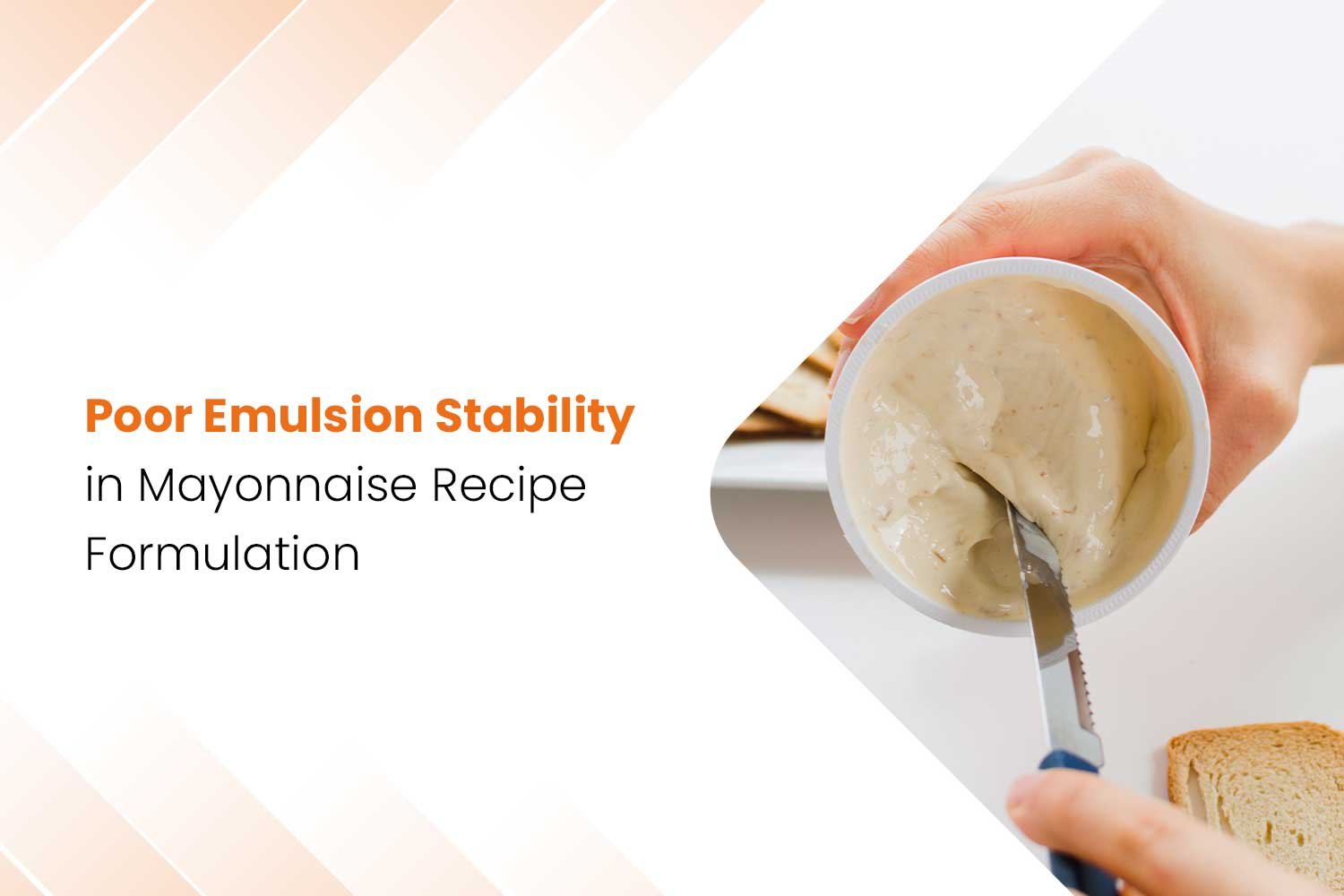
Mayonnaise is an oil-in-water emulsion stabilised by egg yolk or other emulsifiers. Proper temperature and mixing speed are essential to prevent separation. For best results, use suitable oils like sunflower or canola, and apply controlled mixing for stable homemade mayonnaise and efficient mayonnaise production.
Expert Tip
- For a correct mayonnaise emulsion, use high-speed shear mixing between 3,000 and 4,000 rpm, which will help the oil blend smoothly with the water.
- Proper oil droplets are produced during production, approximately smaller than 5 microns. Smaller droplets are important for long-term mayonnaise recipe formulation stability and help prevent separation between oil and water.
FSSAI Mayonnaise Guidelines
- Use only emulsifiers that are approved by FSSAI, like INS 322 and INS 471, to make sure your mayonnaise recipe formulation follows the rules.
- List all emulsifiers clearly on your mayonnaise product label, and make sure they fall under FSSAI Food Category 3.2.1 (Emulsified Sauces).
Ignoring pH Control and Microbial Safety
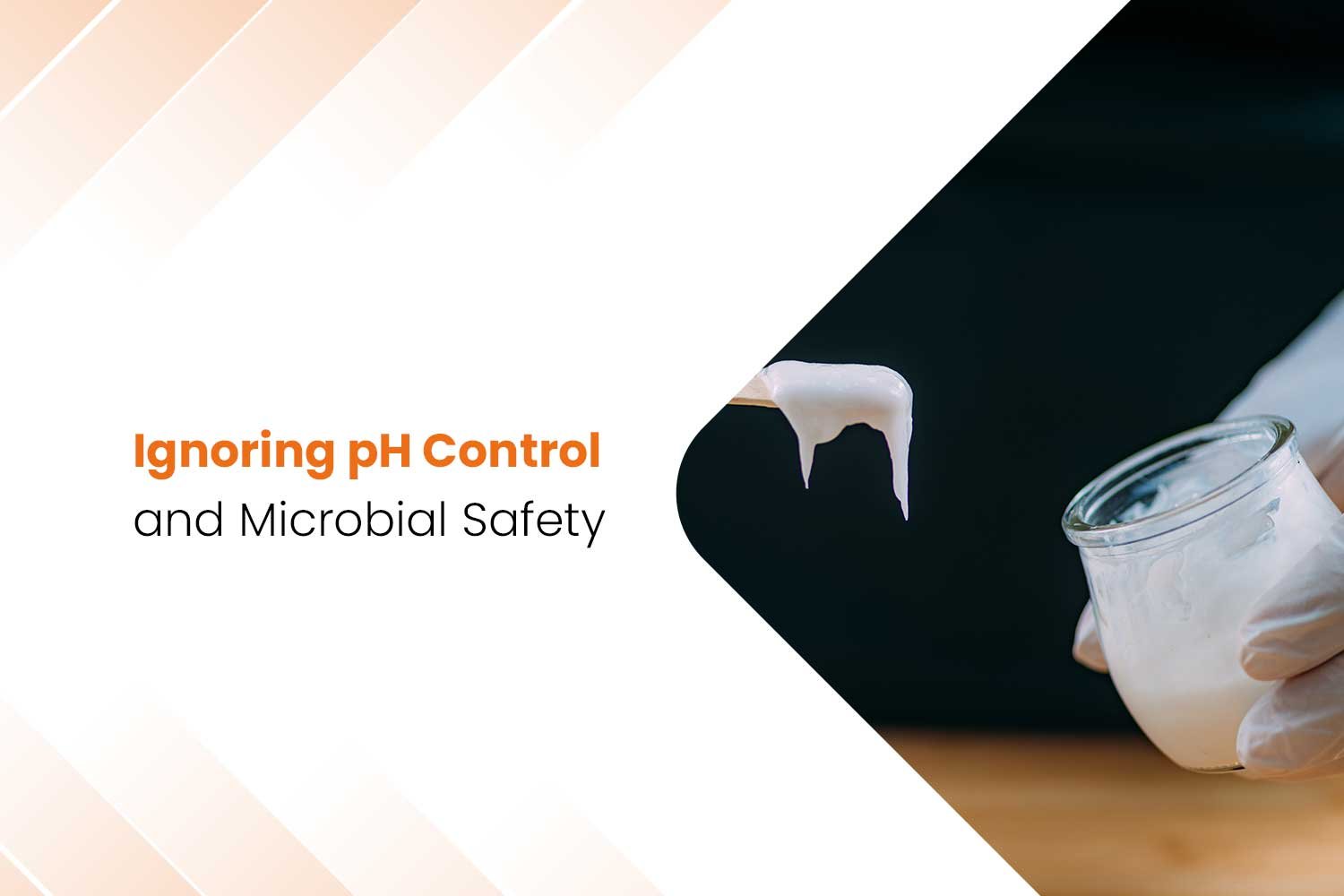
Mayonnaise contains a lot of oil and water that can result in the growth of microbes if it is not handled carefully. The mayonnaise recipe formulators must make sure that the pH is at or below 4.1. They must also keep in mind to use the correct acid to have a proper texture and prevent harmful bacteria growth.
Expert Tip
- Add 5–10% vinegar to your mayonnaise recipe formulation so that the mayonnaise remains stable with the correct pH level. This is to safely lower the pH and help keep the mayonnaise stable.
- Use approved preservatives for the longer shelf life of your mayonnaise recipe development.
FSSAI Mayonnaise Guidelines
- Make sure that the preservatives used in the mayonnaise recipe development are listed on the product label.
- If your mayonnaise has more than 10% egg, it must be labelled as an “Egg Product” to follow FSSAI rules.
More Use Of Unstable Thickeners Or Fillers In Mayonnaise Formulation
Using so many thickeners like xanthan gum or starch will make your mayonnaise feel lumpy or gummy. This can result in water leaking out from the mayonnaise sauce over time. Due to this, your mayonnaise will not stay fresh as long.
Expert Tip
Keep a good balance between the ingredients of your mayonnaise recipe development:
- Oil should be about 60–70% of the total mix.
- The rest should be water, acid, and a small amount of stabiliser.
- Only use 0.3–0.5% xanthan or guar gum; just a little is enough.
FSSAI Mayonnaise Guidelines
- Use only those thickeners and stabilisers that are approved by FSSAI and listed in Appendix A.
- Don’t use more than the allowed proportion of thickeners or any unapproved ingredients; this can result in penalties for mislabeling your product.
Using Non-FSSAI-Approved Plant-Based Ingredients in Eggless Mayo
Use only those plant-based ingredients for eggless mayo that are approved by the FSSAI. Using unapproved ingredients can result in regulatory issues and product recalls. It’s always best to check the latest FSSAI lists before adding any new proteins or starches to your clean-label mayonnaise formulation.
Expert Tip
- Chickpea protein isolate, potato starch, and pea protein are good options for replacing eggs in vegan or eggless mayonnaise formulations.
- Pea protein hydrolysate is not yet clearly approved by FSSAI, so using it could result in regulatory issues.
FSSAI Mayonnaise Guidelines
- Only use plant-based ingredients in vegan mayonnaise that are approved and listed by the FSSAI.
- If you want to add a new protein, you must first get approval through the FSSAI Novel Food Registration process.
Ignoring Labelling & Shelf-Life Claims In Mayonnaise Formulation
Before putting your mayonnaise on the market, check proper labelling and also other claims you have made for shelf life or nutrition.
Expert Tip
- Make sure your mayonnaise product’s shelf life is good for both real-time and accelerated stability tests to prove it stays safe and fresh.
- If you claim your mayonnaise is low-fat or has zero cholesterol, you must have proof from nutrient analysis to back it up.
FSSAI Mayonnaise Guidelines
- Display the veg or non-veg symbol on your packaging.
- List the preservatives if used.
- Show the full ingredient list in descending order by weight.
- Include net weight, shelf life, and your FSSAI license number.
- Avoid misleading claims, such as calling a product “cholesterol-free” if it contains whole egg, as this can result in penalties under Section 53.
Ready to Perfect Your Mayonnaise Recipe?
Still have questions or facing formulation challenges? Foodsure is here to support you with expert guidance in product development, stability improvement, and regulatory compliance.
Whether you’re launching a new mayonnaise brand or improving an existing formulation, our R&D team can help you create a stable, high-quality, and market-ready product.
Book your free R&D consultation today and take the next step toward building a successful mayonnaise product!
FAQs
Q1: What makes mayonnaise stable?
Mayonnaise stability depends on proper emulsification, correct oil-to-water ratio, suitable emulsifiers, and controlled mixing conditions.
Q2: Why does mayonnaise separate?
Separation occurs due to improper mixing speed, incorrect ingredient temperature, or insufficient emulsifier.
Q3: Which oil is best for mayonnaise production?
Refined neutral oils like sunflower, canola, or soybean oil are preferred for smooth texture and consistent flavour.
Q4: Can preservatives be used in mayonnaise?
Yes, permitted preservatives can be used as per food safety regulations to extend shelf life, within allowed limits.
Q5: What is the ideal pH of mayonnaise?
Mayonnaise typically has a low pH (around 3.6-4.2) to ensure safety and microbial stability.
Q6: Is egg mandatory in mayonnaise?
No, egg-free or vegan mayonnaise can be made using plant-based emulsifiers like modified starch or soy lecithin.
Q7: How can I increase the shelf life of mayonnaise?
Use high-quality ingredients, proper acidification, approved stabilisers, hygienic processing, and suitable packaging.