There is a huge difference between developing a drink concept that tastes good in your kitchen and having a packaged food item with bar codes, nutritional content, and a twelve-month shelf life that sits on the supermarket shelf. The process of getting from one to the other is what the construction of a packaged food business entails. This process includes food processing, food production, regulation, packaging, and logistics.
The packaged food market in India was valued at USD 121.3 billion in 2024 and is projected to reach USD 224.8 billion by 2033 at a CAGR of 6.5%. One industry that fits into this bracket is the beverage industry. This kind of growth creates both advantages and difficulties, which include stiff competition, strict gatekeeping practices by the retail outlets, and high consumer expectations.
What Most Founders Get Wrong About Starting a Packaged Food Business
Undoubtedly, the most common theory is that any firm manufacturing packaged foods would always start by thinking of the product. This, however, is not the case. What initiates the entire process is creating a situation that is best suited for the target market. Neither the supermarket, nor the distributors, or the internet platforms will ever stock your drink only because of its great taste. They require the package of your beverage to carry all the necessary labels, validation of its shelf life, possession of an FSSAI license, and a pricing scheme that fits their requirements.
Entrepreneurs who get busy creating their products and considering the other steps later end up losing valuable time that might otherwise have been put into good use. The creation of the packaged foods entails passing through many gates, just like a machine does.
Helpful Guide:- Guide To Food Product Formulation: Concept To Market in 90 Days
Why the Journey From Idea to Shelf Is More Complex Than It Looks
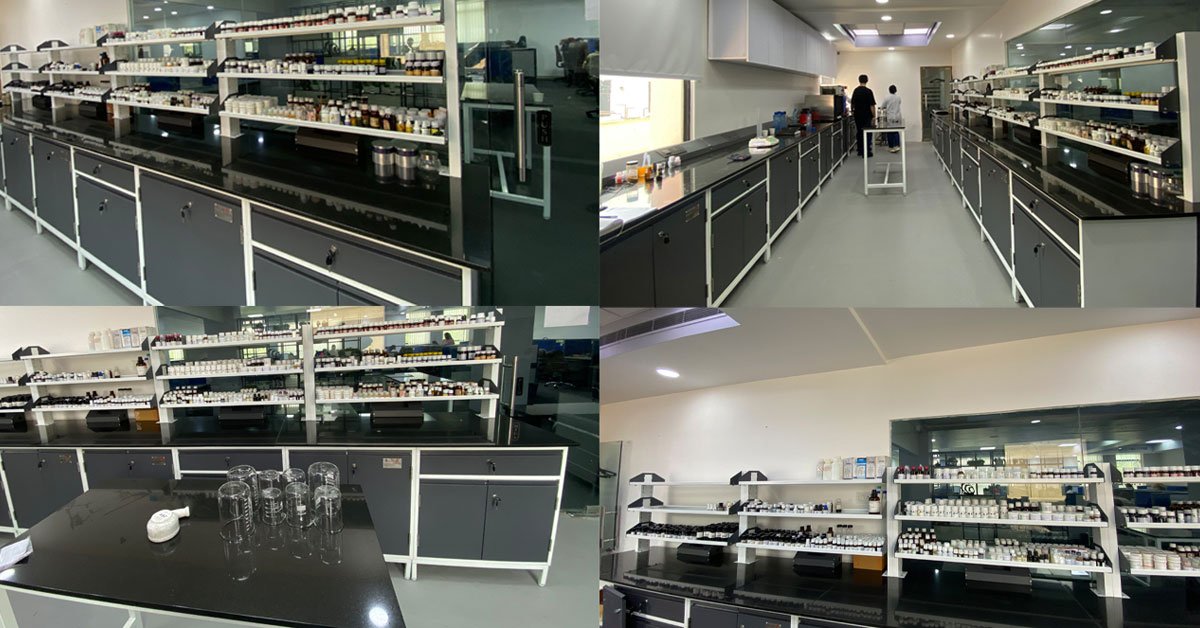
Beverage itself is a food item which can be manufactured using food processing technology. By food processing technology, we don’t refer to industrial cooking. What we are referring to here is the processing that needs to take place in order to render our raw materials into a product which is stable, safe, uniform and commercially feasible. The process could involve selection of formula, processing through either thermal or non thermal process, homogenization, carbonation, filling, sealing, and labeling.
All these processes have technical aspects attached to them which need to be considered while doing the processes to yield the desired product. If the processing temperature is wrong, one ingredient in the mix will die off. If filling is not done properly, there will be loss of carbonation. Finally, if the wrong material for packaging is chosen, there will be flavor migration while storing the product.
Where Founders Lose Time and Money
- Formulation done without considering the effect of processing on ingredient stability
- Shelf life printed on pack without testing for accelerated or real stability
- Choice of packaging without considering whether it is compatible with formulation and filling
- Use of FSSAI license obtained after production and not before
- Nutritional claim done on basis of ingredient database and not testing, causing a failure in the retail store listing
- Minimum Order Quantity assured to the co-manufacturer before validating the formula using pilot scale production
- Assignment of barcode or SKU without assigning the first meeting with retail store
Helpful Guide:- How Nutrition Food Product Formulation Shapes Market Claims
What Founders Experience When the Process Is Not Structured
- There is no relation between production batch and approval batch because there is no pilot production of the product.
- The listing request has been rejected since the labeling standards for FSSAI could not be met.
- The product has been rejected by the distributor for not meeting the required shelf life period.
- Customer complaints have come about because of inconsistencies in the taste of the product due to the inconsistencies in the SOP.
- The supplier wants the MOQ increased because the production batch lacks economic value.
- 4 month delay in launching the product due to failure in adhering to the packaging guidelines.
- Lack of intellectual property documentation, SOP and shelf life details while conducting due diligence.
What It Actually Takes to Build a Retail Ready Packaged Food Business
A food product that is ready to be retailed in the market cannot simply be described as a palatable food contained within some form of packaging. It is more than that as it is a food product that has been designed and produced according to specifications, has been processed according to validated parameters of production, has been packaged and sealed in packaging materials suitable for the chemical and stability requirements of the product, and has been properly labeled according to the FSSAI guidelines and produced uniformly across all units.
All these activities must be undertaken before manufacturing the commercial batch. That is why it forms the basic foundation for any food product line.
How a Beverage Idea Moves Through the Packaged Food Production Process
Stage 1: Formulation and Food Processing Design
Formula Brief serves as a foundation for the development of any drink packaging. These include factors like the nature of the drink, customers, demands of flavors, functionality of the drink, caloric demands, among others. The formula team then comes up with a formula which meets the demands of packaging and the storage period of the drink. The processing is done according to the formula and not the production process.
Stage 2: Bench Trials and Sensory Validation
The bench scale tests will help in the verification of the formula under controlled conditions. Different forms of the formula will be tested depending on the flavor, aroma, color, mouth feel, and texture of the samples. The sensory test for acceptance will take place at this stage. If any change is going to be made on the formula, it has to happen at this stage prior to carrying out the large scale test phase.
Stage 3: Stability and Shelf Life Testing
Once the bench test formula has been established, the next stage is that of the stability test. This is the most time consuming stage in food packaging production because it cannot be reduced in any way. The real time stability test is carried out over the whole shelf life period indicated on the food packaging. On the other hand, the accelerated stability test done at elevated temperatures gives a pointer even before the completion of the real time stability test.
Stage 4: FSSAI Compliance and Label Development
India’s food packaging industry comes under the purview of Food Safety Standards Authority of India (FSSAI). Each and every label should include the following information listing its ingredients in decreasing order according to weight, nutritional information which should be obtained through laboratory testing, an authorization number from FSSAI, best before date, and verification that all the health claims made on the product are authentic. This is one process that cannot take place after manufacture. Labels will be an important part of the formulation process, thus this should take place alongside it.
Stage 5: Packaging Selection and Compatibility Testing
Packaging of beverages in the context of packaged foods is not merely related to brand selection , it is rather a technical decision making process. Packaging must be compatible with the pH, fat content, and processing temperature of the beverage. When dealing with carbonated beverages, packaging material must be capable of handling pressure inside the pack throughout its lifetime. For beverages that include components sensitive to light, UV resistant packaging becomes a critical requirement. In the context of food manufacturing, approval of all food contacting packaging material as per FSSAI guidelines is necessary.
Stage 6: Scale-Up and Co-Packer Alignment
It is during the stage of converting the bench formula into the production process through the use of a co-packer that the new brands usually begin facing technical challenges. The formula must now be converted into the manufacturing standard operating procedure that outlines how the product is to be produced, taking into account such variables as filling conditions, quality control, and batch records based on the machinery at the co-packer’s facilities.
| Stages | Output | What Goes Wrong Without It |
|---|---|---|
| Formulation | Formula specification document | Scale up fails or tastes differ from brief |
| Bench Trials | Sensory approved formula | Costly changes after compliance testing |
| Stability Testing | Validated shelf life and safety data | Retailer rejects short shelf life product |
| FSSAI Compliance | Compliant label and licence | Listing declined, product pulled from shelf |
| Packaging Testing | Compatible, approved packaging | Flavour migration or pressure failure on shelf |
| Scale Up SOP | Manufacturing ready process document | Batch inconsistency and co-packer disputes |
Helpful Guide:- Cost of Food Formula: Accurate Calculation Guide (2026)
What the Best Packaged Food Businesses Do Differently
The companies who start off well and grow smoothly follow a linear and gatekeeping approach to development. This means that they go through all the stages in sequence, and they verify each one before proceeding to the next stage. Instead of incorporating compliance into the product at the end of development, the company designs compliance into the process. The company selects packaging based on the compatibility of packaging with the formula.
This process is not longer than any other. It is actually faster. Companies who cut corners in an attempt to speed up their time to market may end up doubling their efforts
since the errors that could have been avoided were not avoided. The packaged food manufacturing process works well when approached from the standpoint of being a technical skill.
The Role of Food Manufacturing Partners
The food manufacturing partner who is part of the packaging food business acts as the production facility for the brand. Their job is to manufacture products on a consistent basis using the brand’s SOP. The criteria to be considered when choosing the correct food manufacturing partner include their machinery compatibility with the product formula, ability of their quality control systems to deliver batch record books, FSSAI license for the product type, and capacity of their MOQ structure to match that of the brand.
The one critical clause that must be included in every food manufacturing contract is the clause stipulating that the manufacturer will only manufacture according to the approved SOP. Any other action that deviates must be done after getting written consent from the brand owner.
How Foodsure Builds Packaged Food Businesses From Idea to Shelf

Foodsure works on everything concerning the evolution of a beverage into a packaged food product. Everything is covered, from formulation to shelf-life analysis, FSSAI approval, packaging analysis, standard operating procedures for mass production, to working with the co-packer. In all our deals, we end up with the product with a tested formula, an approved label, enhanced shelf-life and standardized manufacturing processes suitable for any manufacturer.
Our expertise includes the manufacture and processing of carbonated drinks, health beverages, probiotic drinks, protein drinks, and packed herbs. Every case involves packaging food manufacturing before proceeding to branding.
What Every Beverage Founder Needs to Know Before Starting
It does not rest on an idea that is great, but rather it rests on the commercial product which is well formulated, well produced, well packaged and regulated according to all the relevant legal statutes. It is also consistent from one batch to another.
Idea is the starting point, and it is from there where turning an idea into reality forms the core of food packaging manufacturing processes. This is what makes the difference from the start when embarking on such a journey for packaged beverages.
Top Trending Guide:- Focus Drink Contract Manufacturing for Modern Brands in 2026
Get Your Food Product Market-Ready with Expert Formulation
From R&D to sensory optimisation & FSSAI compliance—Foodsure brings your food product from concept to shelf-ready.
5000+ Recipes Formulated
FSSAI & Export Compliance
FAQ’s (Frequently Asked Questions)
Q1. What is a packaged food business and what does it take to start one?
A packaged food enterprise involves selling food or beverage items in sealed and labeled packaging.
Q2. How does a beverage concept progress in the packaged food manufacturing process?
By formulation, bench testing, stability testing, FSSAI conformity, packaging choices, scale up standard operating procedures, and finding a co-packer.
Q3. What is food processing and how does it impact the creation of a beverage item?
Food processing entails each technical process involved in processing the raw materials into a product.
Q4. What FSSAI requirements apply to a packaged beverage business?
FSSAI licence, proper ingredient declaration, nutrition facts tested in a laboratory, best before date and health claims substantiation are some of those requirements.
Q5. How long does it take to make a ready-for-retail beverage by means of packaged food production?
The right structure of the packaged food production cycle will take between 18 to 26 weeks from initial brief to having a ready for retail product.
Q6. What is the job of the food manufacturer in packaged food production?
The food manufacturer manufactures the product according to the SOP of the brand; the brand has its own formula and controls all other aspects.
Q7. How does Foodsure assist businesses in packaged food production for beverages?
Completely, from product development to stability tests, FSSAI compliance, packaging, scaling up SOP, and selection of copackers.