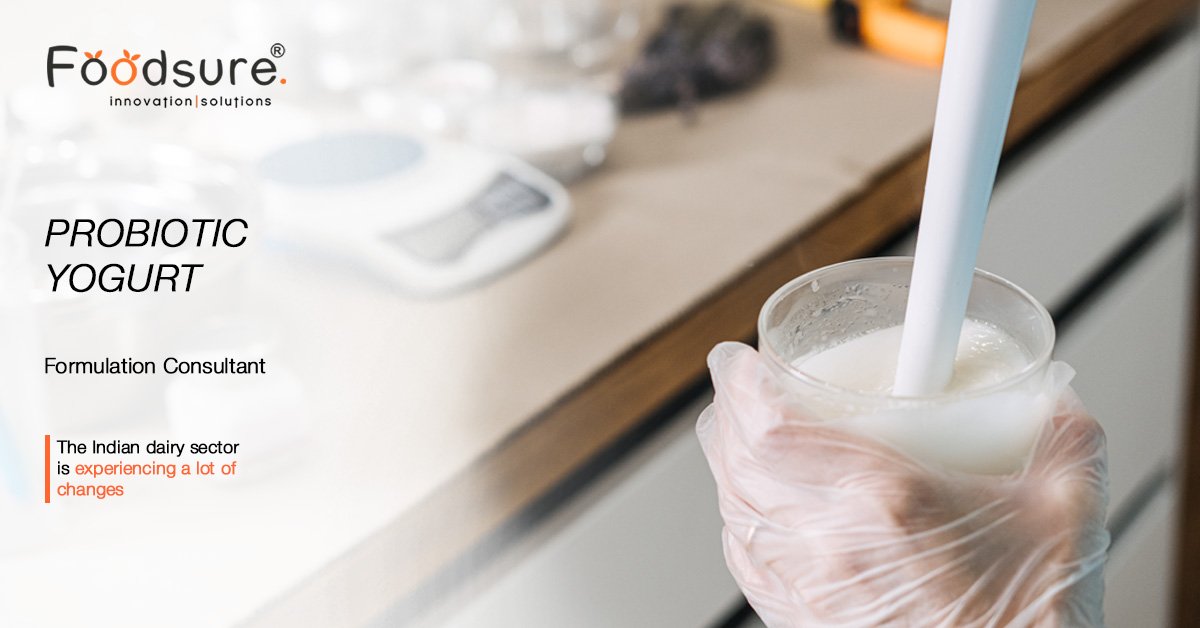
The Indian dairy sector is experiencing a lot of changes in recent times, and customers no longer view yogurt as a regular food product. They look for foods that would support their digestion, and probiotics for immunity and overall health. This is exactly why Probiotic Yogurt presents a great opportunity for traditional dairies as well as functional foods producers along with the probiotic yogurt formulation consultants.
Nevertheless, developing a popular range of products based on probiotics is a rather complex process, as it involves selecting strains, managing the fermentation process, developing the right taste and texture, ensuring shelf life, choosing appropriate packaging and meeting other important demands. The hot weather in India and labeling requirements may affect the product’s performance greatly.
In regard to the formula of probiotic yogurt brand, it would be based mainly on the development of the formula in general, which must be scientifically sound, financially viable, and also reliable as far as the customer is concerned. The point here is that simply having an excellent taste would not necessarily make the brand a success.
Why Probiotic Yogurt Is a Growing Opportunity in India
There is an increase in the demand for probiotic drinks owing to the increasing awareness about the importance of gut health amongst the Indian consumers. City-based consumers have become more aware about the products, compare the different products, and purchase those which offer some benefits additionally. Thus, there emerges the concept of Probiotic Yogurt.
Whereas a regular dahi could suffice, a probiotic dahi must carry a specific positioning with regards to health benefits. Customers will be expecting the product to contain living probiotics, maintain constant taste and consistency, and be readily incorporated into their diet. The chances exist for the production of different types of probiotic dahi products like cup dahi, drinking dahi, fruit probiotic dahi, and spoon dahi.
But then, there is more to opportunity than what meets the eye when it comes to creating a product. Organizations should learn how to produce probiotic dahi products scientifically.
What Makes Probiotic Yogurt Different From Regular Dahi
This difference can mainly be explained in relation to the microorganisms contained and the outcome intended to be achieved. Regular yogurt has undergone the process of fermentation through the addition of starter cultures. But in a probiotic yogurt, there has been an inclusion of additional types of bacteria that provide health benefits for the body.
Formulation choices must also be scientifically based. The culturing process must work well with the composition of the milk, its fat content, taste, acidity, and temperature required for storage. The selected strains must not produce excessive acidification or food matrix breakdown. The selected strains must survive until the expiration date of the yogurt.
In other words, formulating yogurt is not just about science; it is also ensuring that the consumer gets value for his money. The consumer will find it difficult to make repeat purchases if the yogurt is highly acidic or has broken down.

How Probiotic Yogurt Formulation Starts With the Right Culture Strategy
Probiotic yogurt can be developed by choosing a good design of microorganisms. Most companies combine regular yogurt starter and probiotic bacteria in their products. In this case, the yogurt starter is utilized as a base for product manufacturing. Probiotic bacteria bring some functionality to the resulting product.
The first step to be made is the selection of bacteria strains capable of interacting with each other. Some strains perform well in dairy products, whereas others are rather sensitive to specific conditions, for example, low acidity, high temperature, or freezing.
The third variable is the dose. Low levels may lower its efficiency while high doses may affect the taste and lead to post-acidification and instability. This is why it is important to conduct trial production.
The third factor is the function of the formulation. The use of ingredients such as milk powder, stabilizer, fiber, or prebiotics can contribute to improving the texture and increase microbial survival.
Why Probiotic Yogurt Stability Is the Real Commercial Challenge
Many brands are capable of producing a good sample during lab researches. However, there are only few able to produce an effectively stable commercial product Probiotic Yogurt. The real test for the product is its stability.
Among others, one of the most pressing problems that arise during the production process is stability of yogurt shelf life. In fact, the product continues acidifying during storage when fermentation control is improper, making the product taste too sour and influencing the survivability of probiotics. One more problem that arises during the production process is syneresis.
How Probiotic Yogurt Labelling Should Be Handled Carefully
The labelling of the product is quite a sensitive matter when it comes to marketing probiotic yogurt in India. If any information about the benefits of probiotics is provided by the product, then there has to be some data available with the manufacturer to prove it. Inadequate labelling as well as excessive labelling might result in issues.
The label of the product should include all details related to the product, such as how the product should be used and for how long it can be stored before consumption. In cases where the product contains live yogurt cultures, the labelling would become extremely important.
In functional dairy products, labelling is more than just a regulatory requirement.
How Probiotic Yogurt Brands Can Build a Better Product for Indian Consumers
Indian probiotic yogurt formula needs to consider the practical expectations that consumers have, including taste, palatability, economic pricing that allows repeat purchasing, and stability during marketing.
The brand’s target consumer is determined through questions related to the use of the product, age, and even financial ability, which influences factors like degree of sweetness, package size, flavours, and price.
Finally, the brand needs to conduct tests in order to prove the success of their efforts. For instance, sensory testing, microbial testing, shelf-life testing, and packaging testing need to be done before introducing the product into the market. Probiotic Yogurt Key Takeaways
- Choose probiotic strains that survive dairy conditions well.
- Protect live culture count yogurt through full shelf life.
- Control acidity to improve taste and stability.
- Use packaging that supports cold-chain performance.
- Keep labelling clear, accurate, and compliant.
Probiotic Yogurt Foodsure Takeaway
The Foodsure corporation holds that when it comes to designing the best Probiotic Yogurt, the formula, process, and marketing must go hand in hand. Just having an excellent prototype of a product does not count for much. A good yogurt should guarantee the effectiveness of the culture, its physical form, transportation, and efficient communication via packaging.
As far as formulation, processing, stability over shelf life, and compliance with labeling requirements are concerned, there is nothing insignificant about this. A proper developer will always help any novice on the market.
Probiotic Yogurt Conclusion
There are many prospects for improved probiotics in India, but only the developed ones can actually capture the market share. The right Probiotic Yogurt should certainly be able to surpass the fad of health foods that is currently popular. It must be technically developed and well-formulated; have good performance, good stability, and correct labelling.
How to Formulate Probiotic Yogurt in India
Learn how to formulate probiotic yogurt in India with the right live culture counts, shelf life stability, labelling strategy, and product development approach.
FAQs
What is probiotic yogurt formulation?
Probiotic yogurt formulation is the procedure of designing yogurt having beneficial live cultures, texture, flavour, shelf-life, and marketability.
Why should live culture yogurt be considered important?
Live culture yogurt is important to show that there are live, healthy bacteria present in the yogurt during its shelf life.
How can probiotic dahi be formulated?
It requires correct selection of probiotics, fermentation, and cold chain preservation from production till end of product’s shelf-life.
What entails functional dairy product development in this instance?
This includes the development of dairy products that are more functional than just being nutritious, such as having better digestive benefits and tasting good and being commercially stable.
Why is shelf-life stability crucial in yoghurt?
This is because characteristics like texture, pH, and probiotic survival can be impacted during storage.