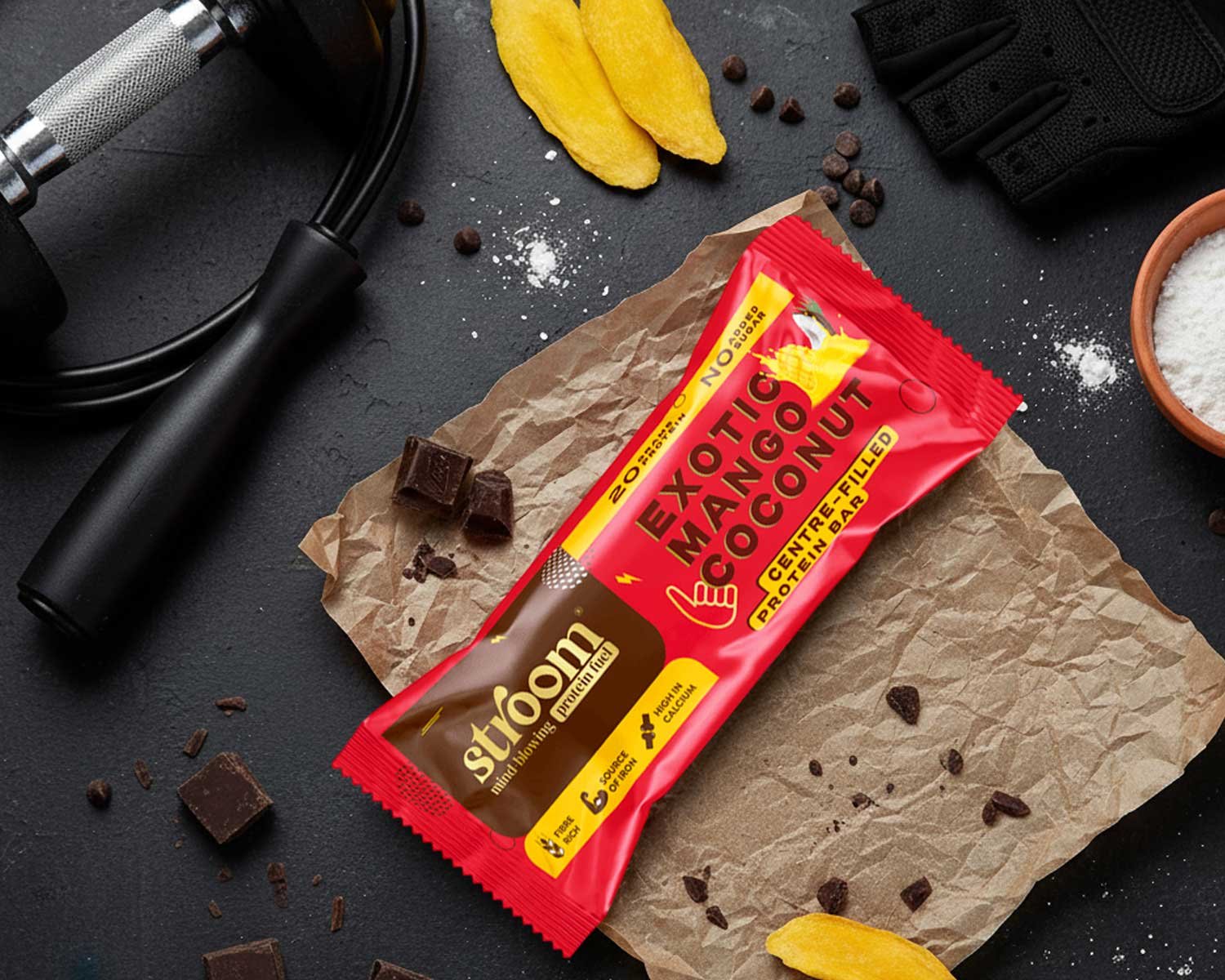
The growing demand from the health snacks category for a product that can cater to all needs, such as taste, convenience, and nutrition, as a combination, has led to the fastest-growing category in health snacks: protein biscuit formulation. Customers today desire snacks that provide higher protein content, have a better nutritional profile, are portable, have controllable portions, and have a cleaner/better ingredient quality. However, one of the reasons most high-protein biscuit launches have not had sustained success is that the customer experience is hampered due to a poor mouth feel. Texture is a very challenging attribute to improve in comparison to increasing the protein content. Most protein cookies have such a dry, crumbly, powdery and chalky mouthfeel that they are poor customer experiences even with their excellent nutritional profile. One-off sales do not build customer loyalty for the brand.
In Foodsure, we feel that getting a successful protein biscuit product developed is about more than getting the level of protein right. The actual challenge is getting the levels of nutrients and the taste, texture and crunch and, therefore, customer pleasure to just the right level to get a foodstuff that is both beneficial and pleasurable to eat.
Why Dry Protein Biscuits Are Rejected by Customers
Customers evaluate products not in a laboratory setting; they evaluate them while they consume them. Some of the common queries by the consumer, after consuming a protein biscuit, are the following:
- Is it crunchy
- Does it taste good
- Is it easy to chew
- Does it dry your mouth
The difference between the protein biscuits with 12% and 18% protein content would not be appreciable to most customers. It would be immediately apparent that the product does not have the correct texture and dries their mouths. Therefore, it becomes important to focus more on the optimization of the mouthfeel than on maximising the protein percentage.

Reasons for the Drying of High-Protein Biscuits
The behaviour of protein components differs greatly from that of conventional biscuit ingredients.
As protein content increases:
- Water absorption increases
- Dough becomes tighter
- Crumb structure becomes harder
- Retention of moisture decreases
Several typical quality concerns are frequently caused by these changes:
- Dryness
- dense bite,
- powdery feel and low consumer preference.
Understanding these challenges is a crucial part of high-protein biscuit formulation, as ingredient interactions directly affect texture, moisture retention, and overall consumer acceptance.
Common Biscuit protein source
Whey Protein
Benefits
- Excellent protein content
- Excellent consumer recognition
- Superb amino acid profile
Challenges
- can make biscuits drier with higher inclusion levels.
- Can make biscuits tougher.
Milk Protein
Advantages
- Enhanced texture
- Creamier profile
- Desirable flavor profile
Disadvantages
- More expensive ingredient
Soy Protein
Advantages
- Economical
- Good functionality in processing
- Widely accessible
Disadvantages
- Allergen labeling restrictions
- consumer concerns in some countries
Pea Protein
Advantages
- Plant-based proposition
- Suitable for vegetarians and vegans
- Eco-friendly image
Disadvantages
- Flavor masking is often necessary
- Can lead to a gritty texture
Protein Blends
Protein blends are commonly advised by Foodsure as they offer the following:
- An improved texture
- An optimal flavor balance
- Enhanced processing stability
- And provide increased consumer acceptance
Combining various protein ingredients often results in a higher quality product than those made from a single protein source.
The Development Process for the High-Protein Biscuit
A planned approach to development will assist in the success of the product.
| Development Stage | Purpose |
|---|---|
| Ingredient Selection | Choose suitable proteins and supporting ingredients |
| Recipe Formulation | Balance nutrition and functionality |
| Dry Mixing | Ensure uniform ingredient distribution |
| Dough Preparation | Develop optimal dough characteristics |
| Sheeting | Create a consistent dough thickness |
| Cutting | Achieve the desired biscuit shape |
Baking | Develop texture and flavour |
Cooling | Stabilise product quality |
Packaging | Protect freshness |
| Shelf-Life Validation | Verify product stability |
| Commercial Launch | Scale production successfully |
How to improve mouthfeel
A well-planned high-protein biscuit formulation focuses not only on protein content but also on achieving the right balance of crunch, flavor, and mouthfeel.
A good protein biscuit needs to have:
- Crunch
- Excellent Taste
- Simple Breakdown While Chewing
- Appealing Mouthfeel
The protein should add value to the product, rather than be controlled by the product. Products that strike a balance in taste and health are more likely to be re-purchased.
Techniques for Formulation to Lessen Dryness
Make Use of Moderate Protein Levels
It’s not always beneficial to have more protein. In fact, many of the highly performing commercial products achieve their market position through an appropriate blend of:
- Protein levels
- Taste
- Texture
- Cost
Rather than pushing high protein claims to their maximum level.
Improve the Fat System
One very important part of sensory quality is fat. The benefits of including this are the following:
- Better Mouthfeel
- Increased lubricity
- Better flavor release
- Greater consumer acceptance
The ‘dryness’ perception may be reduced quite dramatically by having a well-designed fat system.
Take Care When Using Functional Fibres
Fiber can enhance the nutritional content and the possibility of a health claim. But too much fiber may result in the following:
- Dryness
- Hardness
- Densely
Fiber choice is then a matter of strategy and the product formulation itself.
Better Selection of Proteins
Different proteins give different sensory attributes. A good protein blend usually has:
- A better texture
- Better flavor
- Less chalkiness
- Higher consumer acceptance
The Importance of What You Bake
A recipe is no use, unless baked correctly. Baking too much would result in:
Overdoing it
- Dry mouthfeel,
- tough texture,
- low consumer acceptability
under-baking
Under-baking would cause:
- Low shelf life
- Texture Instability
- product quality issues
It is a commercial trial study that will find the correct baking profile.
Suggested Equipment for Producing High-Protein Biscuits
| Stage | Equipment |
| Mixing | Ribbon Blender, Dough Mixer |
| Forming | Biscuit Sheeter, Rotary Cutter |
| Baking | Tunnel Oven / Rotary Rack Oven |
| Packaging | Flow Wrap Machine, Nitrogen Flushing System |
| Quality Control | Moisture Analyzer, Texture Testing Equipment, Shelf-Life Testing Systems |
The level of automation, production capacity, the required product specifications and quality standards dictate the type of machinery to be used.
Consumer preferences: The combination of nutritional needs and enjoyable consumption
Despite consumer demands for increased protein content, consumers ultimately desire a more health-conscious, yet pleasurable and enjoyable, snack experience.
While a protein biscuit possesses substantial nutritional benefits, consumers may not repurchase if the biscuit is described as dry, firm or chalky. As such, they may opt for traditional biscuit substitutes.
The ultimate high-protein biscuit should be balanced in the following:
- Nutritional value
- Taste
- Crunch
- Overall enjoyment of the experience
Manufacturers that achieve all four are likely to achieve customer buy-in and ensure continued sales.
Typical Issues in Product Development
| Problem | Possible Causes |
| Dry Mouthfeel | Excess protein, poor fat balance, over-baking |
| Hard Biscuit | Excess water loss, formula imbalance |
| Chalky Texture | Incorrect protein selection, excessive protein inclusion |
| Poor Flavor Release | Formula imbalance, protein–flavor interactions |
These formulation and processing issues were discovered and resolved during commercial trials before the product launch, resulting in a more palatable texture and better consumer acceptance.
New avenues for protein biscuits
The protein biscuit category is rapidly evolving. Increasing subcategories include:
- High-protein digestive biscuits
- Millet protein biscuits
- Plant-based protein biscuits
- Children’s protein biscuits
- Functional protein sport nutrition biscuits
Early opportunities to get in on the market give brands great potential to lead innovation.
Are You Trying to Make a High-Protein Biscuit
Foodsure can assist you with:
- Development of a high-protein biscuit formulation
- Textural optimization
- Shelf-life assessment
- assistance with machine specification and contract manufacture support
- Commercial launch advice

Conclusion
In the rapidly growing health and snack market, there is huge potential in high-protein biscuit formulation. However, a successful product has to go beyond the simple fortification of protein levels. Consumers are looking for not only nutritionally enriched but also palatable, smooth, crisp and enjoyable products. The most successful high-protein biscuit formulation can establish the perfect balance of enjoyment and nutrition. Palatability and mouthfeel are key to repurchase, although protein amount might be the driving factor for purchase initially. In such a saturated market, a brand that could solve problems like dry mouthfeel may be able to differentiate itself, enhance consumer satisfaction and build long-term customer loyalty.
High-Protein Biscuit Formulation Without Dry Mouthfeel
Create high-protein biscuits with a crunchy bite, balanced nutrition, and superior sensory appeal without the dry mouthfeel often associated with protein-rich baked products. Foodsure helps brands optimize ingredients, improve texture, enhance taste, and develop commercially viable formulations tailored to consumer preferences and market trends.
FAQs
Why do protein biscuits feel dry?
Protein ingredients absorb significant amounts of water and can create a chalky or dry eating experience if the formulation is not properly balanced.
Which protein works best in biscuits?
Protein blends often provide the best combination of texture, taste, functionality, and nutritional performance.
Can plant proteins be used?
Yes. Pea protein, soy protein, and blended plant protein systems are commonly used in protein biscuit formulations.
What is the biggest factor affecting mouthfeel?
The balance between protein, fat, moisture, fiber, and baking conditions has the greatest impact on mouthfeel.
Can high-protein biscuits be clean label?
Yes. Careful ingredient selection and formulation strategy can support clean-label positioning.